Sequencing events Worksheets for Ages 7-8
5 filtered results
-
From - To
Enhance your child's reading comprehension and logical thinking with our Sequencing Events Worksheets for ages 7-8. Carefully designed by experts, these worksheets help children understand the order of events, improving their storytelling and organizational skills. Each activity is engaging and child-friendly, making learning fun and effective. From arranging pictures to reordering story events, our worksheets cater to various learning styles and abilities. Perfect for both classroom and home use, they are an essential tool for building foundational literacy skills. Discover how sequencing can transform your child's cognitive development with our varied and interactive activities.
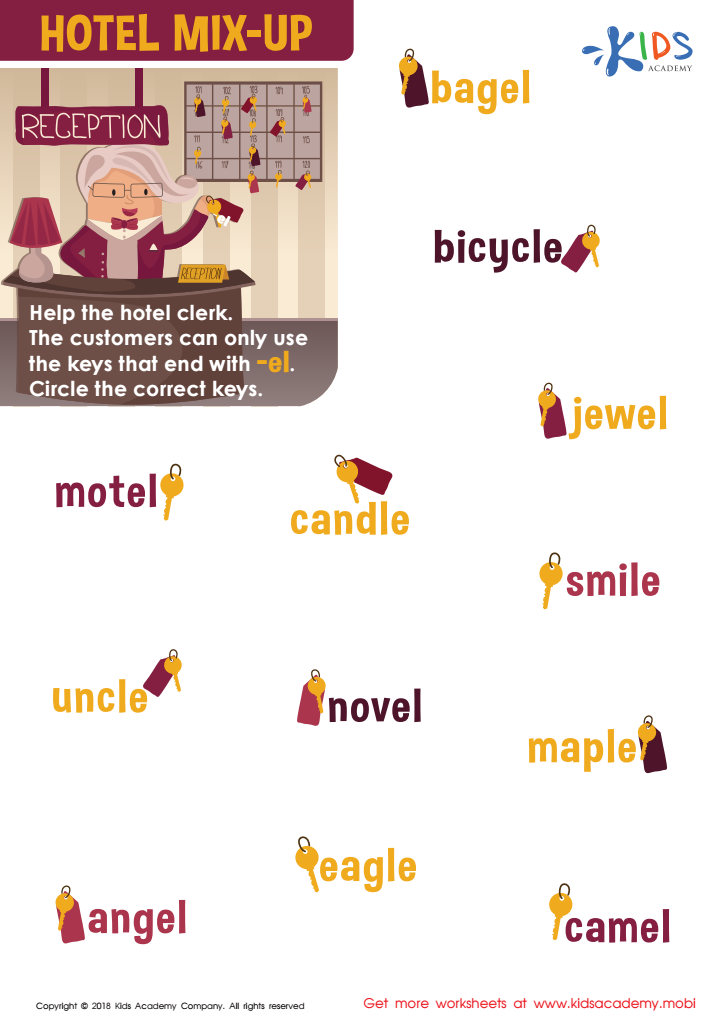
Hotel Mix-up Worksheet
 Assign to My Students
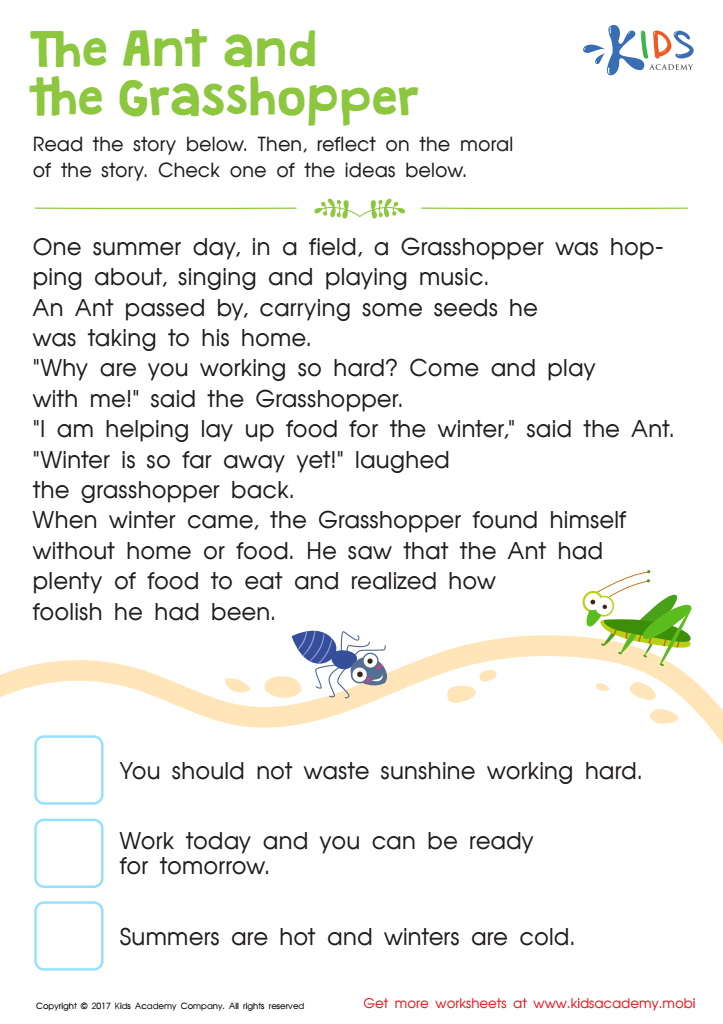
The Ant and The Grasshopper Printable

Emperor Penguin Journey Worksheet
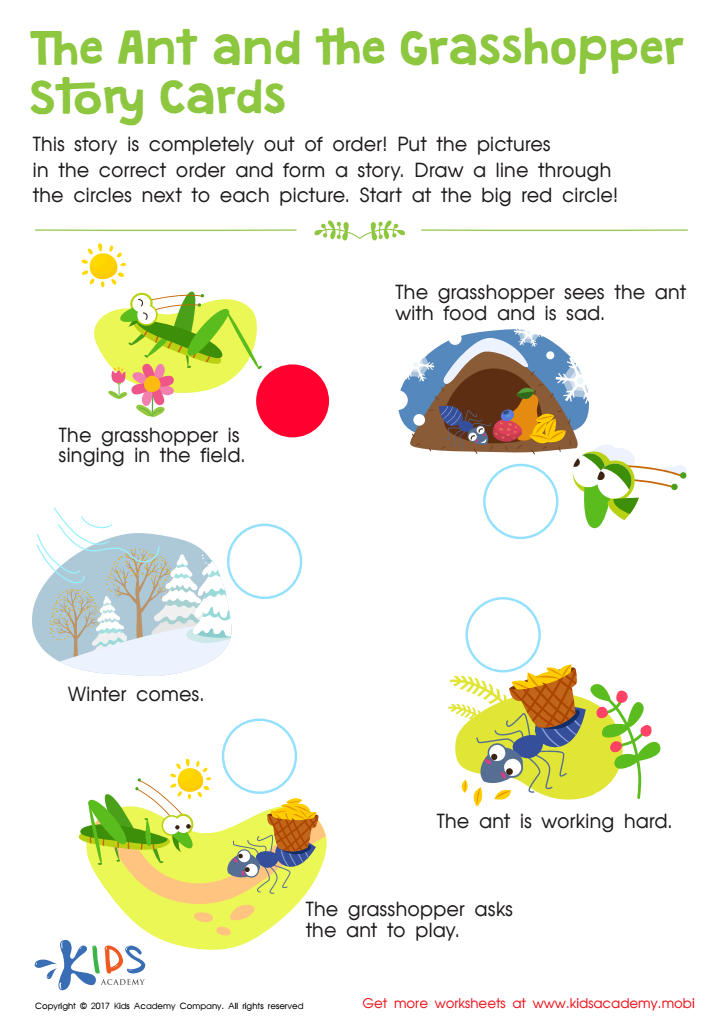
The Ant and The Grasshopper Worksheet
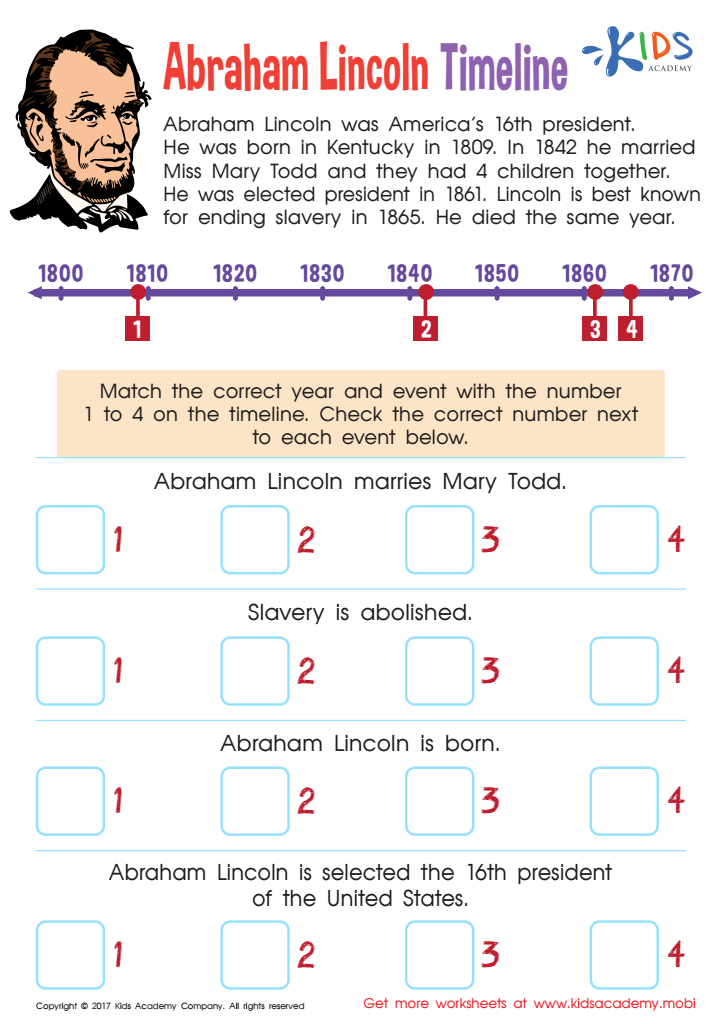
Abraham Lincoln Timeline Worksheet







Sequencing events is a crucial skill for children ages 7-8, as it forms a foundation for both literacy and cognitive development. Parents and teachers should prioritize this because it enhances children's ability to comprehend and organize information, directly impacting their reading comprehension and writing abilities. When children grasp sequencing, they can better follow narratives, predict outcomes, and recall details, all of which are essential for academic success.
Moreover, sequencing supports problem-solving and logical thinking. It helps children understand cause and effect, an essential component in subjects like science and math. For example, in a story, knowing that Sentence A happens before Sentence B builds an understanding of time and consequence. These skills translate into real-world application, such as following instructions or planning activities.
Additionally, proficiency in sequencing helps enhance communication skills. By learning to tell stories or recount events in order, children become more effective communicators. This fluency fosters stronger relationships with peers and adults alike.
Therefore, by integrating sequencing activities—like reading stories, playing sequence games, or doing crafts requiring step-by-step instructions—parents and teachers can support not only academic achievement but also critical thinking and social development, setting a strong foundation for future learning.








