Understanding area Worksheets for Ages 7-8
3 filtered results
-
From - To
Welcome to our "Understanding Area Worksheets for Ages 7-8"! These engaging worksheets are designed to help young learners grasp the concept of area through fun and interactive activities. Tailored for children in the 2nd and 3rd grades, our materials incorporate colorful visuals and relatable examples, making math enjoyable and accessible. Students will explore how to measure area using squares, calculate the area of various shapes, and apply their understanding to real-life scenarios. Perfect for classroom use or at-home learning, our worksheets encourage critical thinking and problem-solving skills. Start your child's mathematical journey today and watch their confidence grow!
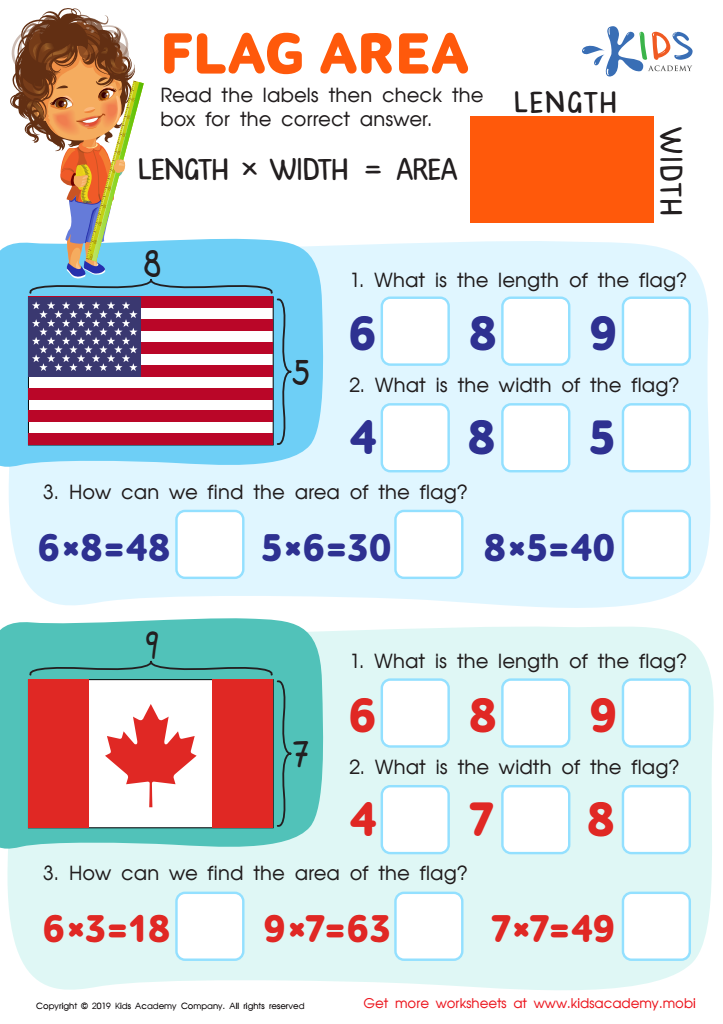
Flag Area Worksheet
 Assign to My Students
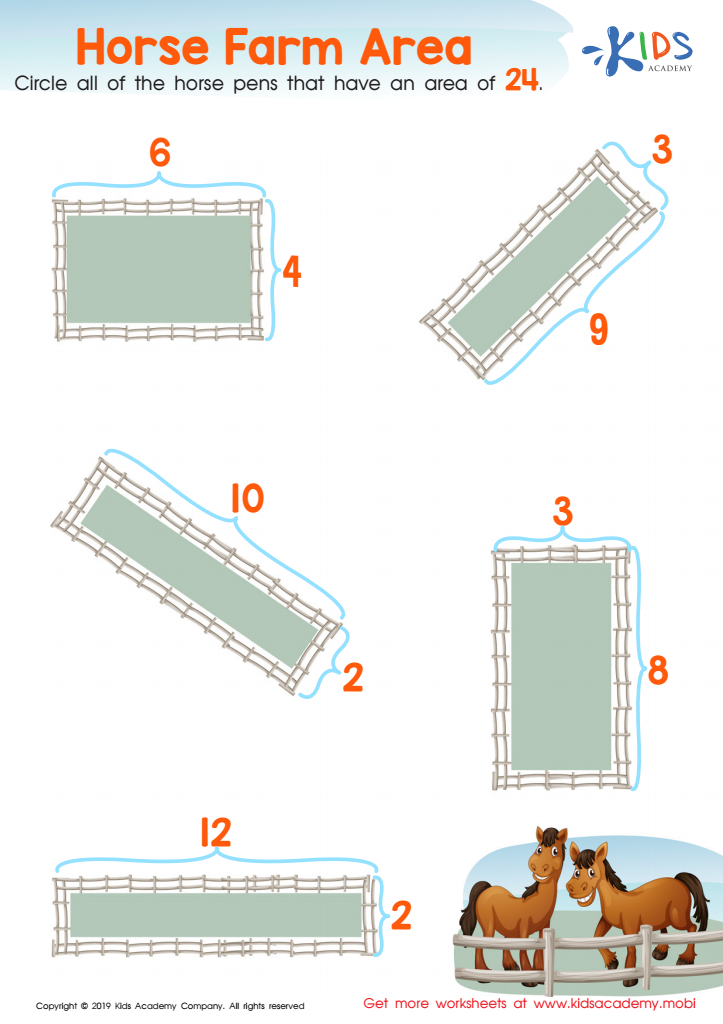
Horse Farm Area Worksheet
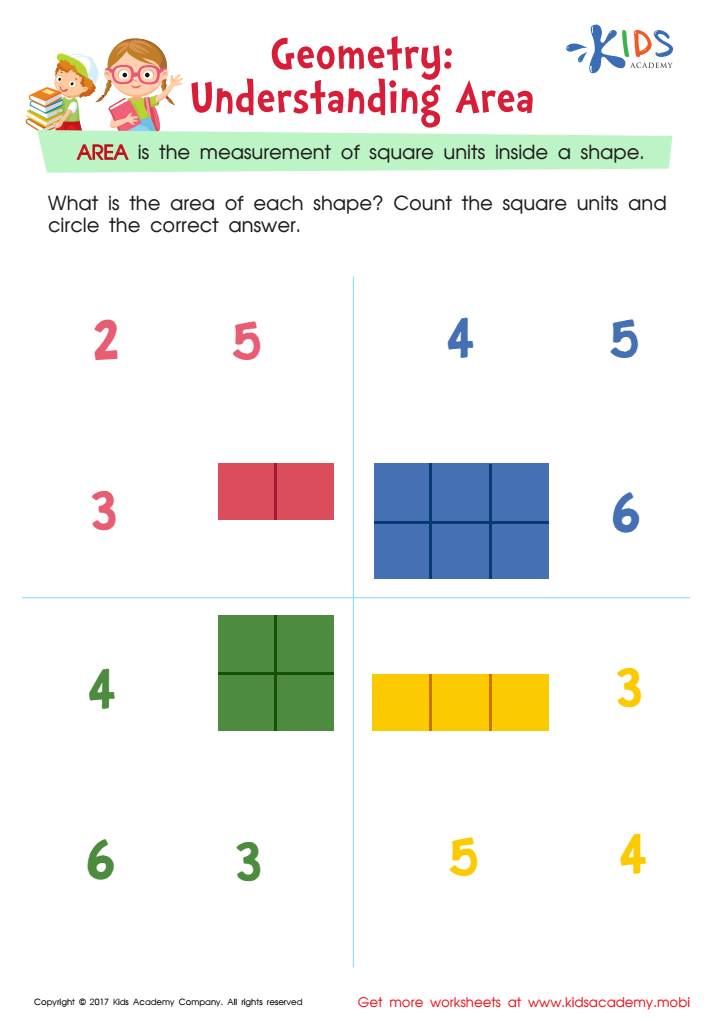
Understanding Area Worksheet






Understanding area is an essential skill for children ages 7-8, as it lays the foundation for various important concepts in mathematics and real-world applications. At this age, children are beginning to transition from learning basic number operations to grasping more complex spatial concepts. Learning about area helps develop critical thinking and problem-solving skills, encouraging students to visualize and manipulate different shapes and spaces.
Area knowledge is not just about math; it has practical implications in everyday life. For instance, when children learn how to measure area, they begin to appreciate concepts like the size of their rooms, gardens, and even how much space they need for playing or homework. It connects to other subjects, such as science, art, and geography, where understanding shapes and their dimensions can enhance comprehension.
Furthermore, teaching area fosters cooperative learning and communication skills as students often work together on projects or challenges. Engaging children in activities related to area, like creating posters or designing simple floor plans, makes learning interactive and fun. Ultimately, by emphasizing the importance of area, parents and teachers equip children with valuable skills that enhance their academic performance and boost their confidence in tackling mathematical concepts.








