Understanding biodiversity Worksheets for Ages 7-8
4 filtered results
-
From - To
Unlock the wonders of nature with our "Understanding Biodiversity Worksheets for Ages 7-8". Tailored to inspire young minds, these engaging worksheets introduce children to the diverse world of plants, animals, and ecosystems. Through fun and interactive activities, kids will explore different habitats, learn about the importance of biodiversity, and discover how living organisms interact with their environment. These educational resources aim to build foundational science skills and foster a deep appreciation for the natural world, making learning an exciting adventure. Perfect for both classroom and home use, set your child on a path to becoming an eco-conscious explorer today!
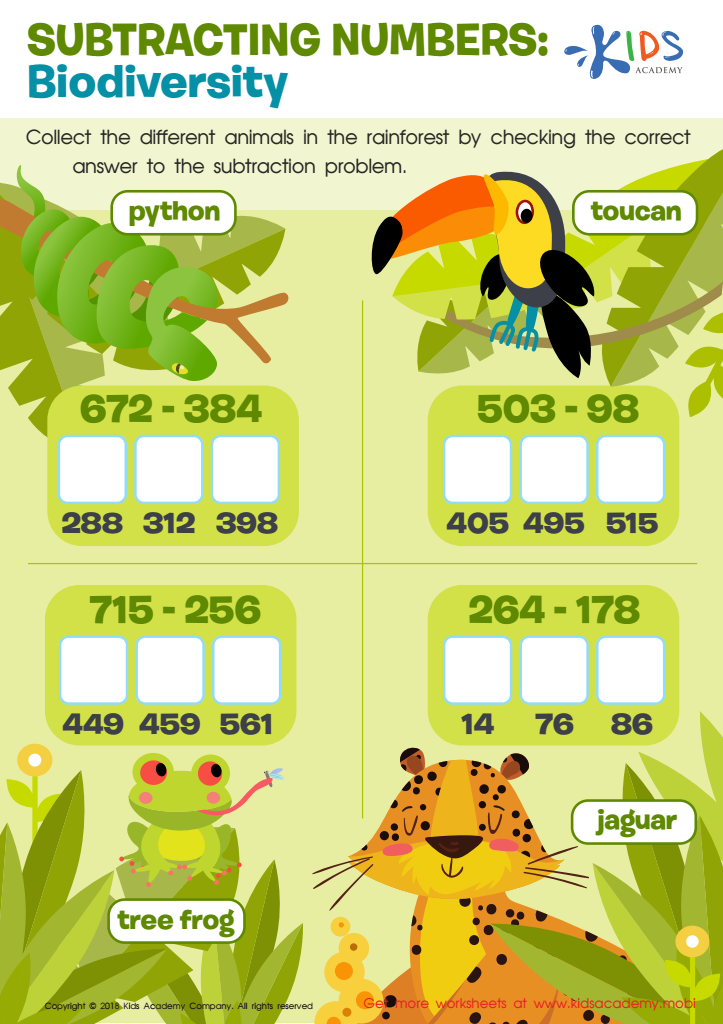
Subtracting Numbers: Biodiversity Worksheet
 Assign to My Students
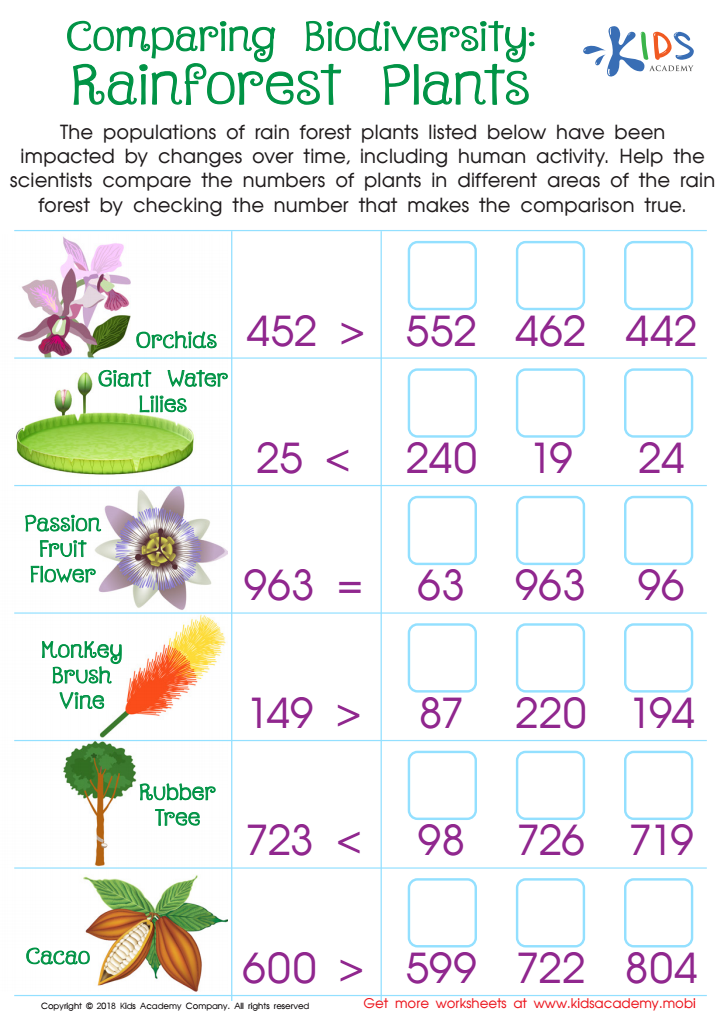
Comparing Biodiversity: Rainforest Plants Worksheet
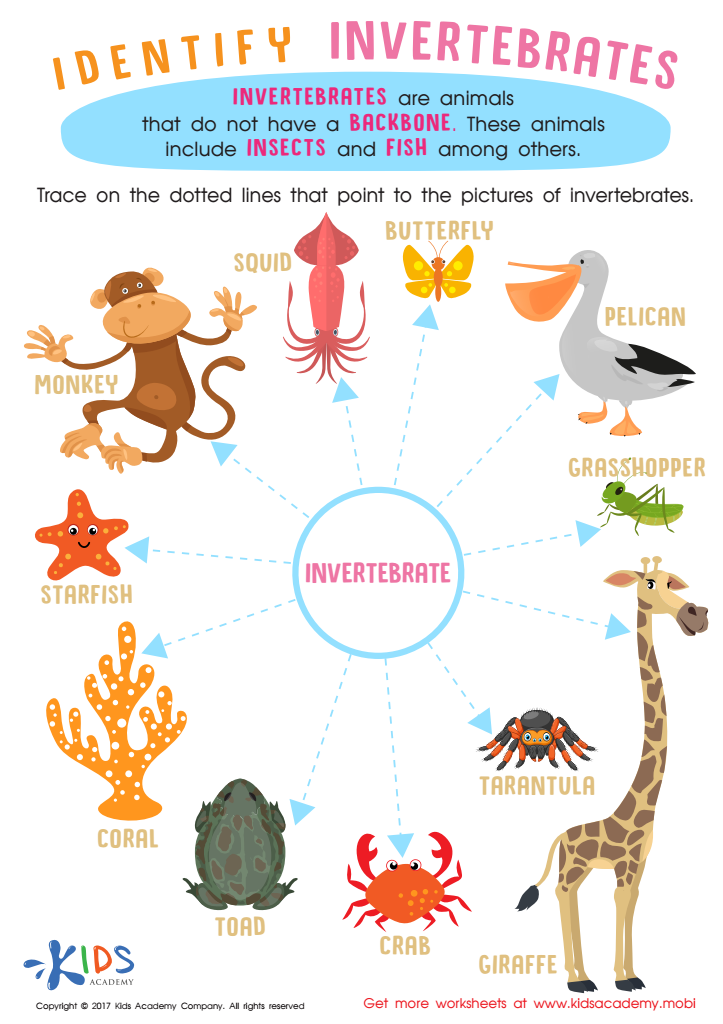
Invertebrates Worksheet for Grade 3
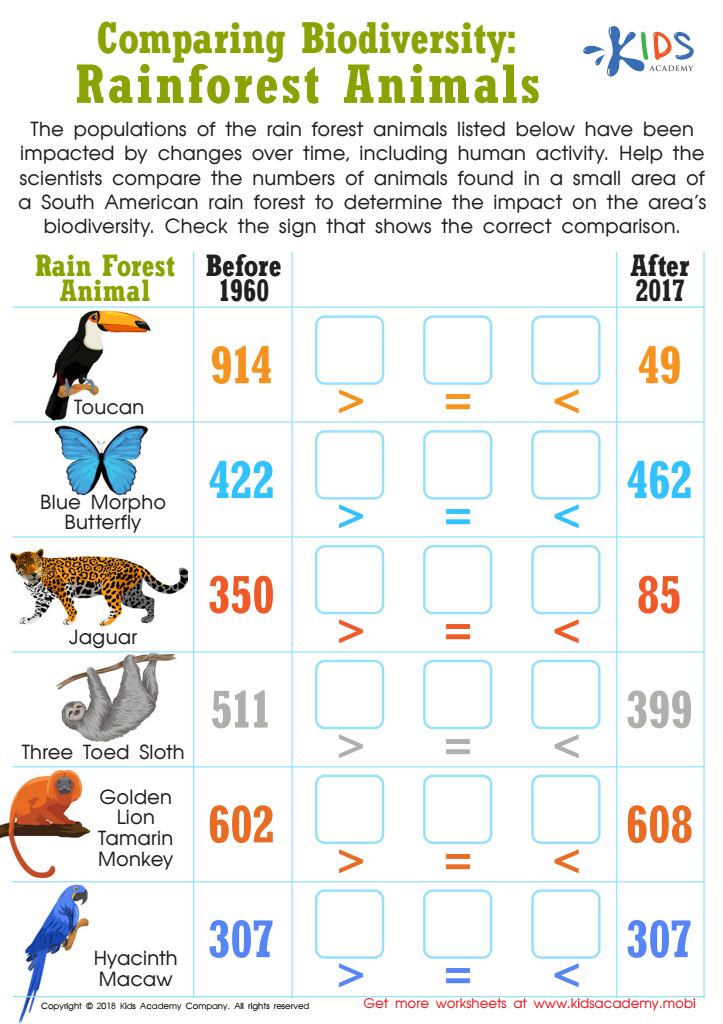
Comparing Biodiversity: Rainforest Animals Worksheet








Understanding biodiversity is essential for young children aged 7-8 as it lays the foundation for a lifelong appreciation of the natural world. At this stage, kids are naturally curious and more receptive to learning about the environment around them. Introducing them to the concept of biodiversity—the variety of life in different ecosystems—can spark a sense of wonder and a desire to protect nature.
Parents and teachers play a crucial role in this early education. By teaching children about various plants, animals, and habitats, adults help youngsters develop empathy and respect for all living things. This awareness can motivate children to make eco-friendly choices, like recycling or conserving water, already creating positive habits early.
Furthermore, understanding biodiversity supports academic learning across multiple subjects. It fosters observational and critical thinking skills, ties into science through the study of ecosystems, enhances vocabulary with new terms, and promotes social studies by exploring different regions and cultures' relationship with nature.
Given the threats to our planet, such as climate change and habitat destruction, educating children on the importance of preserving biodiversity equips them with the knowledge and values necessary to be responsible stewards of the Earth in the future. In summary, a focus on biodiversity education at this critical age benefits both personal growth and global sustainability.








