Understanding food chains Worksheets for Ages 7-8
3 filtered results
-
From - To
Explore the fascinating world of food chains with our "Understanding Food Chains Worksheets" designed for children ages 7-8. These engaging, educational activities help young learners grasp the concept of ecosystems through vibrant illustrations and interactive exercises. Kids will discover the roles of producers, consumers, and decomposers while practicing essential skills such as critical thinking and problem-solving. Each worksheet is tailored to make learning enjoyable, reinforcing key concepts of biology in a hands-on manner. Perfect for classrooms or at-home learning, these resources empower students to connect with nature and understand the importance of various organisms in our environment. Download now and spark curiosity!
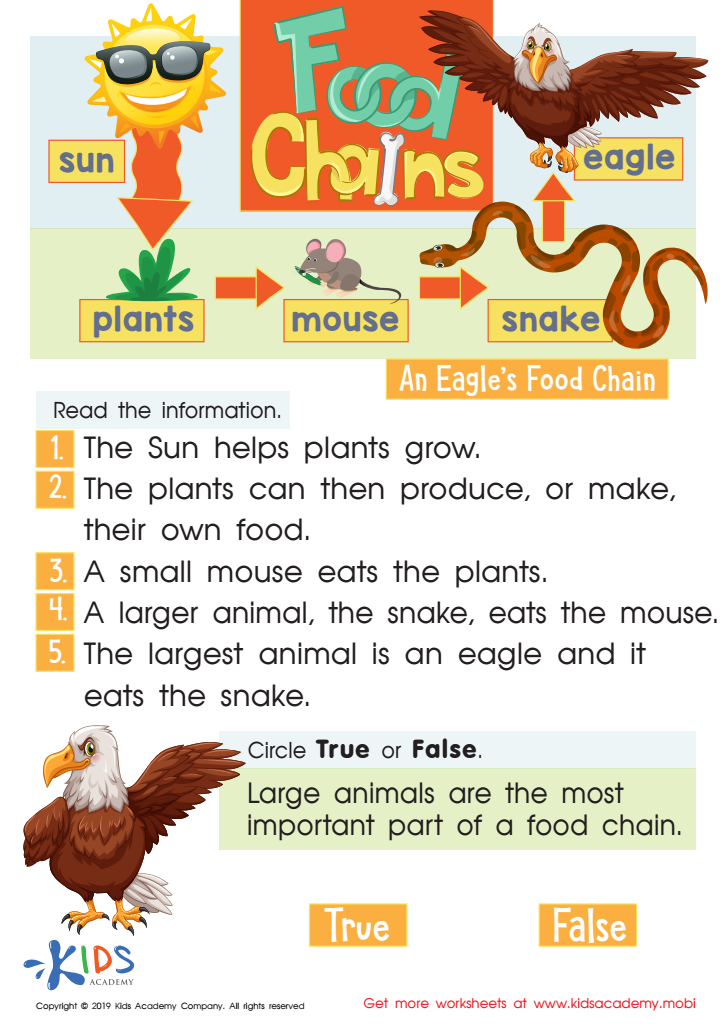
Food Chains Worksheet
 Assign to My Students
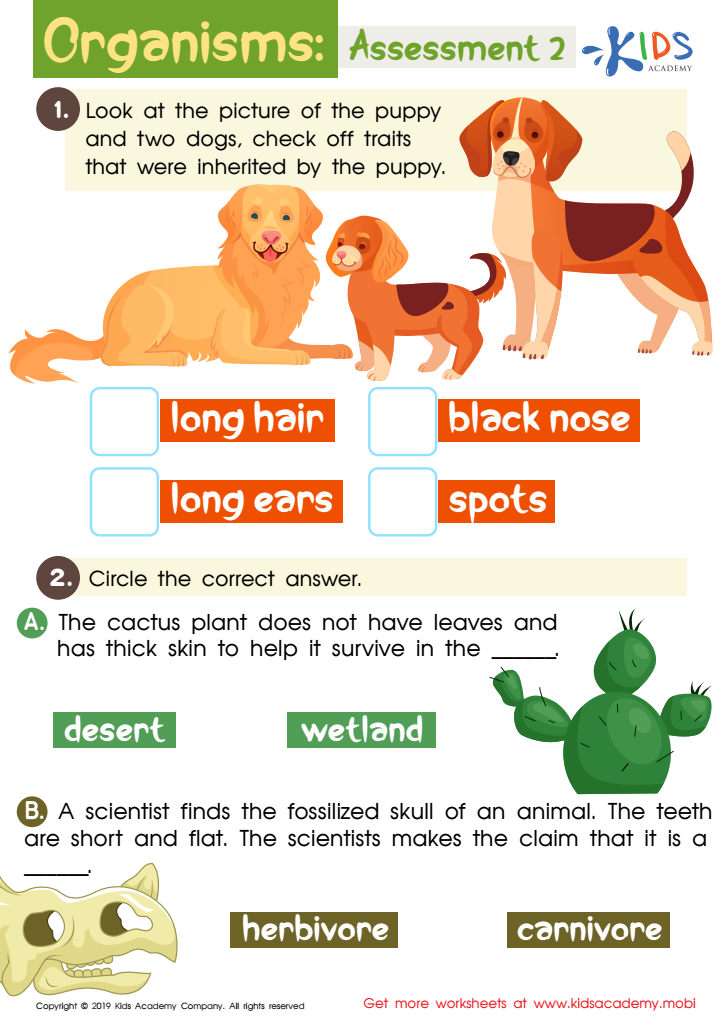
Organisms: Assessment 2 Worksheet
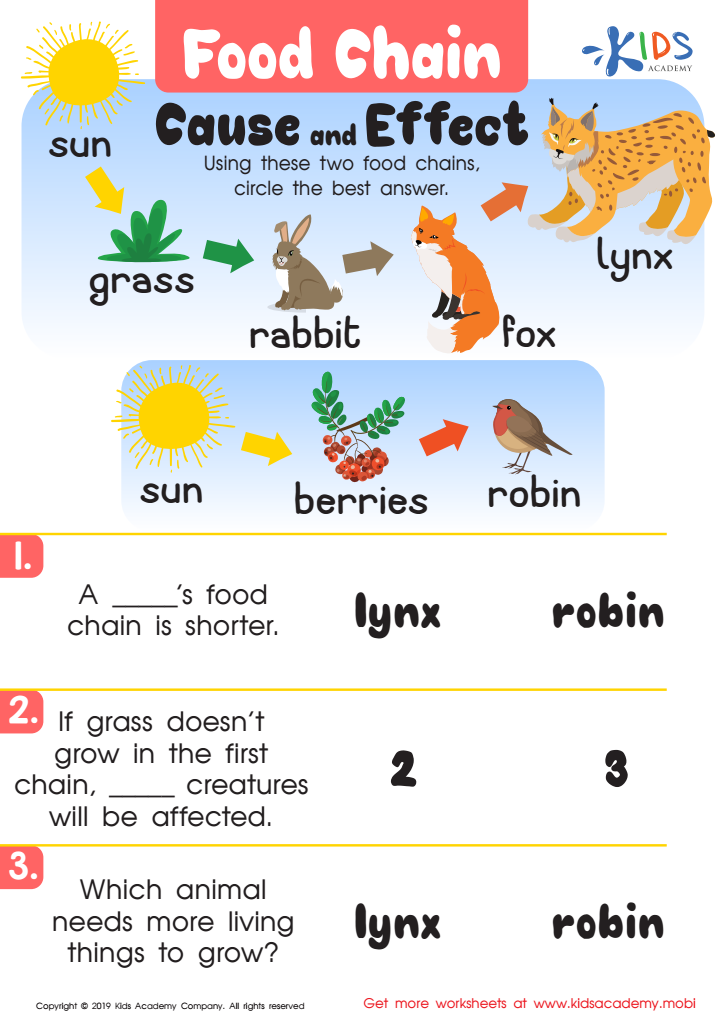
Food Chain Cause Worksheet








Understanding food chains is crucial for children ages 7-8 as it fosters essential scientific knowledge and environmental awareness. At this age, children develop foundational concepts about ecosystems and the interdependence of living organisms. By learning about food chains, they discover how energy flows through an ecosystem, illustrating the relationships between producers (like plants), consumers (animals), and decomposers (fungi and bacteria).
This knowledge nurtures curiosity and encourages exploration, helping children become more observant of their surroundings and the natural world. Moreover, understanding food chains promotes critical thinking skills, enabling children to analyze ecosystems' stability and the consequences of changes, such as habitat destruction or species extinction.
Additionally, this topic can stimulate discussions around sustainability and conservation. Parents and teachers can use food chains as a springboard for conversations about healthy eating, biodiversity, and the impact of human activity on nature. Engaging with these concepts can empower young learners to make informed choices and advocate for environmental stewardship, fostering a sense of responsibility towards their planet as they grow. Ultimately, instilling an appreciation for food chains can lay the groundwork for lifelong learning and engagement in environmental issues, benefiting both individuals and society.








