Understanding Simple Machines Worksheets for Ages 7-8
3 filtered results
-
From - To
Discover our engaging "Understanding Simple Machines Worksheets" designed for kids aged 7-8! These worksheets provide a fun and interactive way for young learners to explore the six fundamental types of simple machines: lever, pulley, incline plane, wheel and axle, screw, and wedge. Each activity encourages critical thinking through hands-on exercises, illustrations, and real-life applications. As students investigate how these machines make work easier, they will enhance their understanding of basic physics concepts while developing essential problem-solving skills. Ideal for both classroom and home use, our worksheets make learning about simple machines an enjoyable adventure for curious minds! Start exploring today!
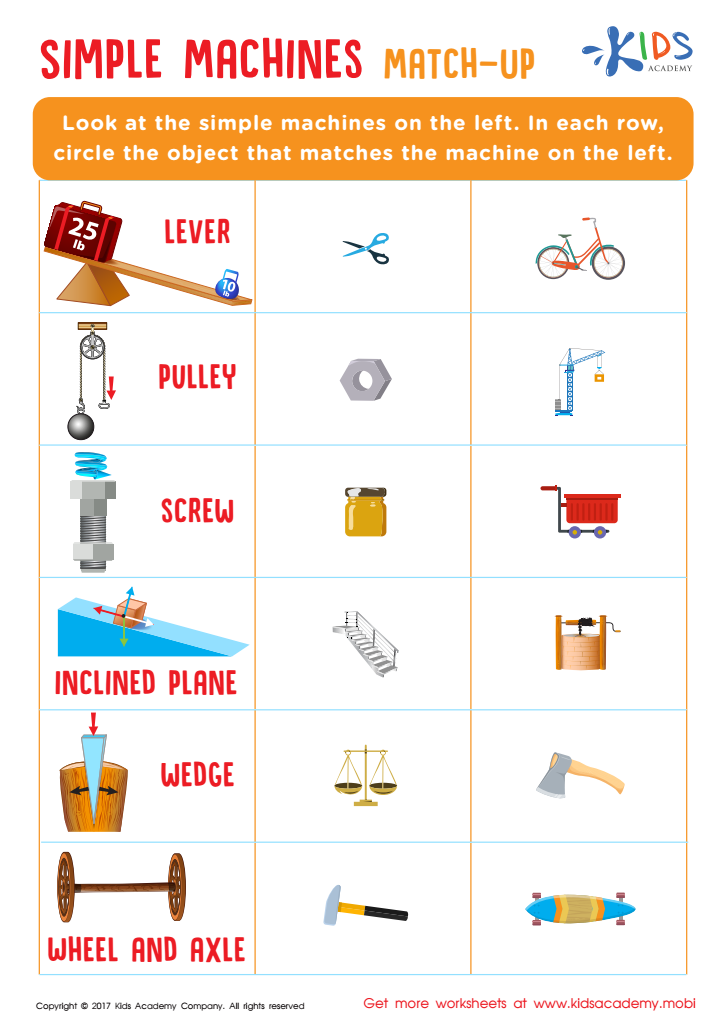
Simple Machines Worksheet
 Assign to My Students
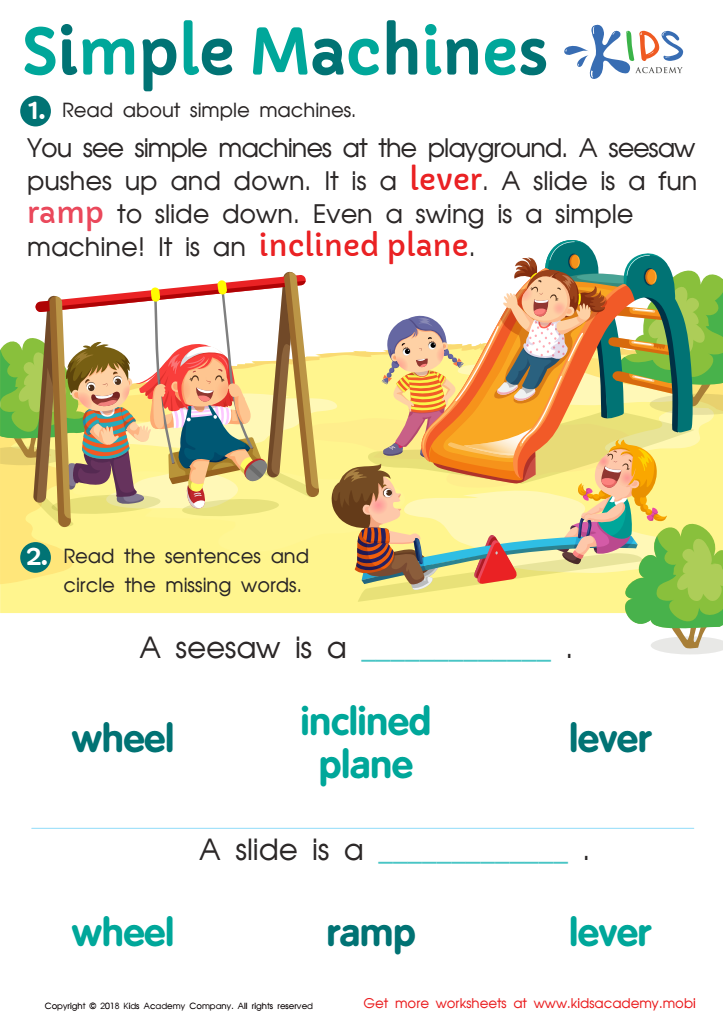
Simple Machines Worksheet
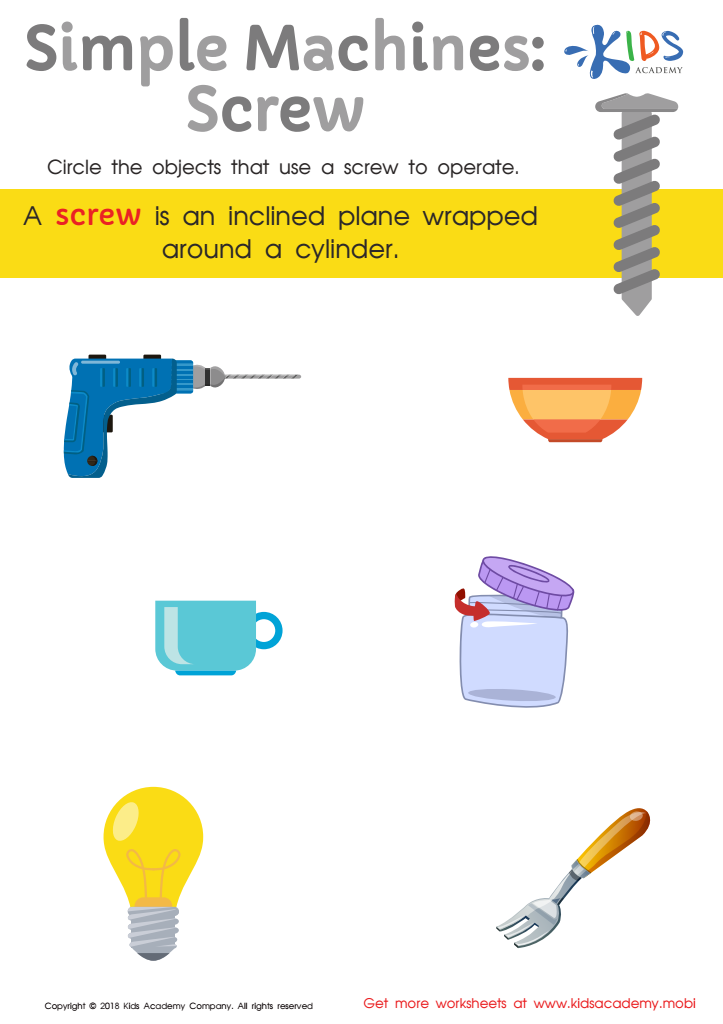
Simple Machines: Screw Worksheet







Understanding simple machines is crucial for children aged 7-8 as it lays the foundation for critical thinking and problem-solving skills. At this age, children are naturally curious, making it an ideal time to introduce concepts that explain how the world around them works. Simple machines—such as pulleys, levers, wheels, and inclined planes—illustrate basic physical principles and teach children about force, motion, and mechanical advantage.
By learning about simple machines, children can connect theoretical knowledge to real-life applications. This can be particularly engaging as they begin to realize how these mechanisms influence their daily tasks, from riding a bicycle to navigating playground equipment. Additionally, understanding these concepts fosters creativity and innovation, encouraging kids to explore how to use simple machines to create their own solutions to everyday challenges.
Moreover, lessons in simple machines often incorporate hands-on activities, promoting collaborative learning. This experiential approach cultivates teamwork and communication skills. Parents and teachers should promote these lessons not just to teach physics, but to inspire a generation of thinkers and makers who can appreciate the elegance of engineering in their everyday lives. Ultimately, knowledge of simple machines enhances a child’s scientific literacy and problem-solving capabilities, invaluable assets in today's tech-driven world.








