Understanding synonyms Worksheets for Ages 7-8
3 filtered results
-
From - To
Our "Understanding Synonyms Worksheets for Ages 7-8" are designed to expand your child's vocabulary and comprehension skills effectively. These engaging worksheets provide various exercises that encourage kids to identify, understand, and use synonyms in context. By mastering synonyms, young learners can enhance their writing, improve their reading fluency, and develop a nuanced understanding of language nuances. Suitable for both classroom and home use, these printable activities make learning fun with colorful illustrations and progressive challenges. Support your child's linguistic growth and help them excel in language arts with these comprehensive synonym worksheets from Kids Academy.
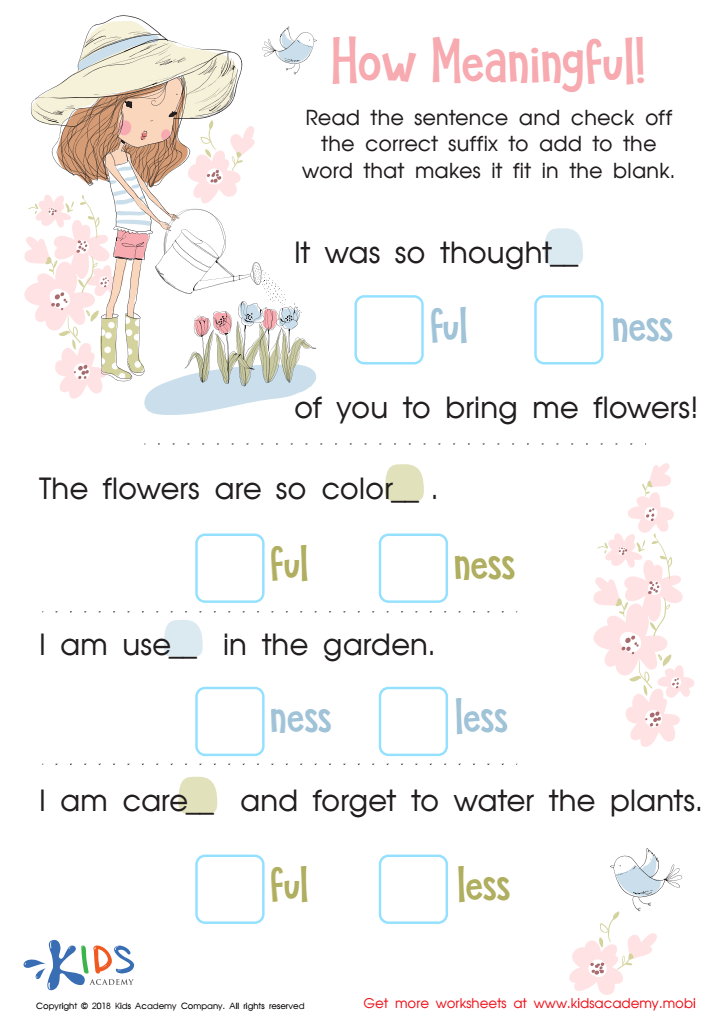
How Meaningful! Worksheet
 Assign to My Students
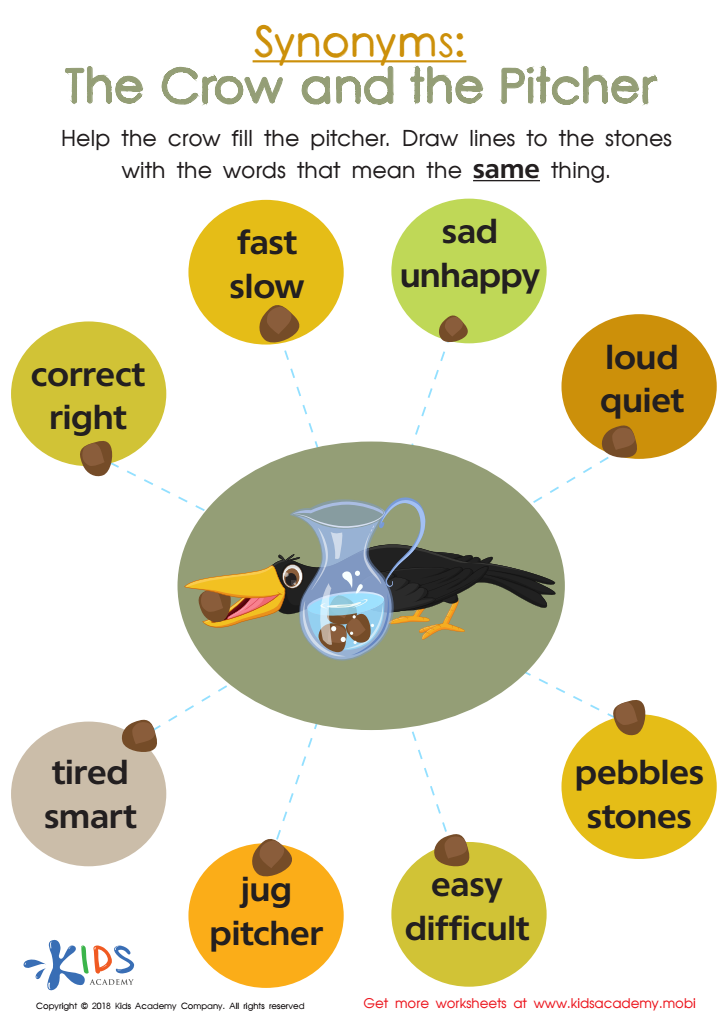
The Crow and the Pitcher Synonyms Worksheet







Understanding synonyms is important for young learners aged 7-8 because it enriches their language skills and enhances their ability to express themselves more flexibly and accurately. When children know multiple words that mean the same or nearly the same thing, they can better understand and convey meaning in both written and spoken communication. This broadens their vocabulary, making reading and writing more engaging and less repetitive.
For parents and teachers, emphasizing synonyms can help children become more adept at identifying context clues in reading materials, thereby improving their comprehension skills. When kids are familiar with synonyms, they are better equipped to tackle diverse reading passages and literature, making them more confident readers.
Furthermore, understanding synonyms encourages children to think critically about word choices, fostering their skills in nuanced communication. It also plays a significant role in academic performance as many standardized tests evaluate vocabulary and word usage. Beyond academics, having a rich vocabulary aids social interactions, allowing children to express their feelings, thoughts, and ideas more clearly and effectively.
In summary, focusing on synonyms supports cognitive development, facilitates better communication, and cultivates a lifelong love for reading and learning, making it an essential component of early education.








