Filters

58 filtered results

Clear all filters
Favorites
With answer key
Interactive

58 filtered results

Difficulty Level

Grade


Check out this FREE "Vocabulary Building" Trial Lesson for age 7-8!

Animal Habitats

Favorites
With answer key
Interactive
  • 7-8
  • Vocabulary Building
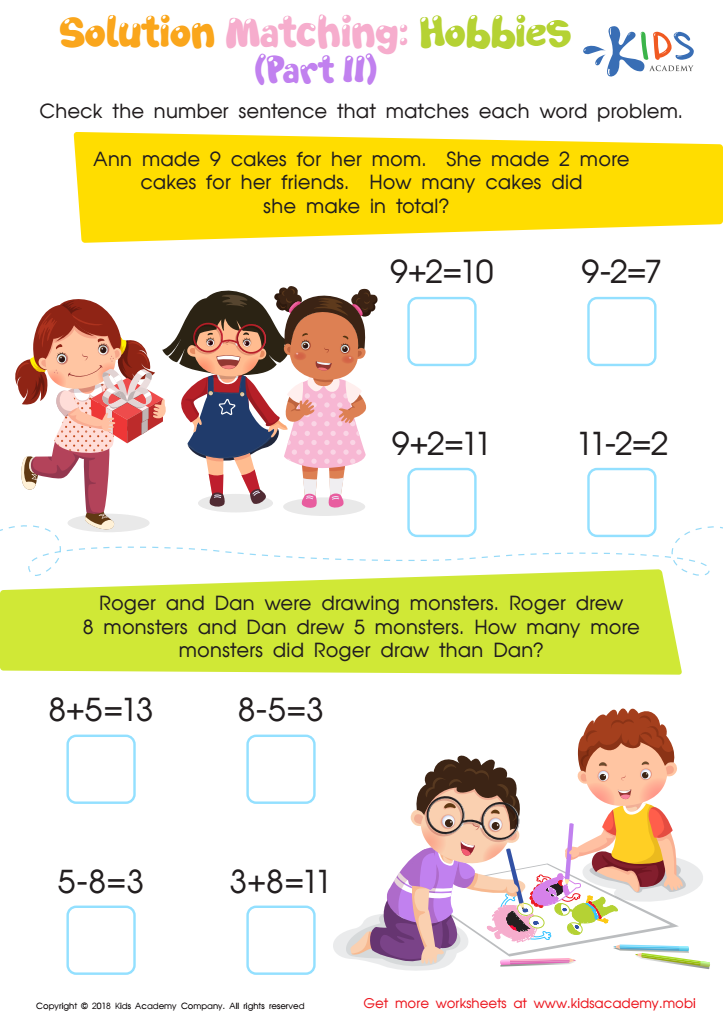
Solution Matching: Hobbies. Part 2 Worksheet

Solution Matching: Hobbies. Part 2 Worksheet

This fun printable worksheet has word problems featuring hobbies your children enjoy! With your child, read through each problem, understanding the numbers and key phrases indicating addition or subtraction. Then, match the correct equation with the solution by checking the box. Math problems are more enjoyable to solve when they’re realistic and engaging!
Solution Matching: Hobbies. Part 2 Worksheet
Worksheet
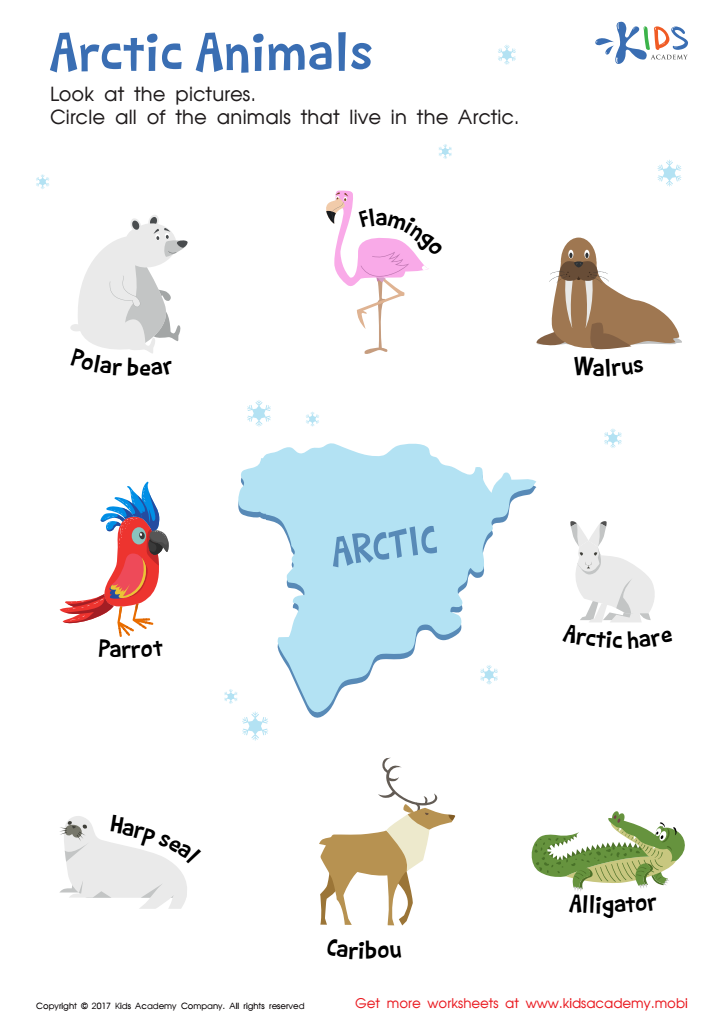
Arctic Animals Worksheet

Arctic Animals Worksheet

Kids love animals and this worksheet is a great way to teach them where they live. It reinforces classification skills and introduces new animals, like the Arctic hare. Use it to discuss the Arctic climate and how these animals live, then ask your child where other animals live to keep the conversation going.
Arctic Animals Worksheet
Worksheet
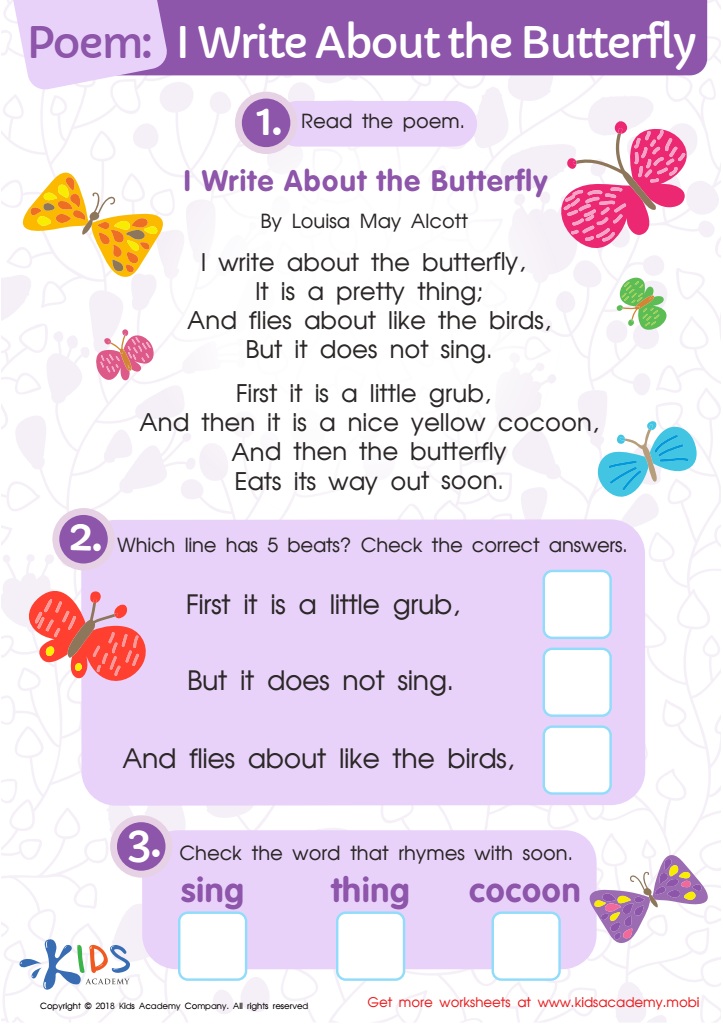
Poem: I Write About The Butterfly Worksheet

Poem: I Write About The Butterfly Worksheet

Do your kids like poetry? Encourage them to explore and connect with their poetic side! Read the butterfly poem from this worksheet aloud, then help them answer the questions. It's a great way to grow their appreciation of poetry and of the natural world.
Poem: I Write About The Butterfly Worksheet
Worksheet
Worksheet: The Boy Who Cried Wolf

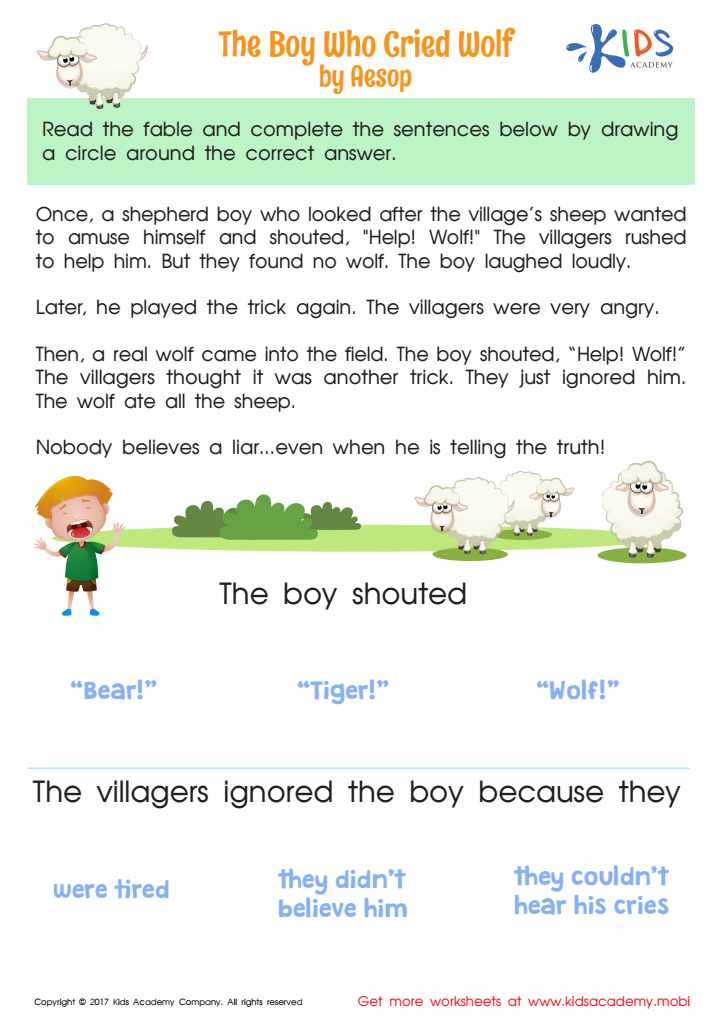
The Boy Who Cried Wolf Worksheet

Test your child's reading comprehension with The Boy Who Cried Wolf worksheet. Read the fable, then answer the questions. Use the text to help your child check their answers are correct. Boost reading skills in a fun, interactive way!
The Boy Who Cried Wolf Worksheet
Worksheet
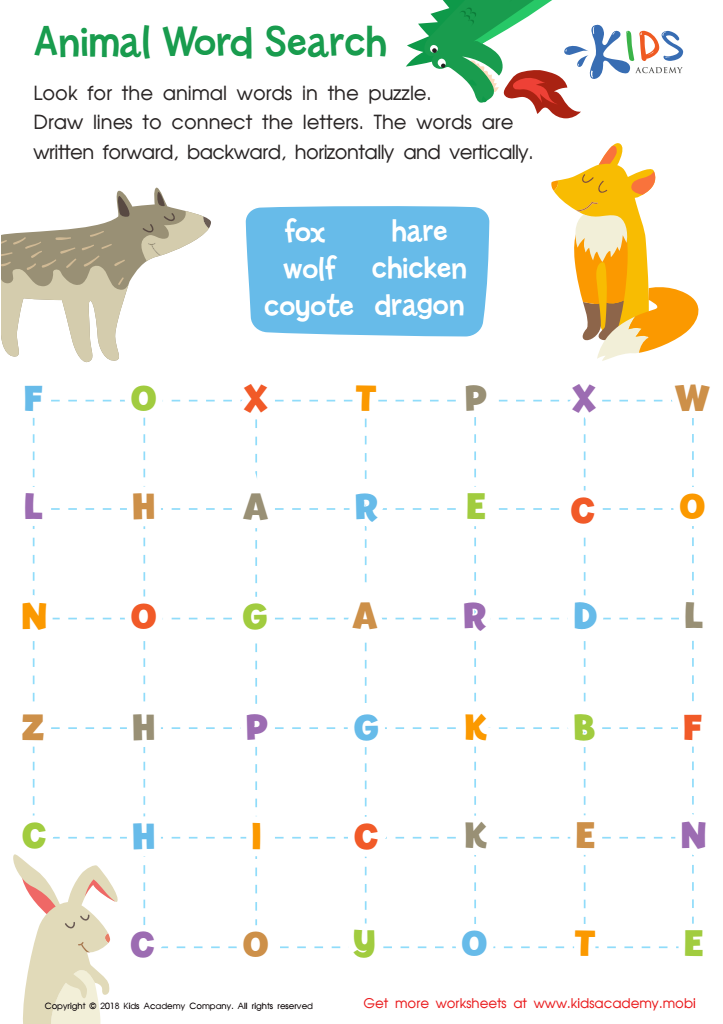
Animal Word Search Worksheet

Animal Word Search Worksheet

Students can have fun and strengthen spelling and vocabulary skills with this word search worksheet. Search for animal words and circle the letters in the puzzle. Words can be found forwards, backwards, horizontally or vertically, providing a great challenge to foster critical thinking skills. An enriching activity for all ages!
Animal Word Search Worksheet
Worksheet
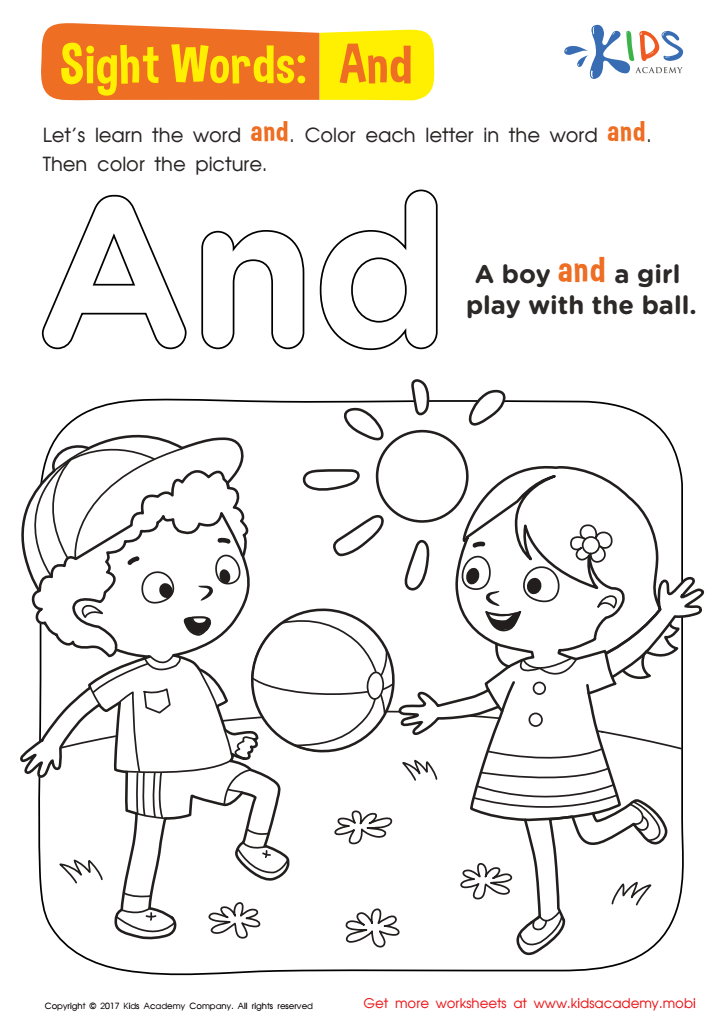
And Worksheet Sight Words Worksheet

And Worksheet Sight Words Worksheet

Help your child get a jumpstart on reading with sight words! Print out this fun worksheet and get your child to read the sentence. Point out the word "and", then color the word and enjoy the rest of the scene! It's a great way to introduce sight words and get their early reading skills going!
Download (PDF)
Assign to My Students
And Worksheet Sight Words Worksheet
Worksheet
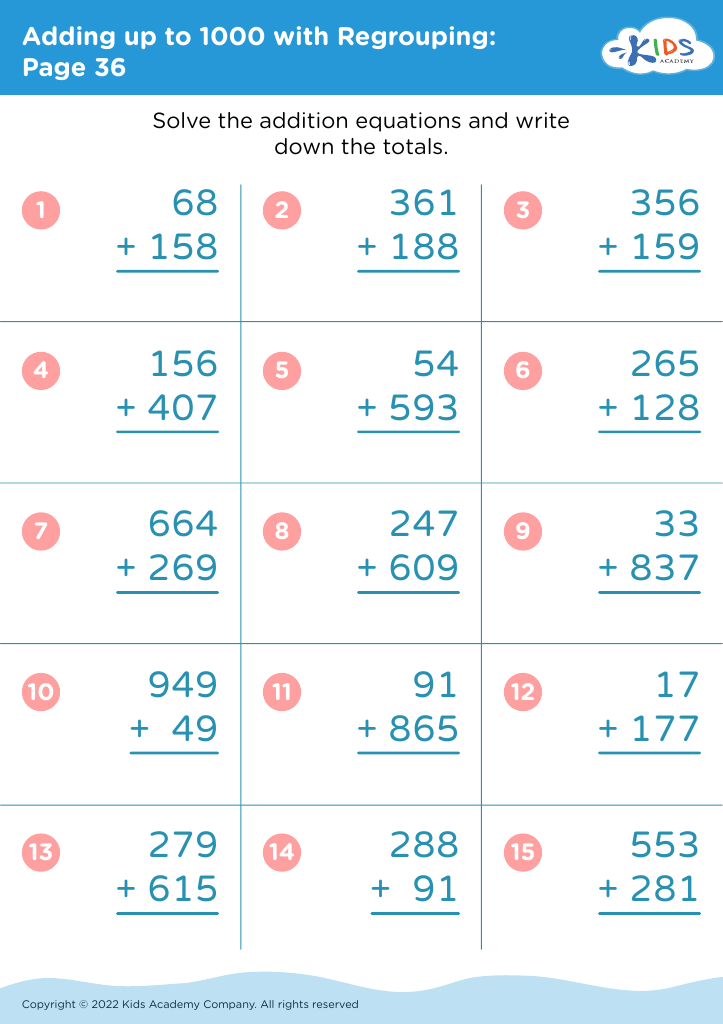
Adding up to 1000 with Regrouping: Page 36
Worksheet
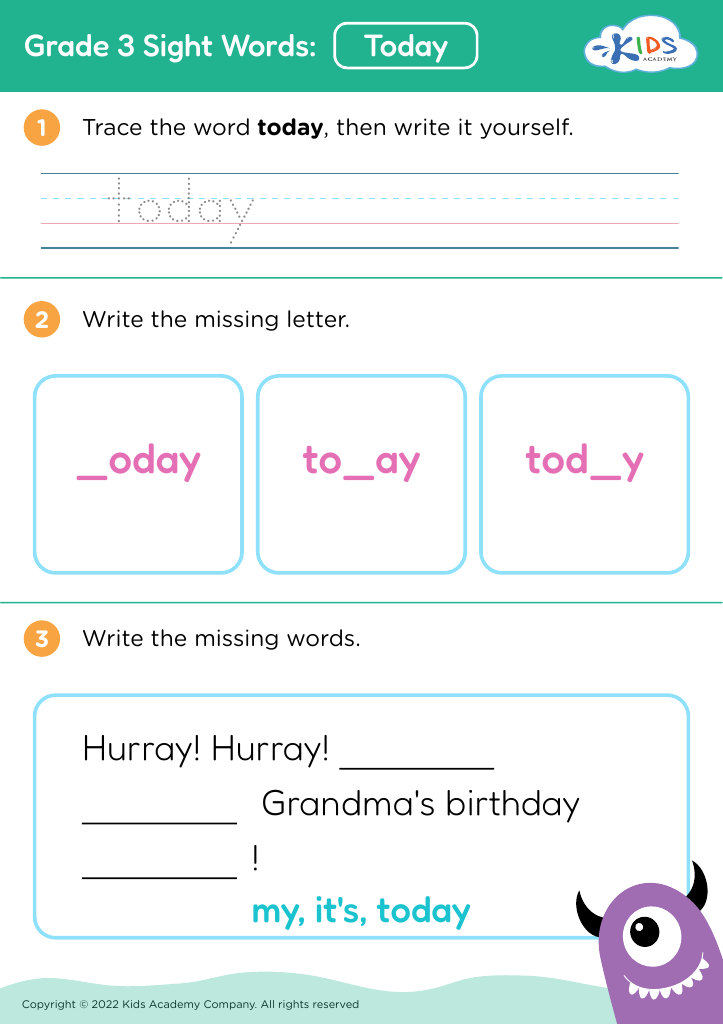
Grade 3 Sight Words: Today

Grade 3 Sight Words: Today

Grade 3 Sight Words: Today
Worksheet
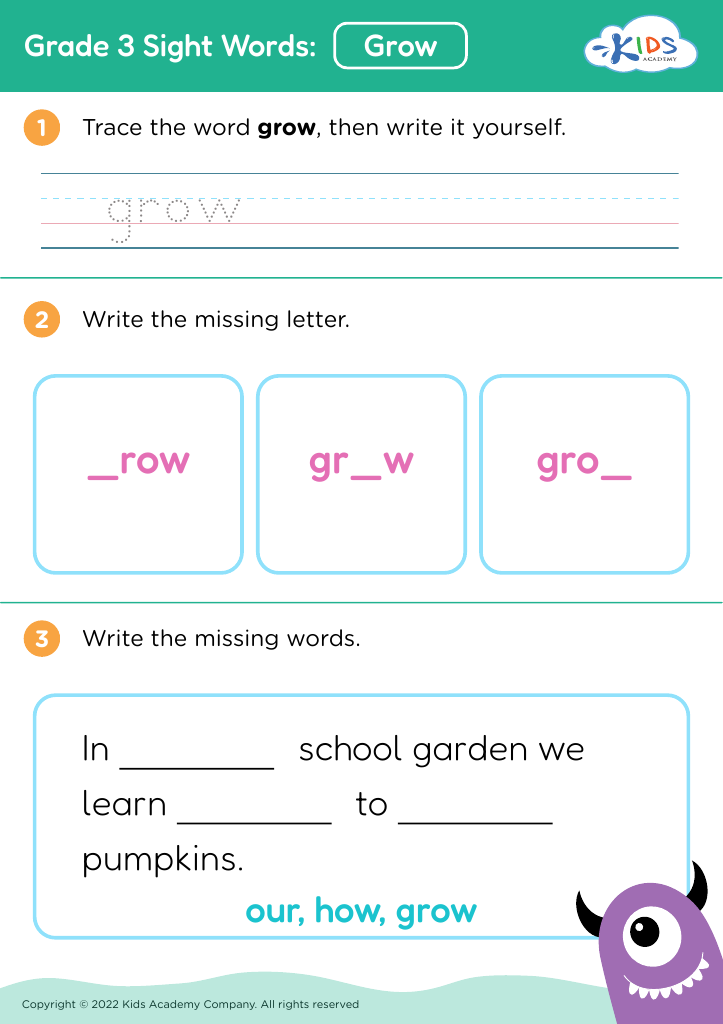
Grade 3 Sight Words: Grow

Grade 3 Sight Words: Grow

Grade 3 Sight Words: Grow
Worksheet
Independence Day: Drummer
Independence Day: Drummer Coloring Page for Kids
Worksheet


... 2 3

Vocabulary building for children aged 7-8 is crucial as it lays the foundation for effective communication, reading comprehension, and overall academic success. At this developmental stage, children are expanding their language skills, transitioning from learning to read to reading to learn. A rich vocabulary enhances their ability to understand complex texts, express their thoughts clearly, and engage confidently in conversations.

Parents and teachers play a vital role in fostering vocabulary development through interactive activities such as storytelling, word games, and discussions about diverse topics. Exposure to a variety of words through reading and verbal interactions helps children not only to learn meanings but also to understand context, which promotes critical thinking.

Furthermore, a strong vocabulary is linked to self-esteem; children who can articulate their ideas and feelings are more likely to participate in class and social settings. Investing time in vocabulary building equips children with tools essential for lifelong learning and success. Therefore, prioritizing vocabulary development in this formative age can significantly contribute to a child’s academic trajectory, confidence, and ability to engage meaningfully with the world around them.