Comparing shapes 2D Shapes Worksheets for Ages 7-8
3 filtered results
-
From - To
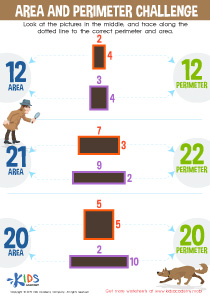
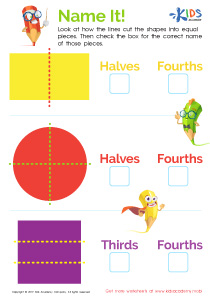
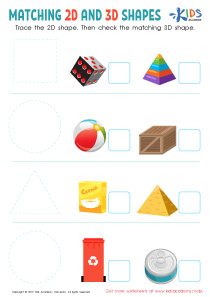
Unlock the wonders of geometry with our "Comparing Shapes" 2D Shapes Worksheets, specifically designed for children aged 7-8. These engaging worksheets help young learners explore and compare various two-dimensional shapes while building essential math skills. Through interactive activities, students will identify shape attributes, analyze similarities and differences, and strengthen their understanding of geometry concepts. Perfect for classroom use or at-home practice, our worksheets offer a fun, hands-on approach to mastering shape comparison. Boost your child’s confidence in math with these thoughtfully crafted resources that foster critical thinking and encourage exploration of the vibrant world of 2D shapes. Explore today!
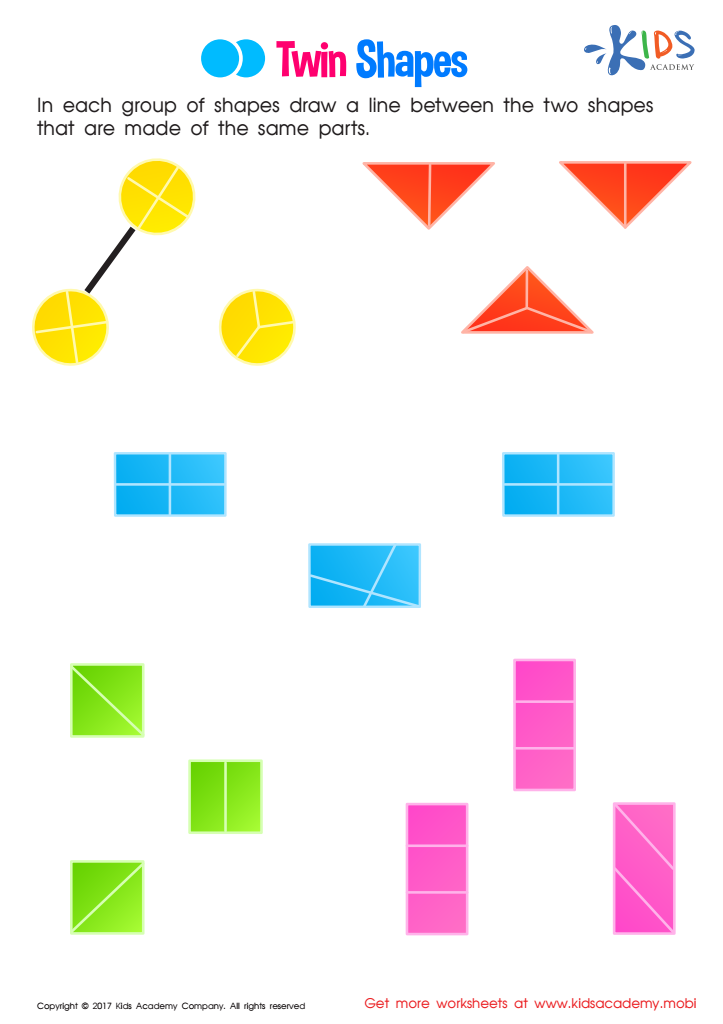
Twin Shapes Worksheet
 Assign to My Students


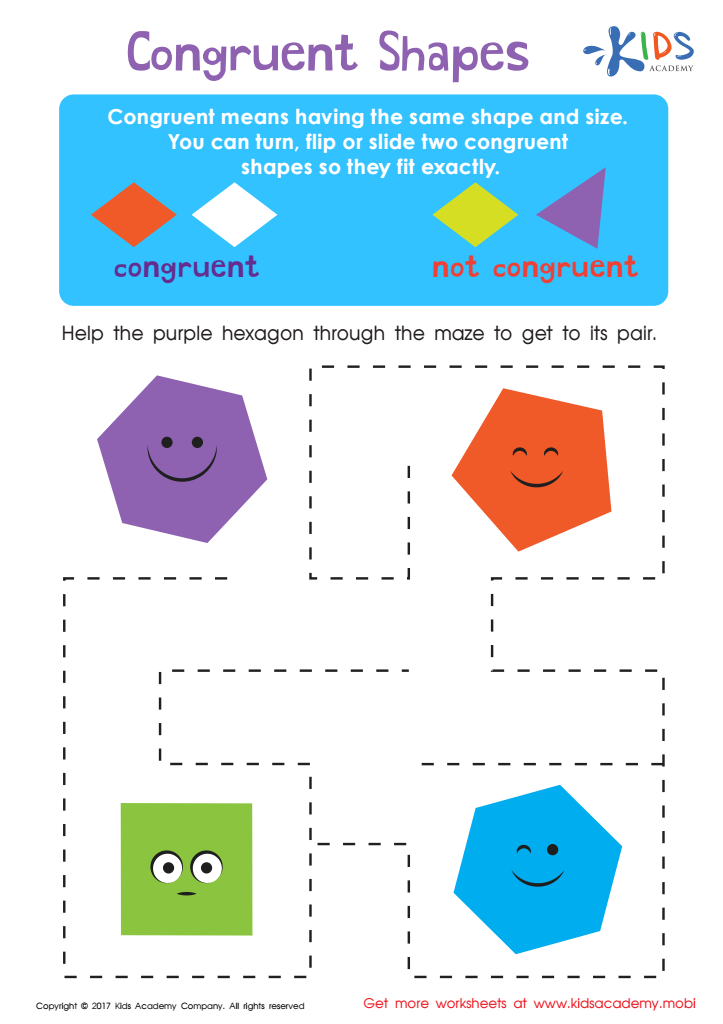
Congruent Shapes Worksheet
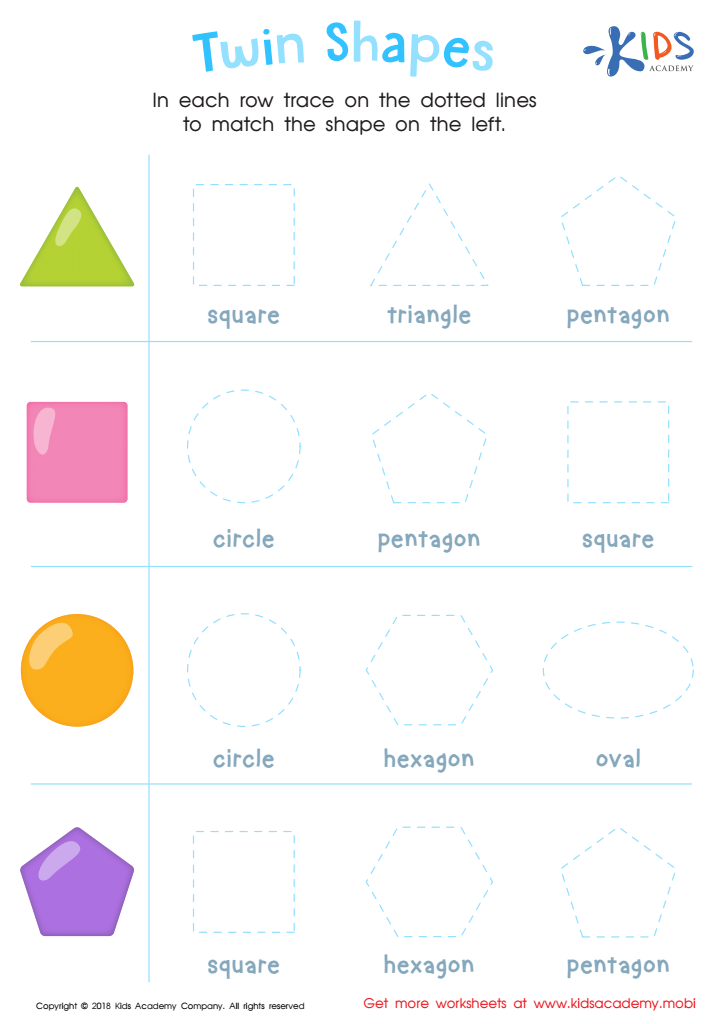
Twin Shapes Dot-to-Dot Worksheet








Comparing 2D shapes is a fundamental skill that lays the groundwork for various mathematical concepts and everyday problem-solving. For children aged 7-8, mastering this skill fosters critical thinking and analytical abilities. Parents and teachers should prioritize this educational topic as it enhances spatial awareness, helping kids understand the world around them. When children learn to compare shapes, they develop the ability to identify characteristics such as size, angles, and symmetry, which are essential for more complex math concepts like geometry.
Moreover, comparing shapes encourages vocabulary development; children learn terms like "congruent," "parallel," and "symmetrical," enriching their language skills. This foundational knowledge is not only important in math but can transcend into science and art, illustrating the interconnectedness of different subjects.
Additionally, engaging in shape comparisons promotes collaboration and communication among peers, fostering social skills. These interactions can lead to improved confidence and independent problem-solving.
Ultimately, as children navigate through shape comparisons, they build a solid base that will support their future educational endeavors, making it pertinent for parents and teachers to emphasize this crucial learning objective. Investing time in this area ensures that kids are well-equipped for more advanced math and real-world applications.