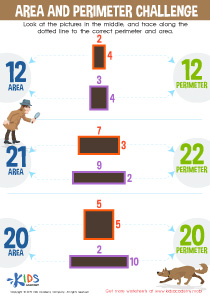
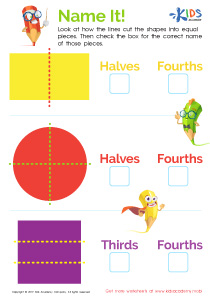
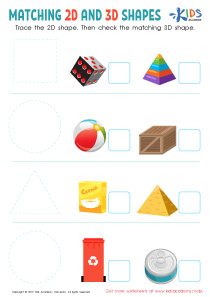
Spatial awareness 2D Shapes Worksheets for Ages 7-8
3 filtered results
-
From - To
Enhance your child's spatial awareness with our engaging 2D Shapes Worksheets designed specifically for ages 7-8! These worksheets focus on developing essential skills such as identifying, comparing, and manipulating various 2D shapes. Through a series of fun, interactive activities, your child will improve their understanding of spatial relationships and geometry concepts. Each worksheet is tailored to reinforce learning and boost critical thinking, making math enjoyable and accessible. Perfect for classroom use or at-home learning, these resources encourage creativity and problem-solving. Help your young learner build a strong foundation in math with our captivating spatial awareness worksheets today!
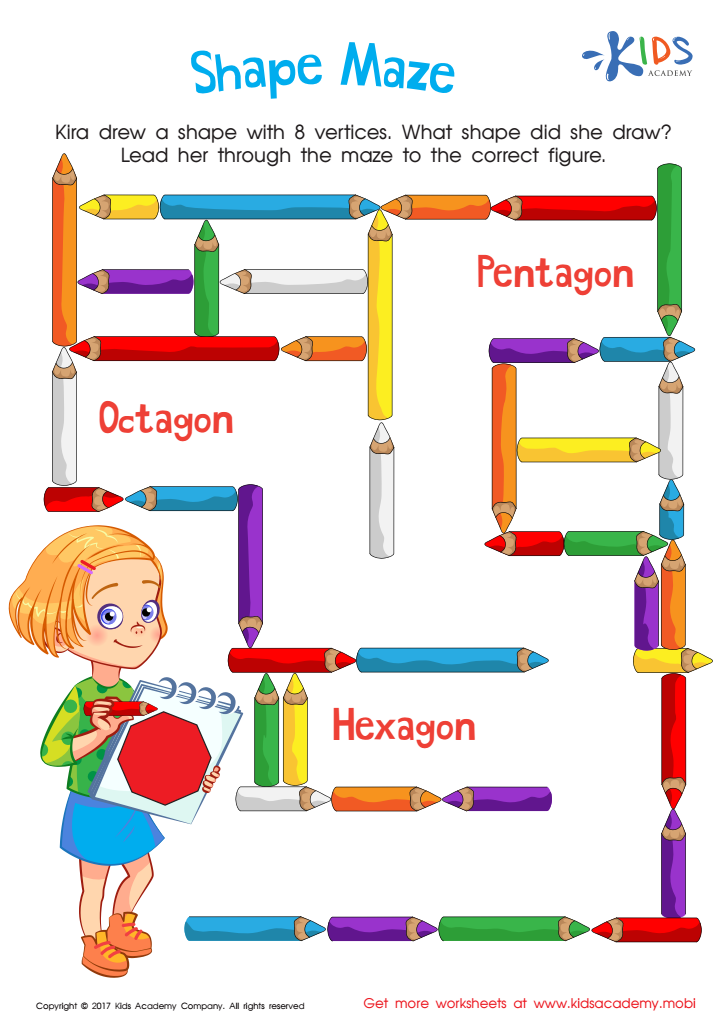
Shape Maze Worksheet
 Assign to My Students

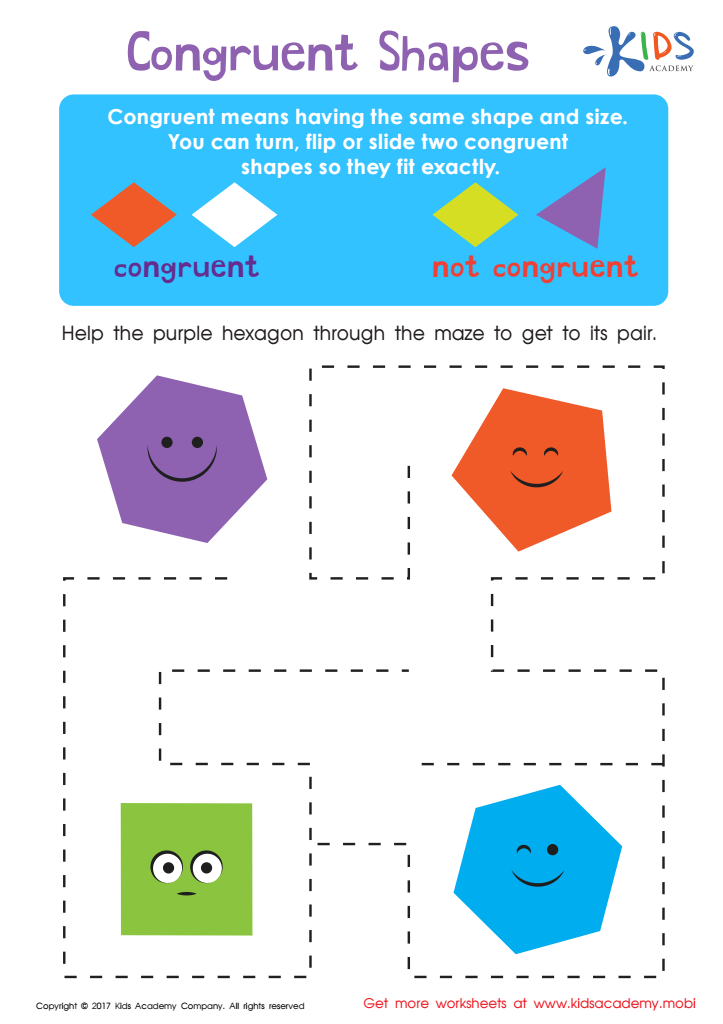
Congruent Shapes Worksheet
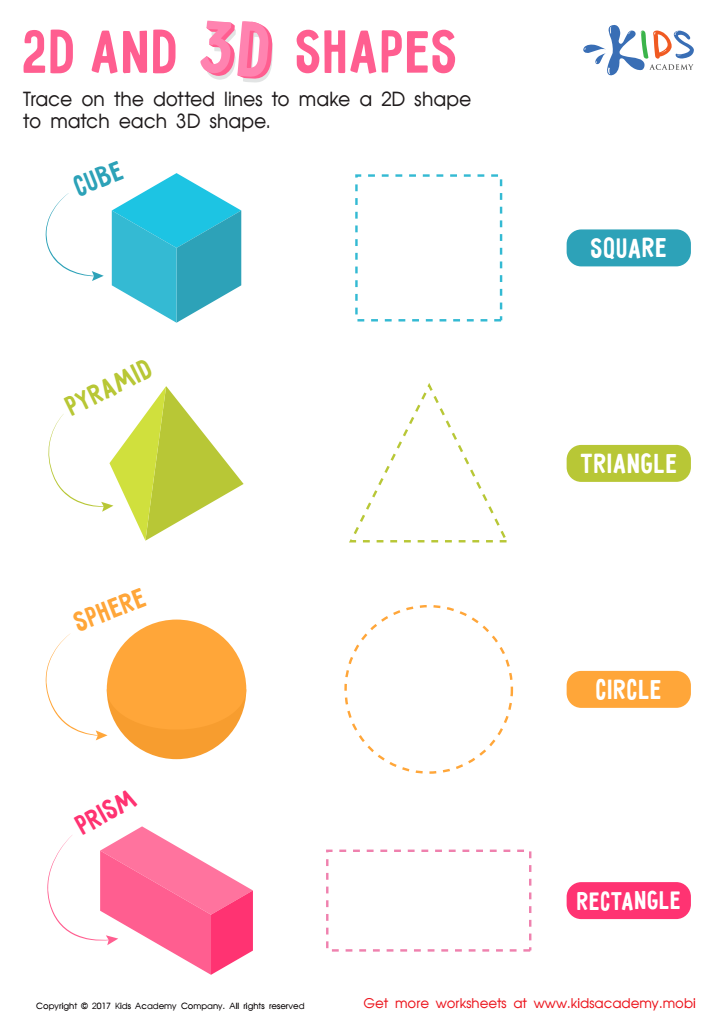
2D and 3D Shapes Worksheet








Spatial awareness and understanding 2D shapes are crucial skills for children ages 7-8, significantly impacting their cognitive development and foundational learning. At this age, children are bridging concrete and abstract thinking, making this an optimal time for engaging spatial reasoning.
Strong spatial awareness allows children to visualize and manipulate objects in their mind, which is critical in subjects like mathematics, science, and art. Understanding 2D shapes—such as squares, circles, and triangles—extends beyond rote recognition; it builds critical thinking skills by helping children compare, classify, and apply properties of shapes in real-world contexts.
Moreover, these skills support problem-solving abilities. Children develop insights into geometry and spatial relationships, fostering the ability to navigate their physical environment confidently. Engaging with shapes can also enhance fine motor skills through activities like cutting, drawing, and constructing.
For parents and teachers, nurturing these skills involves creating diverse and interactive learning experiences. Activities such as puzzles, games, and art projects not only make learning enjoyable but also bridge academic and life skills. By prioritizing spatial awareness and 2D shape understanding, adults are equipping children with tools essential for future success in various learning arenas.