Develop fine motor skills Adding up to 100 Worksheets for Ages 7-8
5 filtered results
-
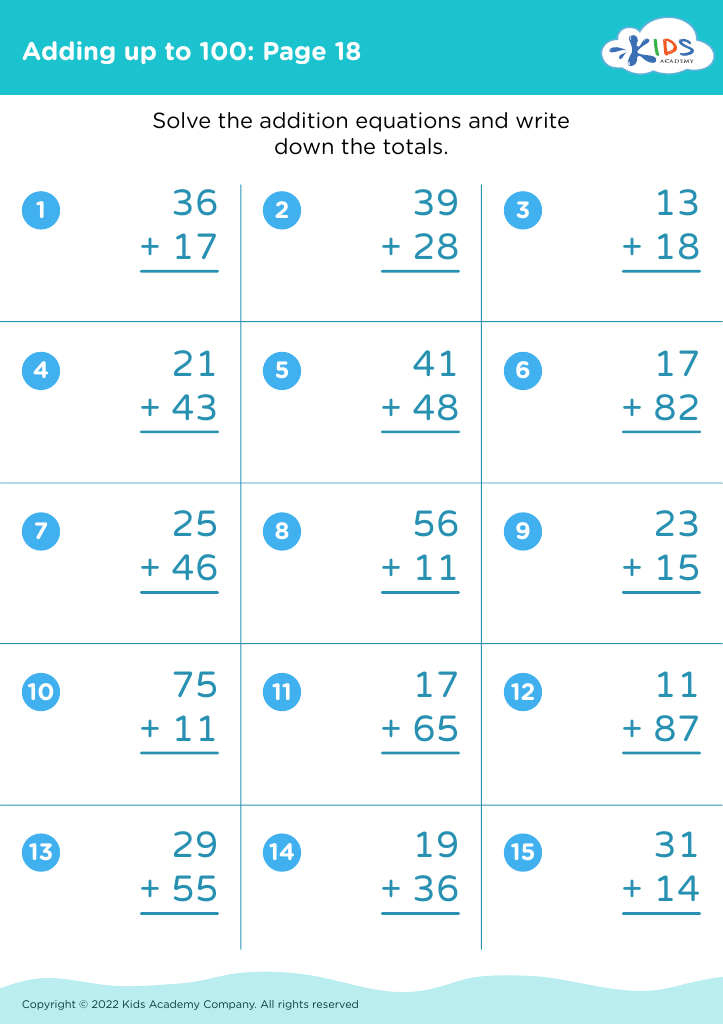
From - To
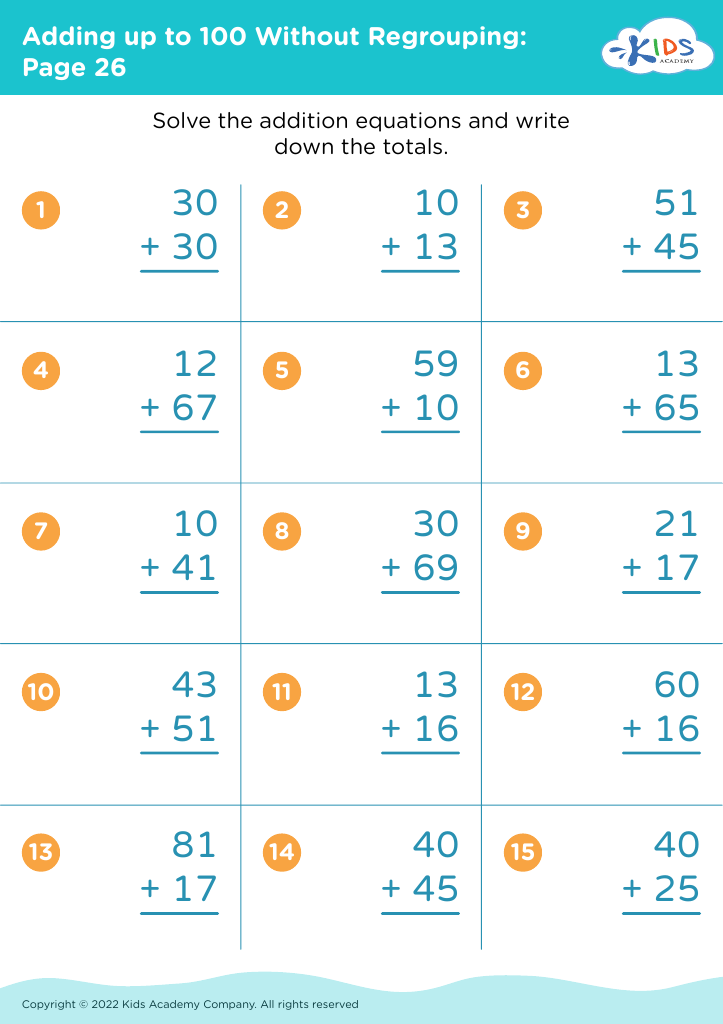
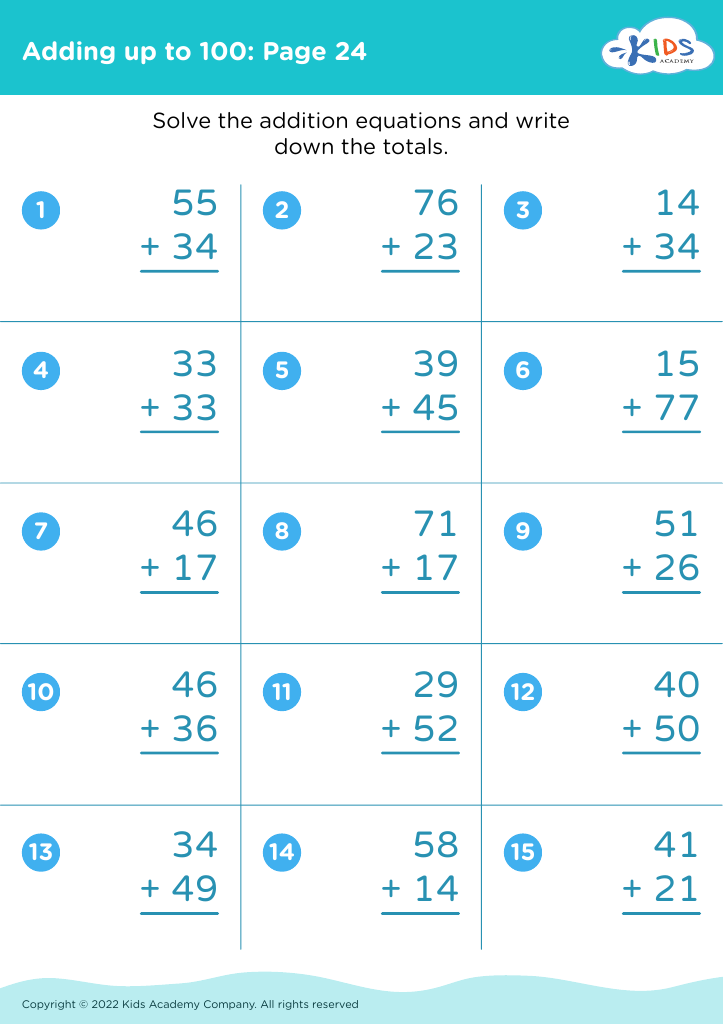
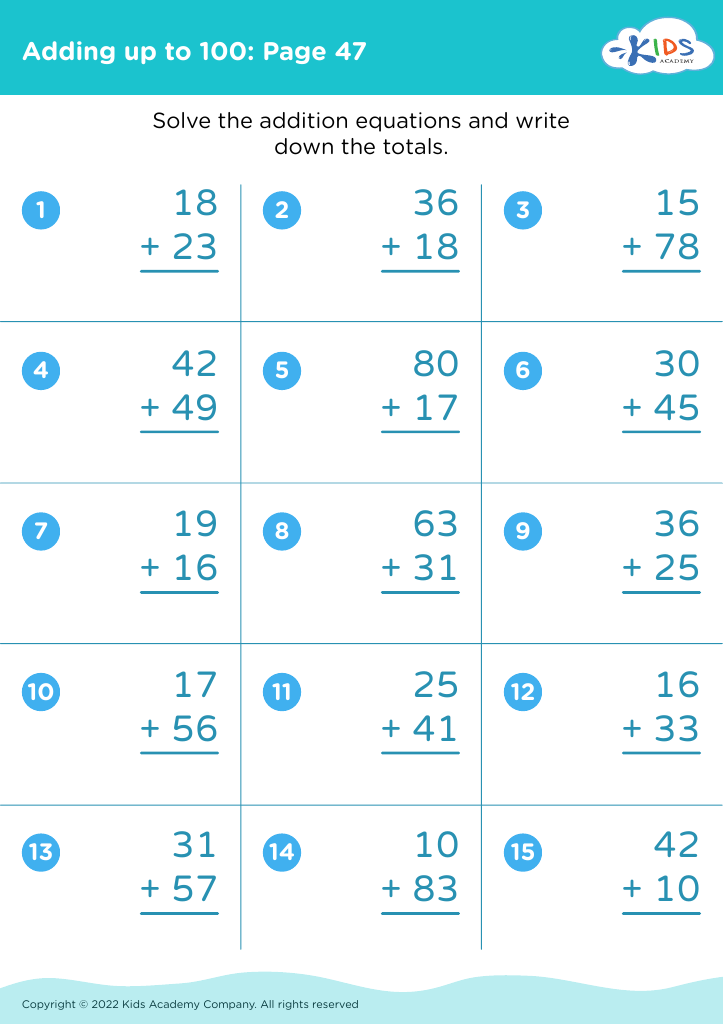
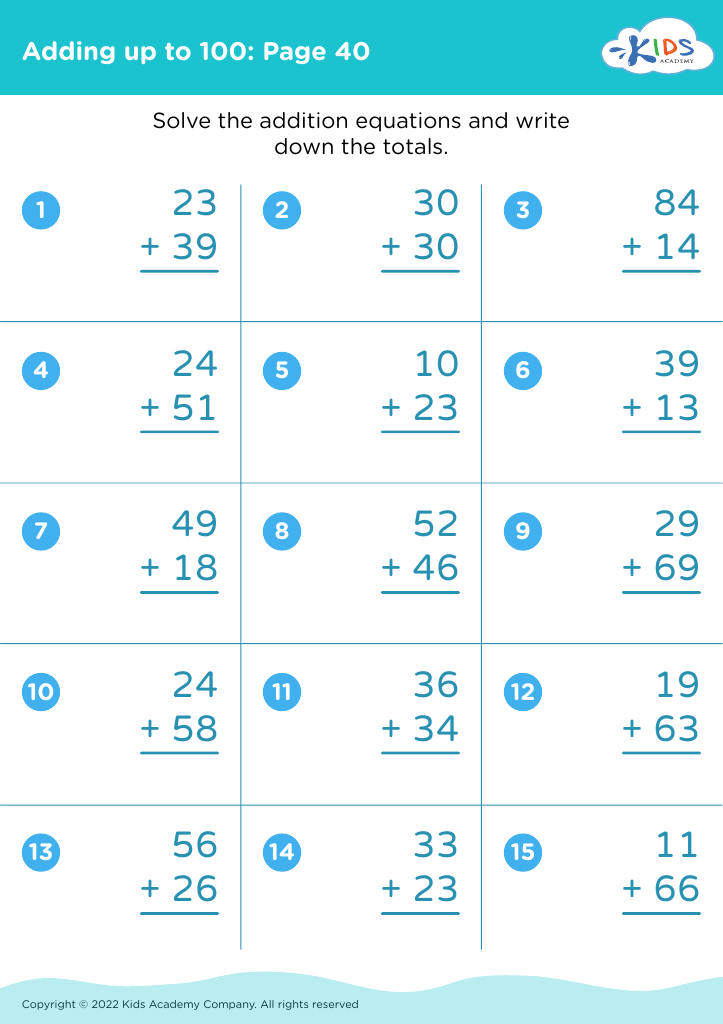
Unlock your child's potential with our "Adding Up to 100" worksheets, designed specifically for ages 7-8! These engaging resources not only enhance math skills but also focus on developing fine motor skills essential for writing and drawing. Each worksheet encourages children to practice their pencil control through various fun activities, such as tracing numbers and solving addition problems. By integrating fine motor skill development with math practice, kids will boost their confidence and proficiency in both areas. Perfect for home or classroom use, our worksheets provide the ideal blend of learning and play, ensuring a well-rounded educational experience for young learners!


%20(1).jpg)




Developing fine motor skills for children aged 7-8 is crucial for several reasons. First, these skills underpin essential tasks such as writing, drawing, and manipulating small objects, all of which are foundational in academic settings. As children advance in their learning, the ability to control their handwriting and create more intricate art becomes increasingly important.
Moreover, strong fine motor skills support cognitive development. Activities that require precise movements, such as cutting with scissors or assembling puzzles, enhance hand-eye coordination and problem-solving abilities. They also encourage concentration and patience, vital traits for academic success.
Additionally, fine motor development is linked to self-esteem and independence. When children master skills like tying shoes or buttoning shirts, they feel accomplished and more confident in their abilities. This fosters a greater willingness to take on new challenges, both academically and socially.
For parents and teachers, supporting fine motor development through engaging activities not only prepares children for school challenges but also aids in their overall growth. Simple practices such as arts and crafts, playing with building blocks, or engaging in sensory play can make a tangible difference in a child's development. Investing time and resources into these activities is essential for fostering well-rounded, capable learners.








