Fine Motor Skills Adding up to 100 Worksheets for Ages 7-8
12 filtered results
-
From - To
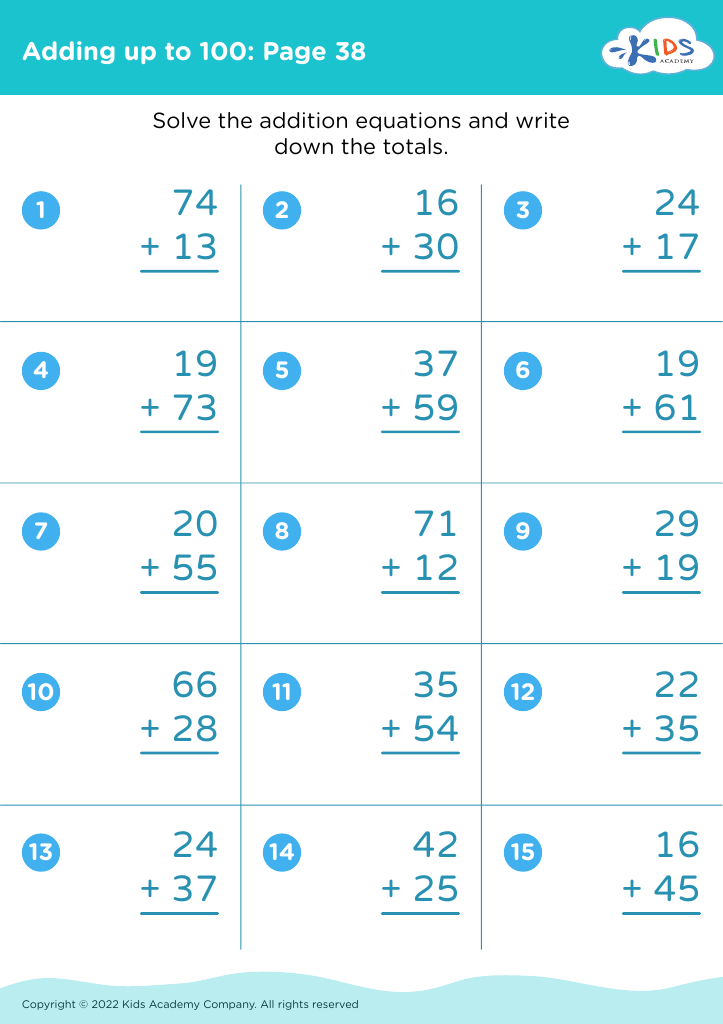
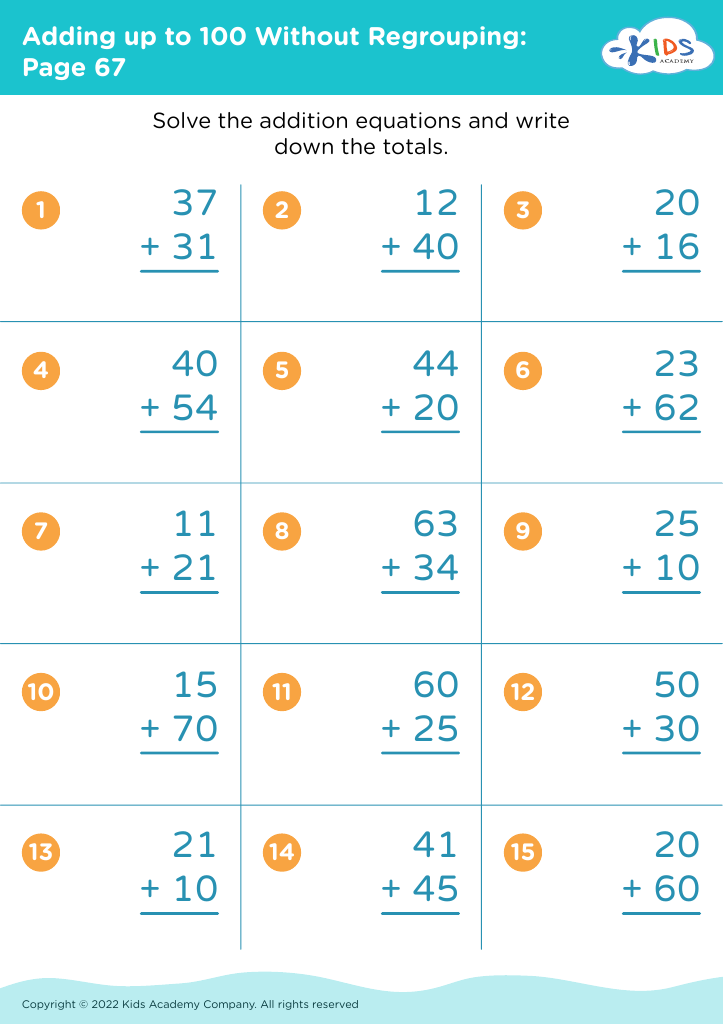
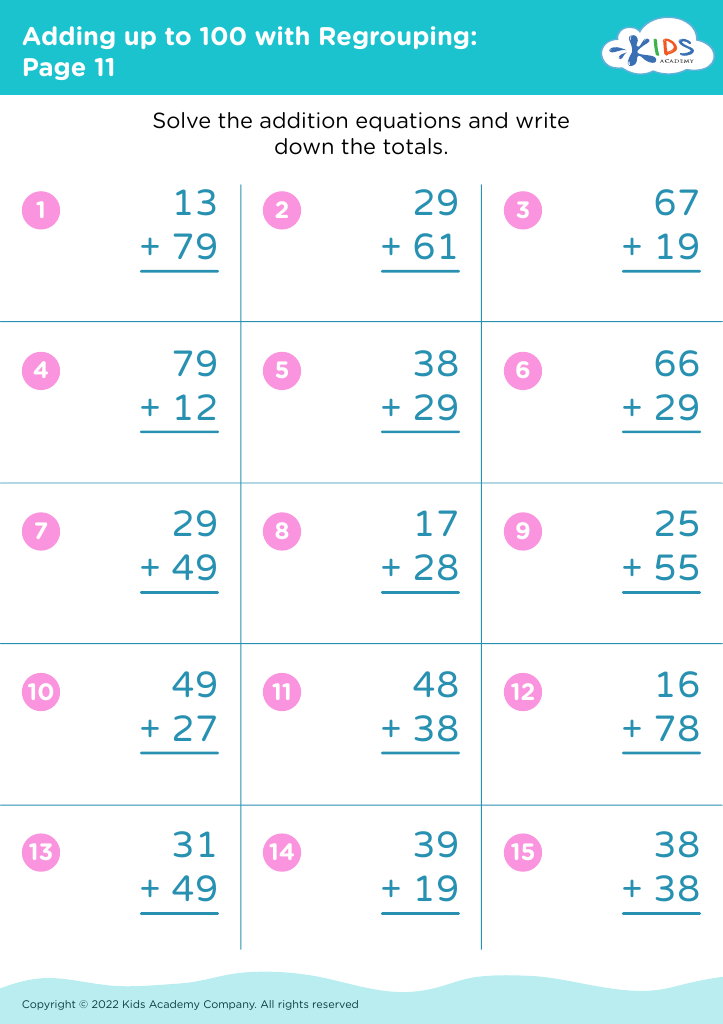
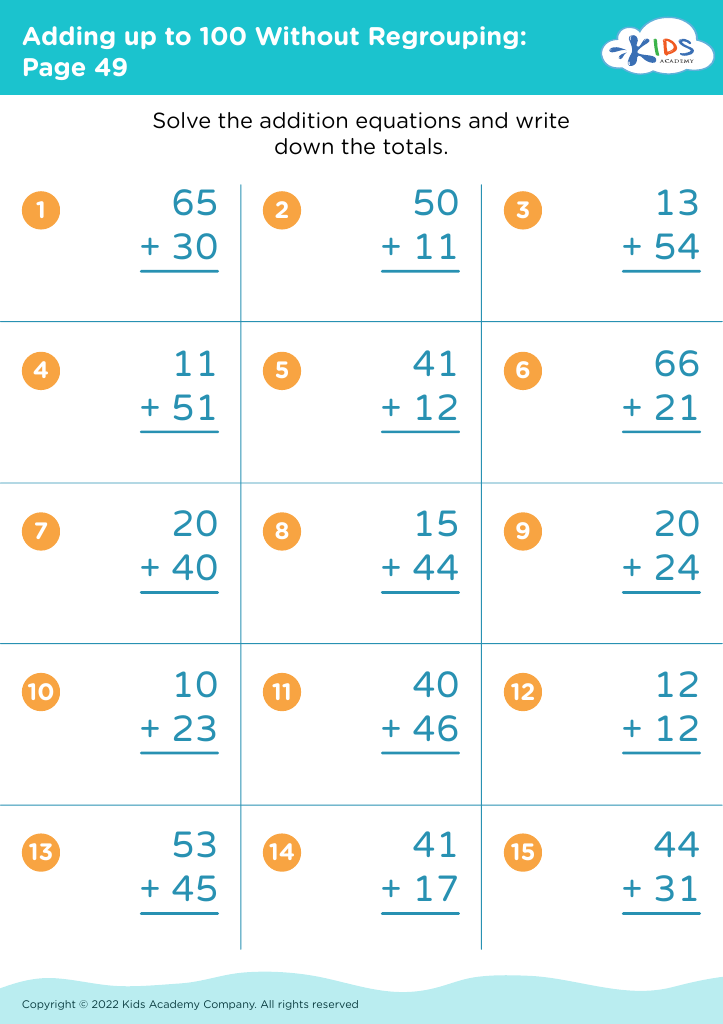
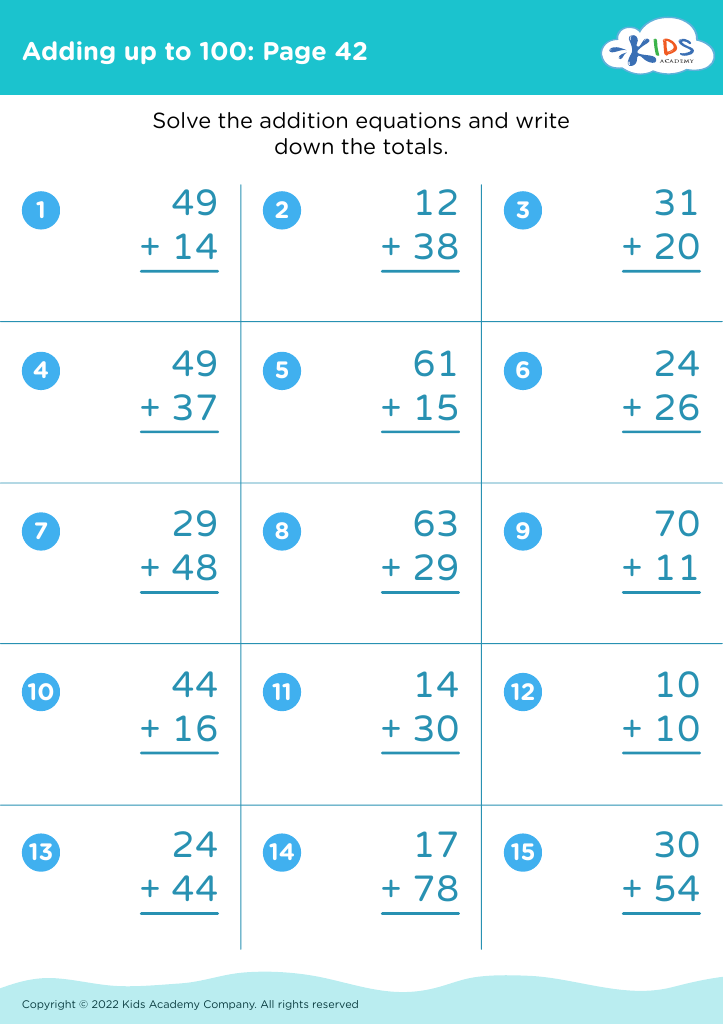
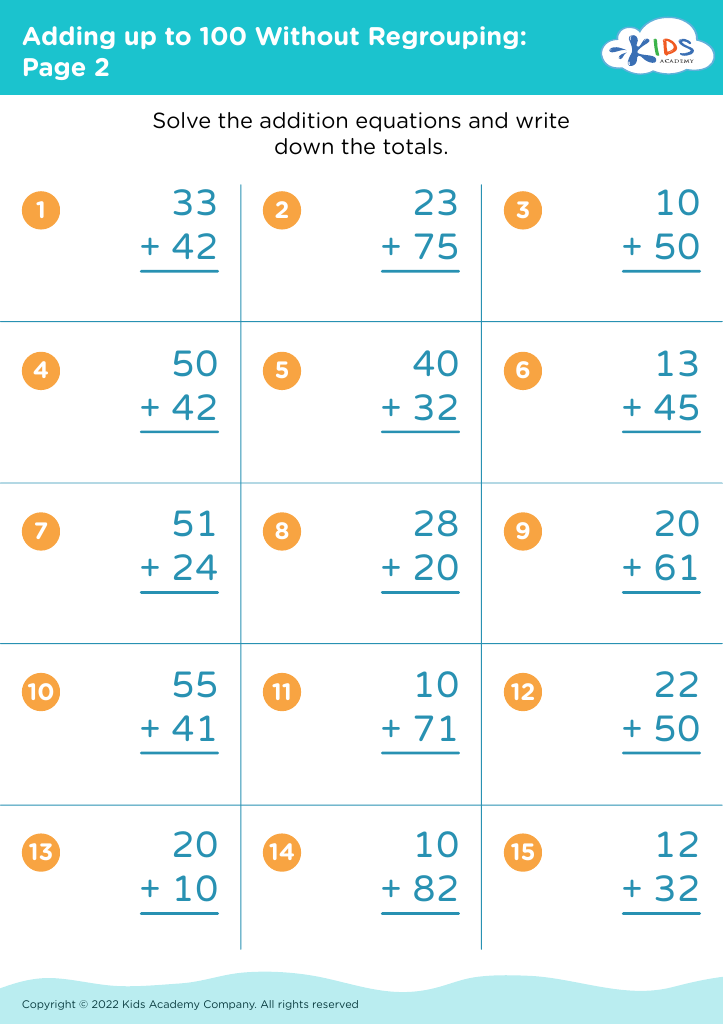
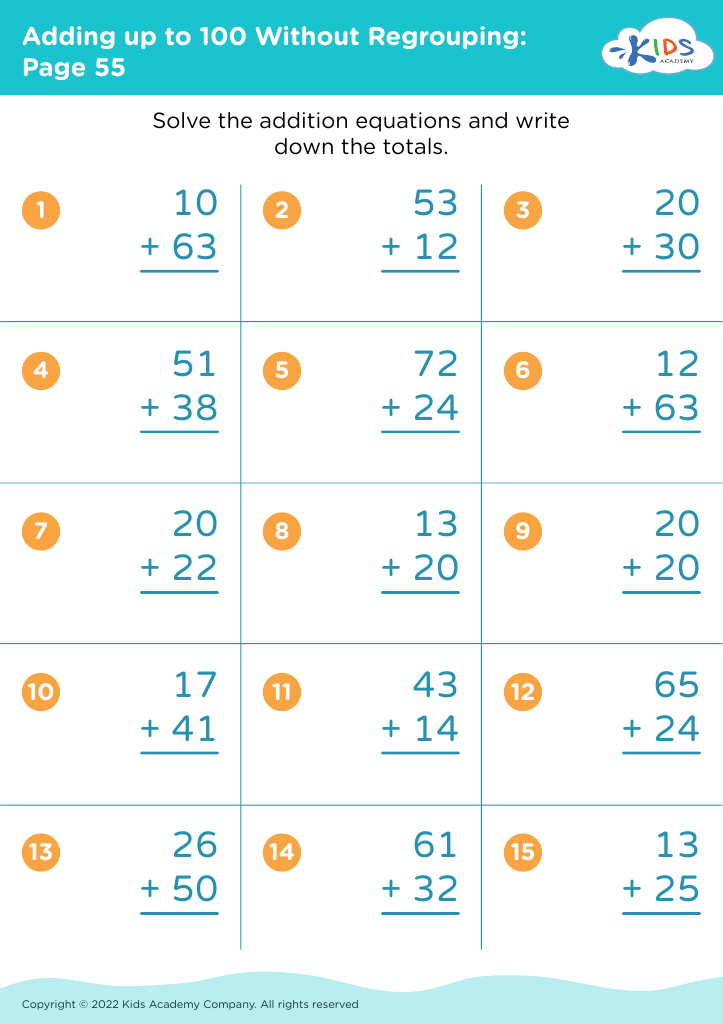
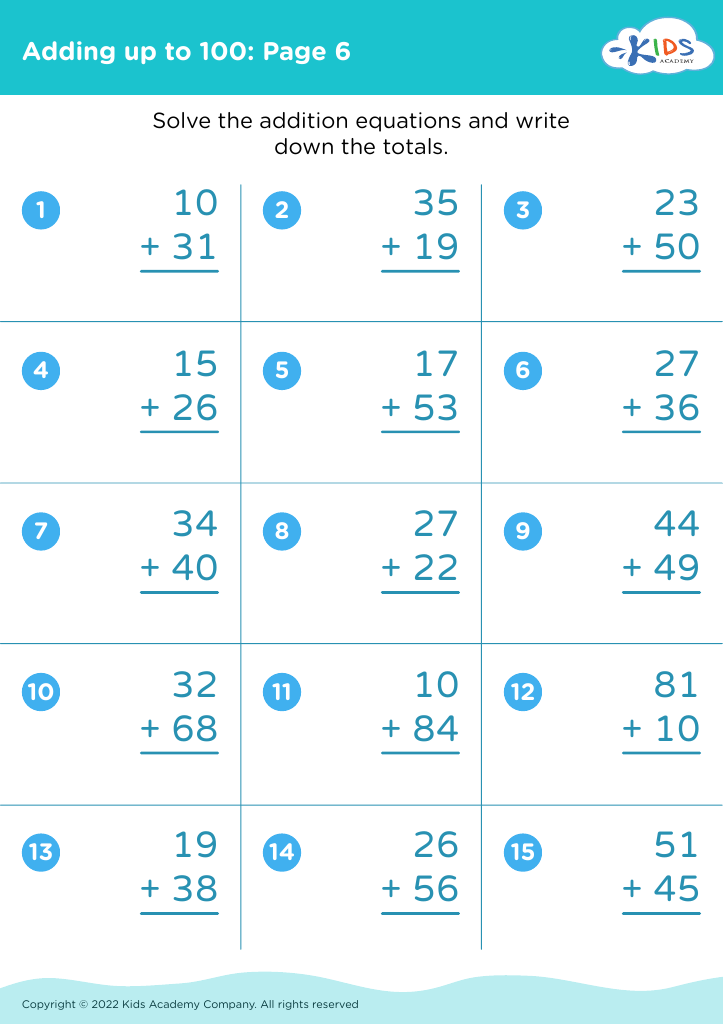
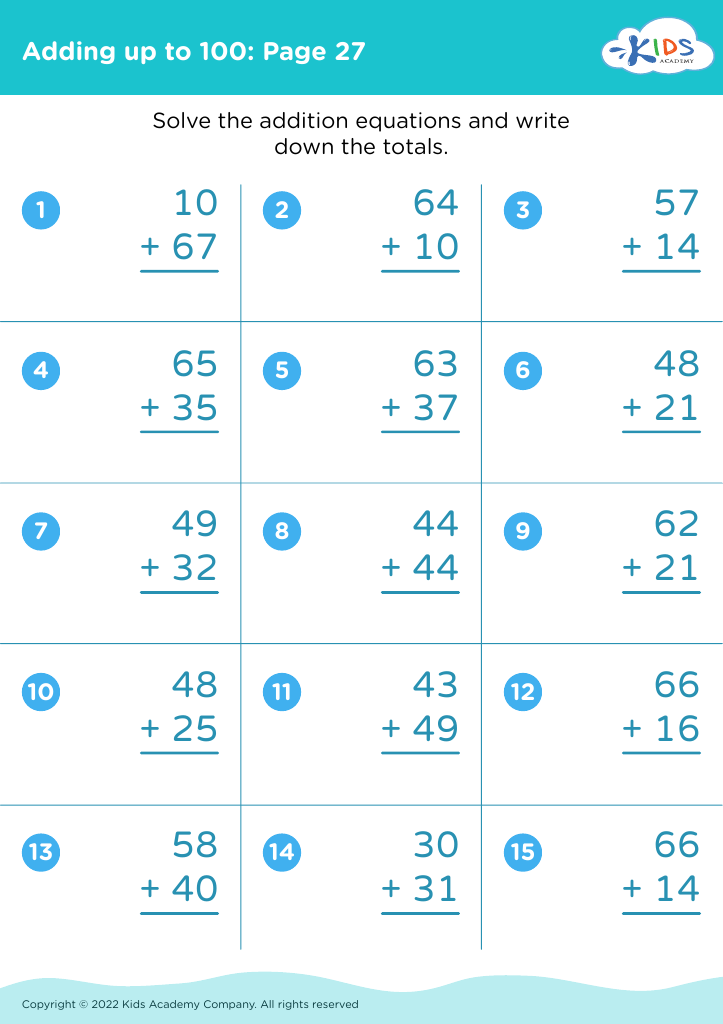
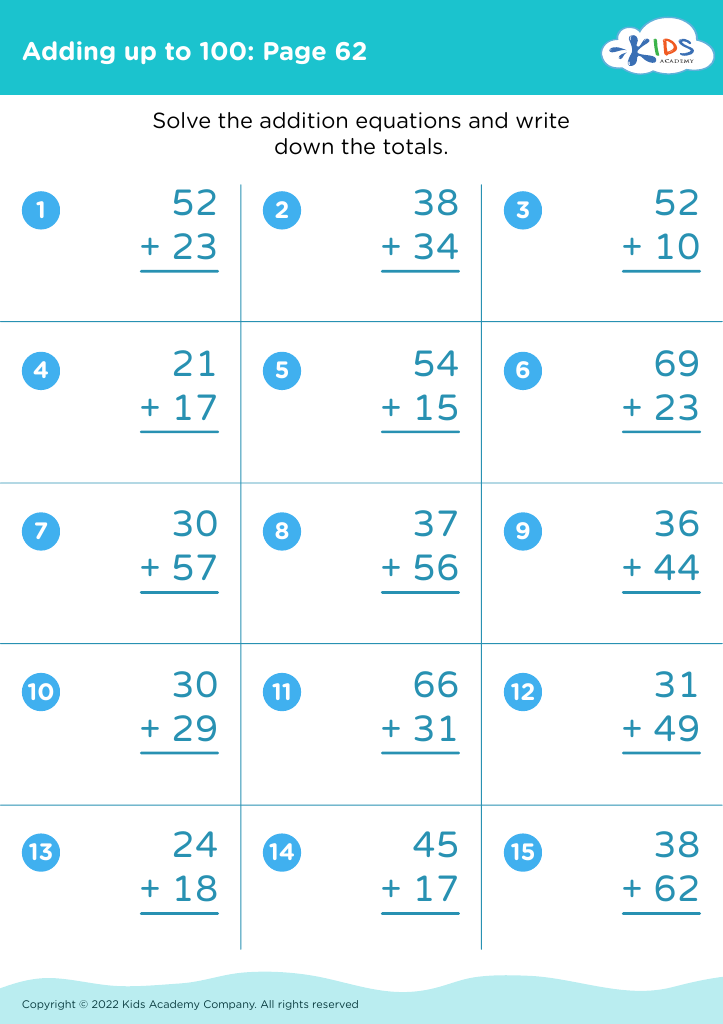
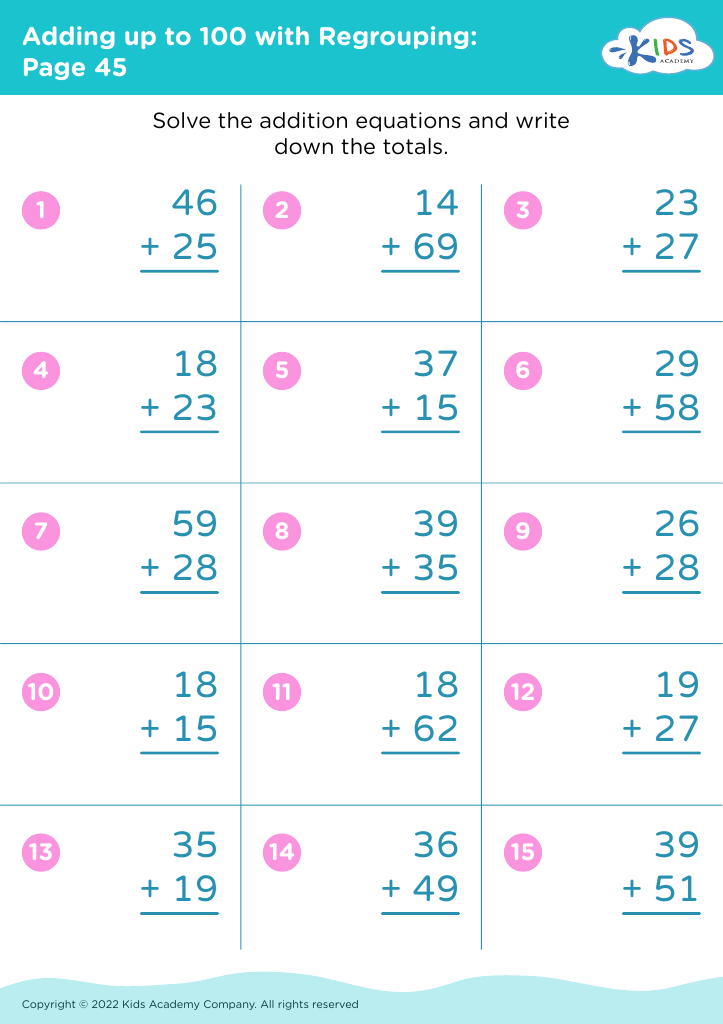
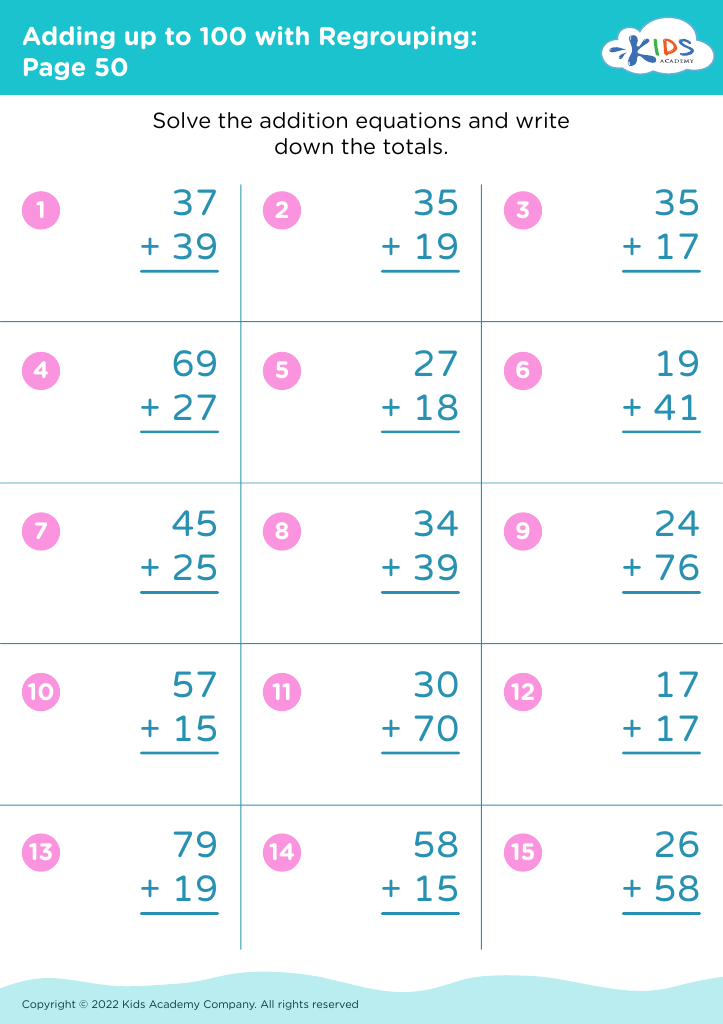
Boost your child’s fine motor skills and math proficiency with our “Adding up to 100 Worksheets” designed for ages 7-8. These engaging printable worksheets help kids practice adding up to 100 while honing their fine motor abilities. Each activity encourages precise hand movements, essential for tasks like writing and cutting. Through fun exercises and colorful illustrations, children will enhance their number sense and strengthen coordination. Perfect for classroom or home use, these worksheets provide a delightful way for learners to improve their math skills and dexterity simultaneously. Support your child's development with these comprehensive and educational activities today!


%20(1).jpg)




Fine motor skills are crucial for children aged 7-8 as they serve as foundational abilities necessary for completing everyday tasks and academic activities. At this stage, kids start engaging in complex school work that can include writing, cutting with scissors, and manipulating small objects. Strengthening these skills helps improve a child's handwriting, enabling them to write legibly and efficiently, which is essential for clear communication and academic success.
Additionally, fine motor proficiency aids in fostering independence and self-confidence. Simple activities like tying shoelaces, buttoning clothes, and using utensils become second nature, which boosts a child's self-esteem and encourages a can-do attitude. These skills also contribute to cognitive development, enhancing coordination between the brain and hands. Adding up to 100, a math activity that combines fine motor and cognitive abilities, sharpens problem-solving skills and supports mathematical concepts.
From a social-emotional perspective, children who can perform tasks independently feel more competent among peers, reducing frustration and increasing positive social interactions. Therefore, parents and teachers should pay attention to the development of fine motor skills to ensure children are not only academically prepared but also capable and confident in handling everyday tasks independently. Supporting activities such as arts and crafts, puzzle-solving, and interactive number games can make this development engaging and effective.








