Identify shapes Adding up to 100 Worksheets for Ages 7-8
4 filtered results
-
From - To
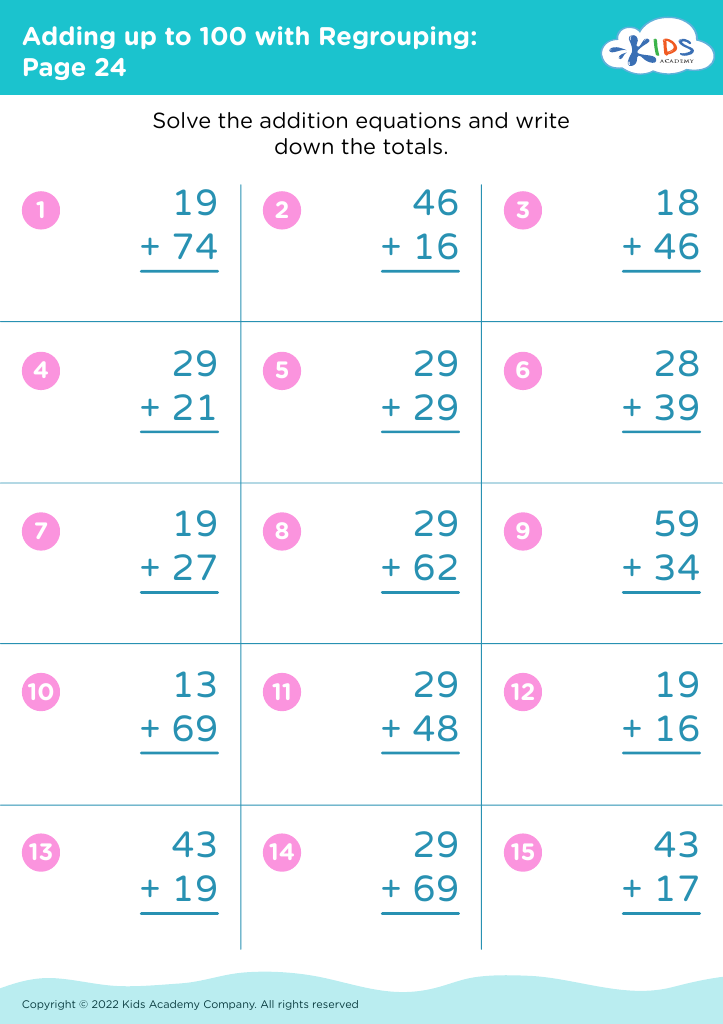
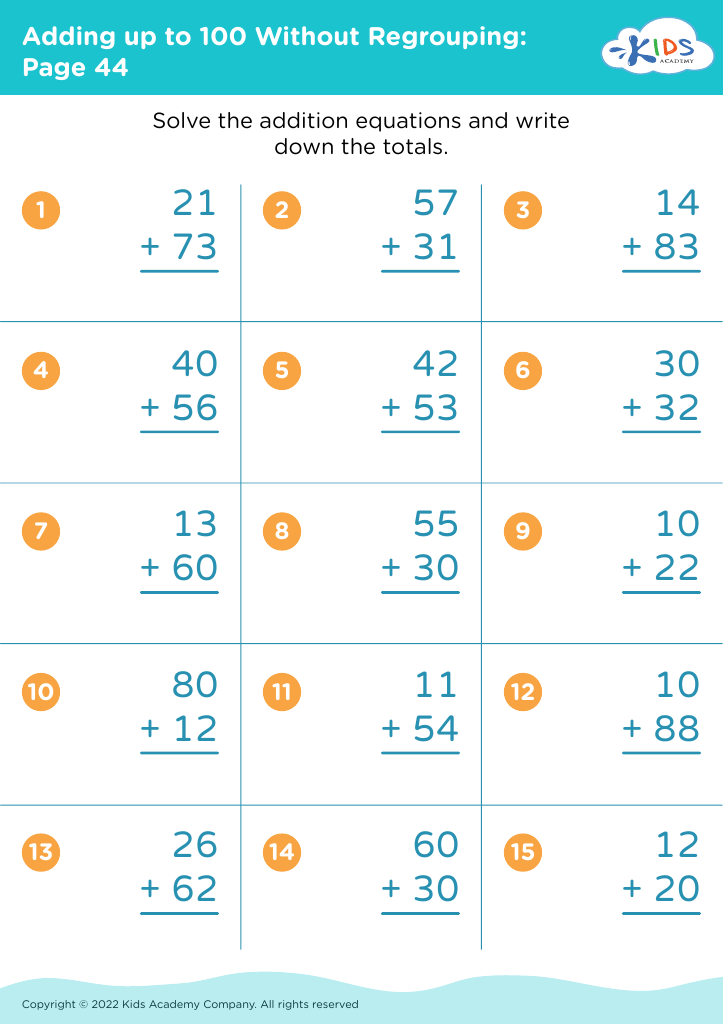
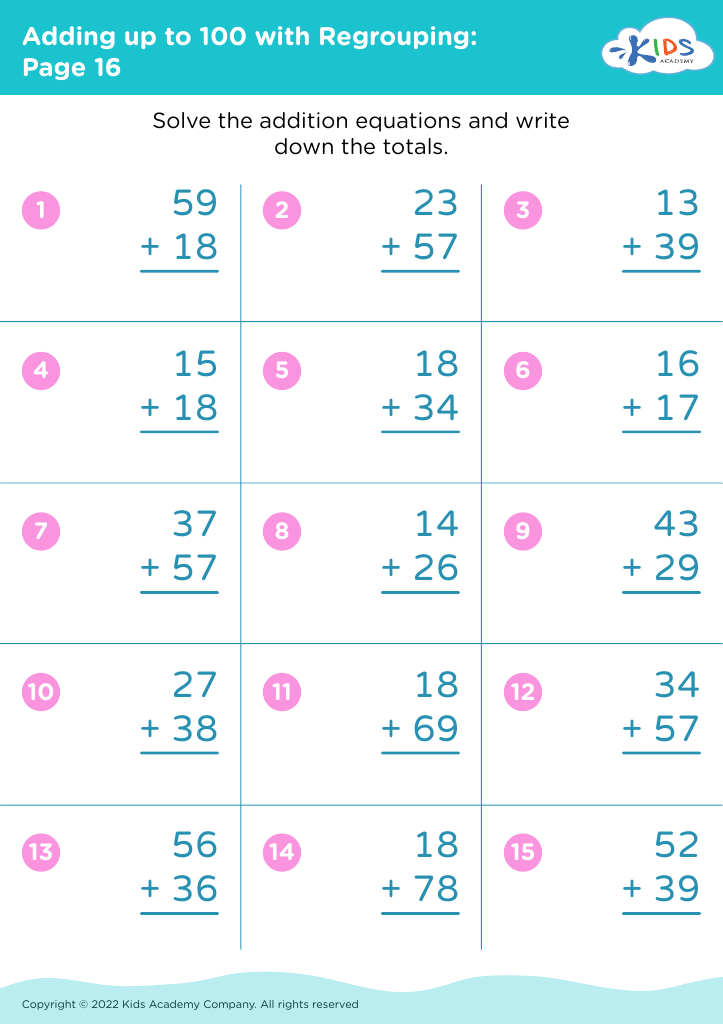
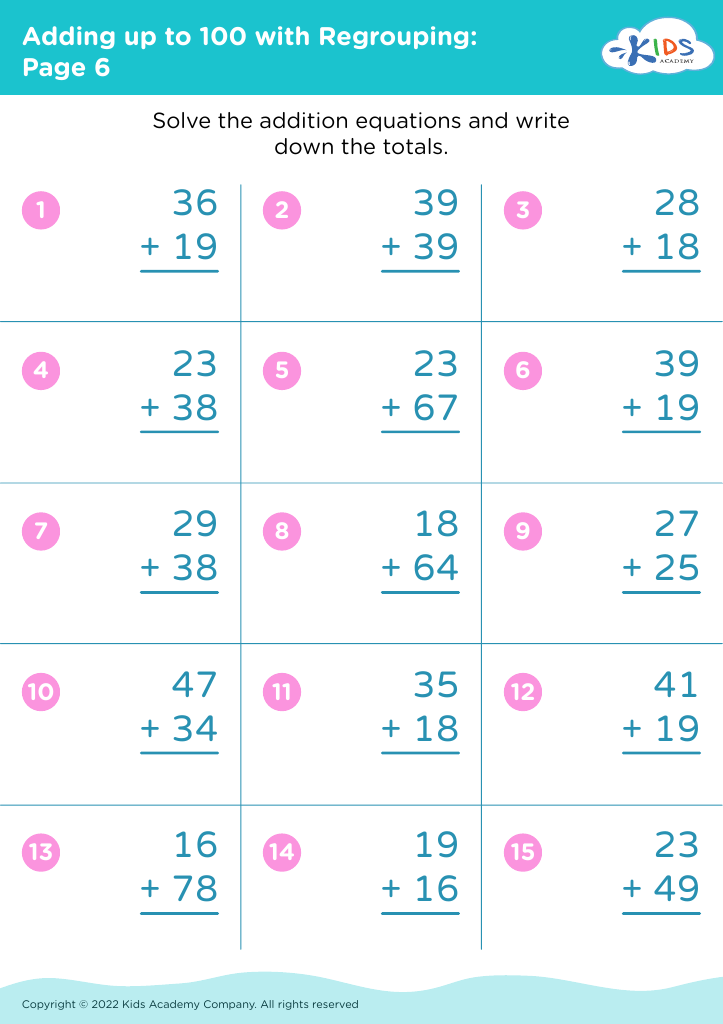
Our "Identify Shapes Adding up to 100" worksheets for ages 7-8 offer a fun and educational way to build essential math skills. Designed to help young learners recognize and categorize shapes while practicing addition, these engaging worksheets combine visual learning with arithmetic practice. Each sheet challenges students to identify various shapes and solve addition problems that sum up to 100, enhancing both geometry and numeracy skills. Ideal for both classroom and at-home practice, these worksheets support grade-level learning standards and make math enjoyable for children. Equip your child with the tools needed for math success!


%20(1).jpg)




Understanding how shapes and numbers form the bedrock of later mathematical skills and critical thinking is important for children aged 7-8. At this age, children are naturally inquisitive and their cognitive abilities are rapidly developing. Introducing them to shapes and the concept of adding up to 100 serves multiple educational purposes.
Firstly, recognizing shapes is fundamental in the study of geometry, which is essential not just in math, but also in understanding the physical world, art, and even fields like engineering later on. Fostering an awareness of geometric concepts at an early age helps children improve their spatial reasoning and problem-solving skills.
Secondly, learning to add numbers up to 100 is a key arithmetic skill that sets the stage for more advanced mathematical operations. It introduces children to the concept of place value and enhances their ability to perform basic calculations. These early numeracy skills are crucial for academic success in math exams and standardized tests. Additionally, math boosts logical thinking and the ability to approach problems methodically.
For parents and teachers, engaging children with these concepts through playful learning and interactive exercises helps in keeping them interested. It lays a solid foundation for a lifelong understanding and appreciation of mathematics, facilitating both academic and everyday competency.








