Number Recognition Adding up to 100 Worksheets for Ages 7-8 - Page 2
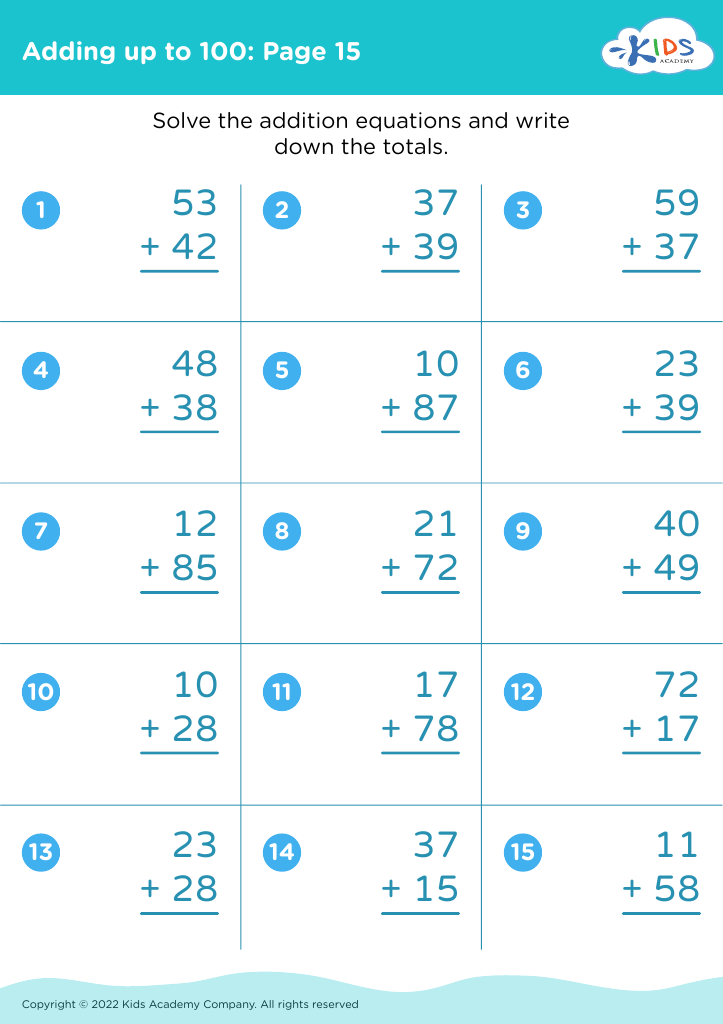
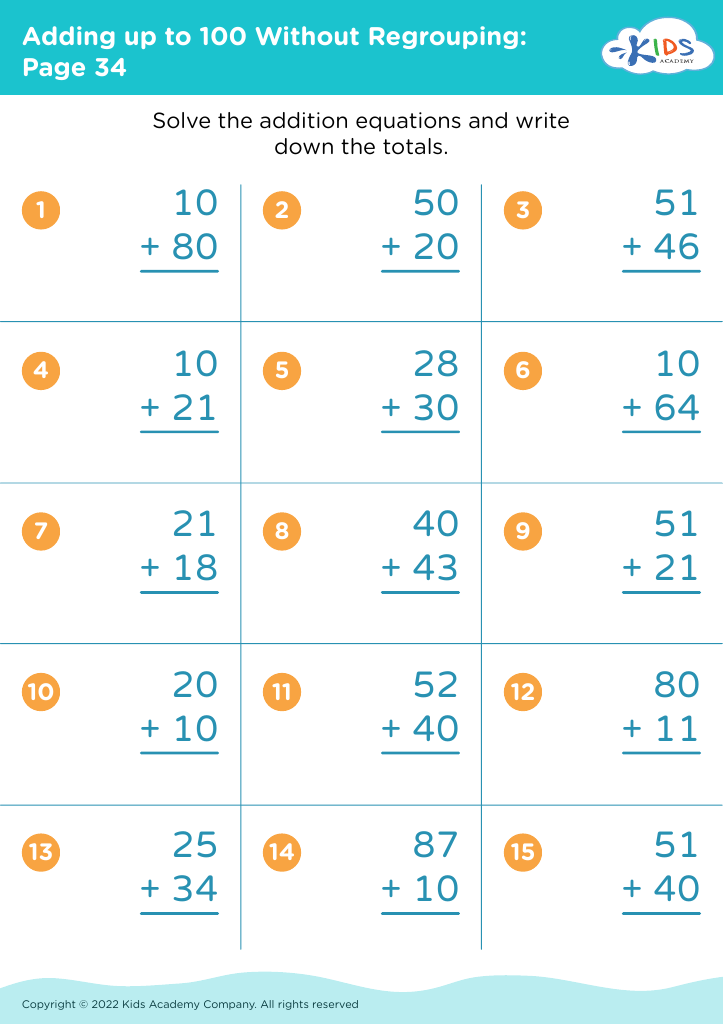
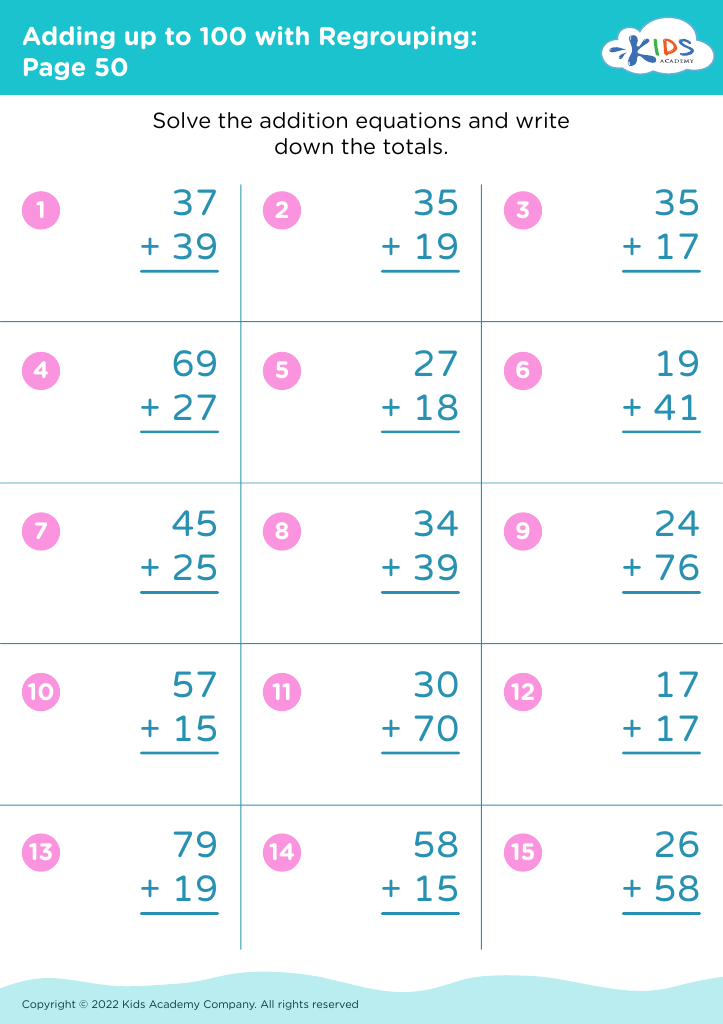
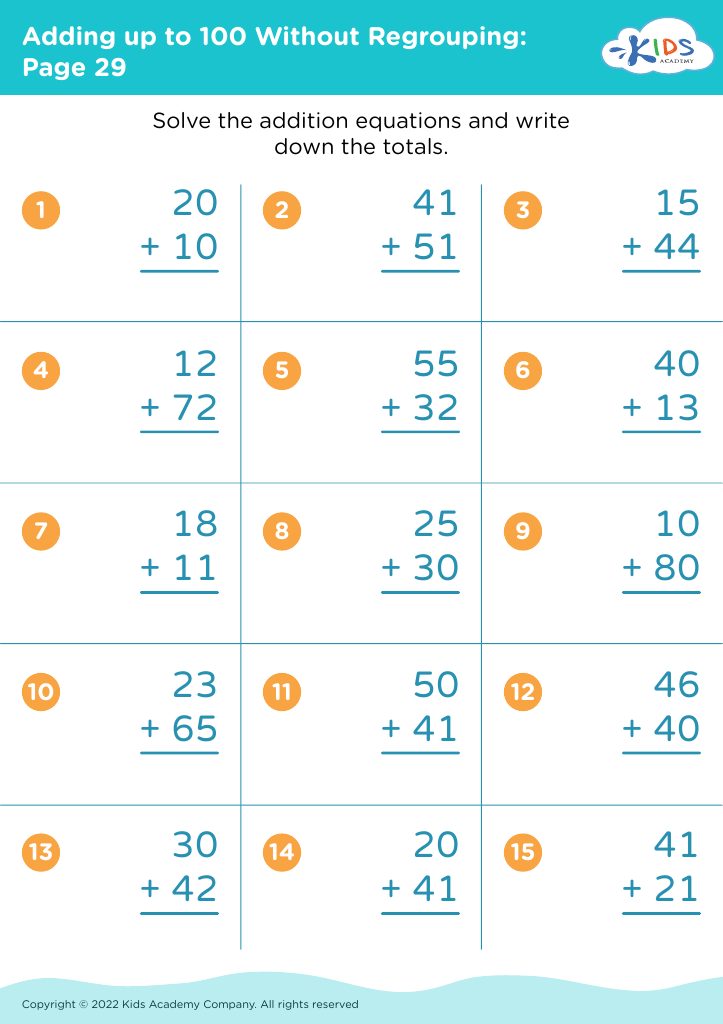




%20(1).jpg)



Number recognition and the ability to understand numbers up to 100 are crucial skills for children aged 7-8. At this developmental stage, children are transitioning from basic arithmetic to more complex mathematical concepts. Mastering number recognition lays the foundation for effective problem-solving, helping students identify and work with larger quantities confidently.
Parents and teachers should care about this skill because it influences a child's ability to engage with their environment and participate in everyday activities—such as telling time, managing money, and measuring ingredients for cooking. Strong number recognition correlates with better academic performance in math, reading, and even science subjects, as it allows children to grasp word problems and mathematical scenarios with ease.
Moreover, number knowledge impacts children's self-efficacy. Children who struggle with number recognition may experience frustration and diminished motivation, leading to a negative attitude towards learning. By nurturing this skill, adults empower children to feel competent and successful, encouraging a lifelong love for learning. Engaging with numbers can also enhance cognitive skills like critical thinking and spatial awareness, preparing children for advanced curriculums in the future. In essence, fostering number recognition not only supports academic growth but also promotes greater independence and confidence in daily life.








