Simplifying Fractions Adding up to 100 Worksheets for Ages 7-8
3 filtered results
-
From - To
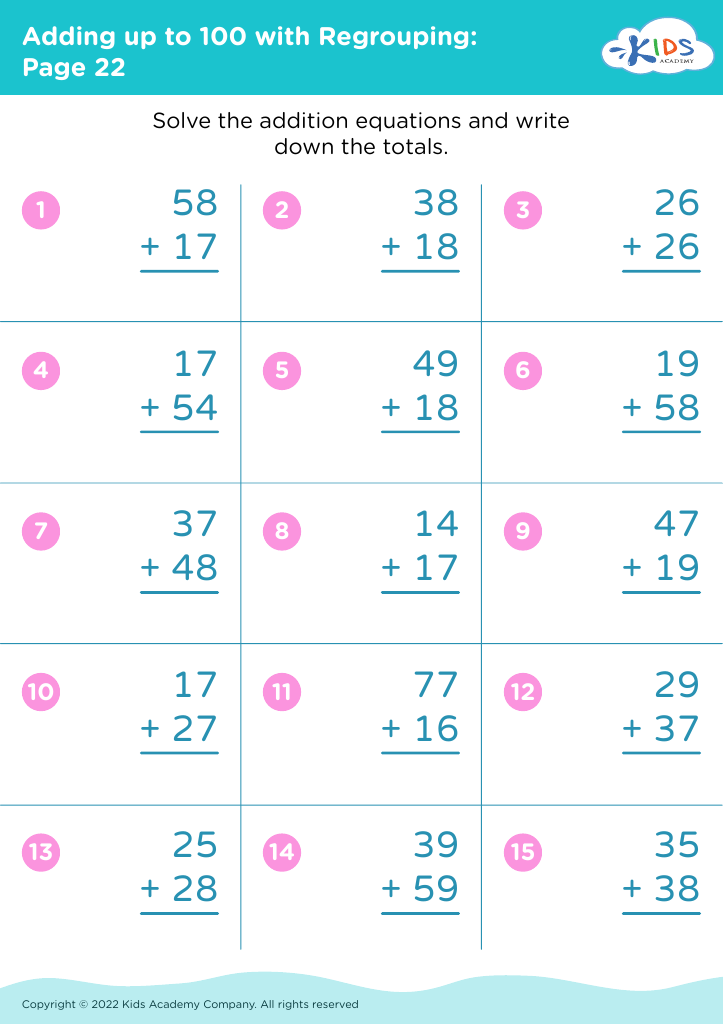
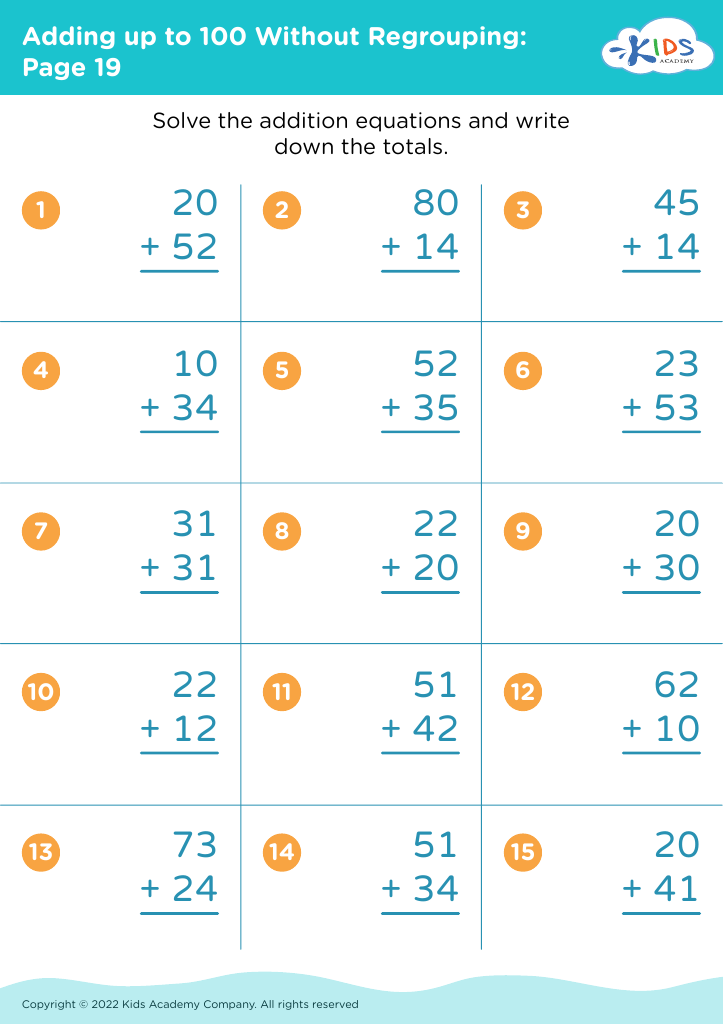
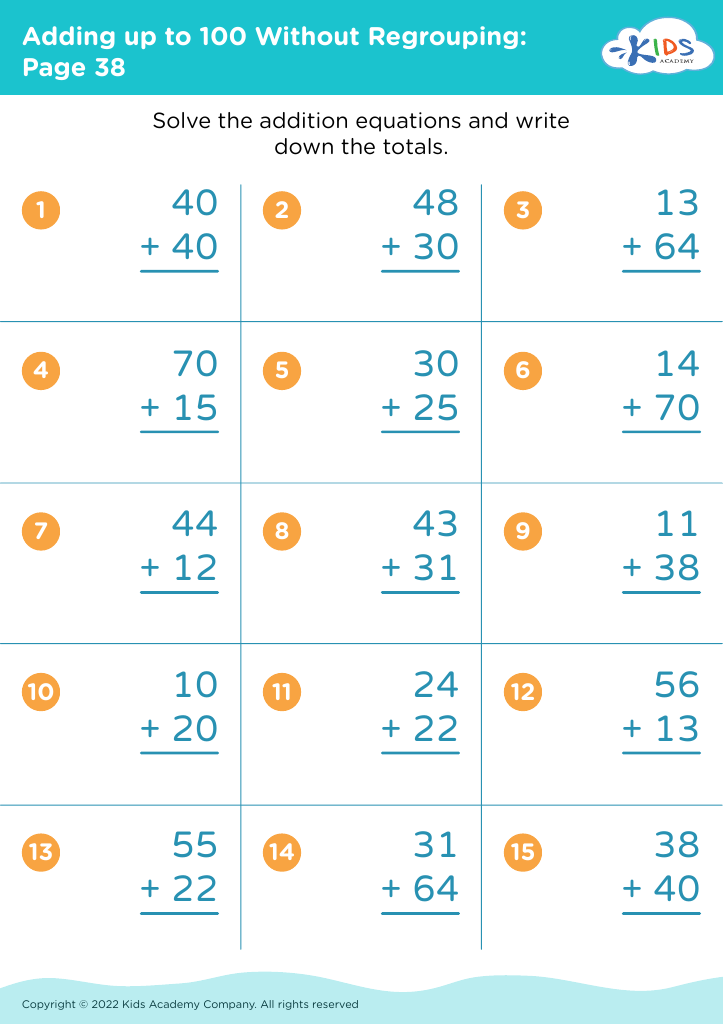
Welcome to our "Simplifying Fractions Adding up to 100 Worksheets" designed specifically for children aged 7-8! These engaging worksheets provide a fun and interactive way to help young learners grasp the concept of simplifying fractions while also mastering addition up to 100. Each worksheet features a variety of problems that challenge students to reduce fractions to their simplest forms, enhancing critical thinking and mathematical skills. Perfect for classroom use or at-home practice, these resources ensure children build a solid foundation in fraction concepts. Foster a love for math and empower your child with the confidence they need to excel!




%20(1).jpg)


Simplifying fractions that add up to 100 is an essential mathematical skill for children aged 7-8, and both parents and teachers should care about its significance. First, mastering this concept lays a strong foundation in understanding fractions, which is crucial for later mathematical learning. At this age, children are developing their critical thinking skills, and simplifying fractions encourages them to analyze and break down numbers, enhancing their problem-solving abilities.
Moreover, the concept of fractions is prevalent in everyday life, from cooking measurements to sharing and comparisons. Learning to simplify fractions helps children understand real-world situations, making math more relatable and engaging. This skill encourages independence and confidence in their mathematical abilities.
Additionally, when parents and teachers emphasize the importance of simplifying fractions, they are fostering a growth mindset in children, encouraging them to seek simpler solutions to complex problems. This not only promotes mathematical competence but also nurtures perseverance and resilience.
Overall, incorporating the skill of simplifying fractions that total 100 promotes mathematical understanding, everyday application, and essential cognitive development, allowing children to approach future learning challenges with greater confidence and proficiency.








