Understanding fractions Adding up to 100 Worksheets for Ages 7-8 - Page 2
51 filtered results
-
From - To





%20(1).jpg)


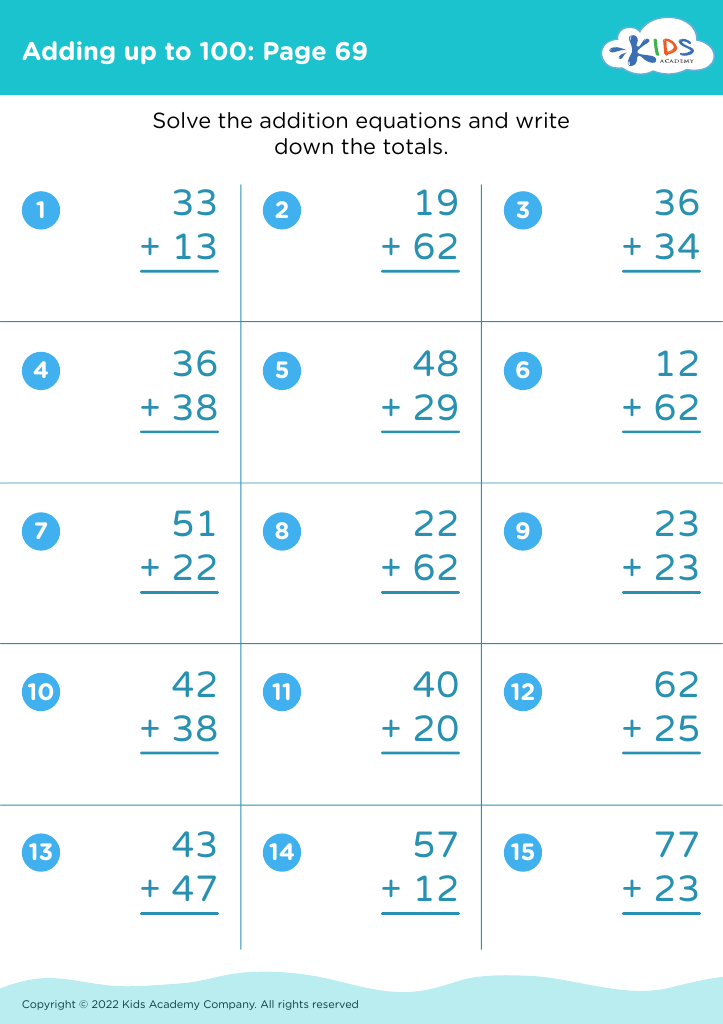
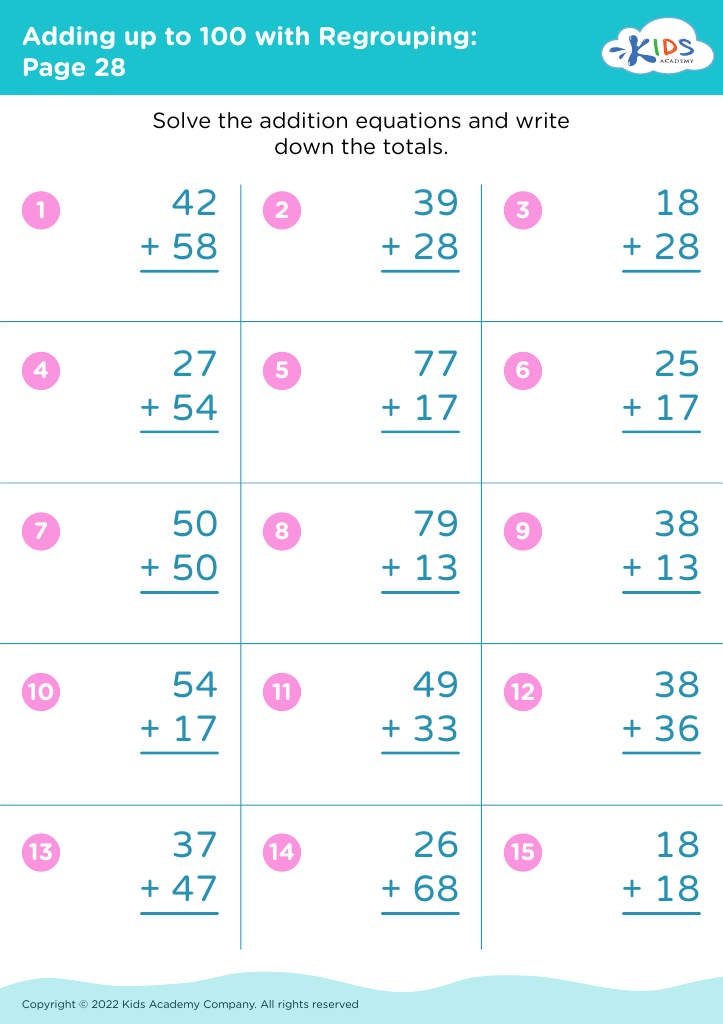
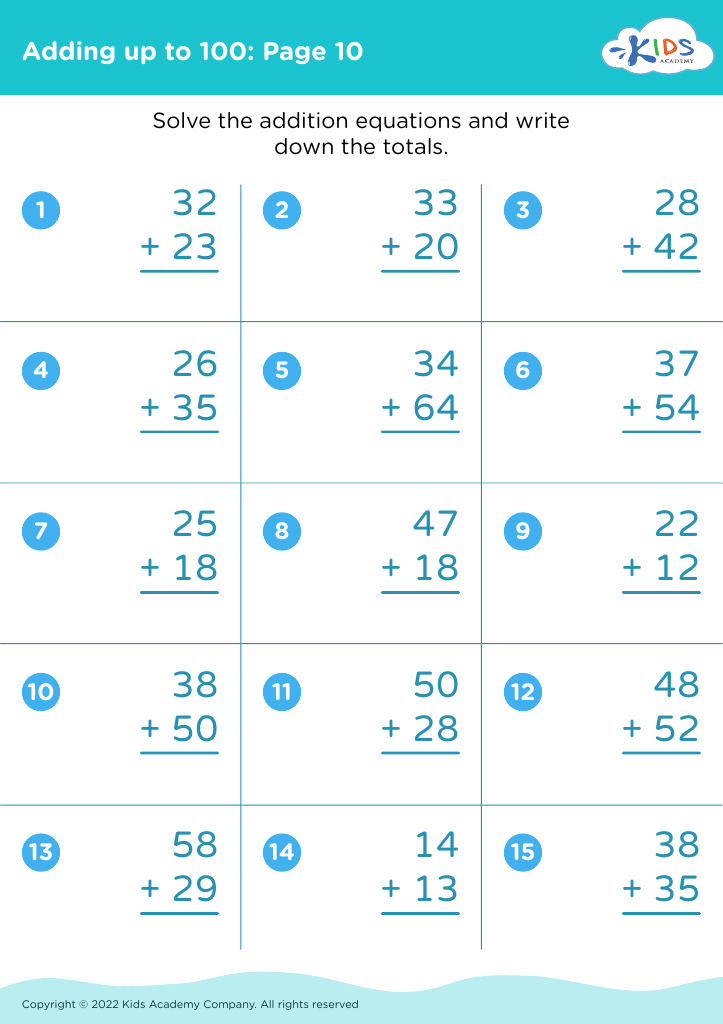
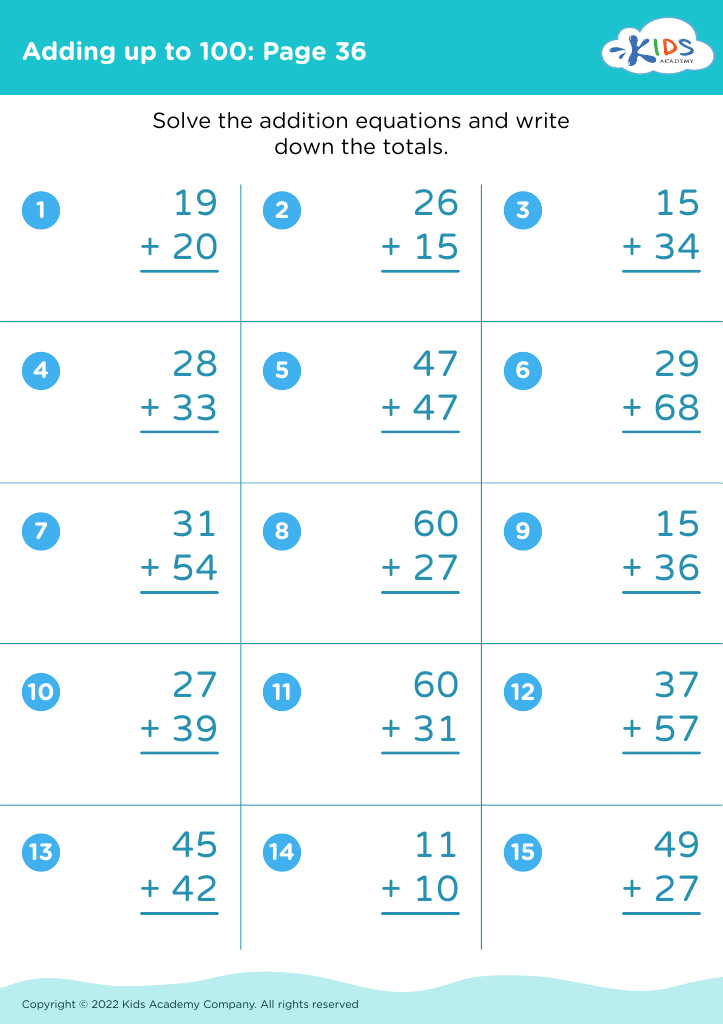
Understanding fractions and adding up to 100 are fundamental math skills for children aged 7-8 that serve as a strong foundation for future learning. At this age, students are transitioning from basic arithmetic to more complex mathematical concepts. Mastery of these skills is crucial for several reasons.
First, fractions teach children about parts of a whole, which is an essential concept for understanding measurements, probability, and algebra later on. Grasping fractions helps students make sense of divisions in everyday life, such as time, money, and sharing items fairly.
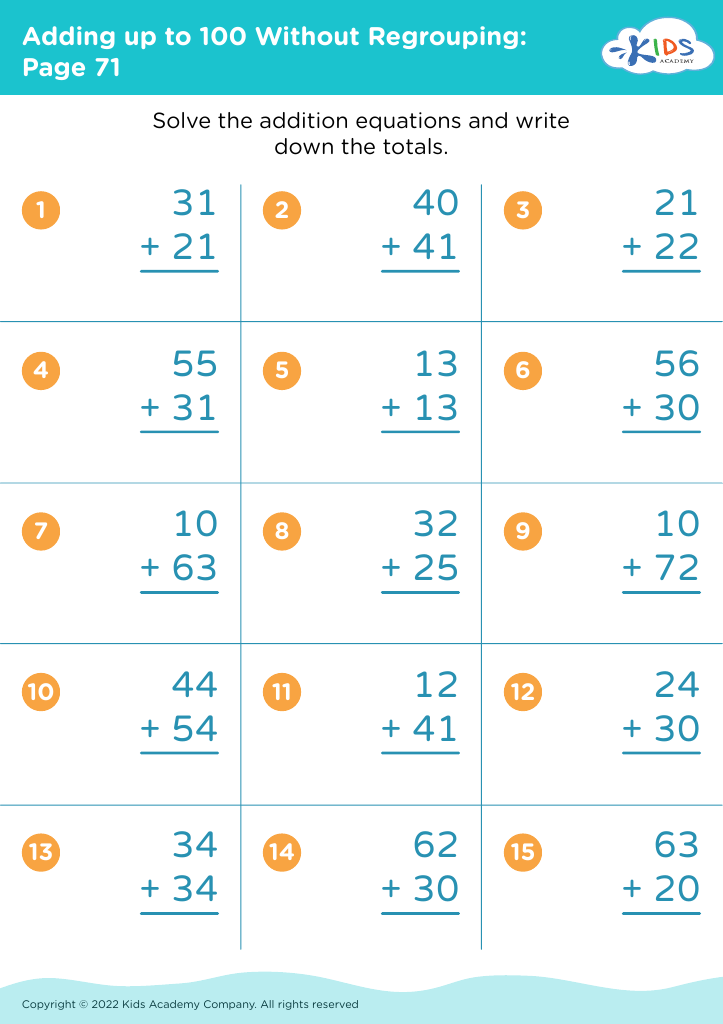
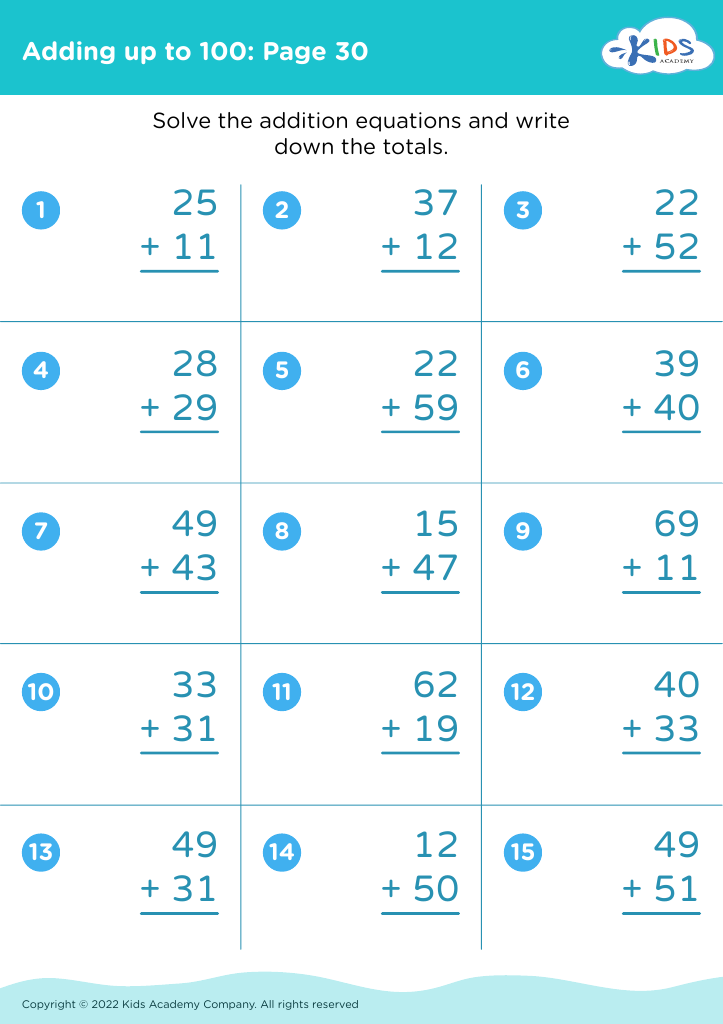
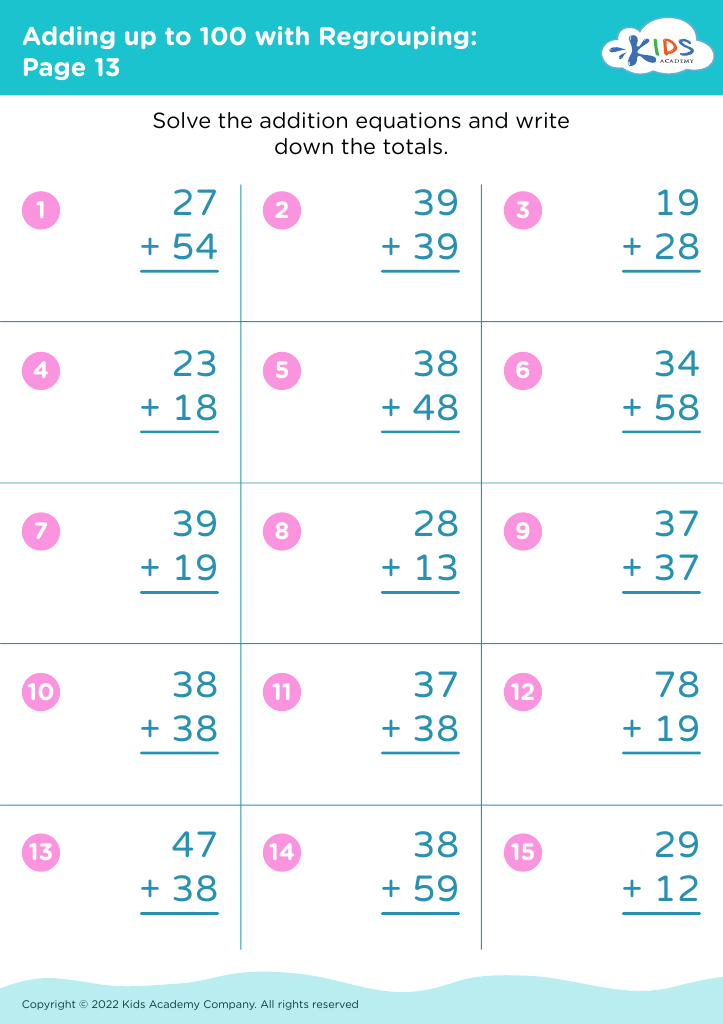
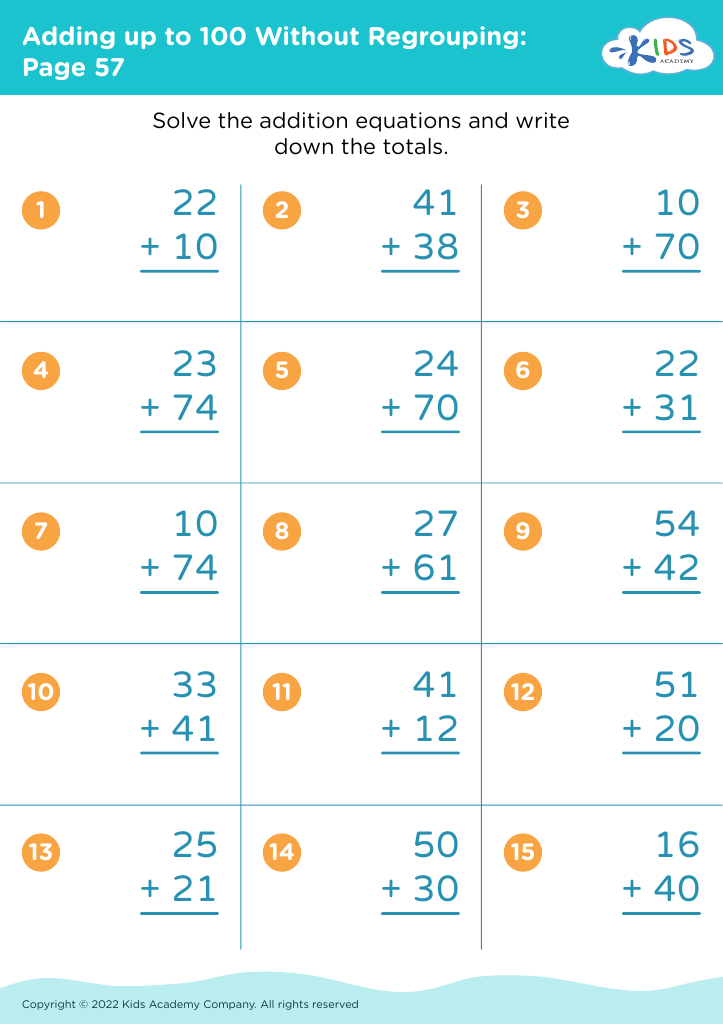
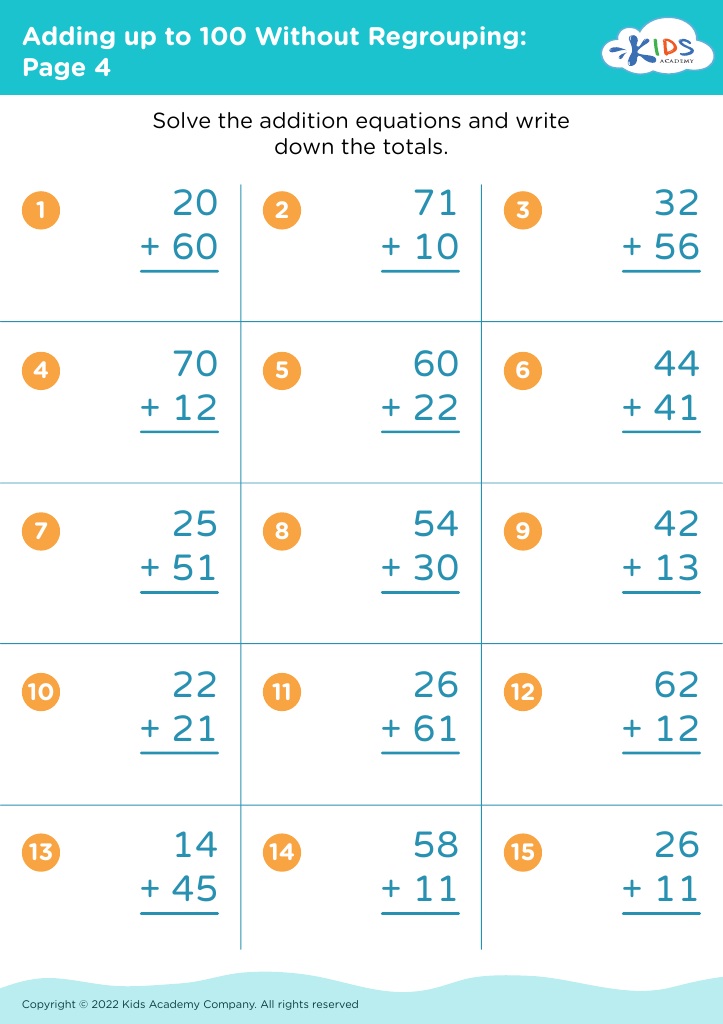
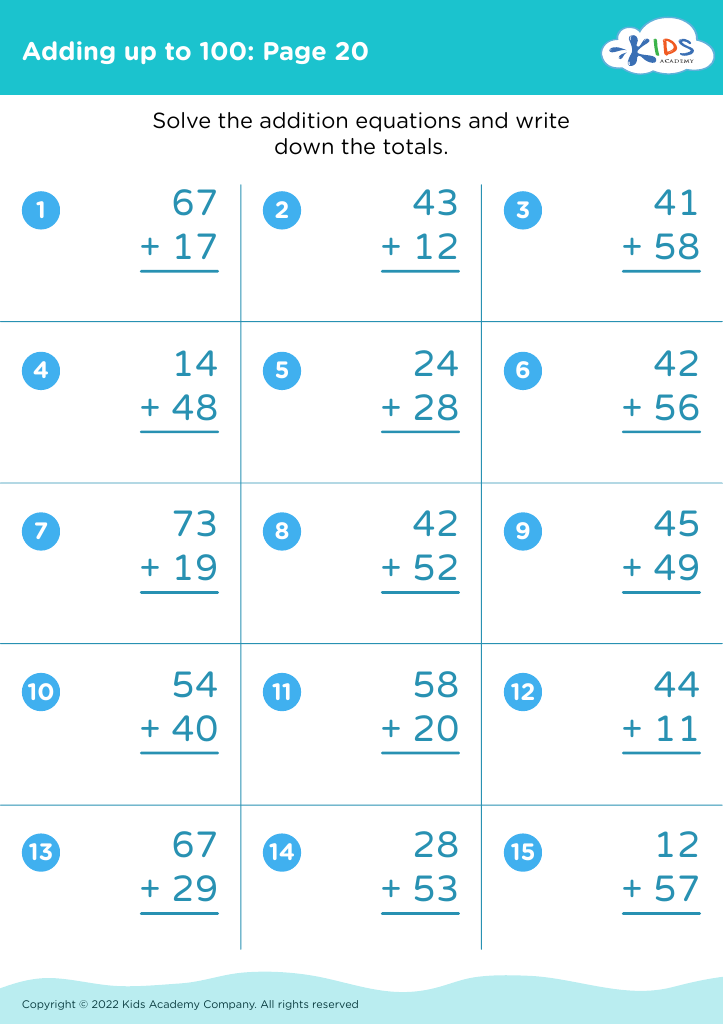
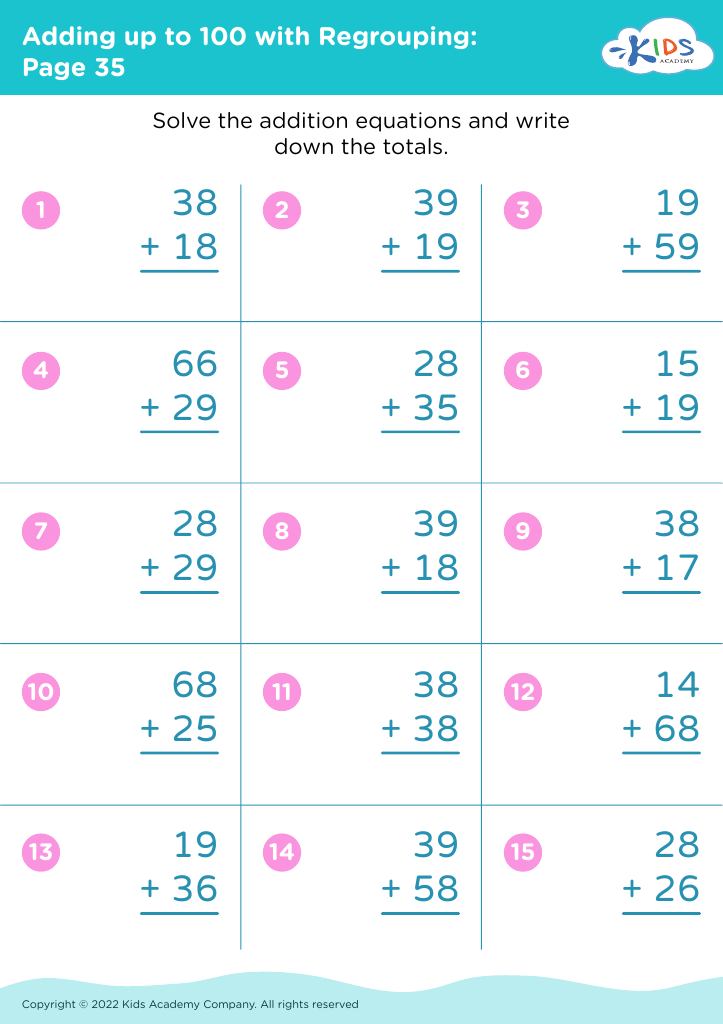
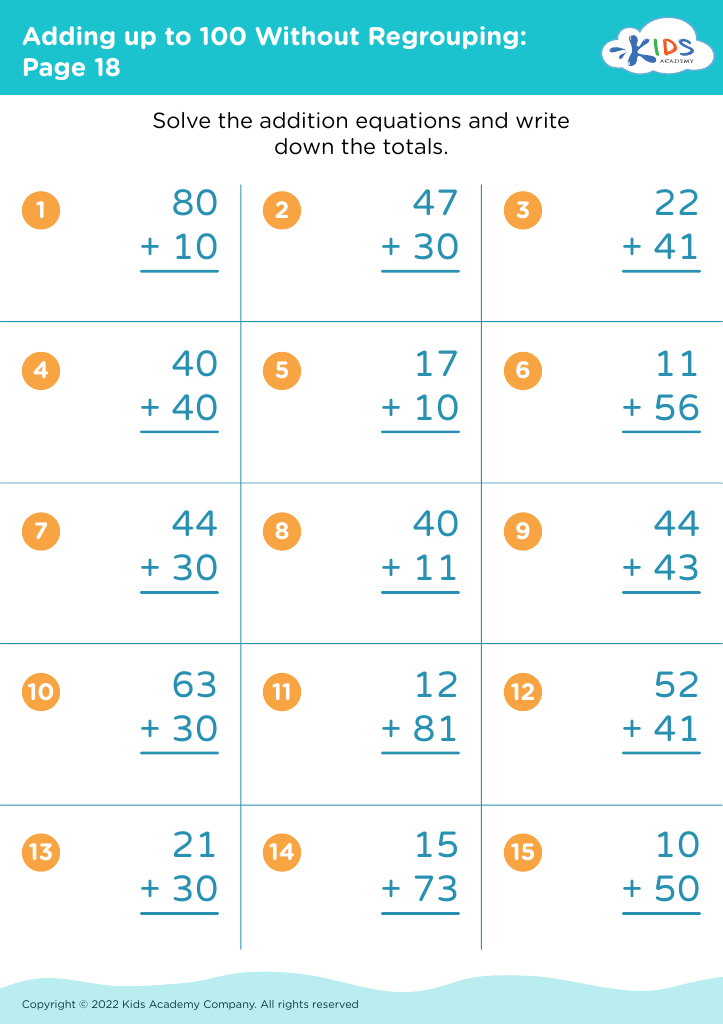
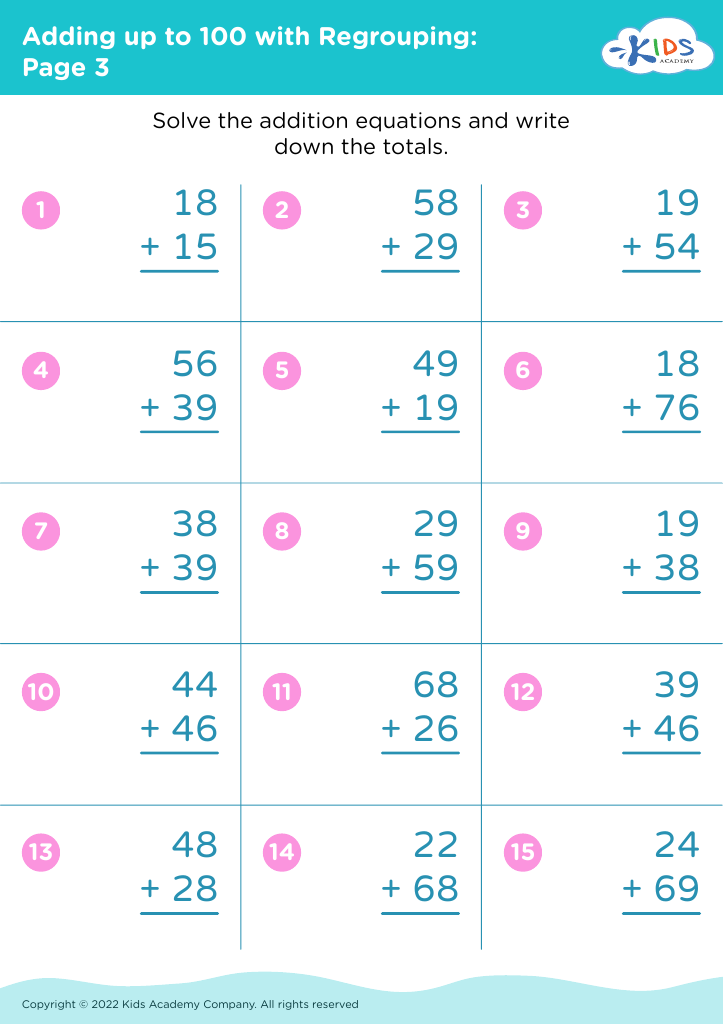
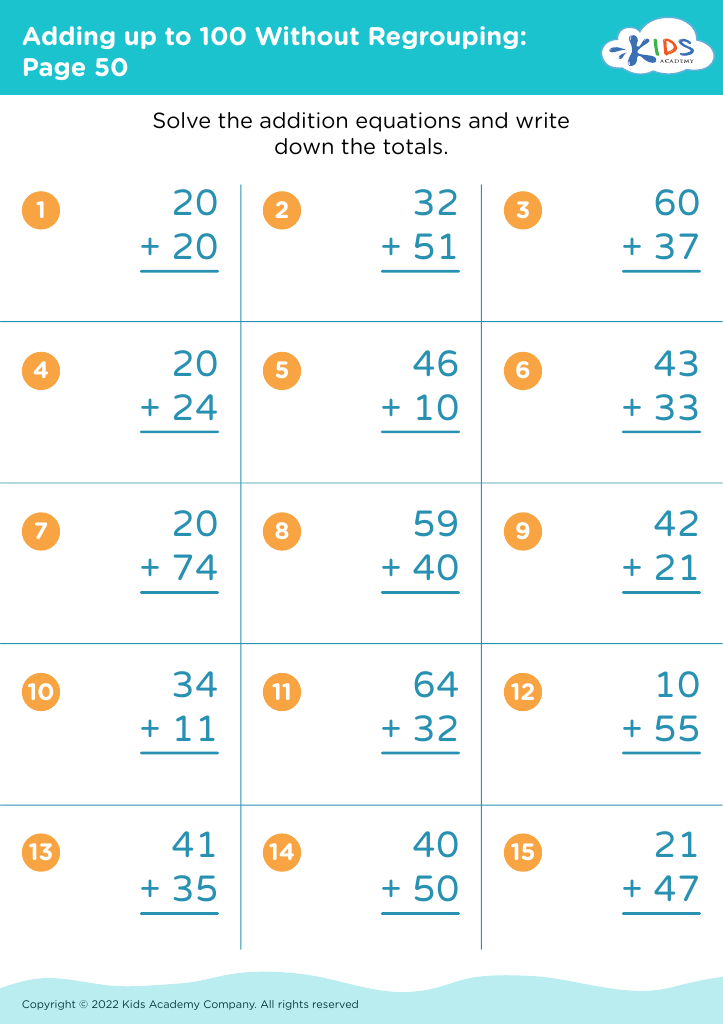
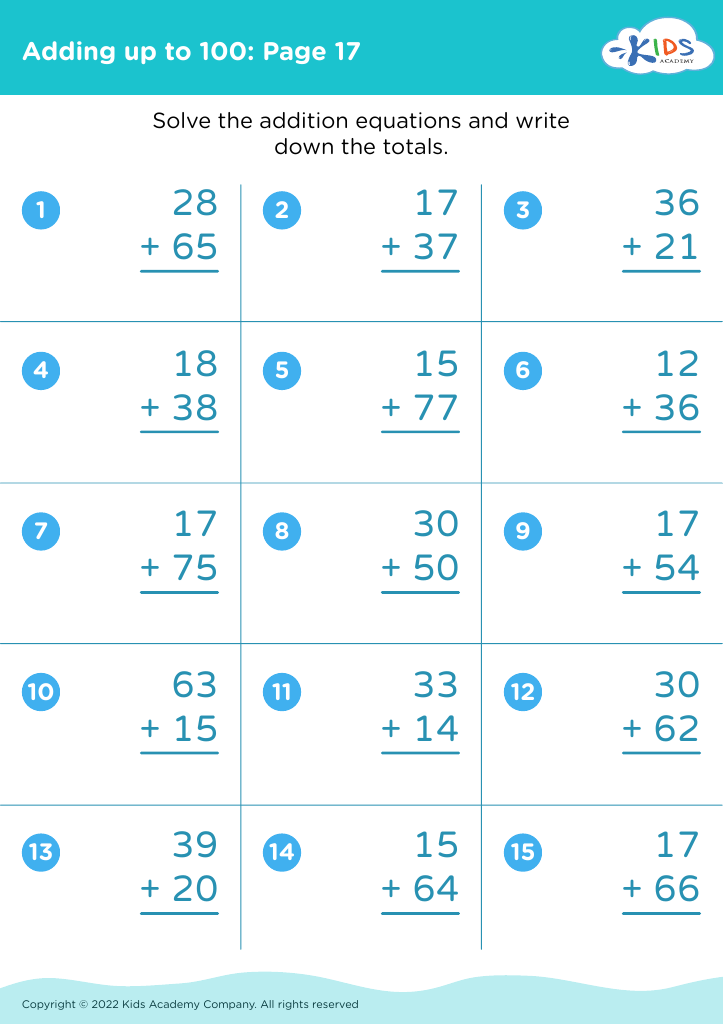
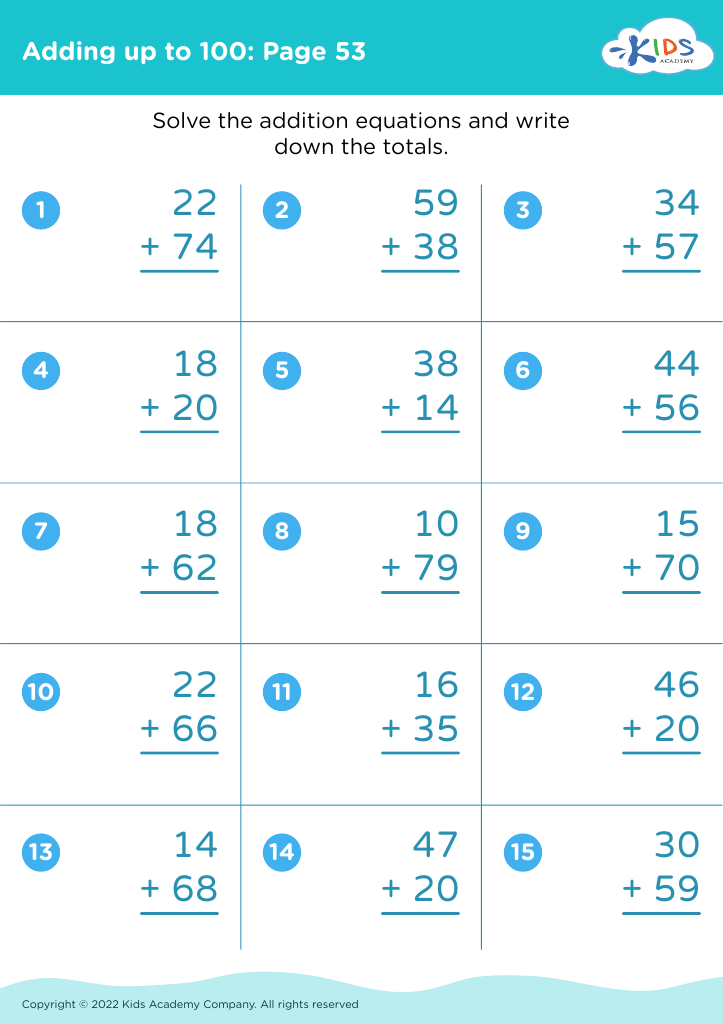
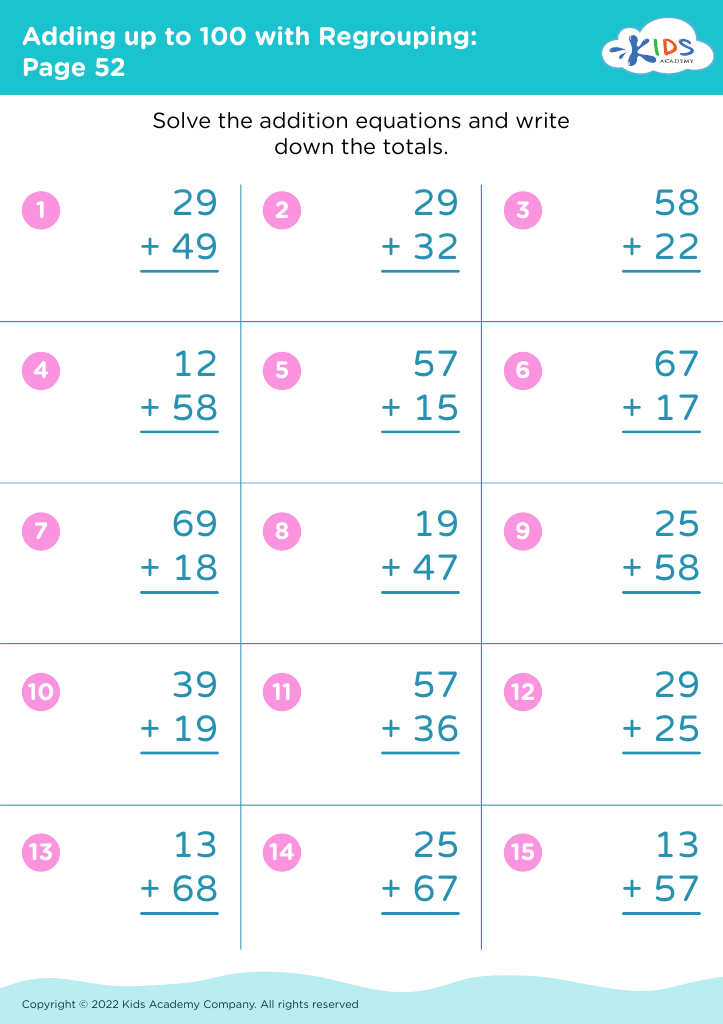
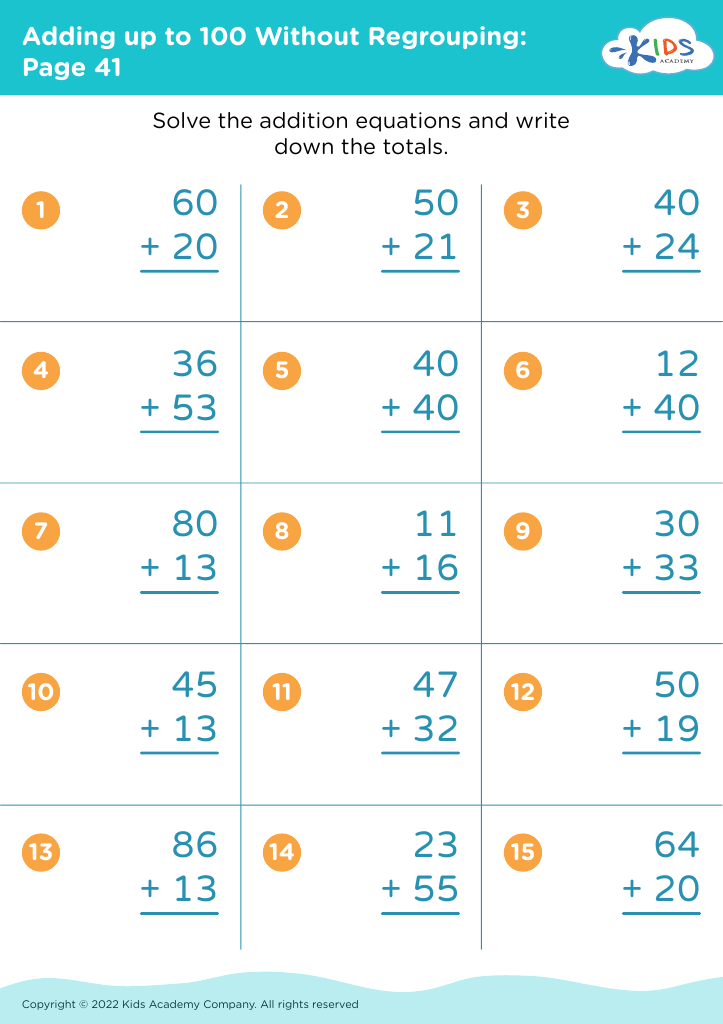
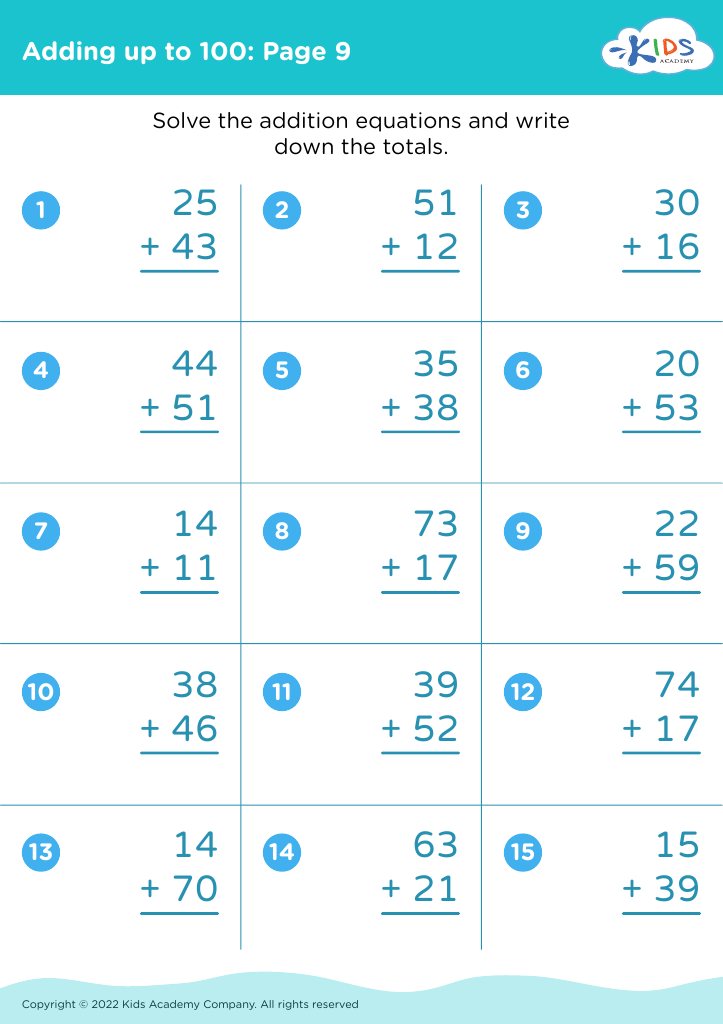
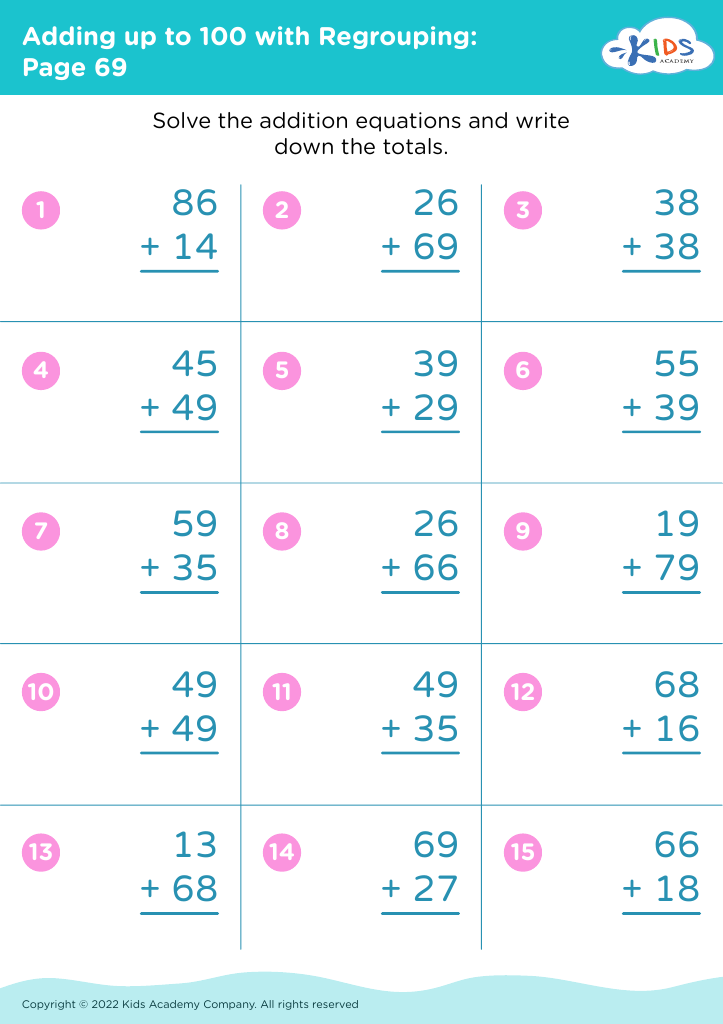
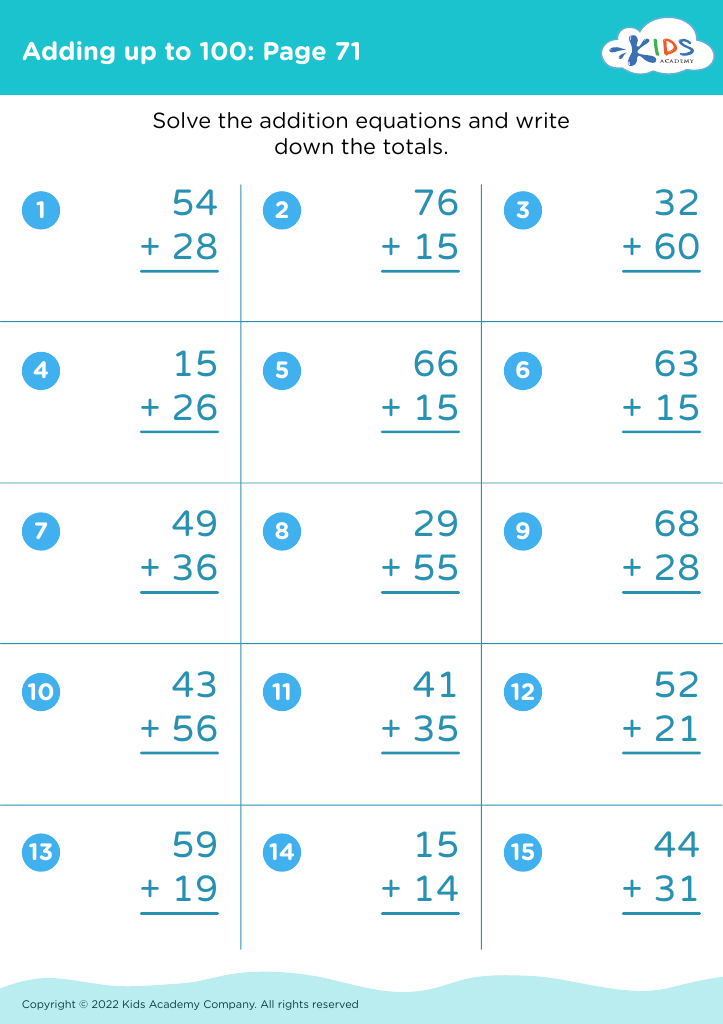
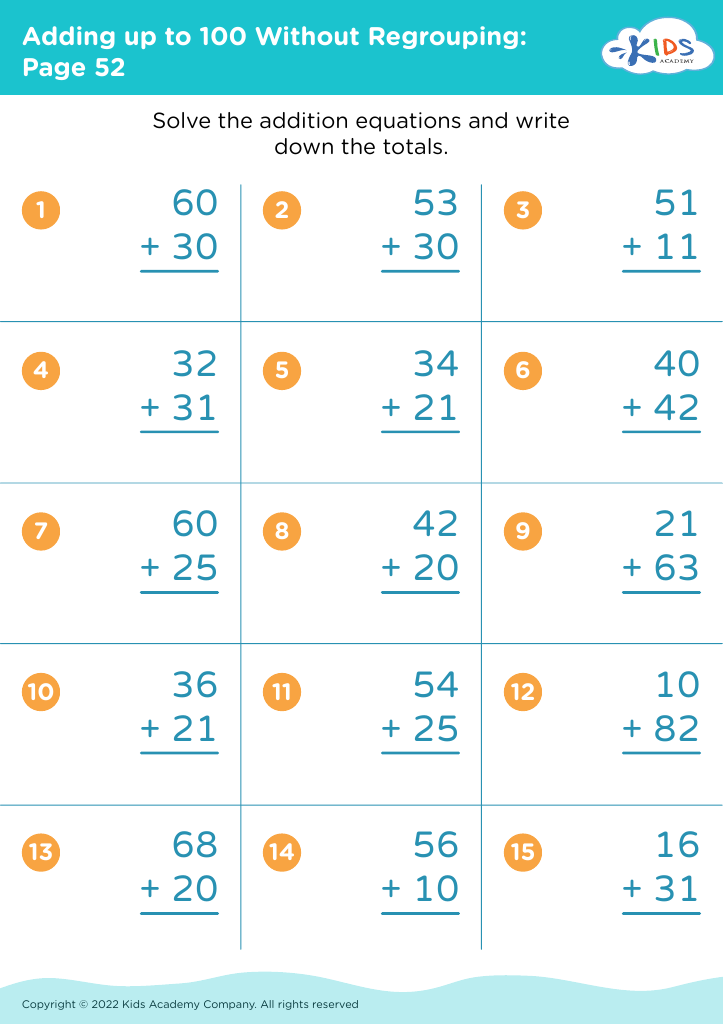
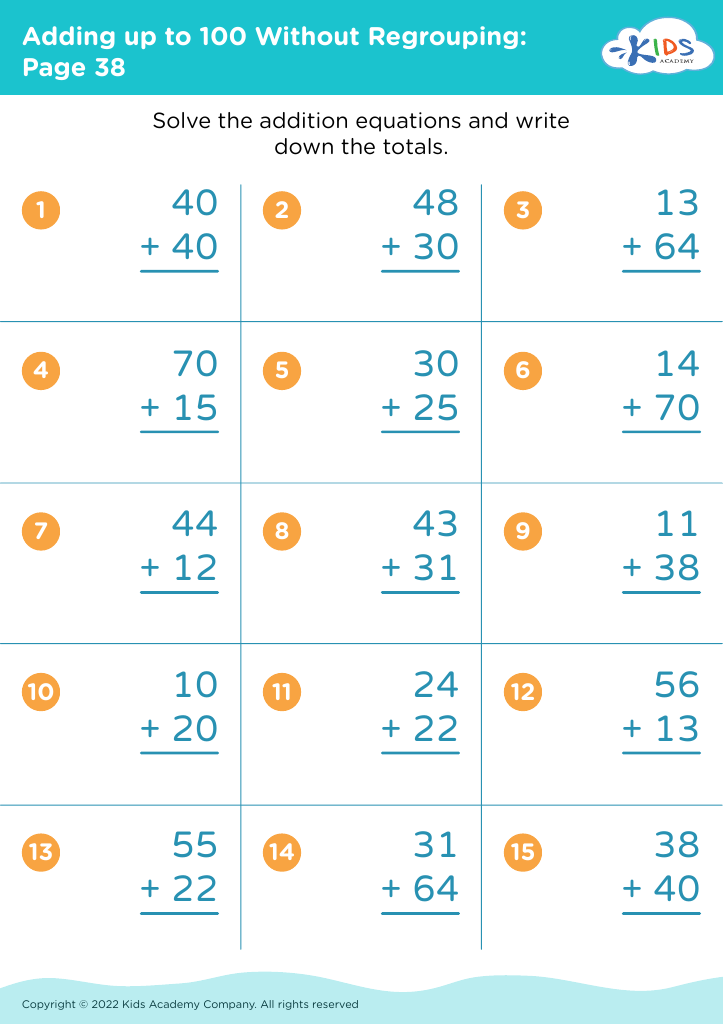
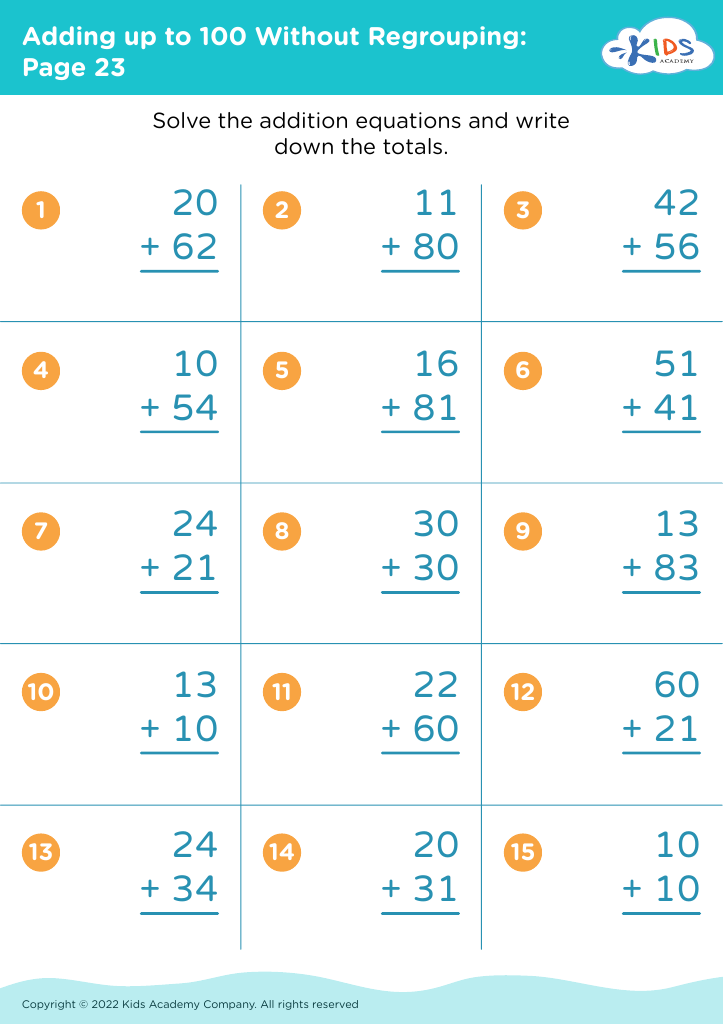
Second, the skill of adding up to 100 reinforces addition and subtraction understanding, primes mental math abilities, and solidifies number sense. By engaging with calculations up to 100, children practice breaking down bigger problems into manageable parts, fostering critical thinking. This number range is significant as it appears frequently in daily interactions, such as handling money or understanding percentages.
Educators and parents should promote these skills to build problem-solving abilities, logical thinking, and confidence in mathematics. A strong grasp of basic math concepts at this stage ensures that students are well-prepared for more demanding subjects, facilitating their overall academic success and fostering a positive relationship with learning. These efforts lay the groundwork for advanced math subjects and practical life skills essential in the future.








