Basic Addition Skills Addition & Subtraction Worksheets for Ages 7-8 - Page 2
27 filtered results
-
From - To
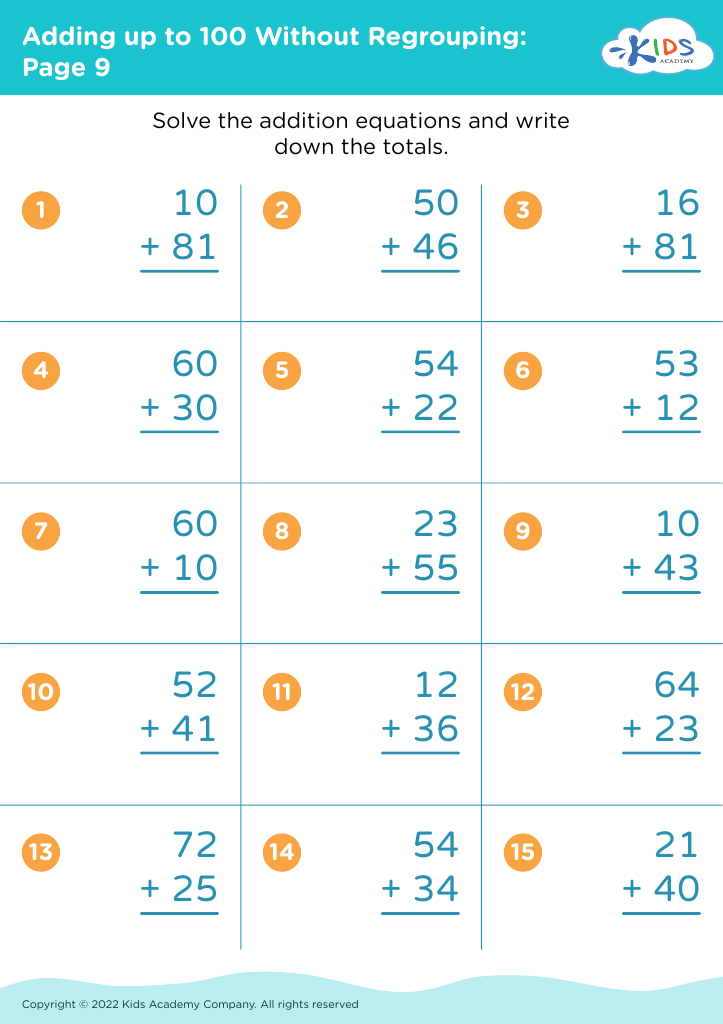
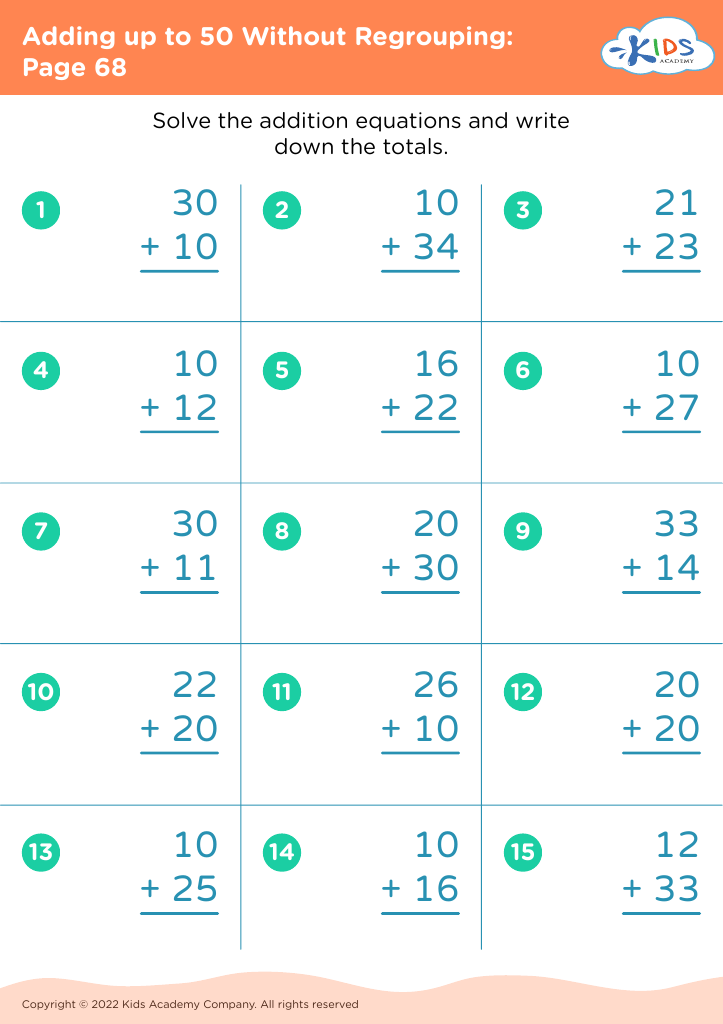
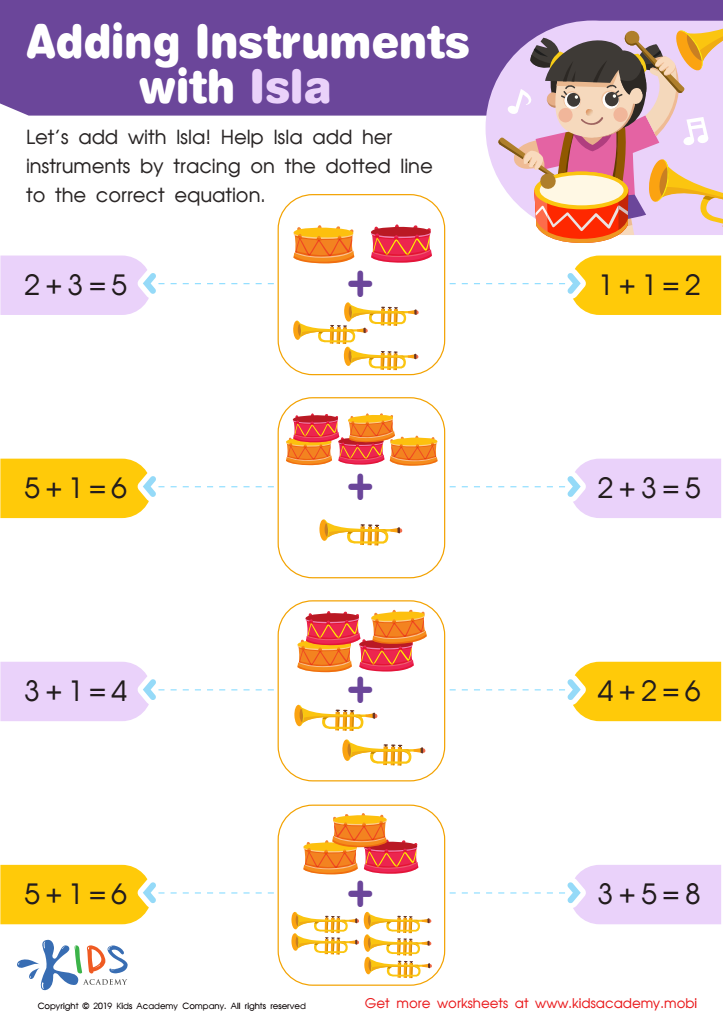
Adding Instruments with Isla Worksheet
 Assign to My Students








Parents and teachers should place a strong emphasis on basic addition and subtraction skills for children aged 7-8 as these foundational concepts are crucial for future learning and everyday problem-solving. At this age, children transition from understanding simple math to applying these skills in more complex scenarios, paving the way for successful math comprehension in higher grades.
Mastering basic addition and subtraction enhances cognitive development, promotes critical thinking, and encourages logical reasoning. Furthermore, these skills are essential for real-life applications, such as shopping, budgeting, and cooking, enriching a child's independence and everyday experiences.
Strengthening these skills also supports collaborative learning environments, where children can engage in group activities and peer-assisted learning, fostering social skills alongside academic growth. Early intervention in building these skills can help identify and address learning gaps, allowing for timely support and resources that can prevent future struggles in math.
Ultimately, parents and teachers play a vital role in cultivating a child's confidence and love for mathematics by making basic addition and subtraction enjoyable and relevant. Such an approach not only aids children academically but also instills a lifelong enthusiasm for learning and exploration in the world of numbers.








