Critical thinking skills Addition & Subtraction Worksheets for Ages 7-8
8 filtered results
-
From - To
Enhance your child's critical thinking abilities with our engaging Addition and Subtraction Worksheets tailored for ages 7-8. Designed to strengthen mathematical foundations, these worksheets promote problem-solving and analytical skills essential for academic success. Young learners will enjoy interactive exercises that challenge their understanding of addition and subtraction, encouraging them to think critically and develop strategies for tackling math problems. With a variety of formats, including puzzles and word problems, these worksheets keep learning dynamic and fun. Empower your child to excel in math while building confidence through critical thinking exercises that stimulate curiosity and foster a love for learning. Perfect for home or classroom use!
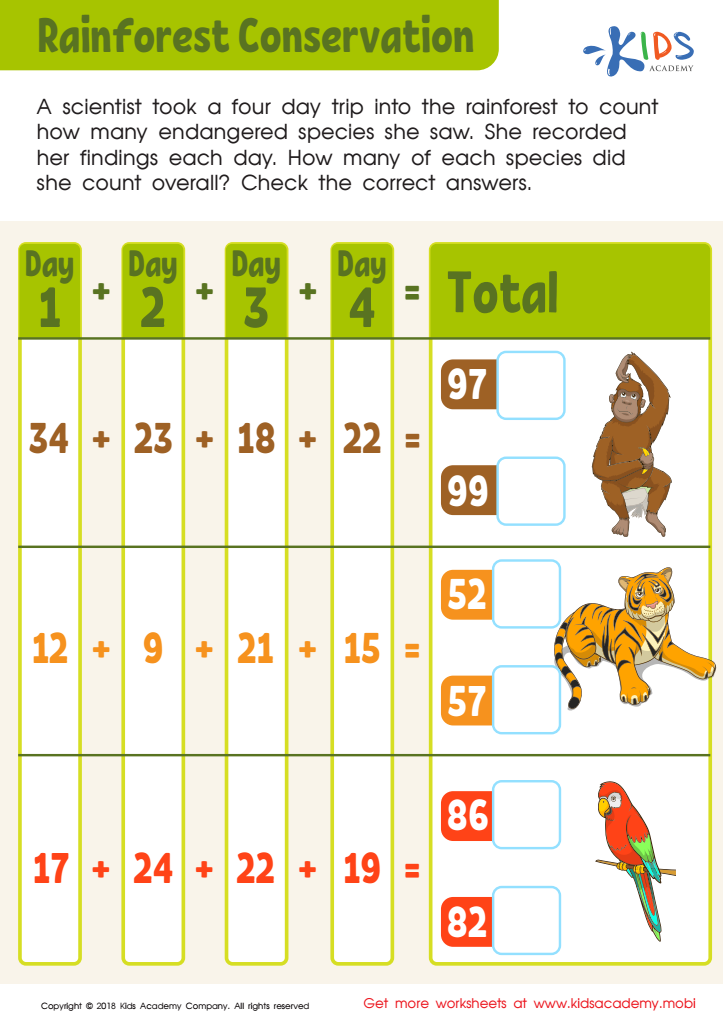
Rainforest Conservation Worksheet
 Assign to My Students
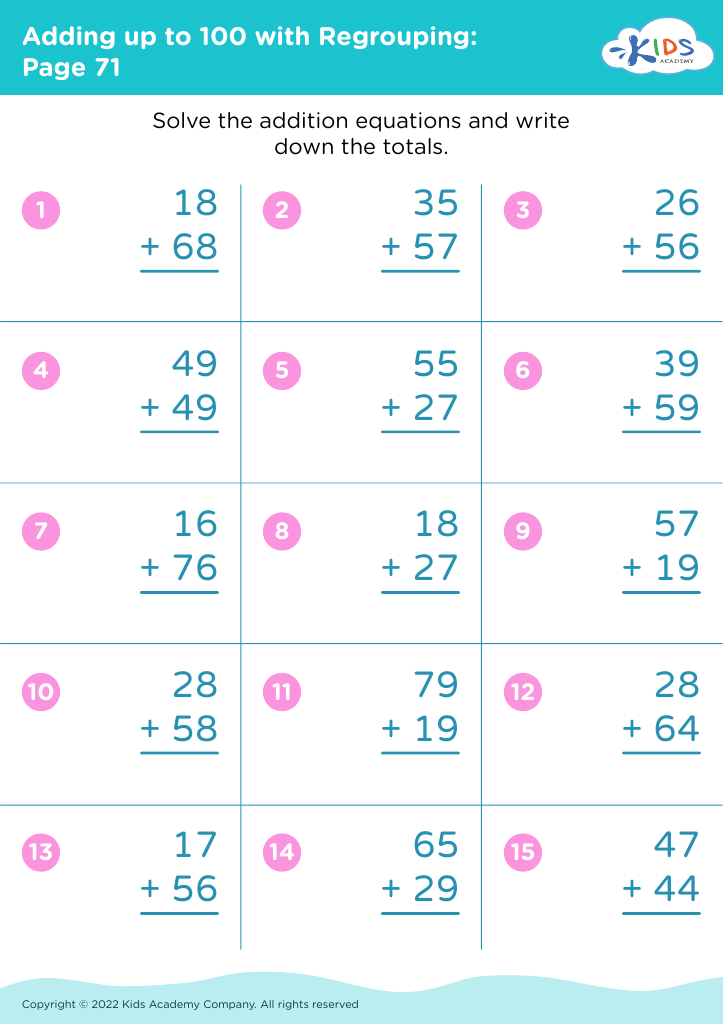
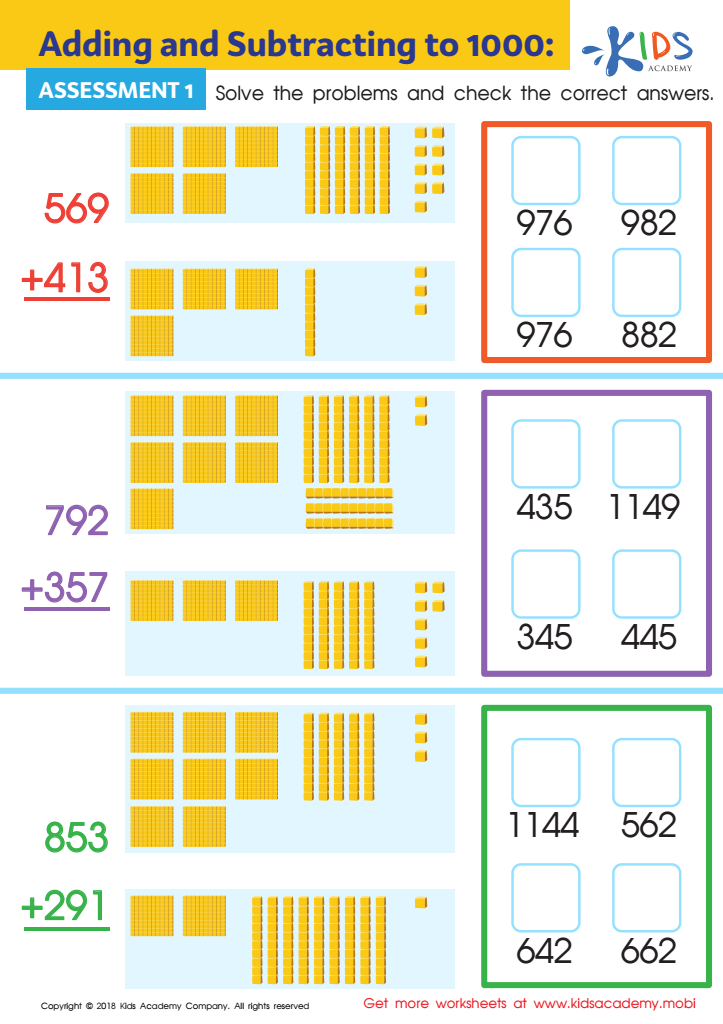
Adding and Subtracting to 1 Worksheet: Assessment 1
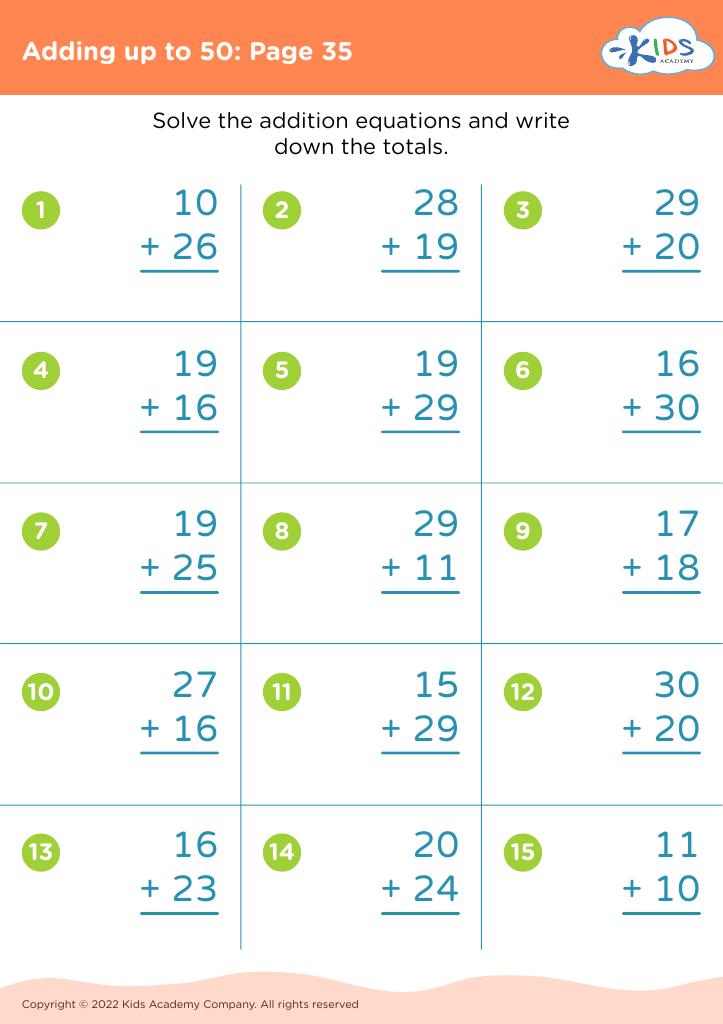
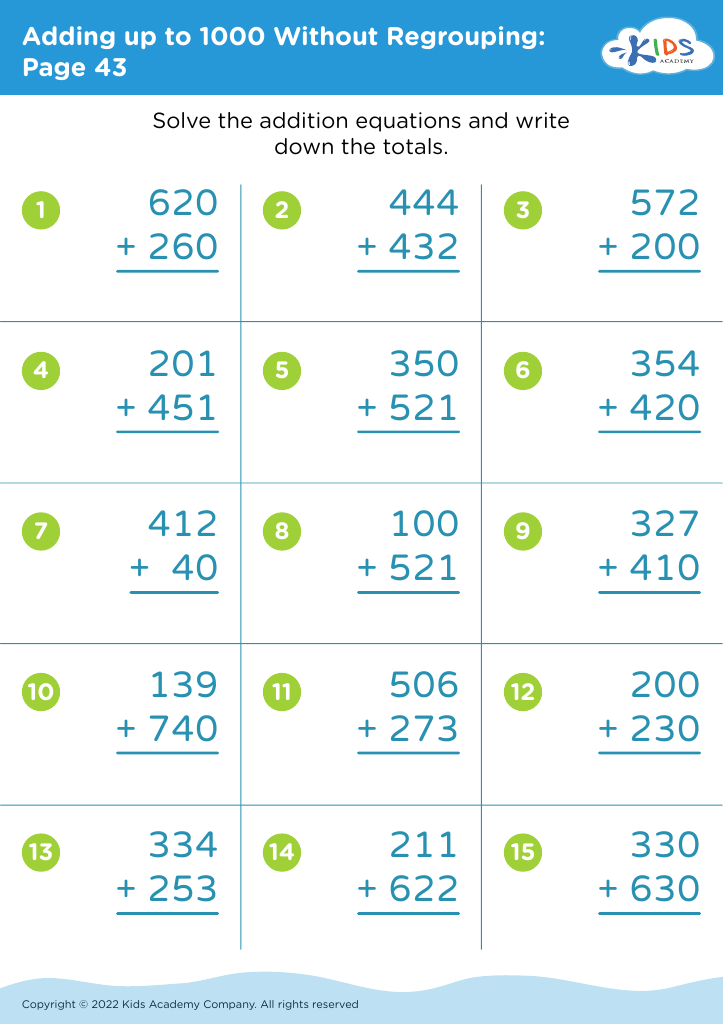
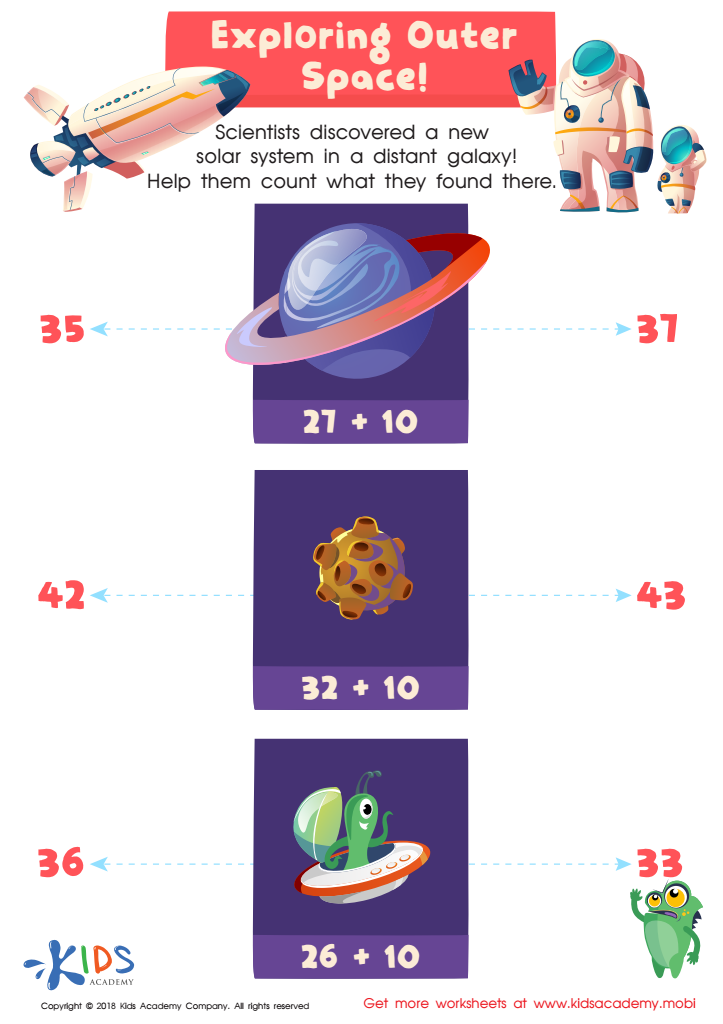
Exploring Outer Space Worksheet








Critical thinking skills in addition and subtraction are vital for children aged 7-8, as they lay the foundation for analytical reasoning and problem-solving. During this developmental stage, children are not just memorizing facts; they are beginning to understand the relationships between numbers and how to manipulate them effectively. Engaging kids in critical thinking around these basic operations helps them to explore various strategies for problem-solving, encouraging flexibility in their approaches.
Additionally, developing critical thinking in math fosters confidence and resilience. When children learn to think critically about addition and subtraction, they create a toolbox of strategies that can be applied to more complex math problems and real-world situations. For instance, by understanding that subtraction can be the reverse of addition, they can tackle word problems more effectively or relate math to everyday life scenarios—such as budgeting with pocket money.
Parents and teachers should prioritize cultivating critical thinking skills in math to prepare students for advanced topics in mathematics and other disciplines, ultimately nurturing a generation of critical thinkers who can tackle challenges with a strategic mindset. Learning becomes more meaningful, enriching the child's overall educational experience and equipping them for future academic success.








