Develop problem-solving skills Addition & Subtraction Worksheets for Ages 7-8
7 filtered results
-
From - To
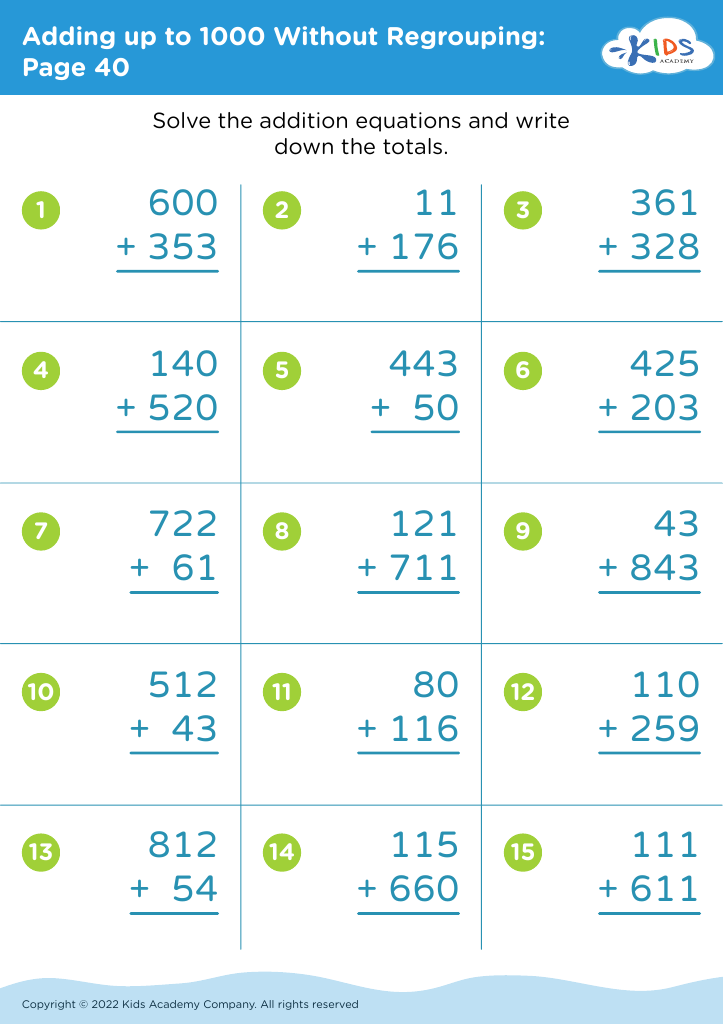
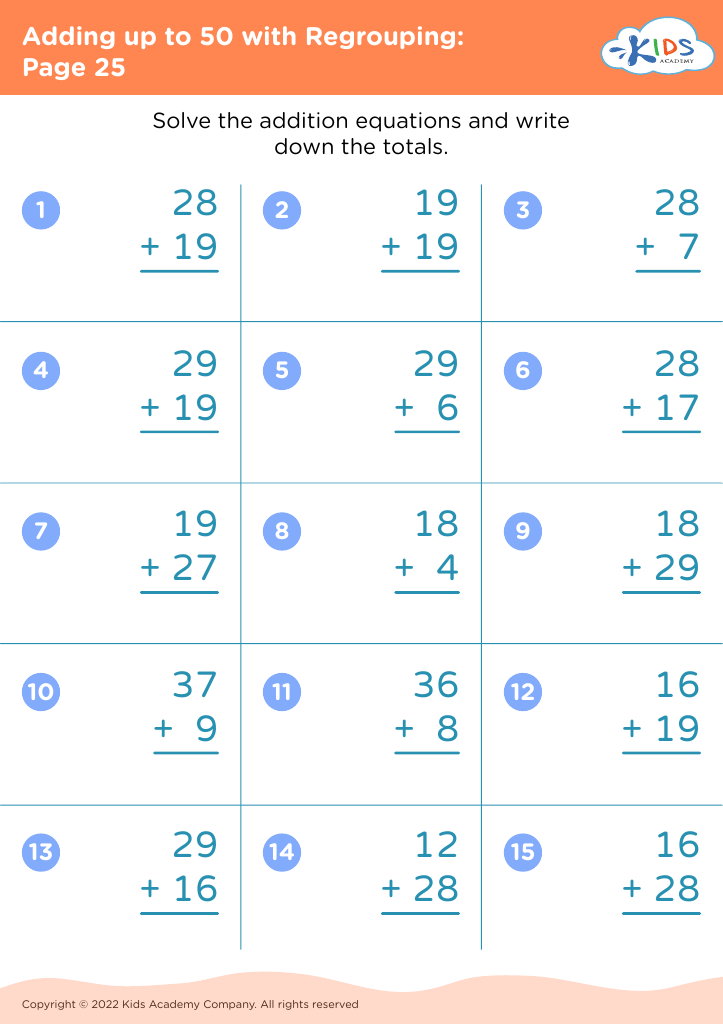
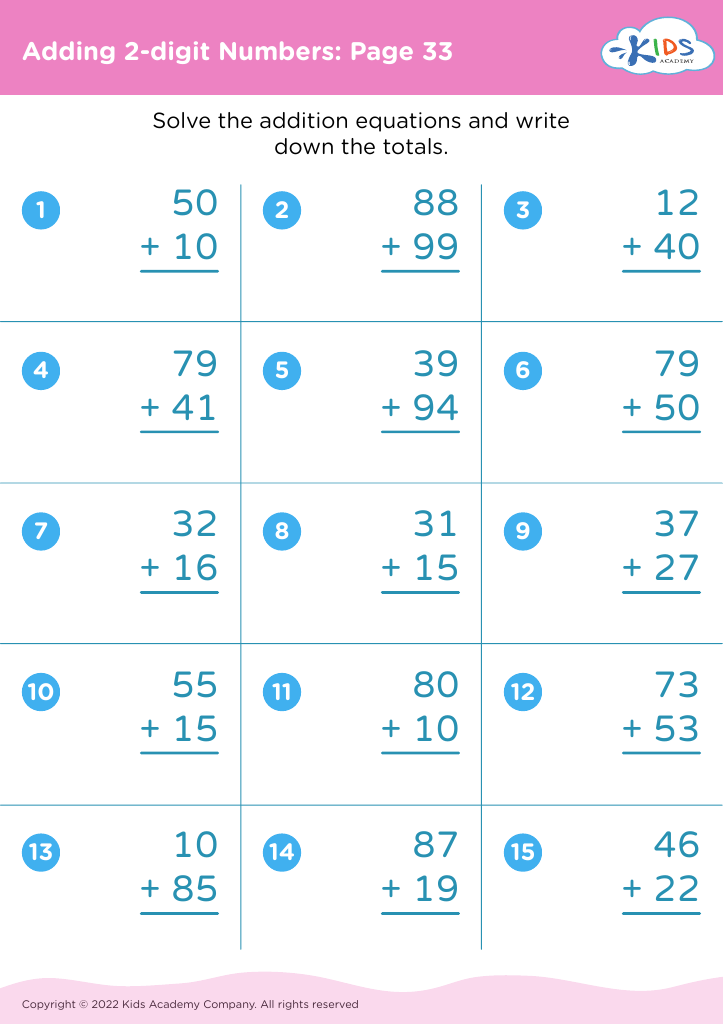
Enhance your child's critical thinking with our "Develop Problem-Solving Skills: Addition & Subtraction Worksheets for Ages 7-8." Designed for early learners, these engaging worksheets not only teach fundamental math concepts but also promote essential problem-solving abilities. With a variety of interactive exercises, children learn to apply addition and subtraction in real-life scenarios, fostering both confidence and competency in their math skills. Each worksheet challenges kids to think creatively and analytically, laying a strong foundation for their future education. Ideal for both classroom use and at-home practice, these resources make math fun and relatable, ensuring your child is well-prepared for academic success!
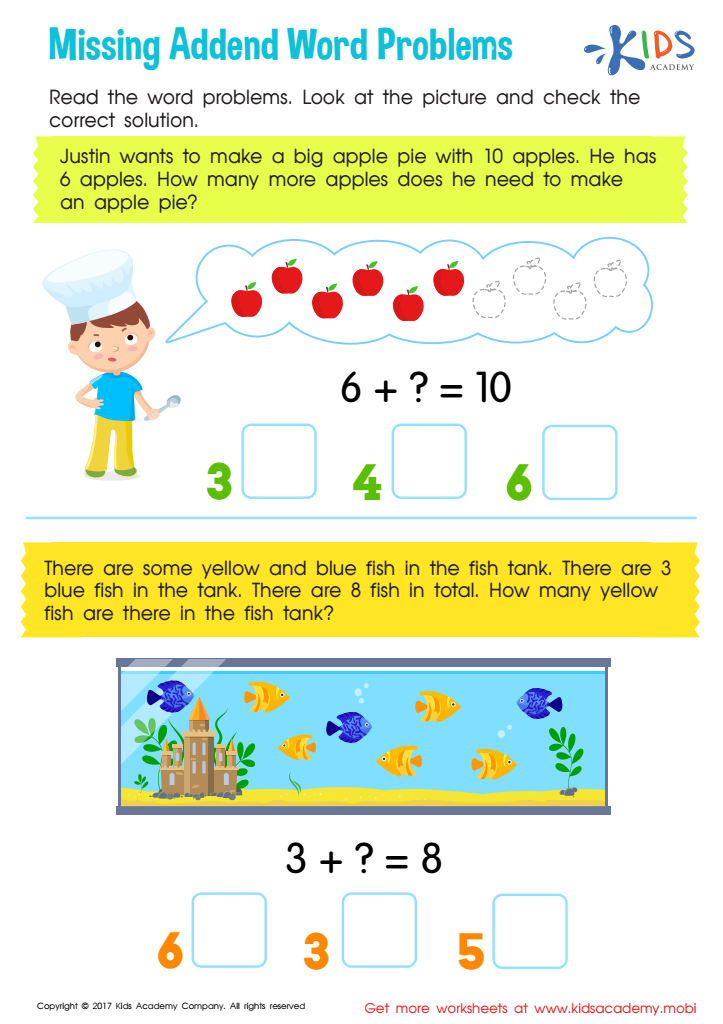
Missing Addend Word Problems Worksheet
 Assign to My Students








Developing problem-solving skills, particularly in addition and subtraction for ages 7-8, is crucial for several reasons. Firstly, this age range marks a significant transition in cognitive abilities, where children begin to think critically and approach challenges independently. Mastery of these basic arithmetic operations not only enhances their mathematical competence but also builds a foundation for more complex concepts like multiplication and division, which they will encounter in later grades.
Furthermore, problem-solving extends beyond academic achievement; it fosters perseverance and resilience. When children learn to tackle tricky math problems, they develop the ability to think creatively and come up with multiple strategies, which are essential skills in everyday life and future learning processes. For parents and teachers, nurturing these skills equips children with the confidence to face challenges, balancing both self-efficacy and the willingness to seek help when needed.
Additionally, developing these skills encourages logical reasoning and analytical thinking, which are vital for informed decision-making. Parents and teachers play a pivotal role in this development; by engaging children in problem-solving activities related to addition and subtraction, they can foster a love for math and empower students to become proactive learners. Ultimately, the investment in these skills today can lead to greater success and adaptability in varied life contexts tomorrow.








