Enhance fine motor skills Addition & Subtraction Worksheets for Ages 7-8
3 filtered results
-
From - To
Discover our engaging Addition & Subtraction Worksheets designed specifically for children aged 7-8 to enhance their fine motor skills. Our printable worksheets provide a fun and interactive way for kids to practice essential math concepts while improving their handwriting, pencil grip, and overall dexterity. Each worksheet features vibrant illustrations and easy-to-follow exercises that promote focus and coordination. As children solve addition and subtraction problems, they’ll not only strengthen their mathematical abilities but also develop the fine motor skills necessary for everyday tasks. Foster a love for learning and help your child master math with these essential worksheets today!
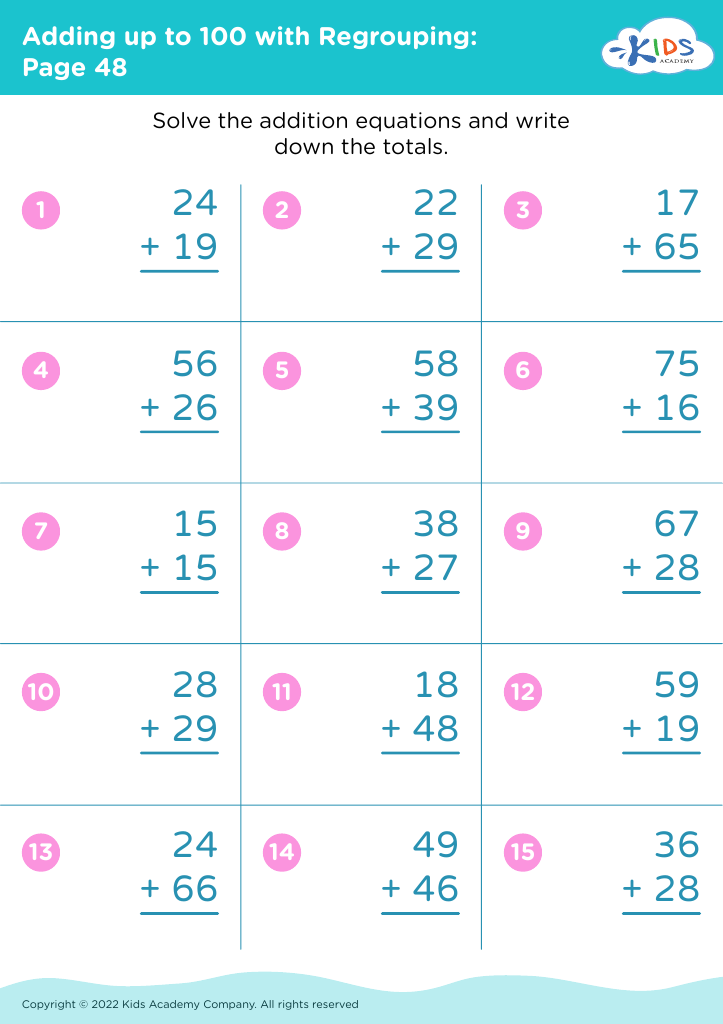
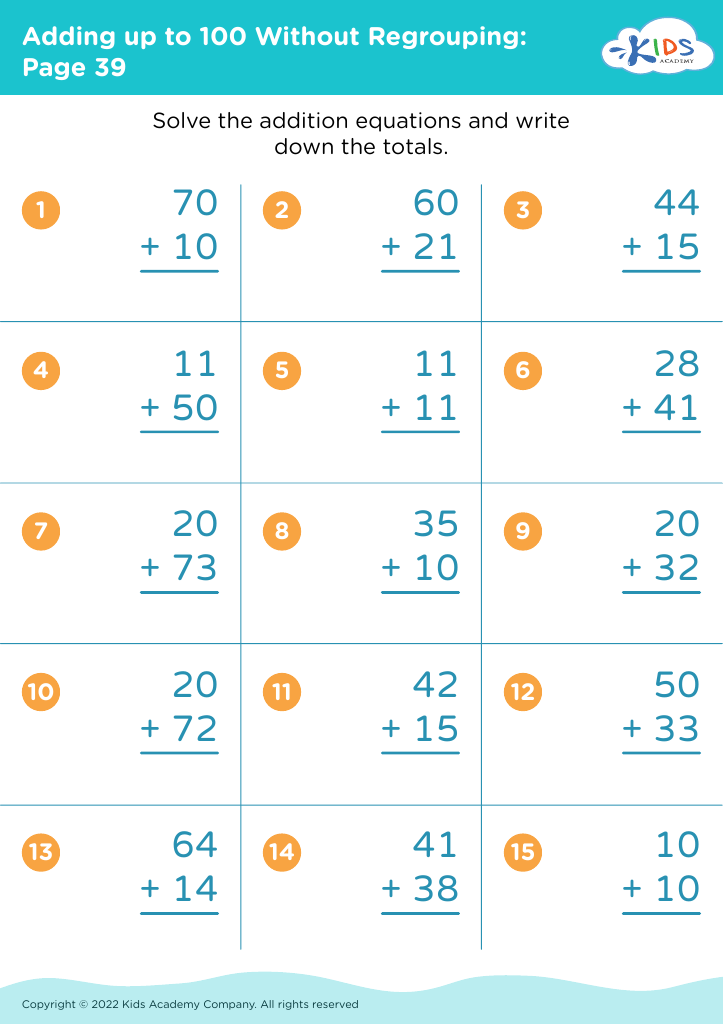
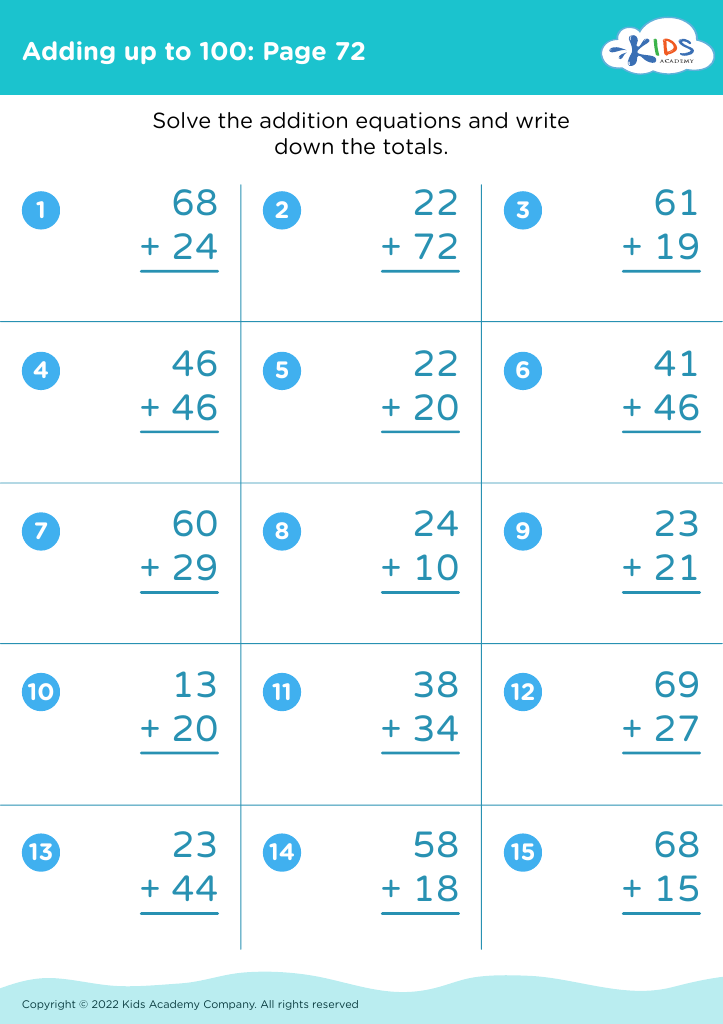








Parents and teachers should prioritize enhancing fine motor skills related to addition and subtraction for children aged 7-8 because these foundational skills are critical for academic success and everyday life. As children engage in mathematical operations, their fine motor skills naturally develop through activities like writing numbers, using tools (e.g., pencils or abacuses), and manipulating objects (e.g., counting blocks). Improved fine motor skills lead to greater precision and confidence in writing calculations, ultimately impacting their performance in math.
Furthermore, fine motor skills are linked to overall cognitive development. Activities that promote these skills—such as crafting, assembling puzzles, or playing with manipulatives—can create a multisensory learning environment that keeps children engaged and motivated. In this age group, enhancing fine motor coordination while practicing addition and subtraction will help solidify their understanding of concepts, making it easier for them to move on to more complex math in the future.
Additionally, having strong fine motor skills supports their self-esteem and independence in learning. As children become more proficient in managing their tasks, they are more likely to develop a positive attitude toward mathematics. Thus, fostering these skills is essential for both academic and personal growth.








