Enhances number recognition Addition & Subtraction Worksheets for Ages 7-8
4 filtered results
-
From - To
Boost your 7-8-year-olds' math skills with our "Enhances Number Recognition" Addition & Subtraction Worksheets! Tailored specifically for early learners, these engaging worksheets help children master essential math concepts while developing strong number recognition. Packed with fun visuals and interactive exercises, students will practice addition and subtraction skills in an enjoyable way. Each worksheet is designed to build confidence, improve focus, and motivate young learners to enhance their problem-solving abilities. Perfect for reinforcing classroom learning or as an at-home resource, these worksheets provide the ideal foundation for a lifetime of mathematical proficiency. Start your child’s math journey today!
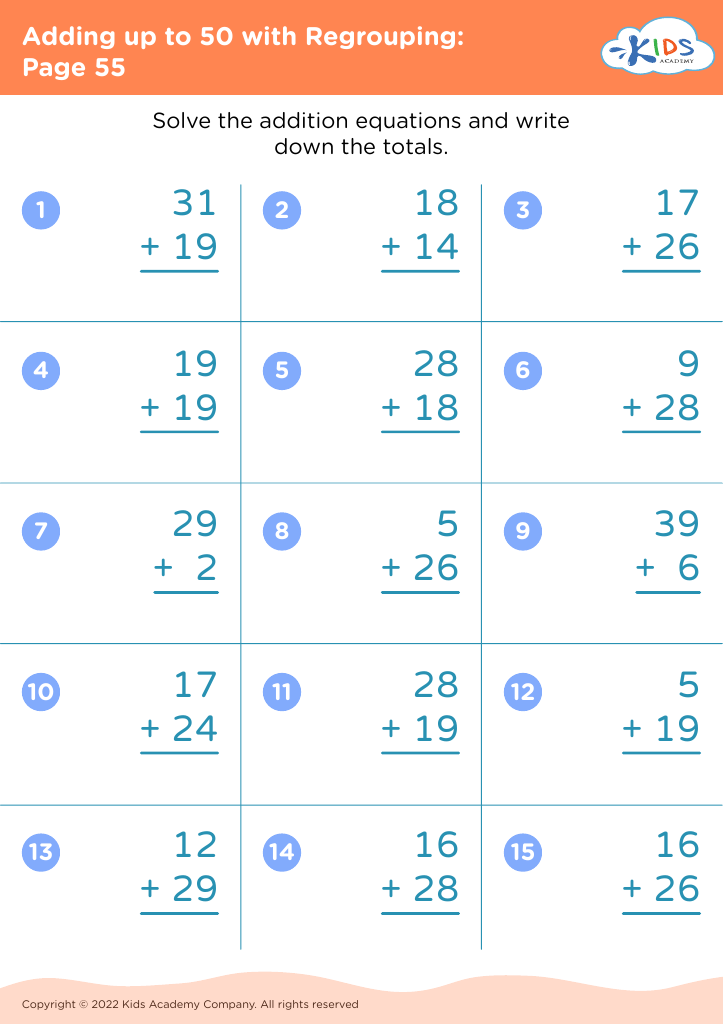
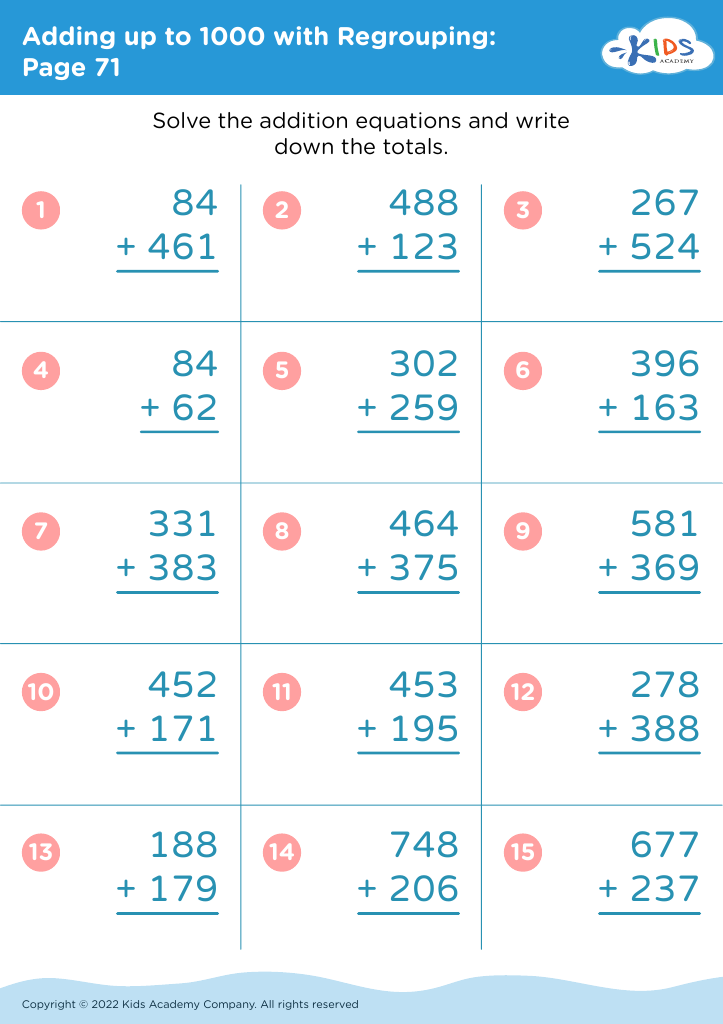
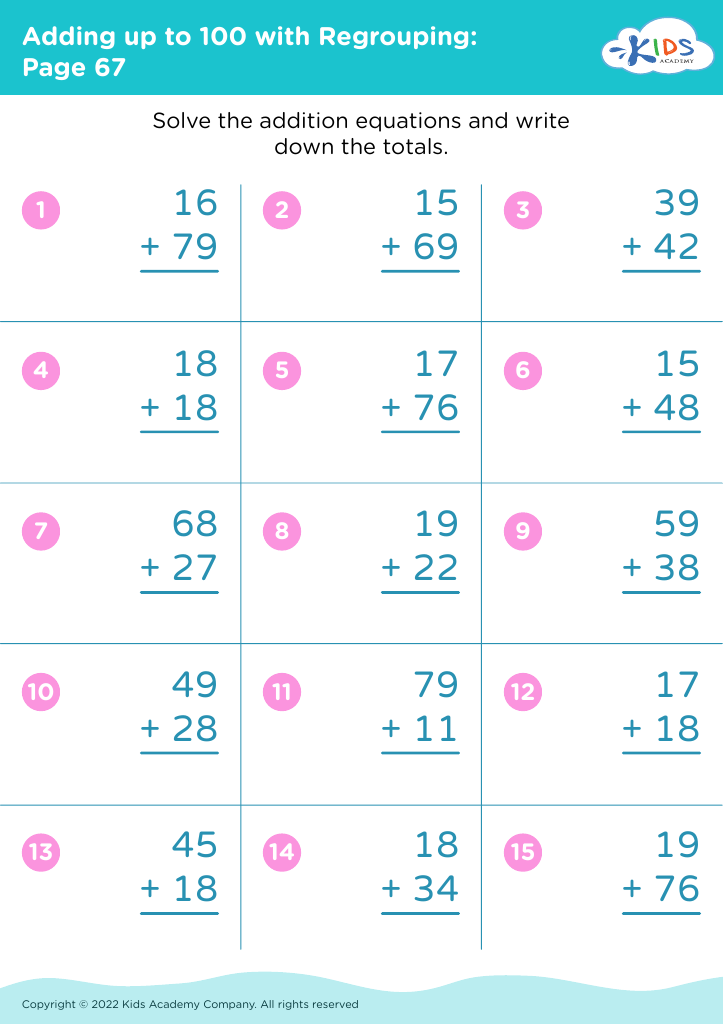
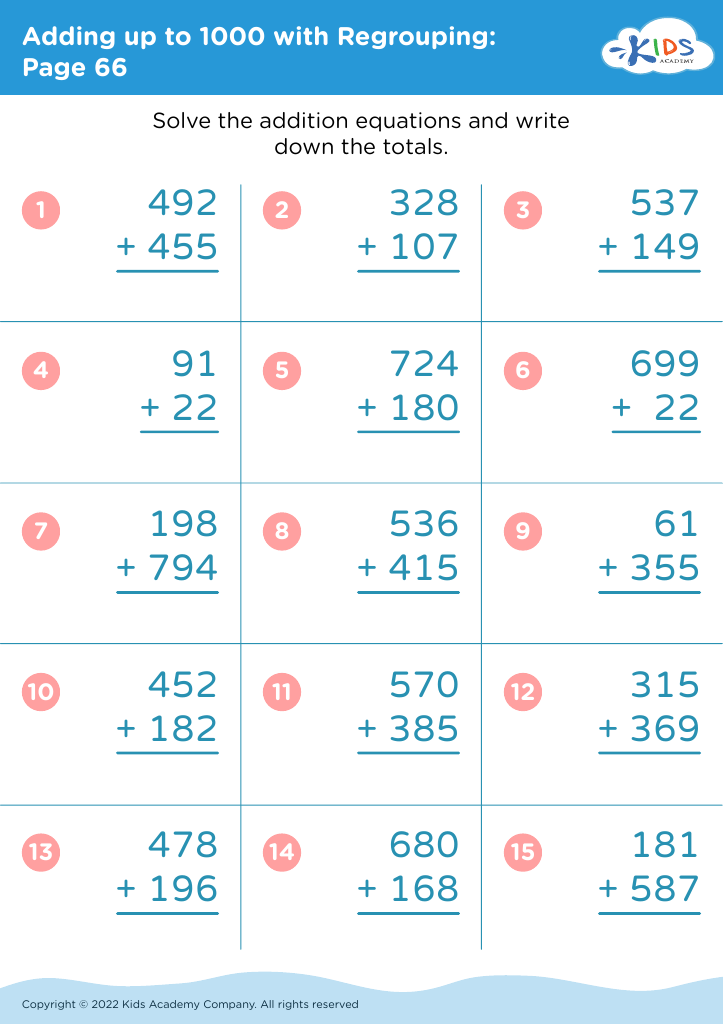








Enhancing number recognition, addition, and subtraction skills for children aged 7-8 is crucial for their overall mathematical development and academic success. At this age, children transition from basic number concepts to more complex mathematical operations, forming a foundation for future learning. Strong number recognition helps children understand the value of digits, identify patterns, and quickly grasp arithmetic concepts, which are vital when tackling more advanced topics in mathematics.
Moreover, mastery of addition and subtraction at this stage is not only essential for academic competence but also promotes critical thinking and problem-solving skills. Young learners equipped with these skills can confidently approach real-life situations involving budgeting, measuring, and time management.
For parents and teachers, fostering these abilities can help develop a child's self-esteem and enjoyment of learning. Engaging in fun activities that promote number sense—such as games, puzzles, or real-world problem-solving—can turn math into an enjoyable experience. Additionally, supporting children through encouragement and practical applications ensures that they see math as a useful tool, laying the groundwork for lifelong learning and proficiency in mathematics. Ultimately, building strong skills in these areas helps children become independent learners and prepares them for future academic challenges.








