
Geography knowledge Addition & Subtraction Worksheets for Ages 7-8
4 filtered results
Difficulty Level
Grade
Age
-
From - To
Subject
Activity
Standards
Enhance your child's math and geography skills with our specially designed Geography Knowledge Addition & Subtraction Worksheets for ages 7-8! Our engaging worksheets intertwine basic arithmetic with fun geographical themes to create an enriching learning experience. Children can practice addition and subtraction while exploring continents, countries, and landmarks, all through colorful, interactive activities. Ideal for reinforcing classroom learning or extra practice at home, these worksheets help build foundational math skills while fostering a love for geography. Download today and watch your child's confidence and knowledge grow in both math and the world around them!
Favorites
With answer key
Interactive
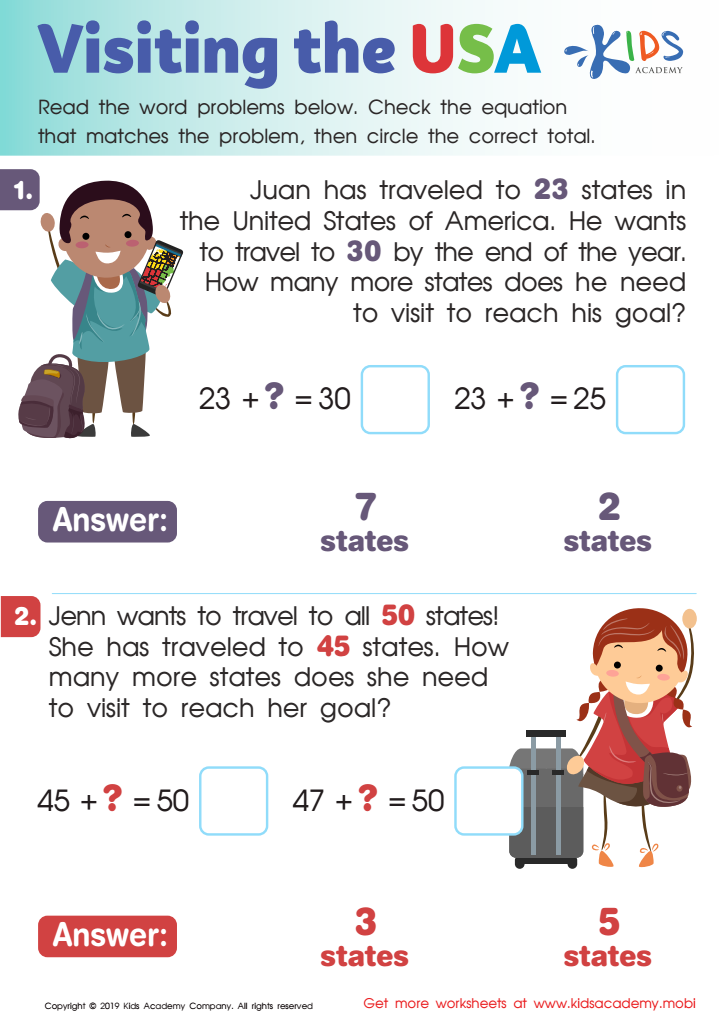
Visiting the USA Worksheet
Do your kids love travelling? Ask them why and find out what they look forward to the most. People travel for a variety of reasons, such as adventure, holiday, or business. Juan and Jenn in the picture travel for adventure and have a goal they want to achieve. Read the word problems to your kids and help them pick the right equation and match the total.
 Assign to My Students
Visiting the USA Worksheet
Worksheet
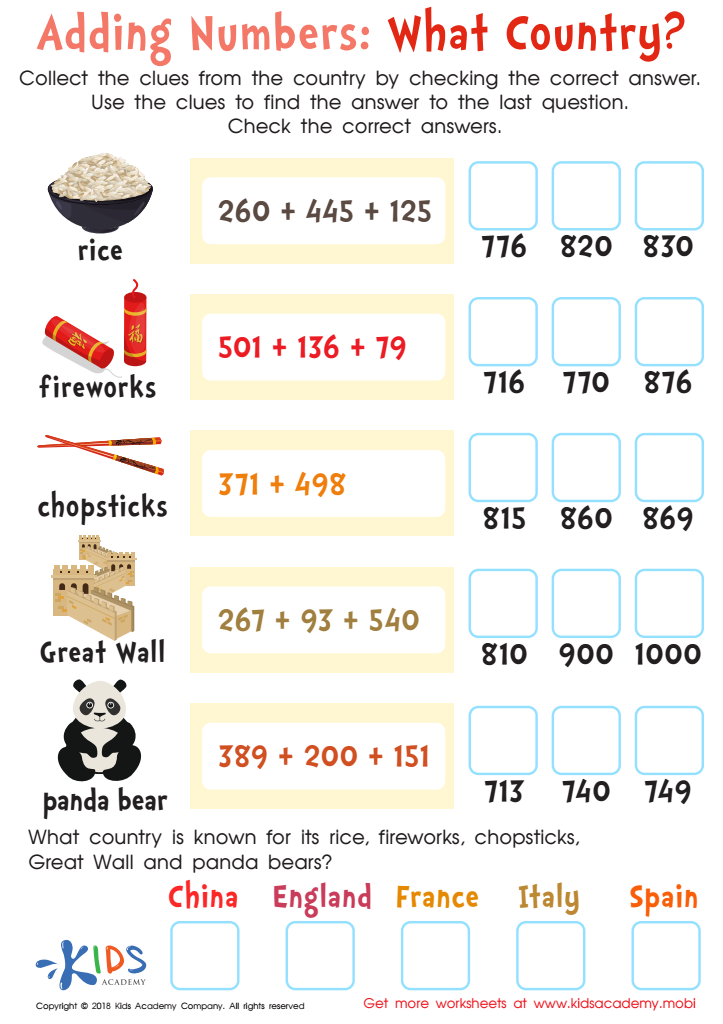
Adding Numbers: What Country Worksheet
Students can use this worksheet to learn more about different countries. Have them collect clues from the worksheet to answer the last question. Help them check the correct answer, and they'll gain knowledge about each country's food, animals, celebrations, and landmarks.
Adding Numbers: What Country Worksheet
Worksheet
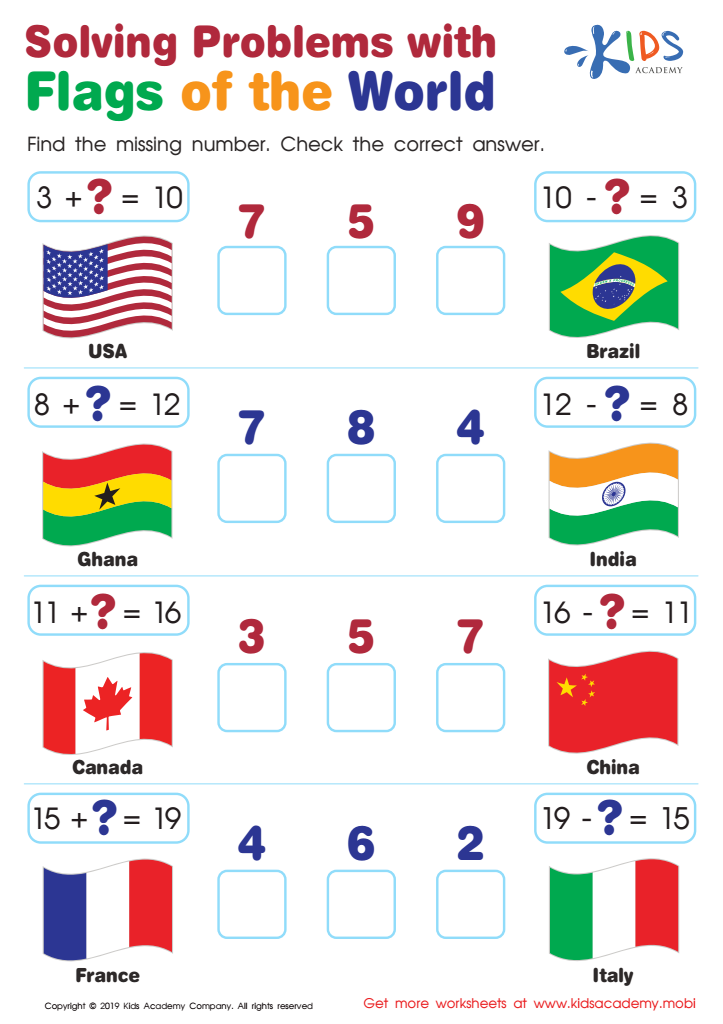
Solving Problems with Flags of the World Worksheet
Name some countries you know with your kids, then introduce their flags with this worksheet. Help them find the missing number in each addition problem, and then check the answer. It's a fun way to learn about different countries near and far.
Solving Problems with Flags of the World Worksheet
Worksheet
Join Kids Academy for Free
Who is primarily going to use this learning content?








For children ages 7-8, possessing knowledge in geography and proficiency in addition and subtraction equips them with essential cognitive and life skills. First, geography fosters a global perspective, teaching children about diverse cultures, landforms, and ecosystems. This early understanding cultivates curiosity, tolerance, and respect for differences, foundational for fostering inclusivity and empathy in an interconnected world.
Simultaneously, addition and subtraction are foundational arithmetic skills that underpin everyday activities and advanced mathematical concepts. Mastery of these basic operations enhances problem-solving abilities and critical thinking. For instance, children who are proficient in math can confidently handle real-life situations such as budgeting small amounts of money or understanding distances on a map, effectively bridging geographic awareness with practical math skills.
Parents and teachers play a crucial role in integrating these subjects into everyday learning, igniting students' imaginations through hands-on activities like map-reading and interactive math-games. Structured learning within these domains can enhance cognitive development — sharpening memory, improving patience, and boosting spatial awareness. Moreover, early competence in math and geography sets a strong academic foundation, often correlating with future academic success, technological literacy, and career opportunities. Ultimately, nurturing these skills signals a commitment to holistic education, preparing children to navigate and contribute to a complex and ever-changing world.








