Improving observation skills Addition & Subtraction Worksheets for Ages 7-8
3 filtered results
-
From - To
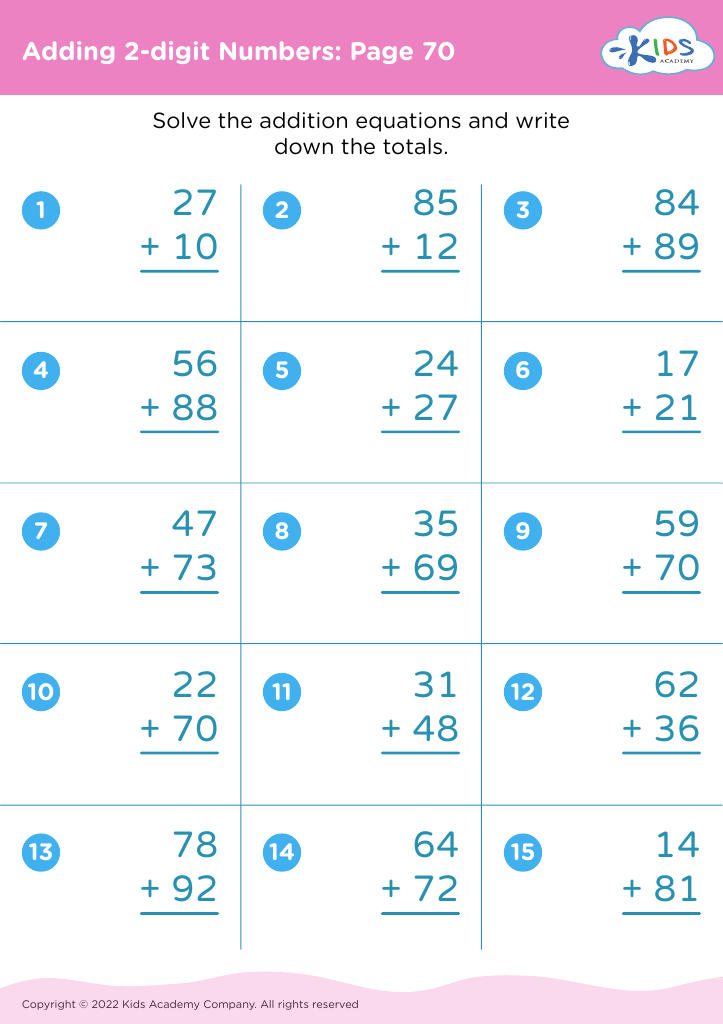
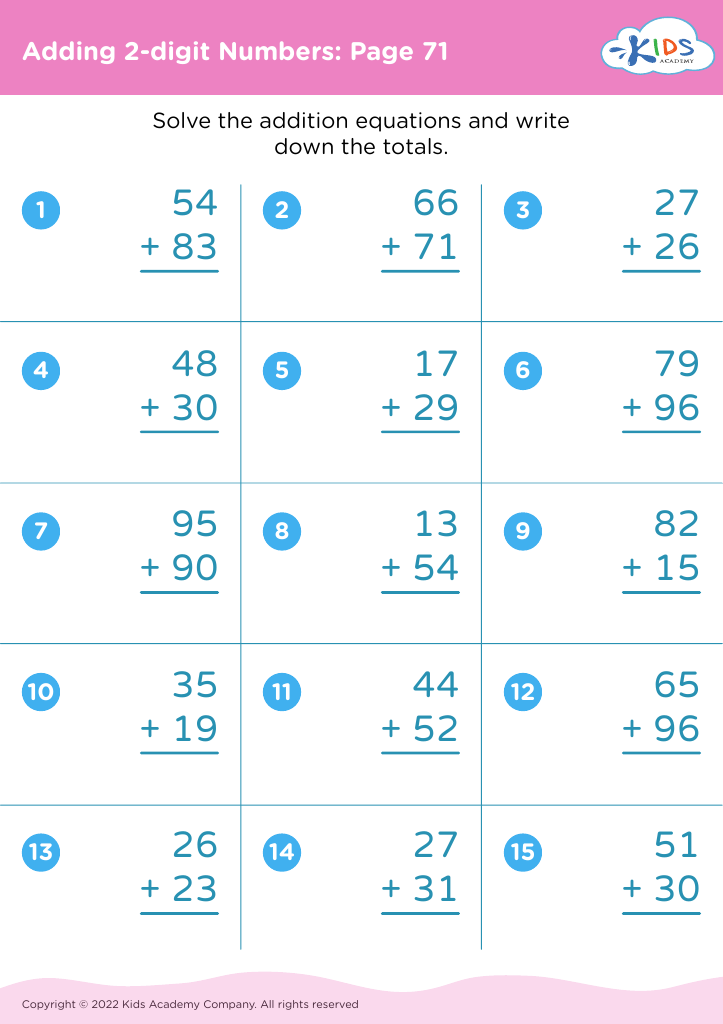
Enhance your child’s mathematical abilities with our "Improving Observation Skills Addition & Subtraction Worksheets" designed for ages 7-8! These engaging worksheets focus on developing keen observation skills, essential for mastering addition and subtraction concepts. Through interactive exercises and fun illustrations, children will learn to identify numbers, patterns, and relationships while solving math problems. This not only reinforces mathematical understanding but also boosts critical thinking and attention to detail. Ideal for both classroom and home learning, our worksheets provide a comprehensive approach to math education. Get your little learner excited about math and watch their confidence soar!
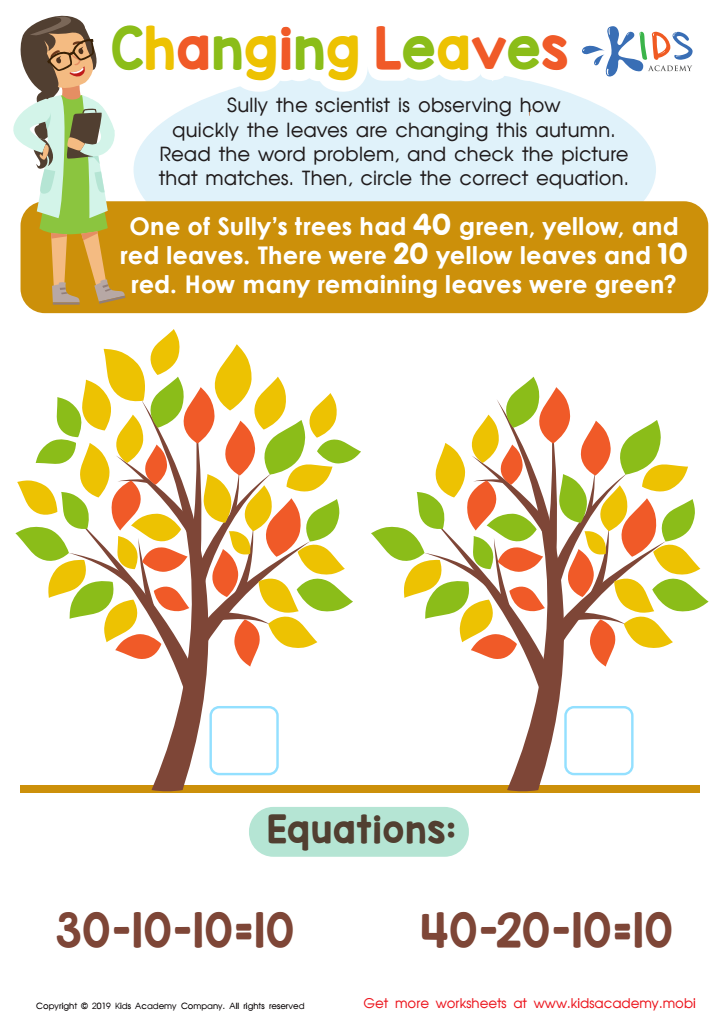
Changing Leaves Worksheet
 Assign to My Students








Improving observation skills in addition and subtraction for children aged 7-8 is crucial for their mathematical development and overall learning. At this age, learners transition from basic arithmetic to more complex problem-solving. Enhancing their observation skills helps them notice patterns, recognize relationships between numbers, and identify relevant information in word problems. This fosters critical thinking, enabling children to approach math with curiosity and confidence.
Parents and teachers should care about this skill because strong observation enhances a child’s ability to tackle real-life mathematical situations, such as budgeting or measuring. It builds a foundation for higher-order math concepts and skills, preparing them for future academic challenges. Observational skills also promote active engagement, making math lessons more interactive and enjoyable.
Additionally, by encouraging observational learning, educators and parents can help develop a child's perseverance and resilience. Gaining confidence in tackling mathematical problems can translate into a positive attitude towards learning in general. Ultimately, improved observation skills can enhance a child's academic performance, making it an essential focus for parents and educators invested in a child's long-term success.








