
Matching skills Addition & Subtraction Worksheets for Ages 7-8
3 filtered results
Difficulty Level
Grade
Age
-
From - To
Subject
Activity
Standards
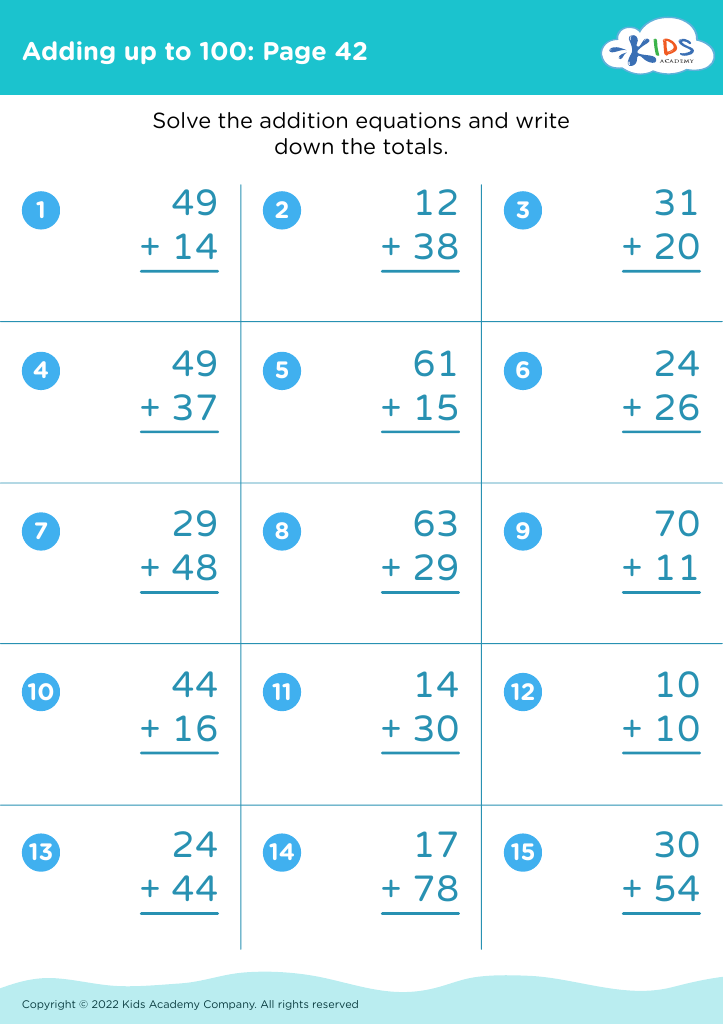
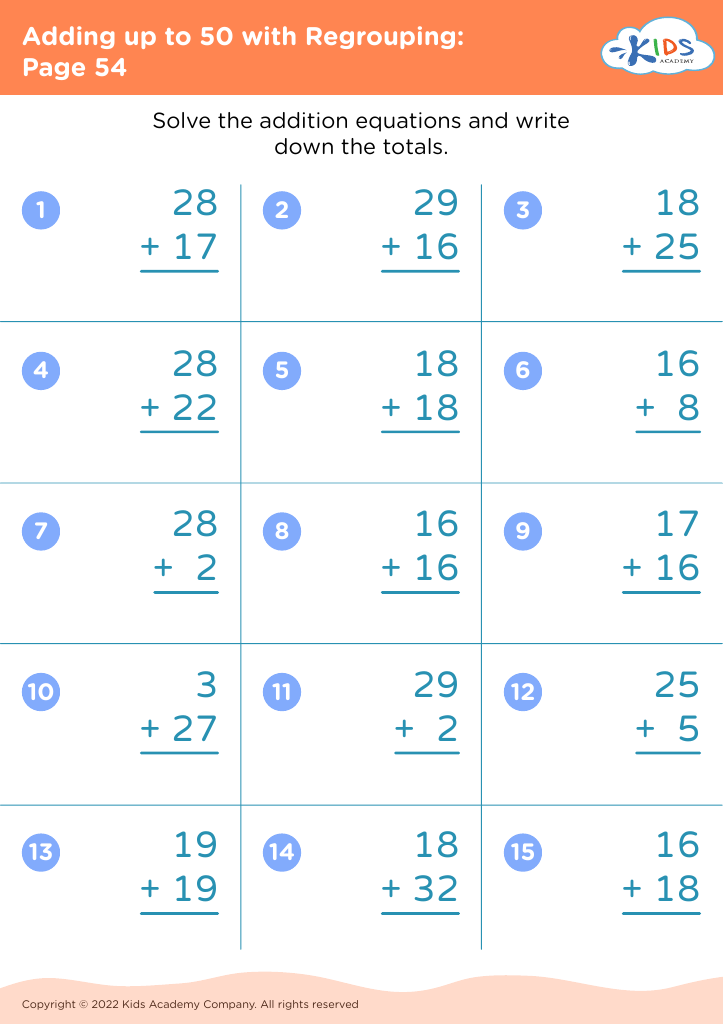
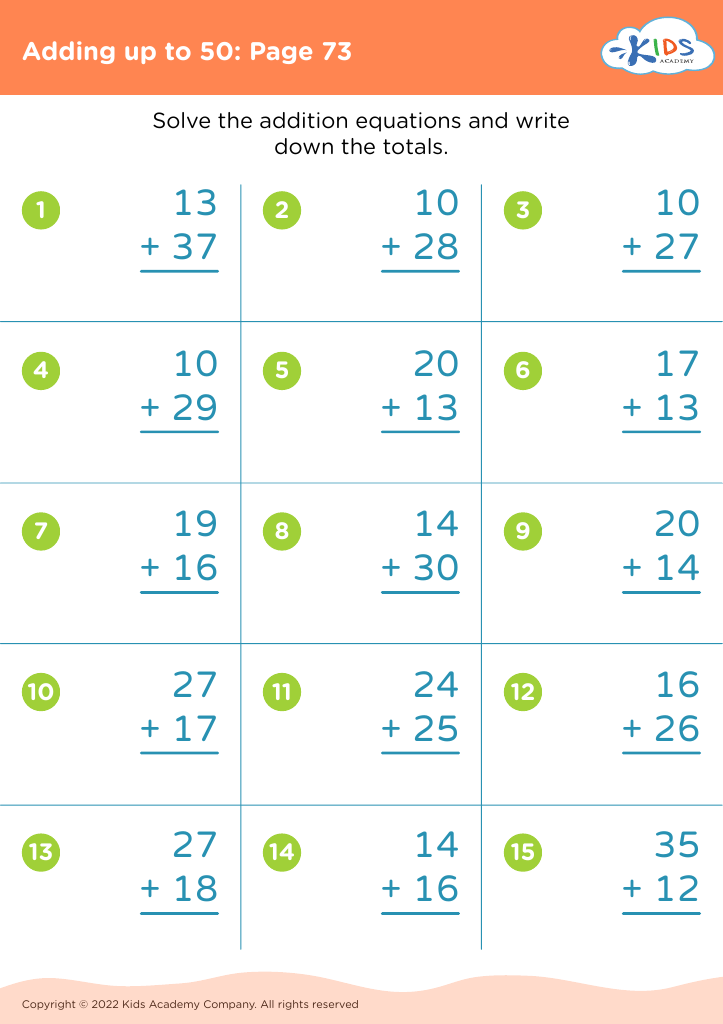
Enhance your child’s math abilities with our "Matching Skills Addition & Subtraction Worksheets" designed for ages 7-8. These engaging worksheets help young learners solidify their addition and subtraction skills through fun matching exercises. Ideal for second graders, the activities support the development of critical thinking and problem-solving capabilities. With an intuitive approach, each worksheet ensures that kids enjoy the learning process while reinforcing their math knowledge. Perfect for both classroom use and homeschooling, these printable worksheets will boost your child's confidence and competence in mathematics. Explore now to make math practice effective and enjoyable!
Favorites
With answer key
Interactive
Join Kids Academy for Free
Who is primarily going to use this learning content?








Caring about developing addition and subtraction skills in children aged 7-8 is crucial because these foundational math skills are essential for their academic and everyday lives. At this age, students are transitioning from simple counting to more complex mathematical operations, and mastering addition and subtraction builds the necessary groundwork for future learning in mathematics. These skills enhance their numerical fluency, which is vital for comprehending advanced concepts such as multiplication and division.
By focusing on matching skills—pairing sums with correct equations, for example—children learn to think critically and accurately, boosting their confidence. Matching activities also promote cognitive development by improving memory and pattern recognition, key components in problem-solving.
For parents, engaging in these activities at home strengthens their child's academic foundation, supports classroom learning, and provides a shared bonding experience. For teachers, incorporating such exercises into the curriculum ensures differentiated learning, catering to individual educational needs, and maintaining engagement.
Ultimately, fostering proficient addition and subtraction skills contributes to a student's positive attitude towards math, laying a solid base for future studies and daily tasks like handling money, comparing quantities, and understanding measurements. Thus, care in this developmental stage sets children up for long-term success and resilience in both academics and life skills.








