Shape Recognition Addition & Subtraction Worksheets for Ages 7-8 - Page 2
33 filtered results
-
From - To
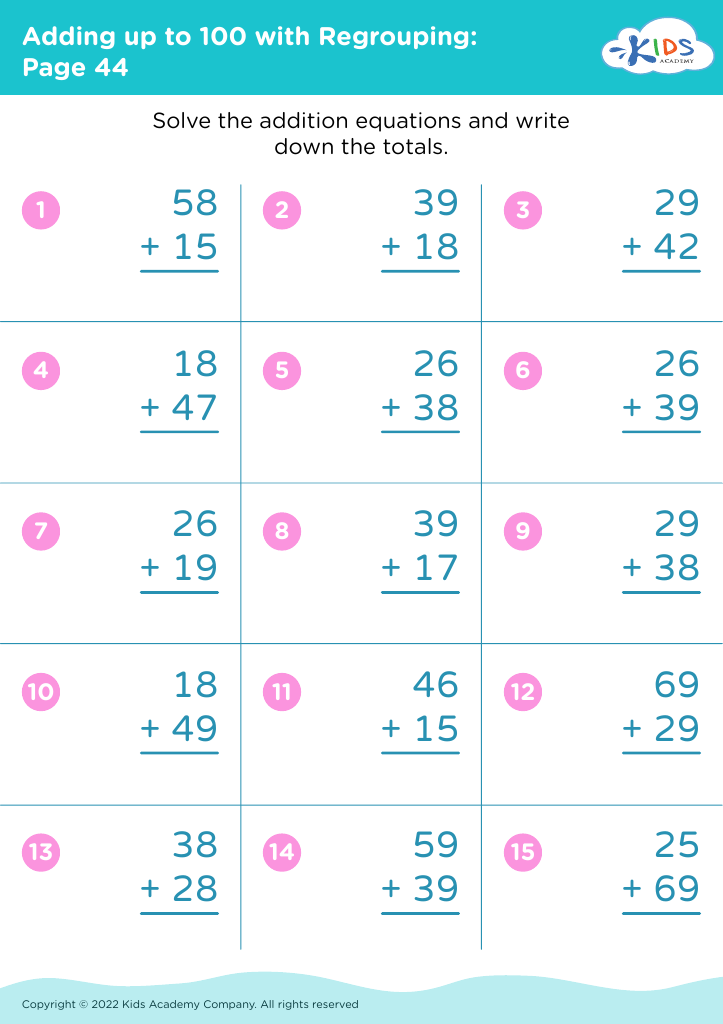








Shape recognition, addition, and subtraction are crucial skills for children aged 7-8, forming the foundation for more advanced mathematical concepts. Parents and teachers should emphasize these areas because they nurture cognitive development and critical thinking skills. Shape recognition aids spatial awareness, helping children understand geometry, a key aspect of their future academic journey. Recognizing and distinguishing between different shapes enhances visual perception and classification skills, which are beneficial across various subjects.
Addition and subtraction, essential arithmetic operations, enable children to solve basic math problems, fostering numerical literacy. Mastery of these skills is fundamental for future tasks such as multiplication, division, and problem-solving, laying the groundwork for more complex mathematical concepts.
Integrating shape recognition with addition and subtraction encourages a holistic learning approach. For example, using shapes to visualize addition and subtraction problems makes abstract concepts more concrete, aiding comprehension and retention. This combined methodology also promotes engagement and interest in math through interactive and tangible learning experiences.
Furthermore, these skills are not only academically beneficial but also practical in daily life. Understanding shapes assists in navigating and organizing everyday objects, while basic arithmetic is essential for managing time, money, and other practical activities. Therefore, focusing on these skills ensures well-rounded cognitive development and prepares children for future academic and life challenges.








