Understand patterns Addition & Subtraction Worksheets for Ages 7-8
6 filtered results
-
From - To
Explore our “Understand Patterns: Addition & Subtraction Worksheets” designed specifically for children ages 7-8. These engaging worksheets help young learners grasp the concept of patterns in math, enabling them to make connections between addition and subtraction. Through fun activities and colorful illustrations, students will enhance their critical thinking and problem-solving skills. The worksheets focus on recognizing number patterns, understanding relationships between numbers, and improving overall math fluency. Perfect for classroom use or at-home practice, our resources create a solid foundation for future math success. Discover the joy of learning with our carefully crafted materials that make math exciting!
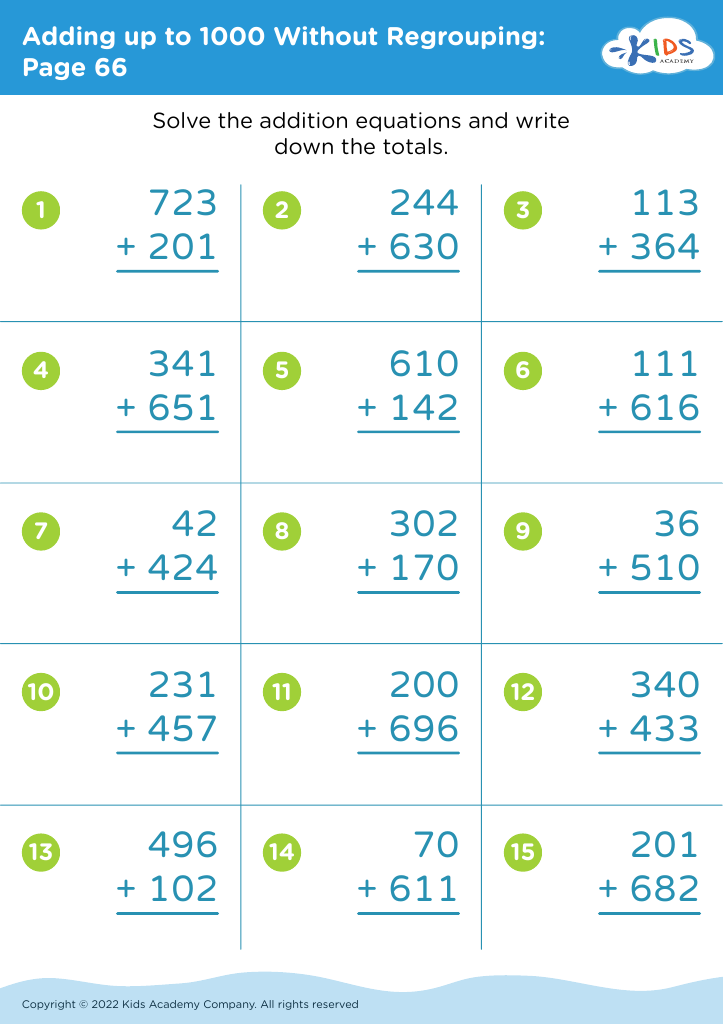
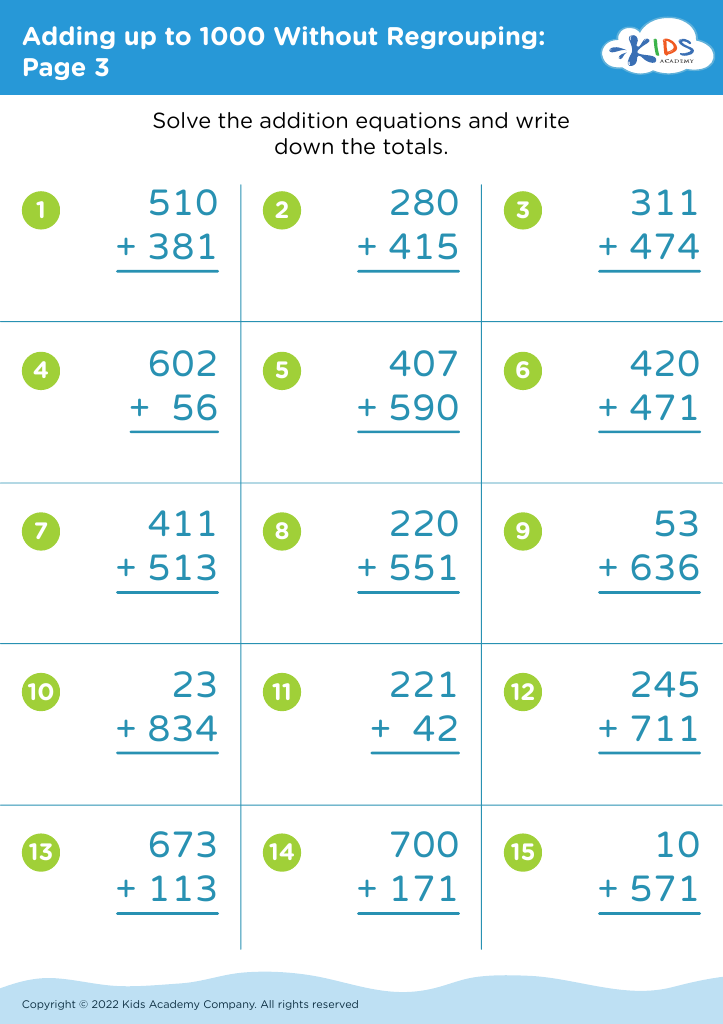
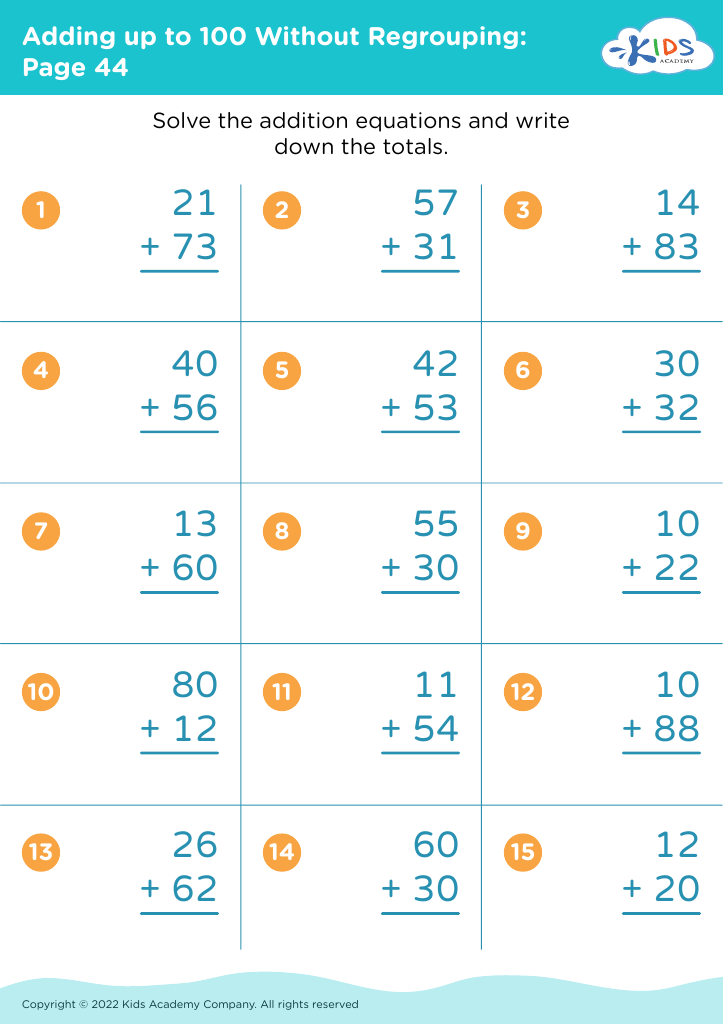
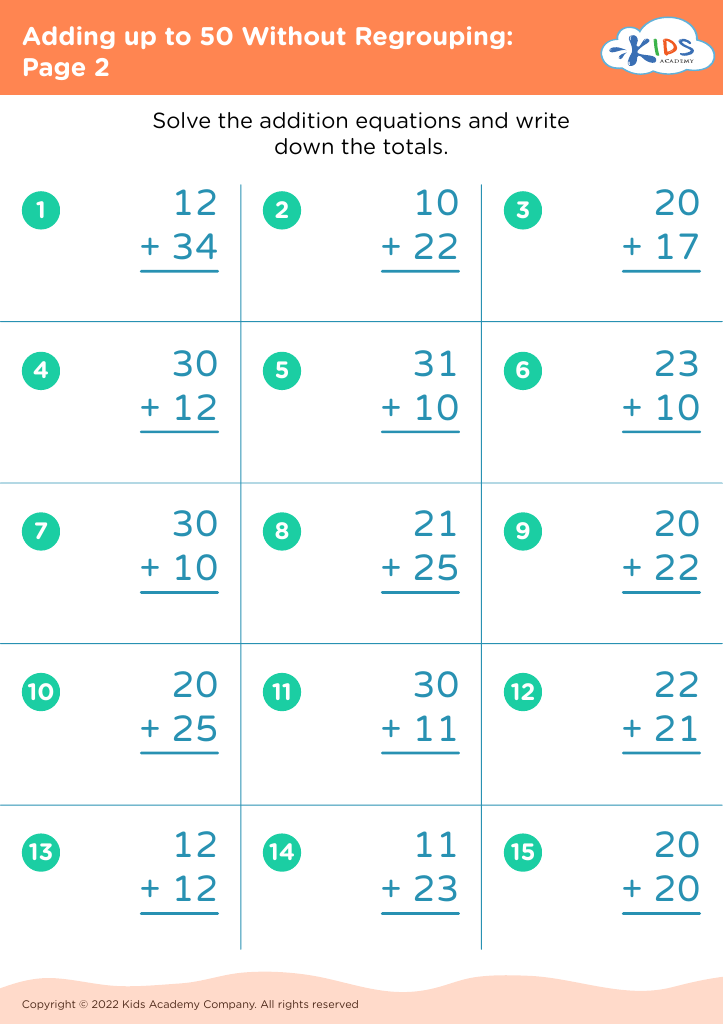
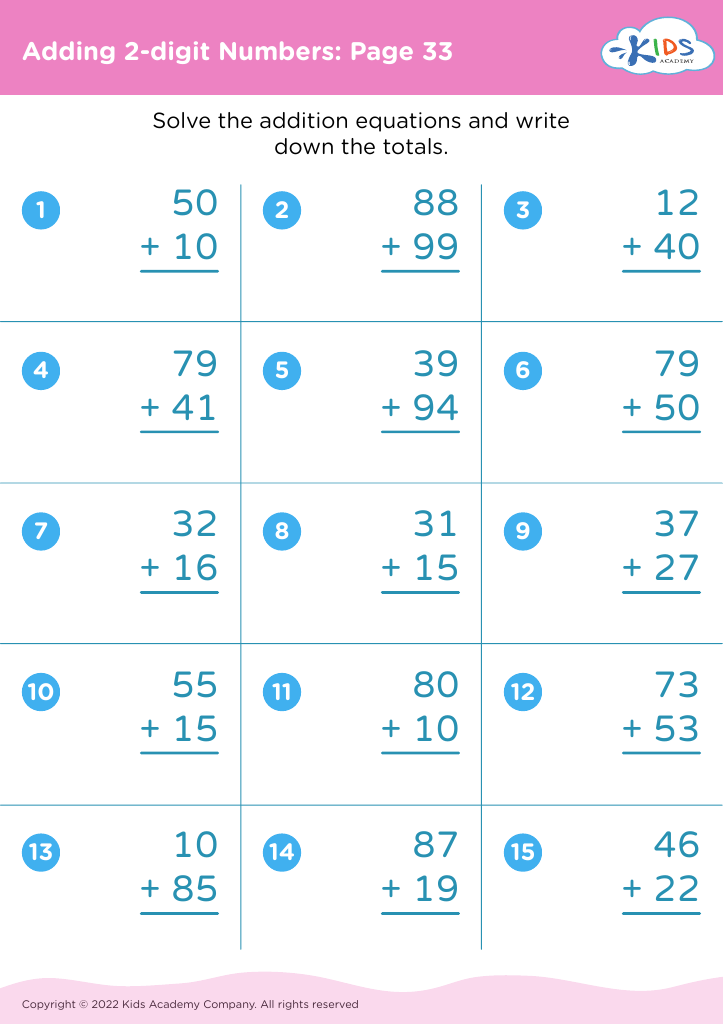
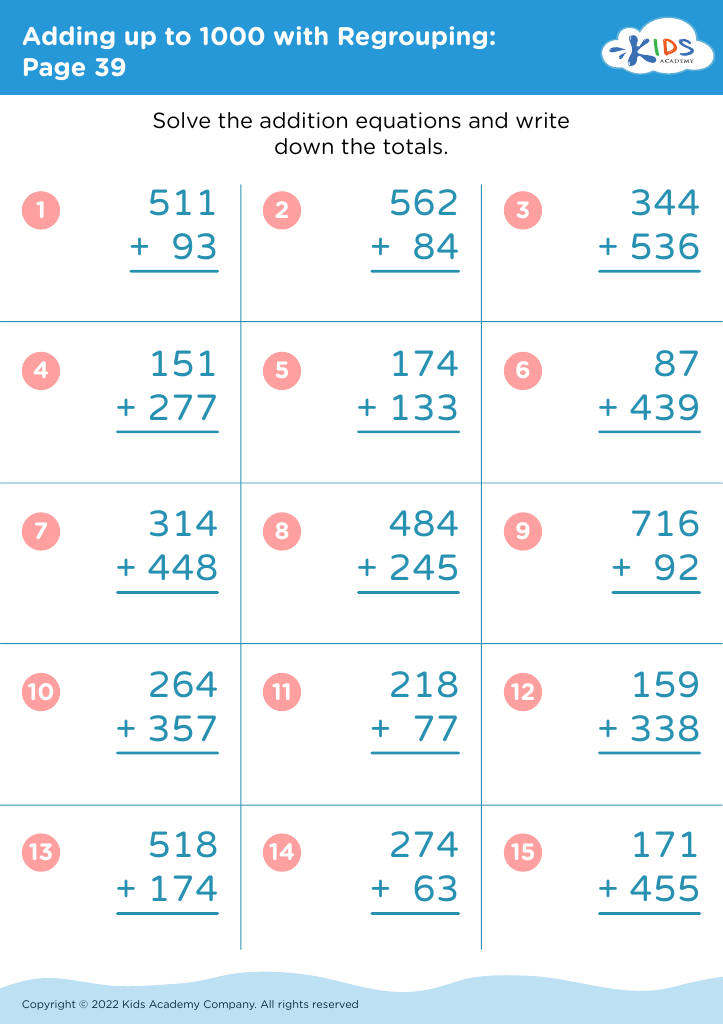








Understanding patterns in addition and subtraction is essential for children aged 7-8 as it lays a strong foundation for future mathematical learning. At this age, children begin to encounter more complex arithmetic operations, and recognizing patterns can simplify these concepts, making them more approachable.
Firstly, patterns help students internalize mathematical concepts, enhancing their problem-solving skills. By recognizing repetitive sequences in numbers, children can develop mental math strategies, making calculations quicker and more intuitive. For instance, understanding that adding 10 to a number consistently increases the tens place helps students grasp the concept of place value.
Additionally, pattern recognition stimulates critical thinking and logical reasoning. When children can predict outcomes based on identified patterns, they learn to analyze problems, which is vital not just in math but across all subjects. Engaging with patterns also enhances motivation and engagement, as students become excited to uncover and manipulate numbers.
Furthermore, strong foundational skills in pattern recognition lead to better performance in advanced math topics, such as multiplication and division, which increasingly rely on these same concepts. For parents and teachers, nurturing this understanding is key to fostering confidence and competence in math, ultimately setting children on a path to success in school and beyond.








