Understanding directions Addition & Subtraction Worksheets for Ages 7-8
3 filtered results
-
From - To
Explore our "Understanding Directions: Addition & Subtraction Worksheets for Ages 7-8," designed to enhance young learners' math skills in a fun and engaging way. These worksheets focus on helping children develop their ability to comprehend and follow directions while mastering addition and subtraction concepts. With a variety of interactive activities and clear instructions, your child will gain confidence in problem-solving and improve critical thinking skills. Perfect for classroom use or at-home practice, these resources make learning math enjoyable and effective. Download now and support your child's journey towards math proficiency with fun, insightful exercises that encourage understanding of directions!
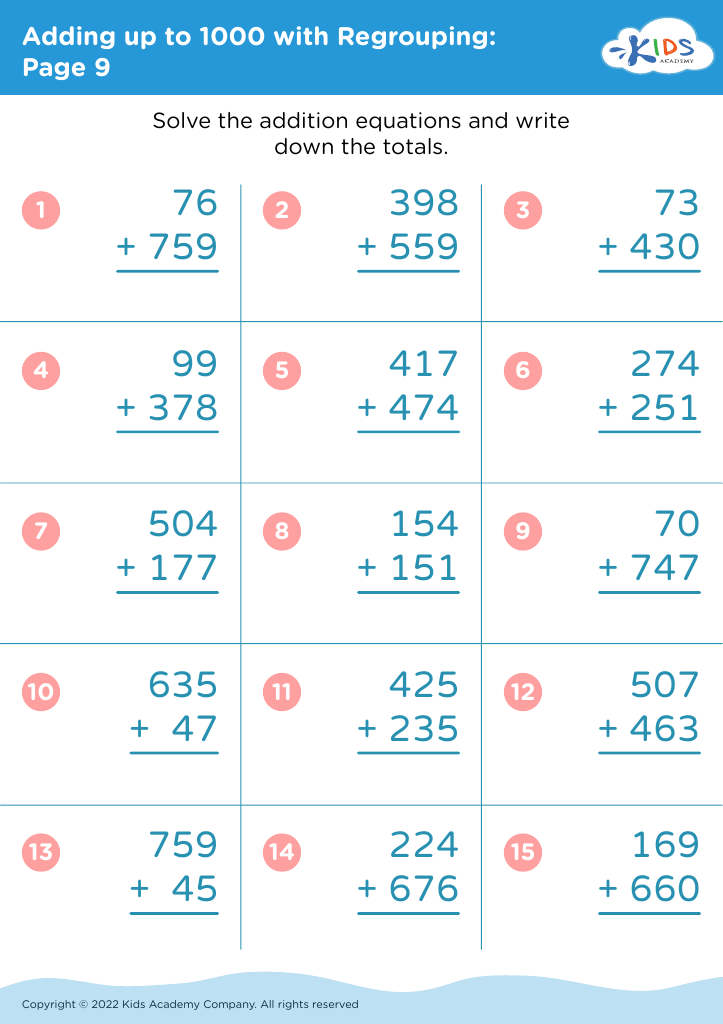
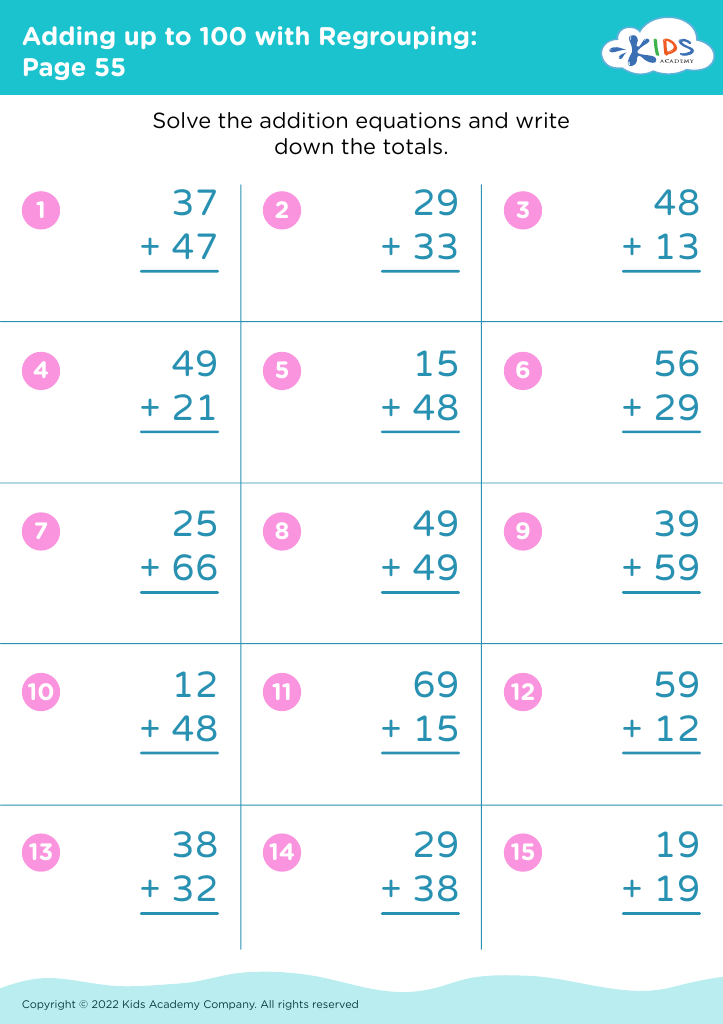
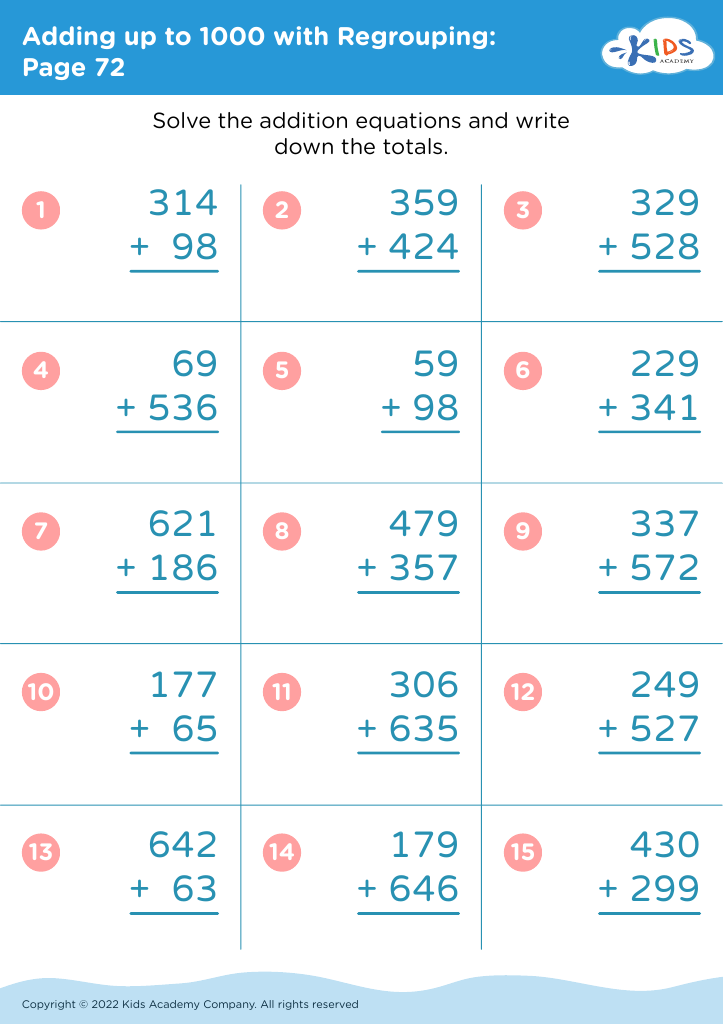








Understanding directions in addition and subtraction is crucial for children aged 7-8 as it lays the foundation for their mathematical skills and problem-solving ability. At this age, students transition from basic arithmetic to more complex concepts. When they grasp how to read and interpret directions accurately, they enhance their ability to tackle word problems and multi-step equations easily.
Parents and teachers should be aware that the way children comprehend instructions can greatly impact their performance. Clear understanding of the steps involved in solving addition and subtraction problems boosts confidence and fosters independence in learners. Moreover, mastering these basic operations cultivates critical thinking, enabling children to break down problems and analyze them effectively.
Additionally, strong arithmetic skills are essential for future academic success across subjects such as science, economics, and engineering. When parents actively support their children in understanding directions during math exercises, they can encourage a growth mindset, showing that math can be engaging and manageable.
In conclusion, prioritizing the comprehension of directions in addition and subtraction is vital for developing a child's problem-solving aptitude and self-assurance, setting them on a pathway for future academic achievement and lifelong learning.








