Understanding sequence Addition & Subtraction Worksheets for Ages 7-8
4 filtered results
-
From - To
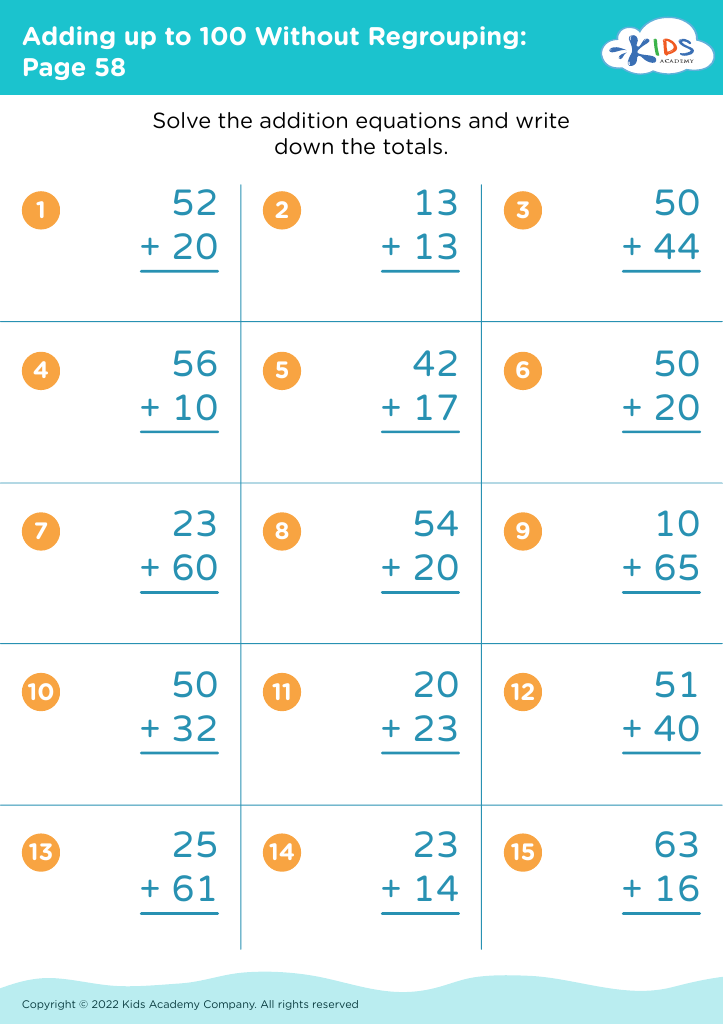
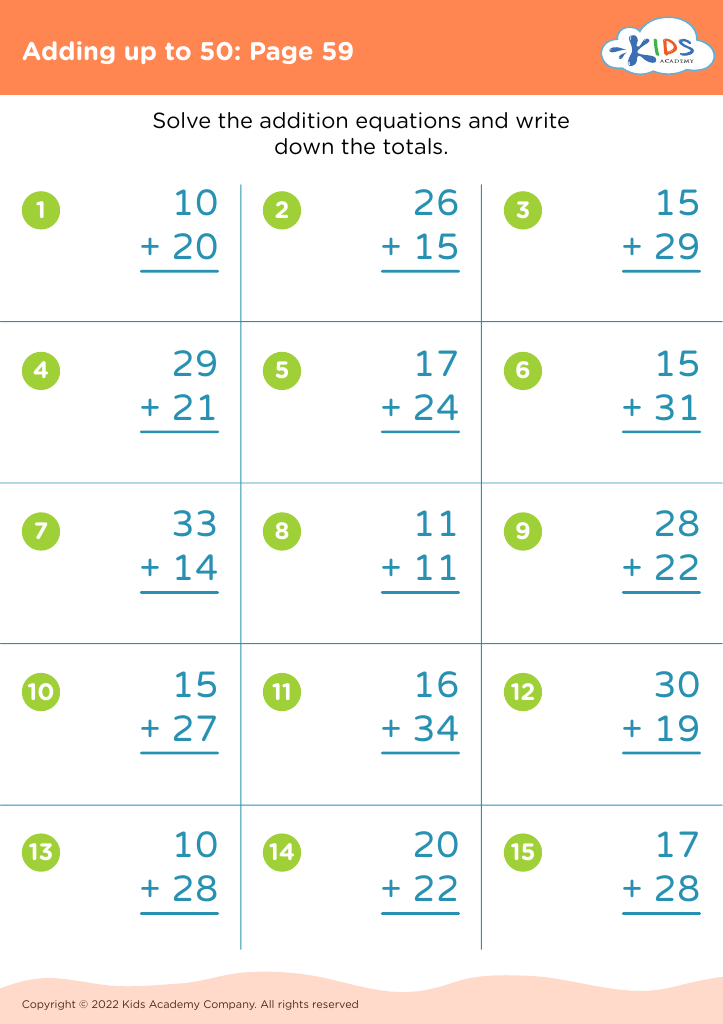
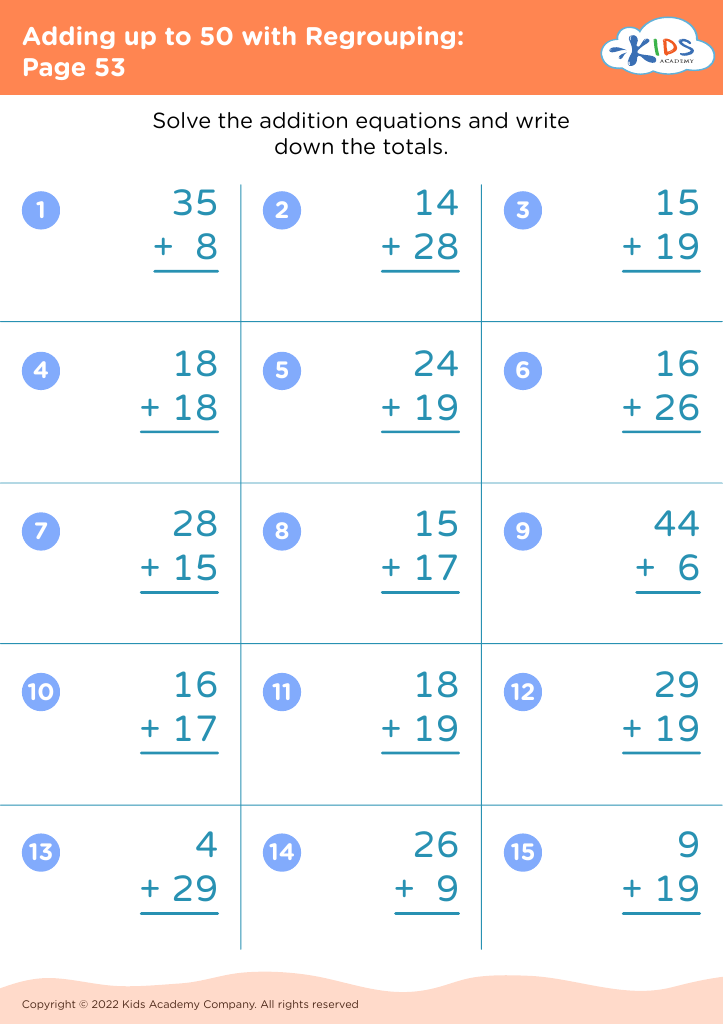
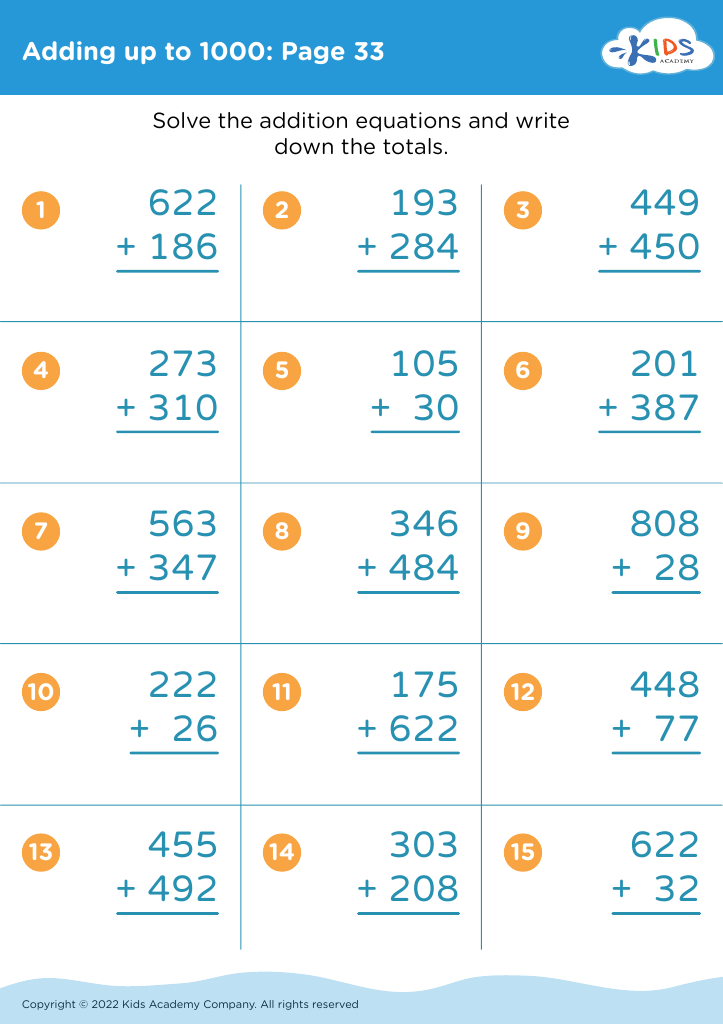
Explore our "Understanding Sequence Addition & Subtraction Worksheets" designed specifically for children ages 7-8. These engaging worksheets focus on building foundational math skills by helping young learners visualize and understand the sequence in addition and subtraction operations. Through a variety of interactive exercises, students will enhance their problem-solving abilities and develop a strong grasp of numerical sequences. Perfect for reinforcing classroom learning or for use at home, these worksheets ensure that children practice in a fun, accessible way. Empower your child’s math journey with our carefully crafted resources, fostering confidence and competence in tackling addition and subtraction challenges.








Understanding the sequence of addition and subtraction is crucial for children aged 7-8 as it lays the foundation for future mathematical competency. At this age, students begin to encounter more complex math concepts, including multi-digit addition and subtraction. By grasping how numbers combine and separate, children can develop a deeper conceptual understanding of mathematics, helping them transition from concrete to abstract thinking.
Parents and teachers play a vital role in reinforcing these skills. Recognizing patterns in how numbers interact through addition and subtraction encourages logical reasoning and problem-solving abilities. This understanding supports students in tackling word problems and mathematical reasoning, skills that are necessary not only for math but across all subjects.
Moreover, mastering these foundational skills enhances a child’s confidence in their overall academic capabilities. When children see their progress in handling broader mathematical concepts, their motivation to learn increases. This positive attitude toward learning can lead to greater academic success in the long run.
In summary, understanding the sequence of addition and subtraction equips children with essential life skills, promotes a love for learning, and builds a strong mathematical foundation that benefits them throughout their education.








