Visual representation comprehension Addition & Subtraction Worksheets for Ages 7-8
5 filtered results
-
From - To
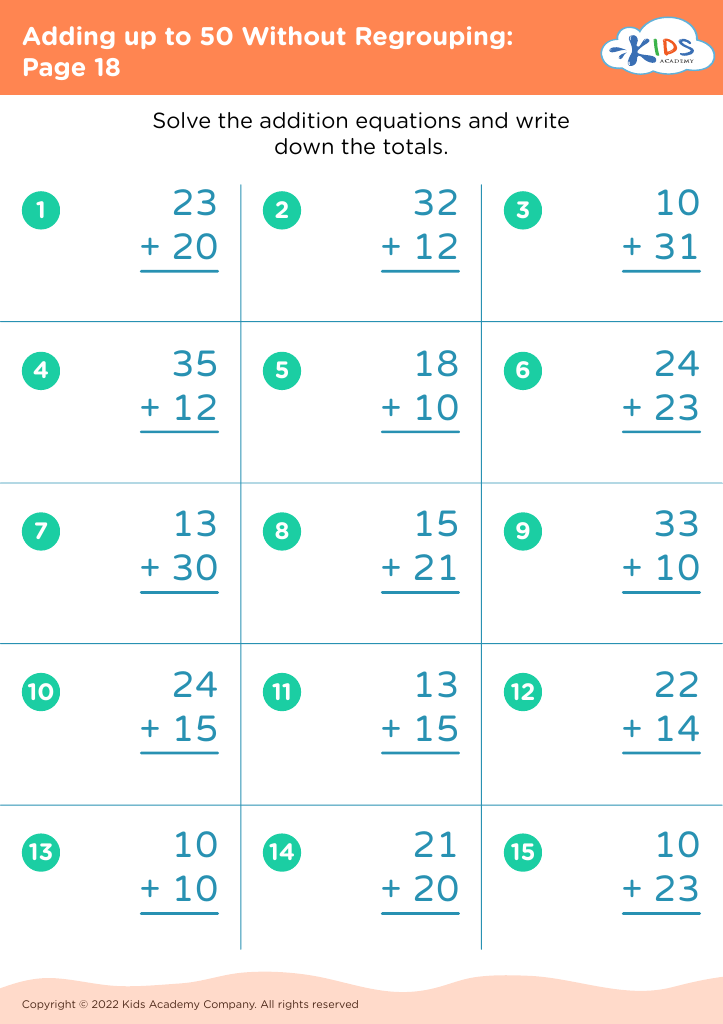
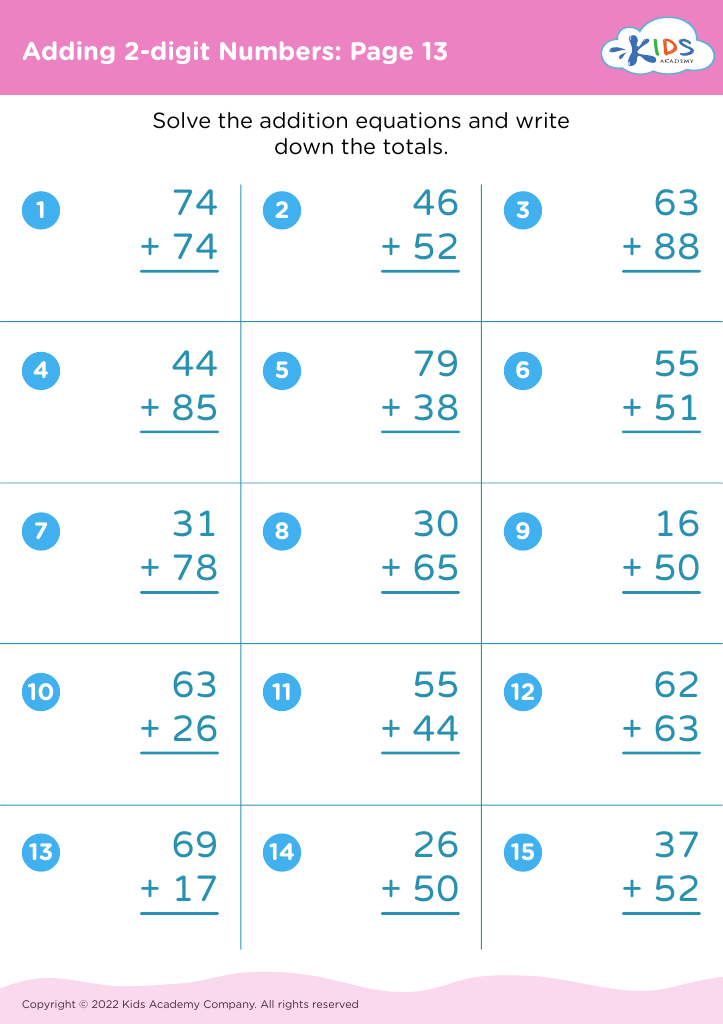
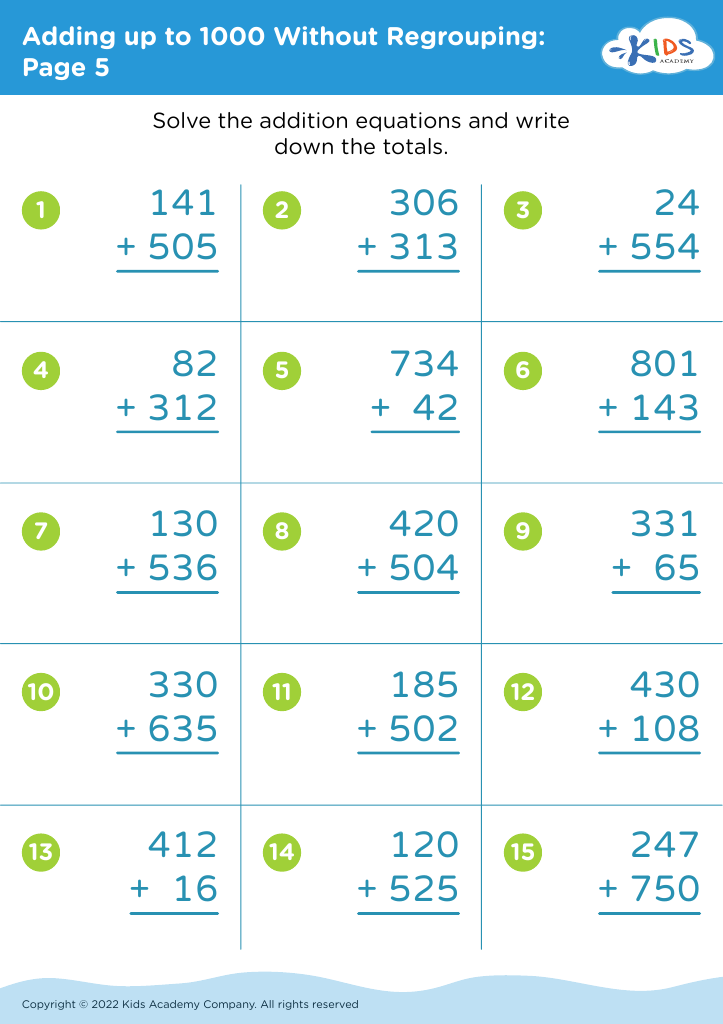
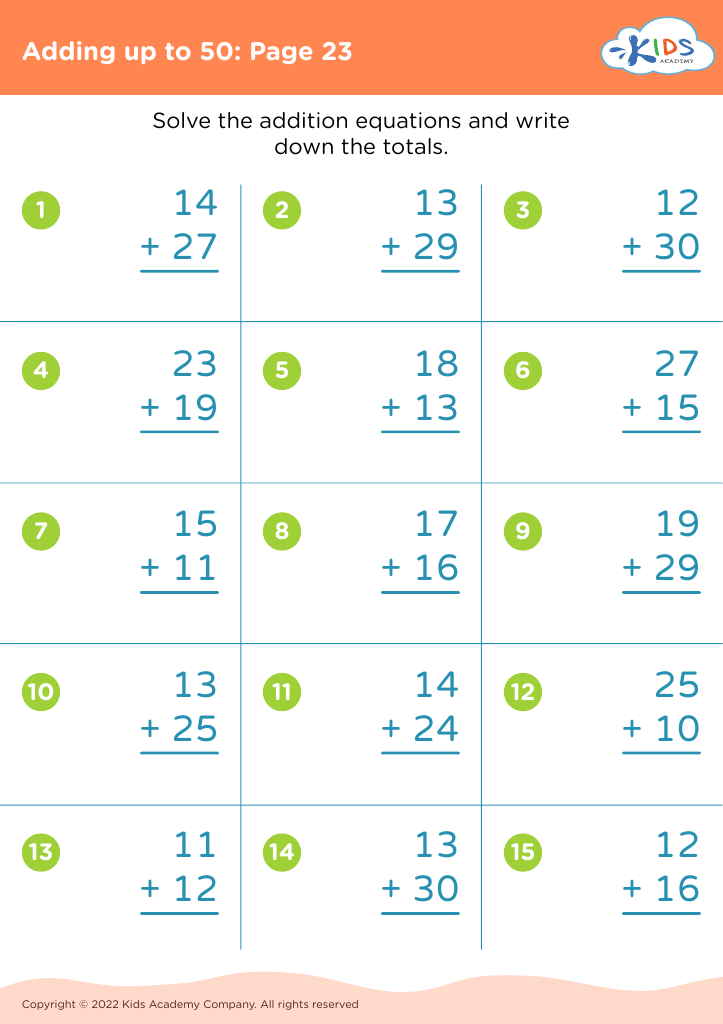
Enhance your child's mathematical skills with our specially designed "Visual Representation Comprehension Addition & Subtraction Worksheets" for ages 7-8. These worksheets use vibrant visuals to simplify addition and subtraction concepts, making learning more engaging and fun. They help young learners develop essential problem-solving skills by connecting abstract math to real-world examples. Each activity is crafted to bolster confidence and improve understanding of mathematical operations, paving the way for academic success. Perfect for classroom and home use, these worksheets offer a solid foundation for children's math proficiency. Start your child's math journey with these engaging educational tools today!
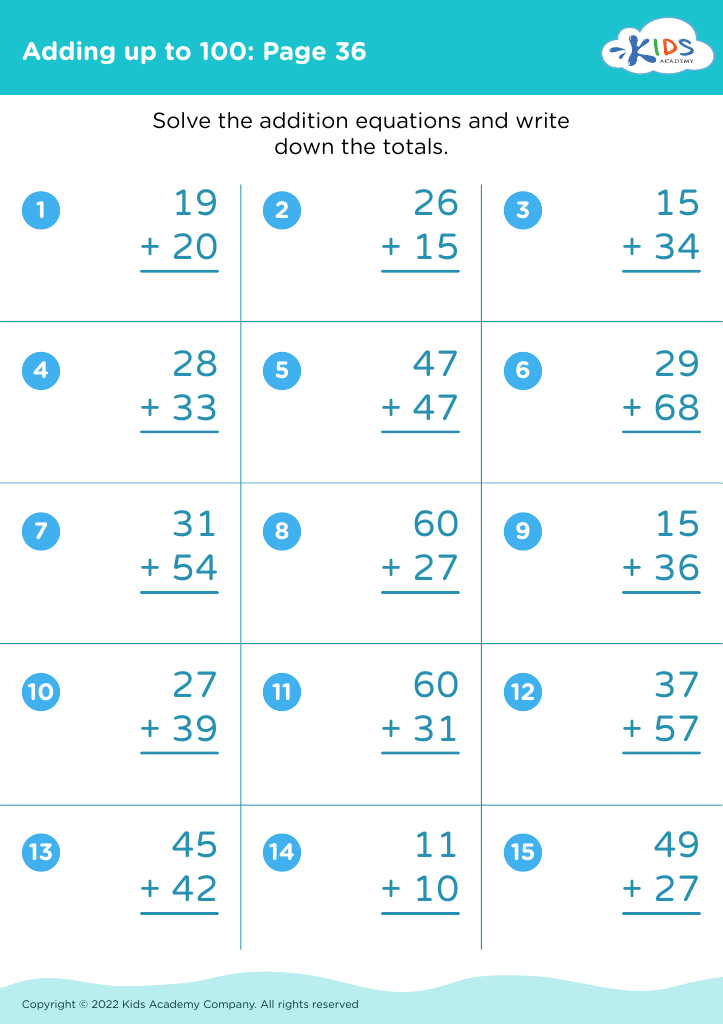








Children aged 7-8 are in a crucial stage of cognitive development, where they are transitioning from concrete to abstract thinking. Visual representation comprehension in addition and subtraction plays a key role in this phase. By using visual aids like number lines, base-ten blocks, and pictorial representations, children begin to understand mathematical concepts more intuitively. For instance, visualizing a group of apples being added to or taken away from another group helps solidify the abstract idea of addition and subtraction.
Visual representations bridge the gap between tangible objects and numerical symbols. They make math less intimidating and more engaging, transforming abstract numbers into something concrete and understandable. This is especially valuable for students who may struggle with traditional number-based approaches.
Moreover, incorporating visual tools can cater to diverse learning styles, supporting children who are visual learners. It also fosters problem-solving skills as children learn to represent and manipulate math problems in various ways.
Investing in visual representation comprehension sets a strong foundation for more complex mathematical concepts. It encourages children to develop a deeper, more flexible understanding of numbers, ultimately promoting better retention and application of math skills. Parents and teachers should thus prioritize visual aids to cultivate a robust mathematical mindset in young learners.








