Counting objects Addition Worksheets for Ages 7-8
8 filtered results
-
From - To
Discover engaging Counting Objects Addition Worksheets tailored for children aged 7-8! These comprehensive resources are designed to enhance young learners' arithmetic skills through interactive counting exercises. Our worksheets focus on helping kids visually identify and count objects, encouraging them to practice addition in a fun and approachable way. With a variety of colorful and stimulating activities, students will gain confidence as they develop their mathematical abilities. Ideal for classroom use or at-home practice, these worksheets offer an effective way to reinforce addition concepts while nurturing a love for math. Start your child's journey toward math mastery with our Counting Objects Addition Worksheets today!
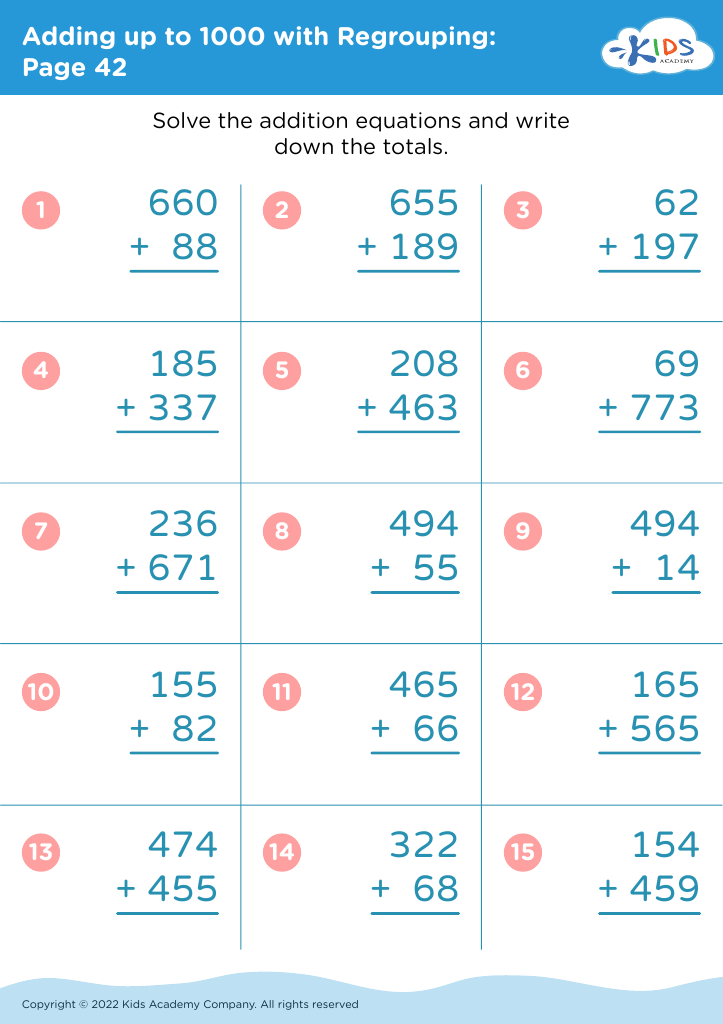
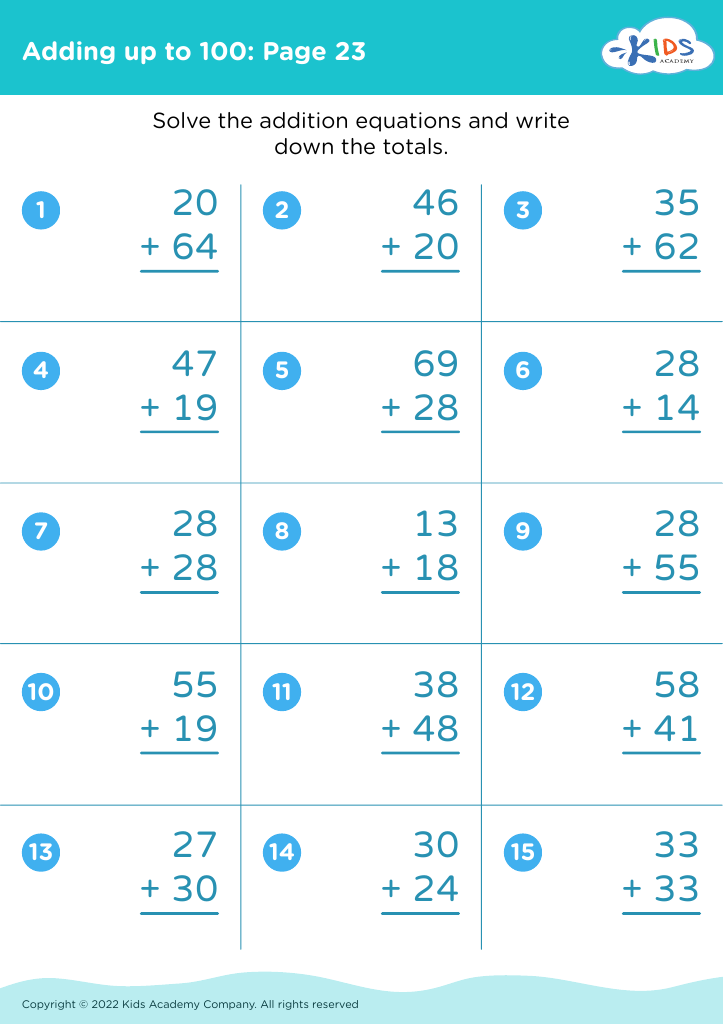
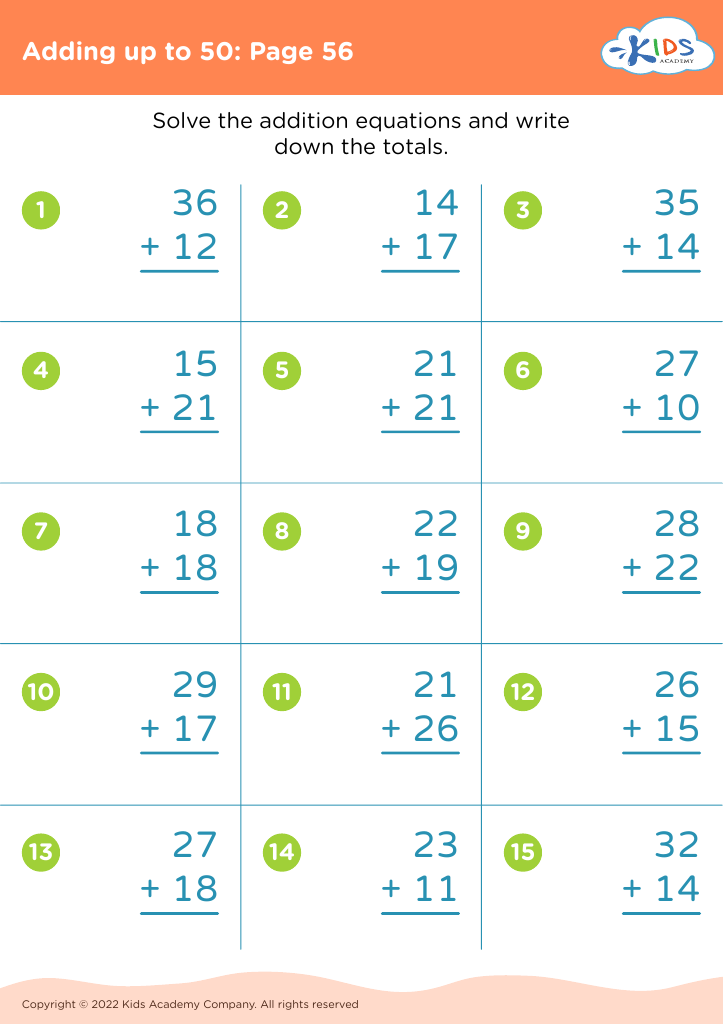
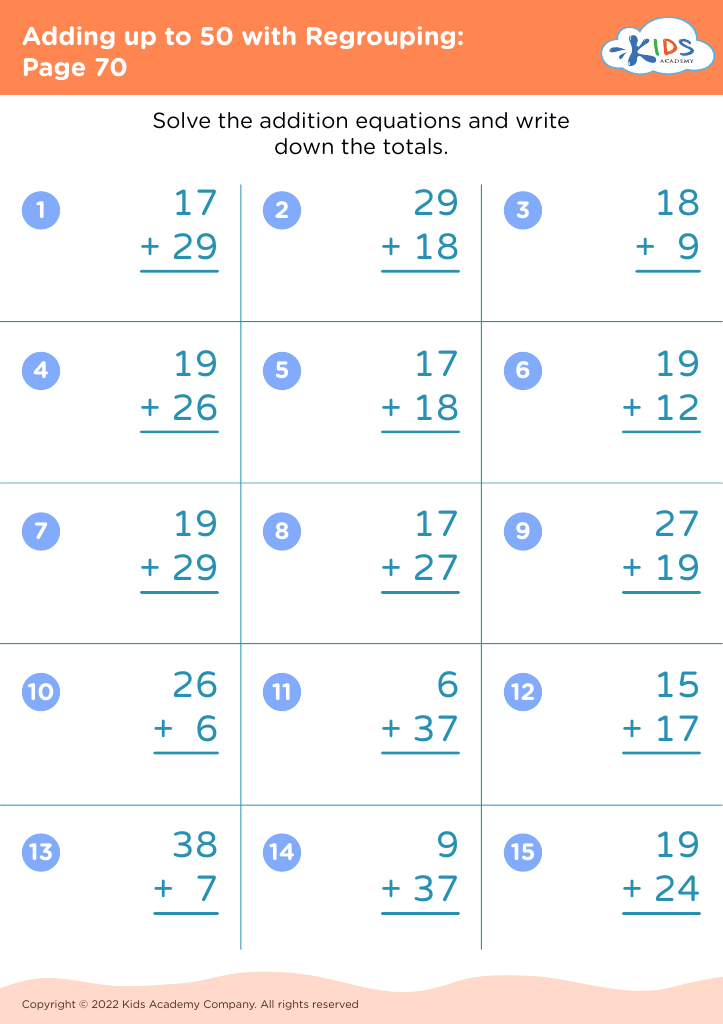
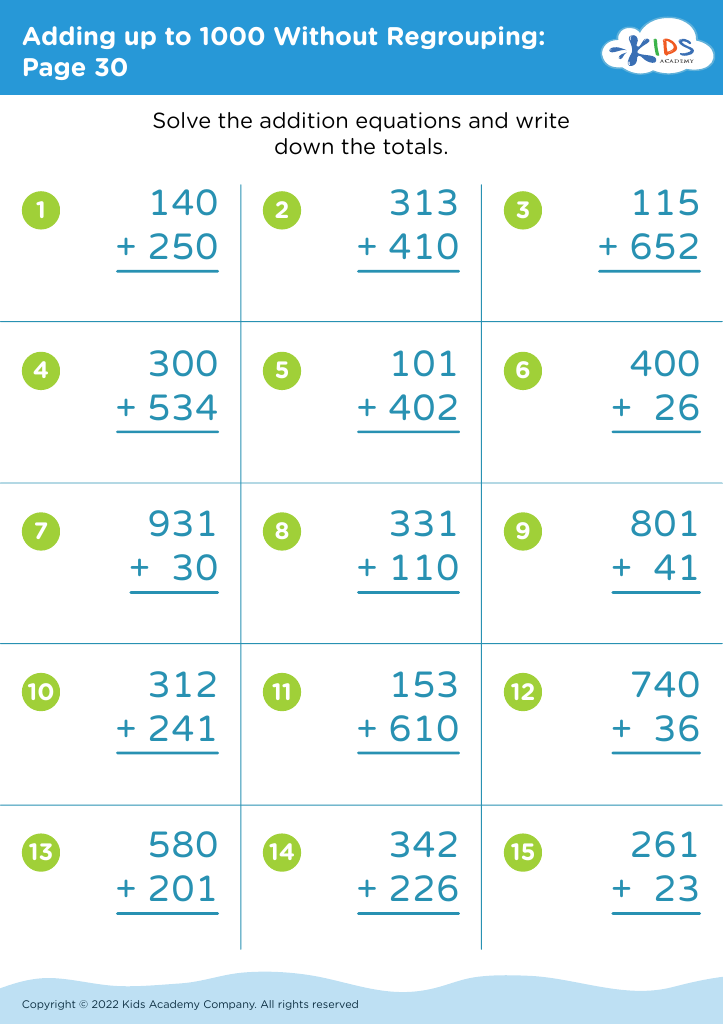
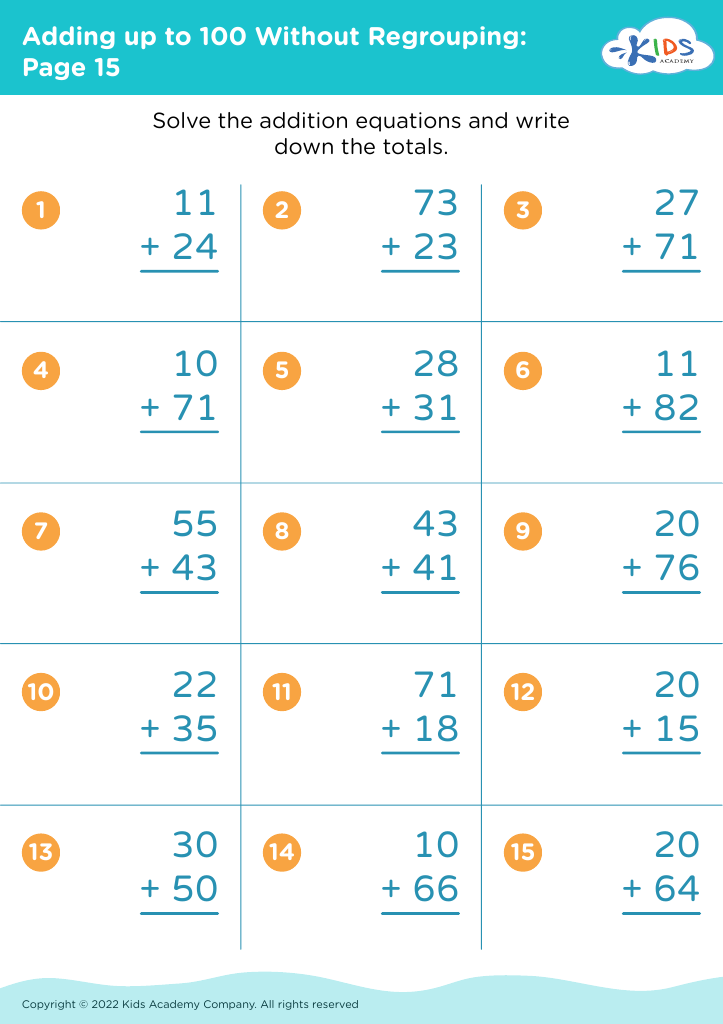
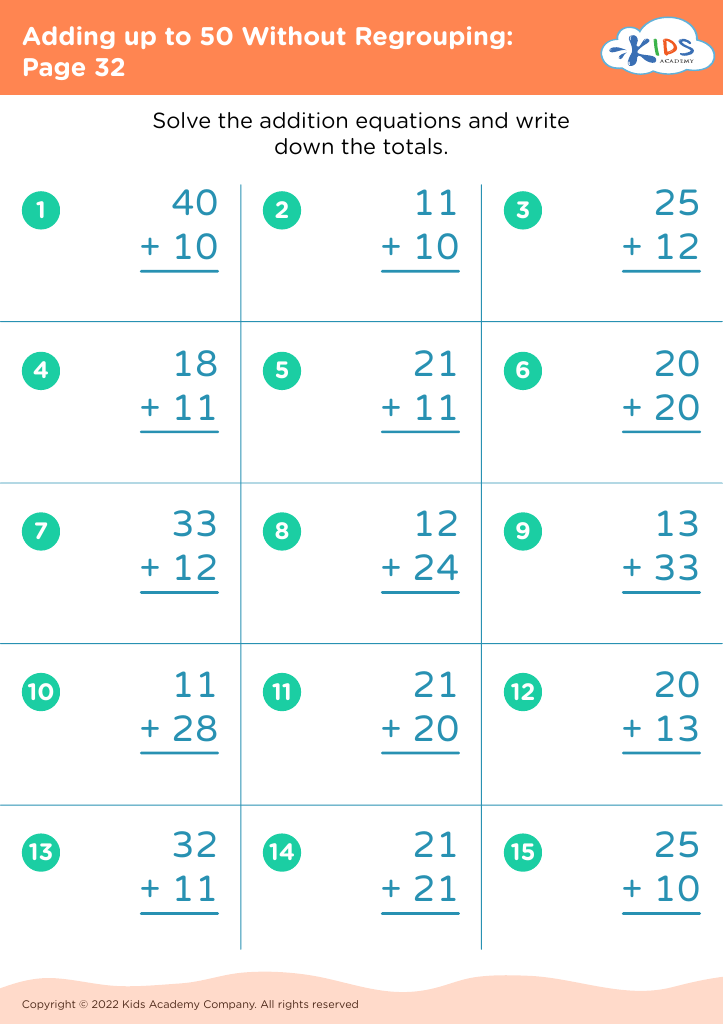
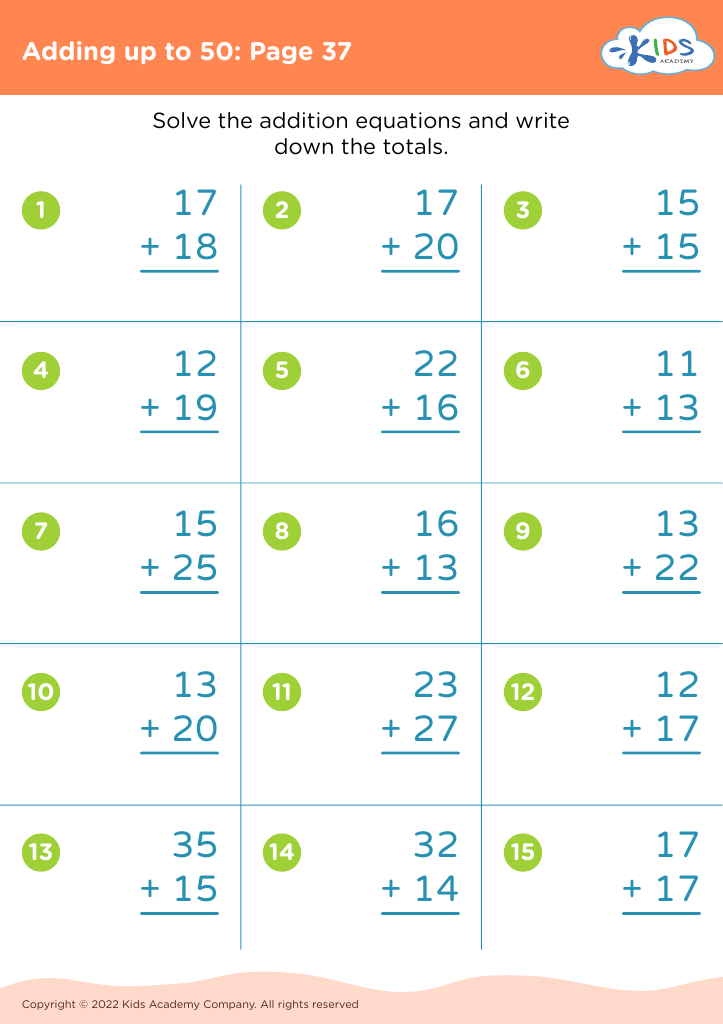








Counting objects and mastering basic addition is crucial for children aged 7-8, as it lays the foundation for more advanced mathematical concepts. At this age, children are transitioning from concrete learning to more abstract thinking, making it an ideal time for educators and parents to emphasize the importance of these skills.
Counting objects helps children develop a strong number sense, which is fundamental for everyday problem-solving. It aids in understanding quantities, comparing numbers, and using these concepts to solve real-world problems—skills they will rely on throughout their education and life.
Moreover, adding objects offers a tactile learning experience, which can engage different learning styles. By visualizing and manipulating physical items, children solidify their understanding of numeracy. This hands-on approach not only boosts their confidence but also makes math enjoyable, fostering a positive attitude towards learning.
Furthermore, parents and teachers play a vital role in creating a supportive environment to practice counting and addition, transforming learning into a shared experience. By prioritizing these skills, they prepare children not just for future math challenges but also for critical thinking and analytical skills essential for success in various disciplines. Investing time in counting and addition during these formative years is indeed invaluable for their growth.








