Developing problem-solving skills Addition Worksheets for Ages 7-8
5 filtered results
-
From - To
Enhance your child's mathematical abilities with our "Developing Problem-Solving Skills Addition Worksheets" for ages 7-8. These engaging and thoughtfully designed worksheets encourage young learners to tackle addition problems in real-world scenarios, fostering critical thinking and analytical skills. Your child will enjoy solving diverse mathematical challenges that promote clear reasoning, collaborative exploration, and creative solutions. Our resources not only reinforce their addition skills but also build a strong foundation for navigating complex problems in the future. Discover how fun and effective practicing math can be! Download our worksheets today and empower your child to become a confident problem solver.
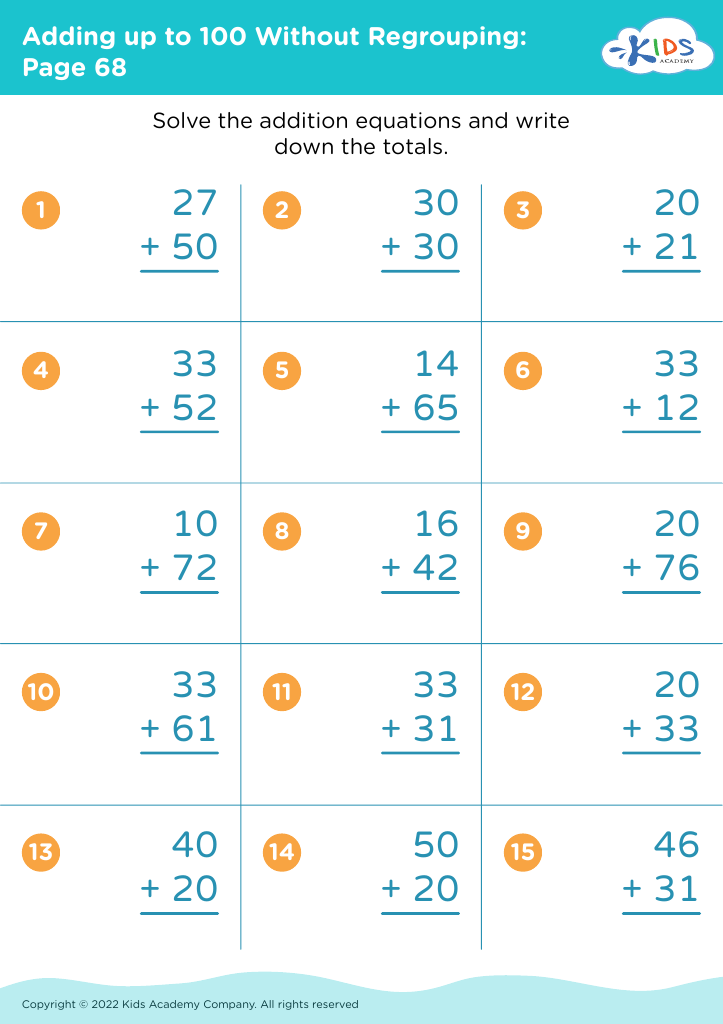
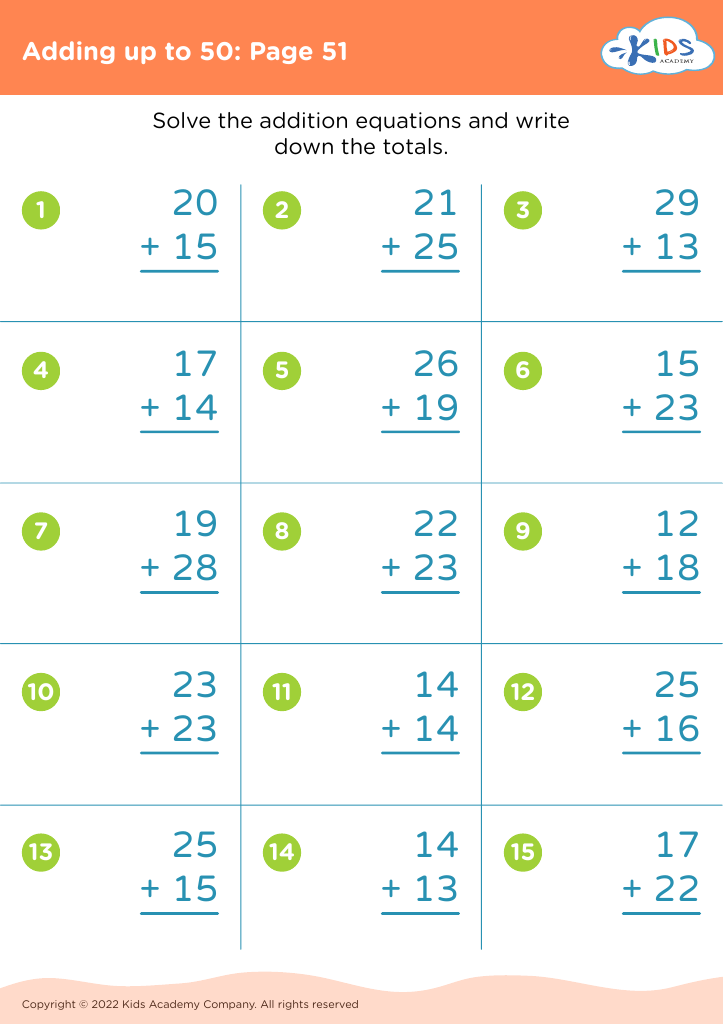
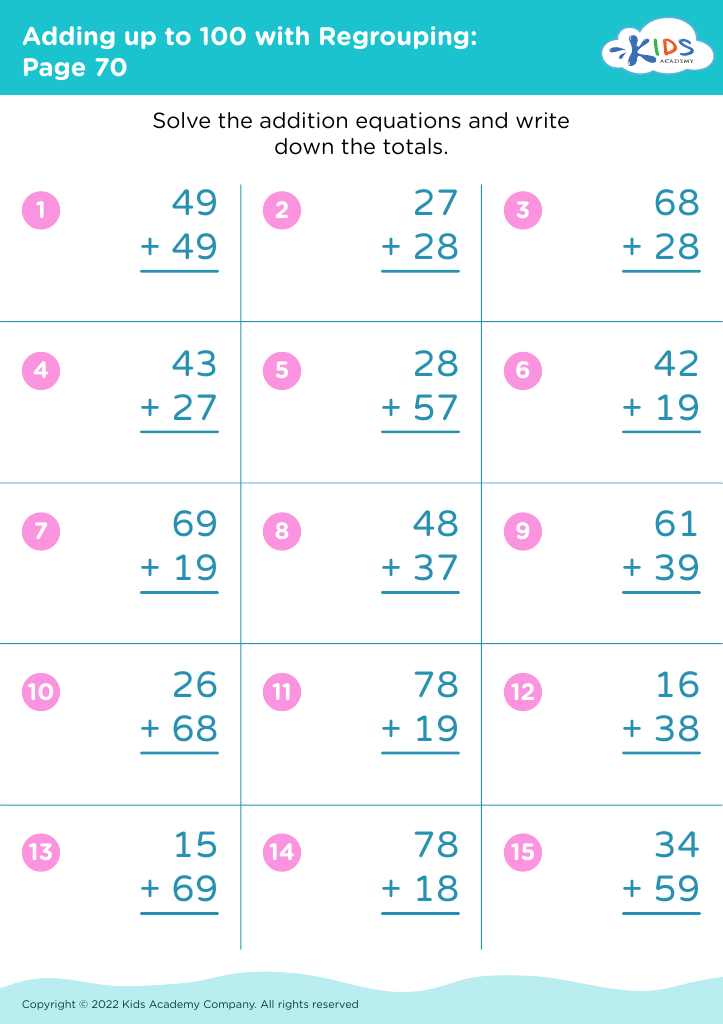
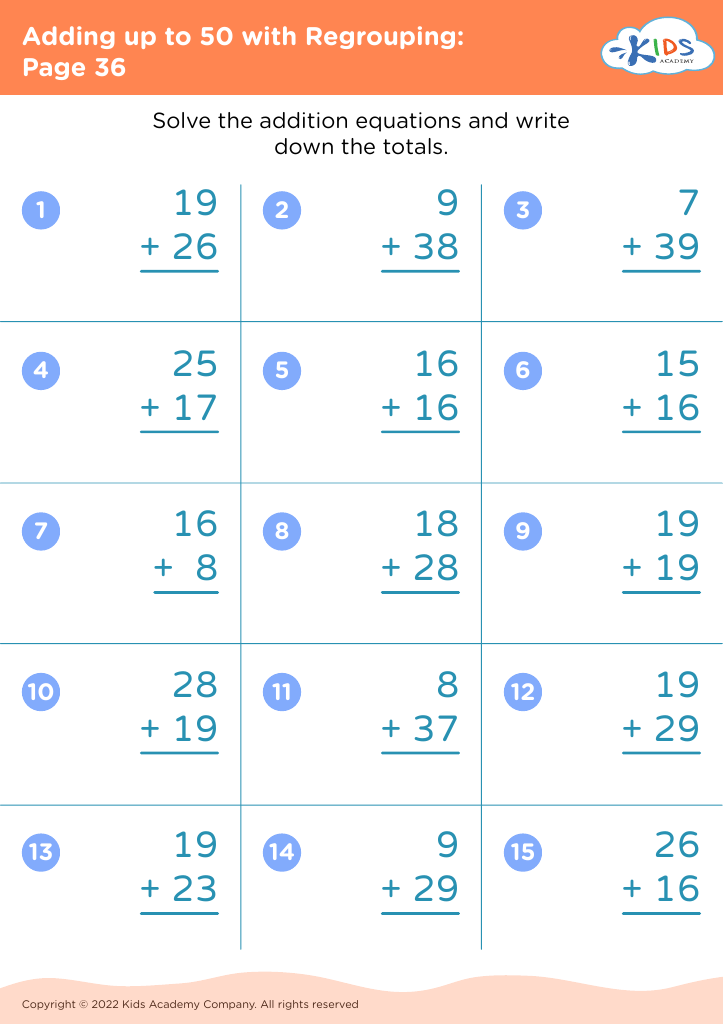
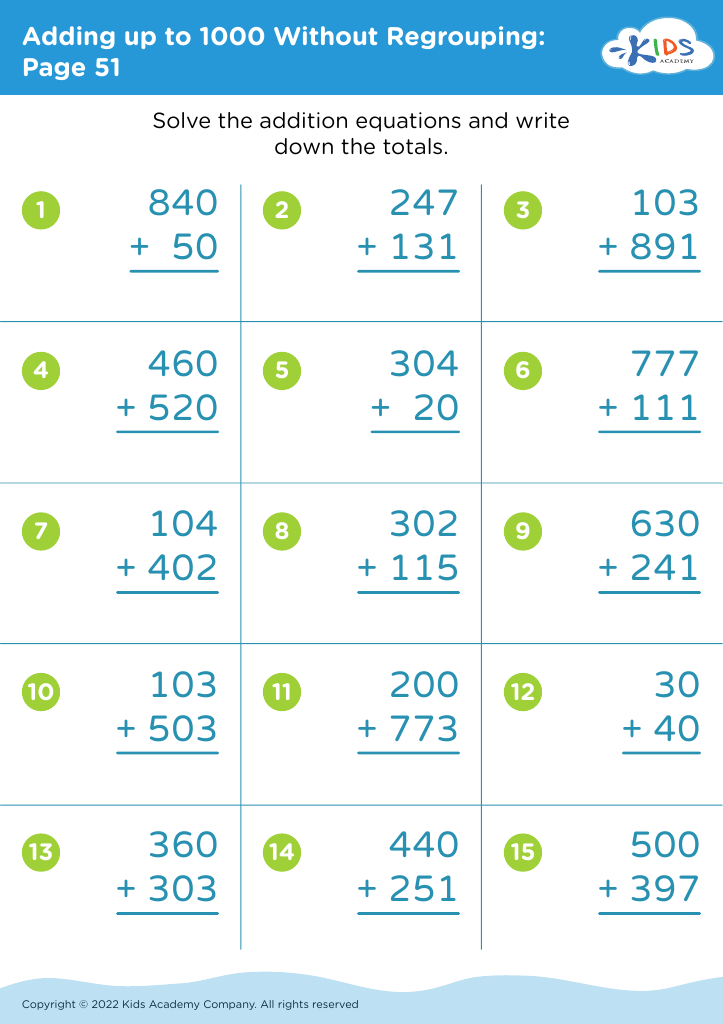








Developing problem-solving skills in children, particularly in the area of addition, is essential for their overall cognitive and social development. At ages 7-8, children are transitioning from basic arithmetic to more complex mathematical concepts. Fostering strong problem-solving skills during this pivotal stage not only enhances their mathematical abilities but also boosts their critical thinking and logical reasoning.
By engaging children in addition problems that require more than memorization, parents and teachers encourage them to explore different strategies, visualize relationships between numbers, and persevere in finding solutions. This process cultivates a growth mindset, teaching them that effort and persistence are key to overcoming challenges.
Moreover, strong problem-solving skills in math correlate with success in other subjects, equipping children with the ability to tackle various academic tasks they will face throughout their education. Additionally, these skills have practical implications in daily life, preparing children for real-world scenarios, such as budgeting, planning, and decision-making.
Ultimately, by emphasizing the importance of problem-solving in addition, adults are not just teaching math; they are helping children develop confidence and resilience that serve them well in all areas of life.








