Enhance number recognition with our engaging addition worksheets designed specifically for ages 7-8. These worksheets provide a fun and interactive way for young learners to master fundamental addition concepts while reinforcing their ability to identify and understand numbers. Featuring colorful illustrations and diverse activities, our resources promote critical thinking and enhance math skills through practice and repetition. Whether in the classroom or at home, these worksheets cater to various learning styles and ensure students build a strong foundation in numeracy. Empower your child’s math journey with our carefully crafted addition worksheets that make learning enjoyable and effective!
Check out this FREE Trial Lesson on Addition for age 7-8!

Match Objects that Fit Together

Favorites
With answer key
Interactive
  • 7-8
  • Enhance number recognition
  • Addition
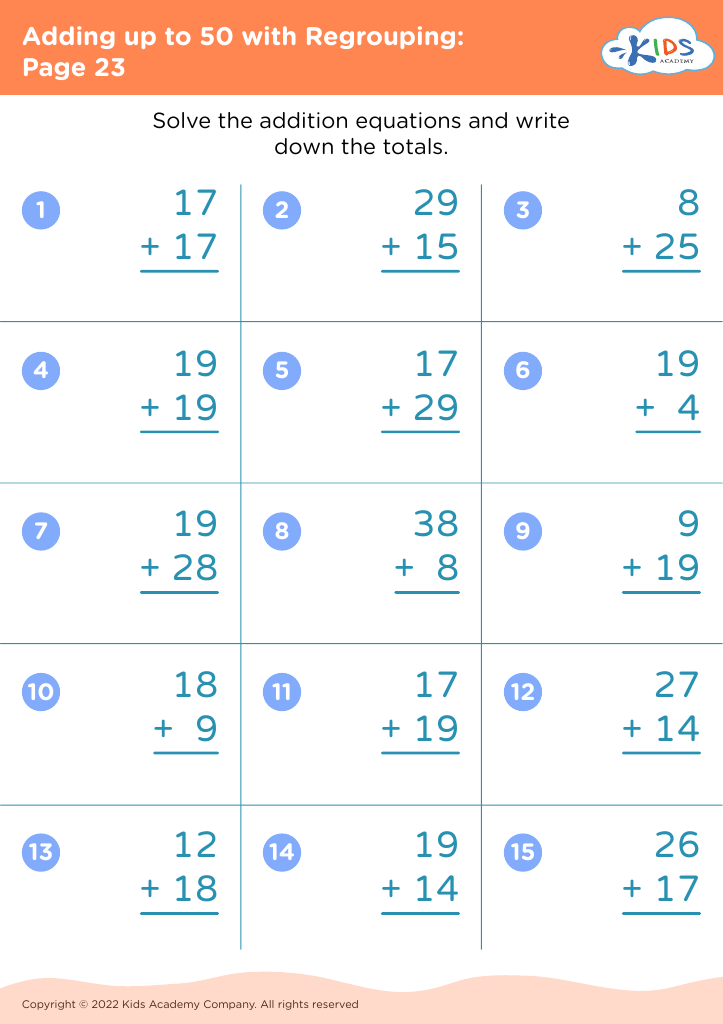
Adding up to 50 with Regrouping: Page 23
Worksheet
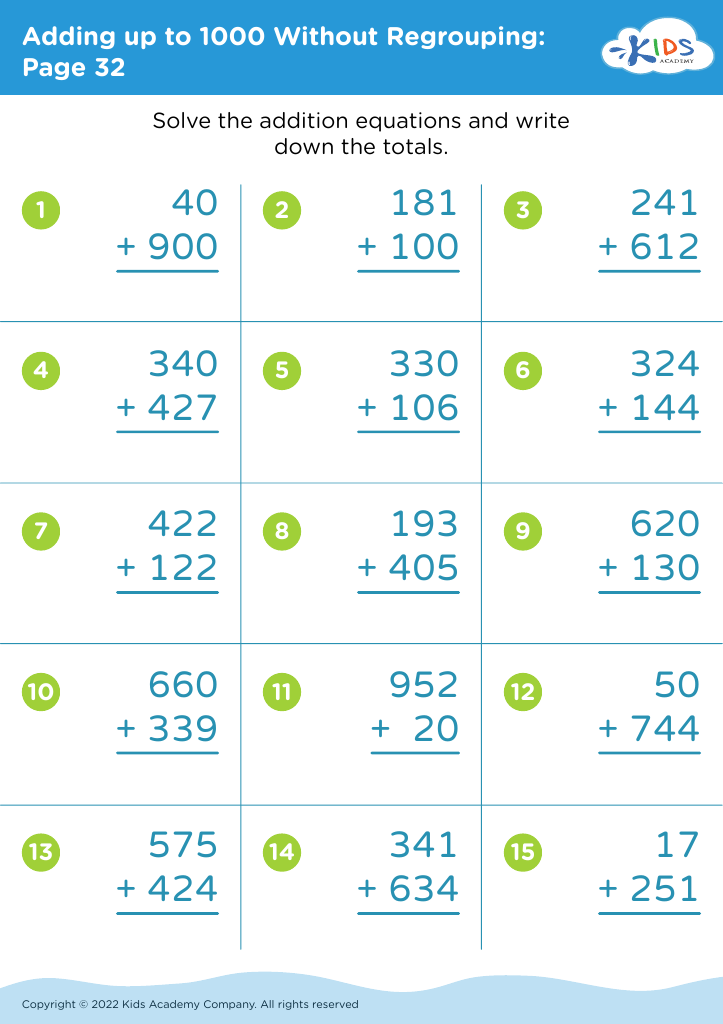
Adding up to 1000 Without Regrouping: Page 32
Worksheet
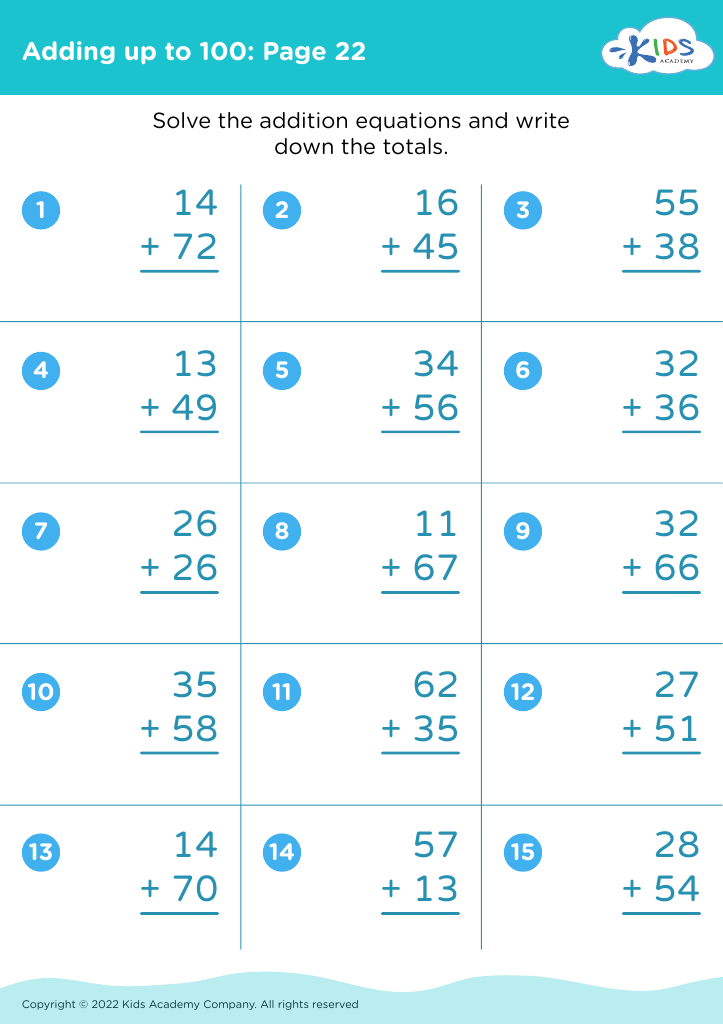
Adding up to 100: Page 22

Adding up to 100: Page 22

Adding up to 100: Page 22
Worksheet
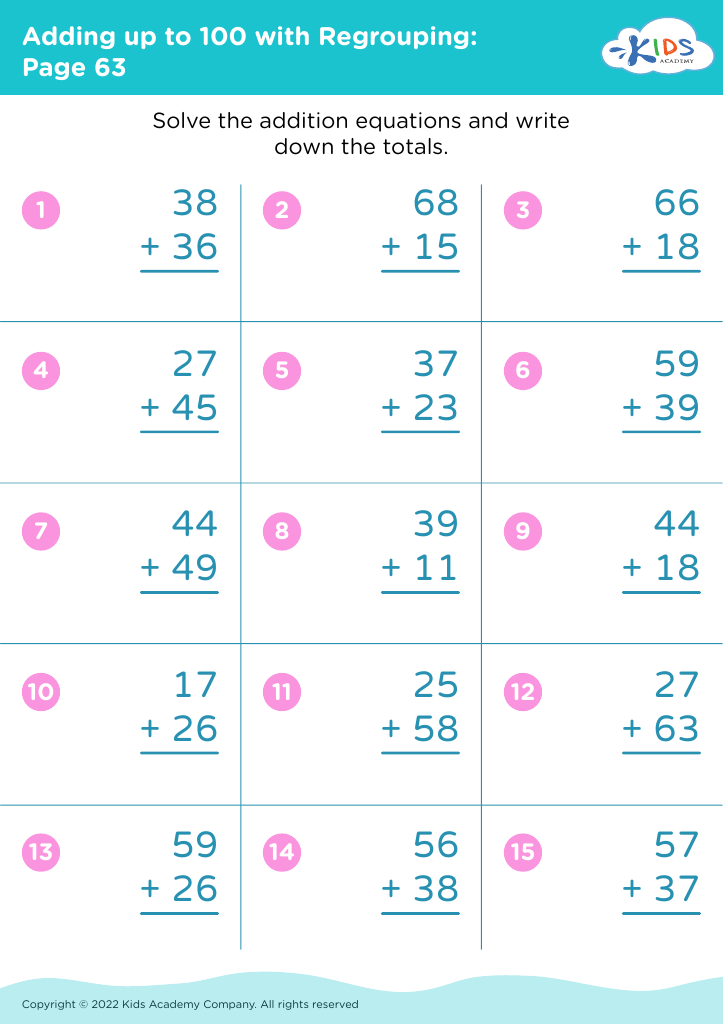
Adding up to 100 with Regrouping: Page 63
Worksheet
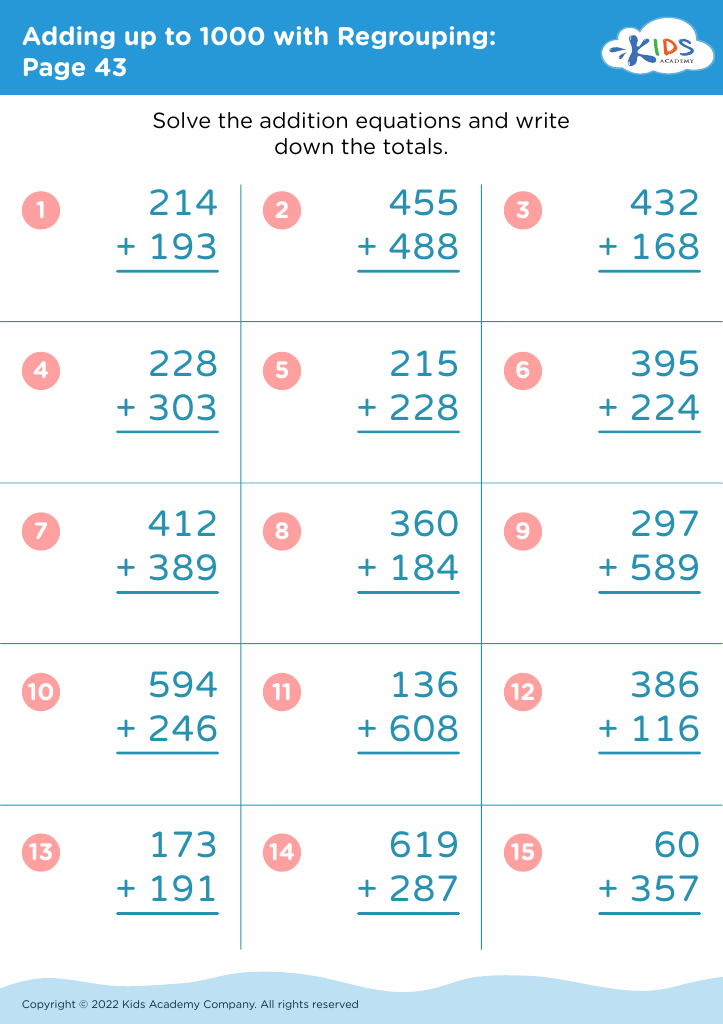
Adding up to 1000 with Regrouping: Page 43
Worksheet
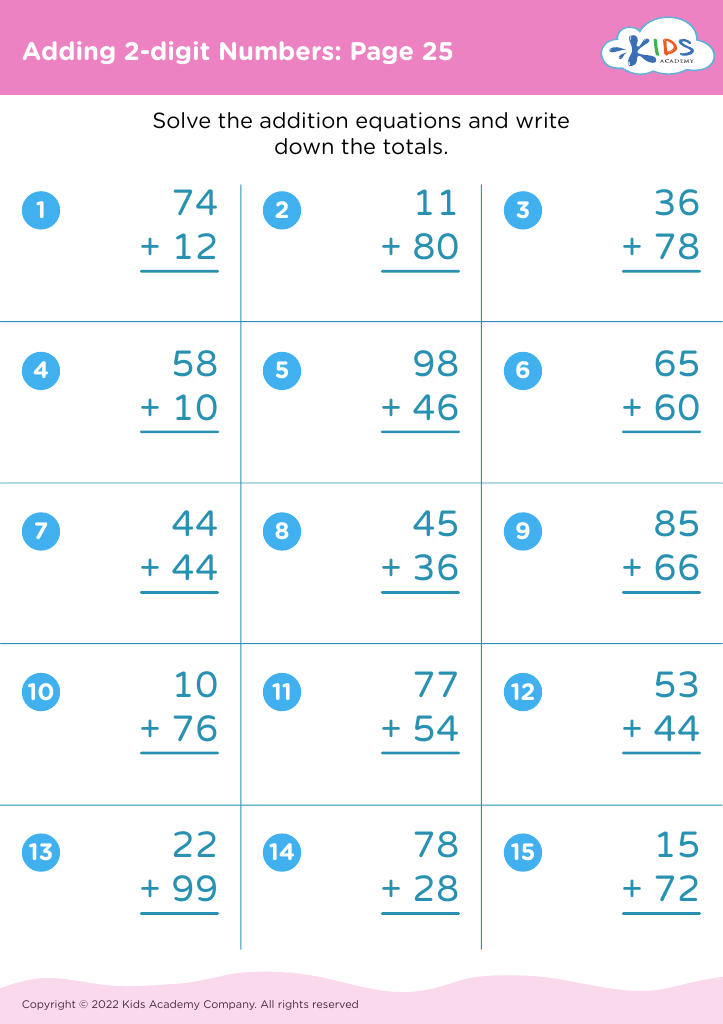
Adding 2-digit Numbers: Page 25

Adding 2-digit Numbers: Page 25

Adding 2-digit Numbers: Page 25
Worksheet
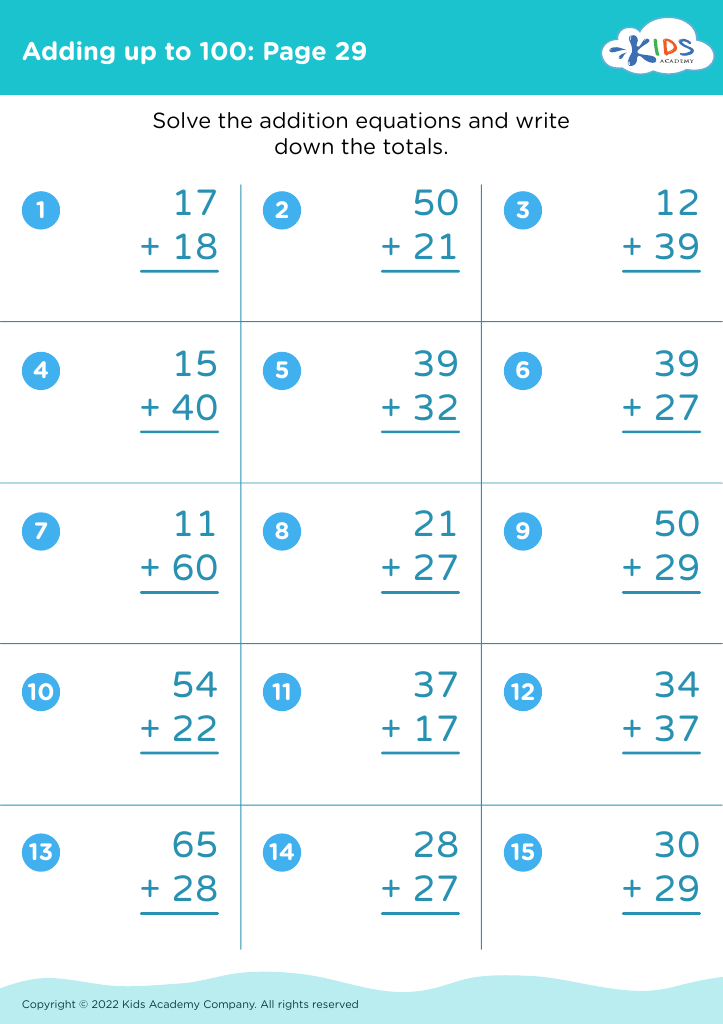
Adding up to 100: Page 29

Adding up to 100: Page 29

Adding up to 100: Page 29
Worksheet
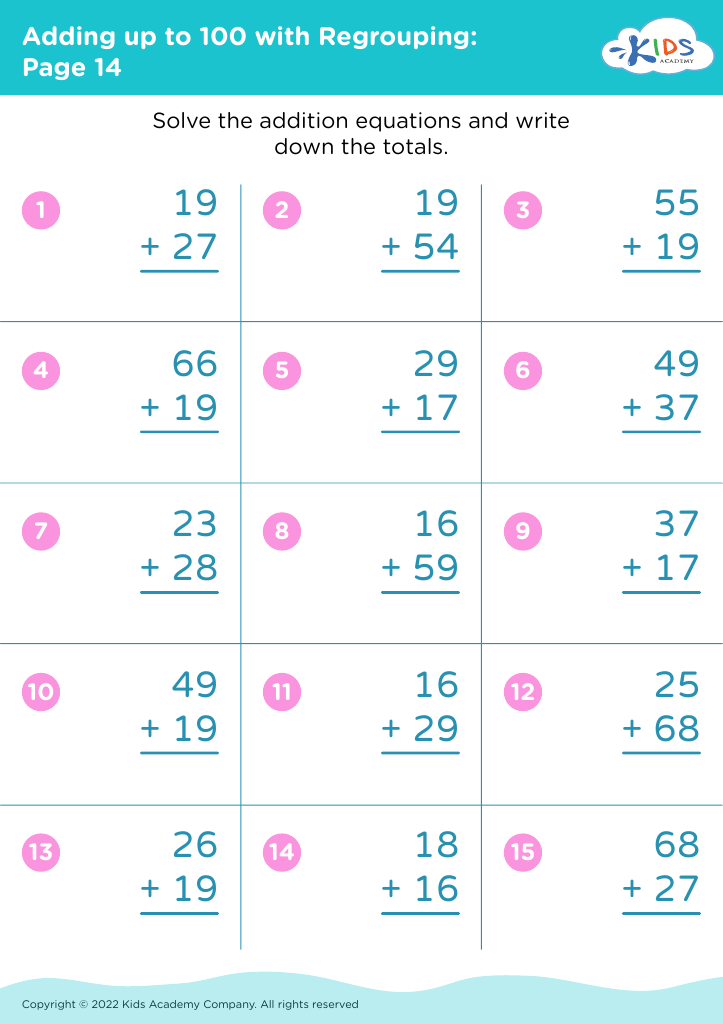
Adding up to 100 with Regrouping: Page 14
Worksheet
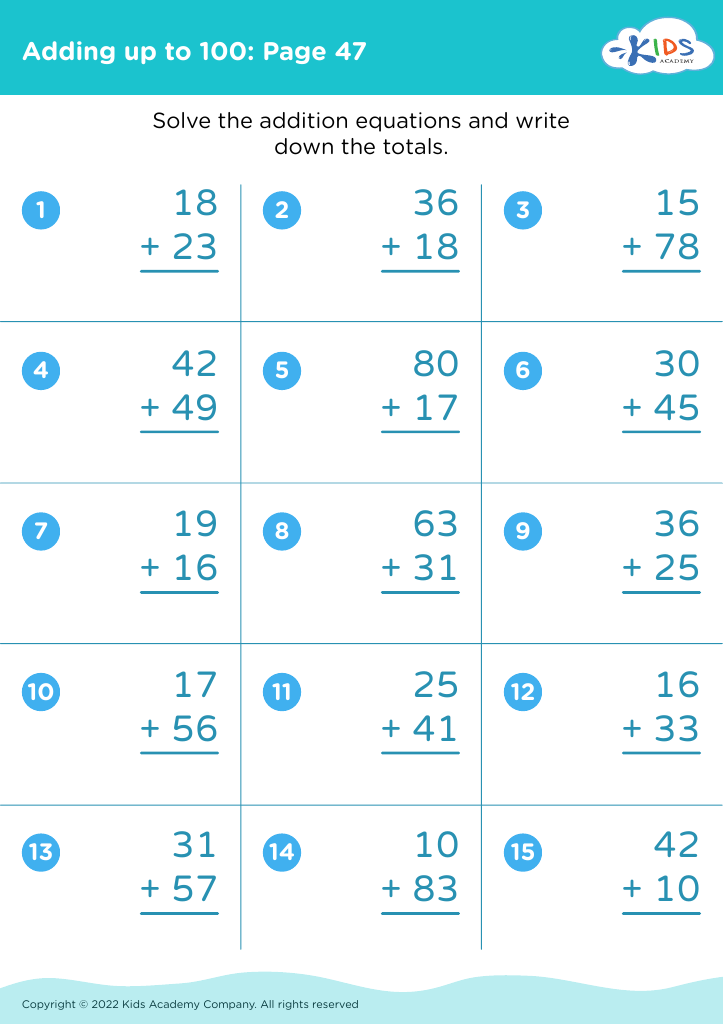
Adding up to 100: Page 47

Adding up to 100: Page 47

Adding up to 100: Page 47
Worksheet
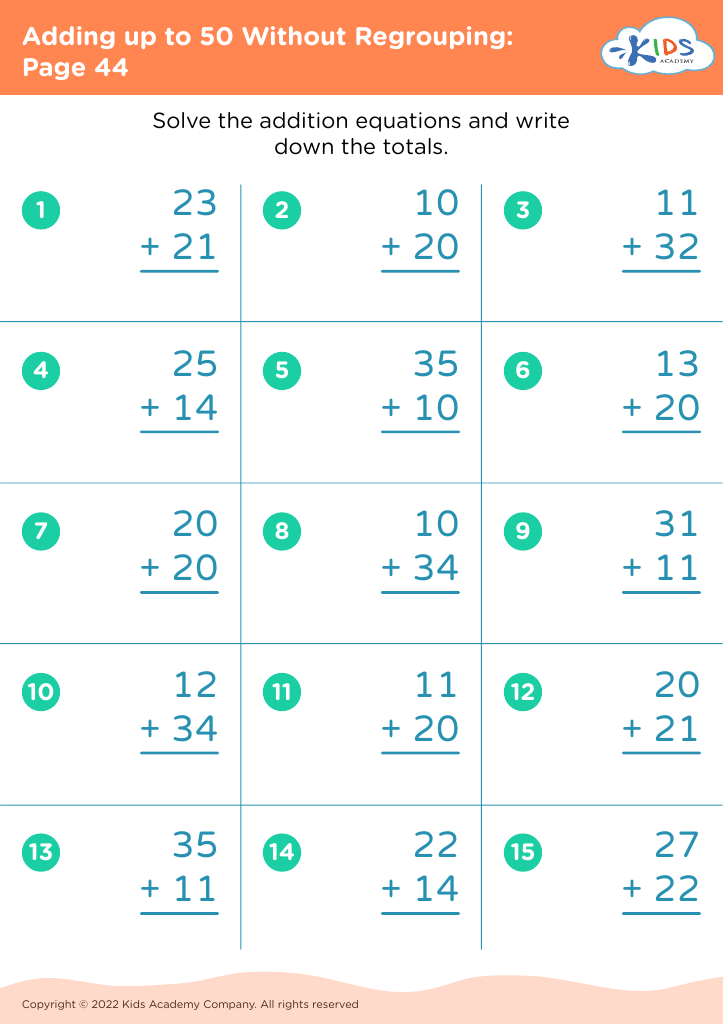
Adding up to 50 Without Regrouping: Page 44
Worksheet
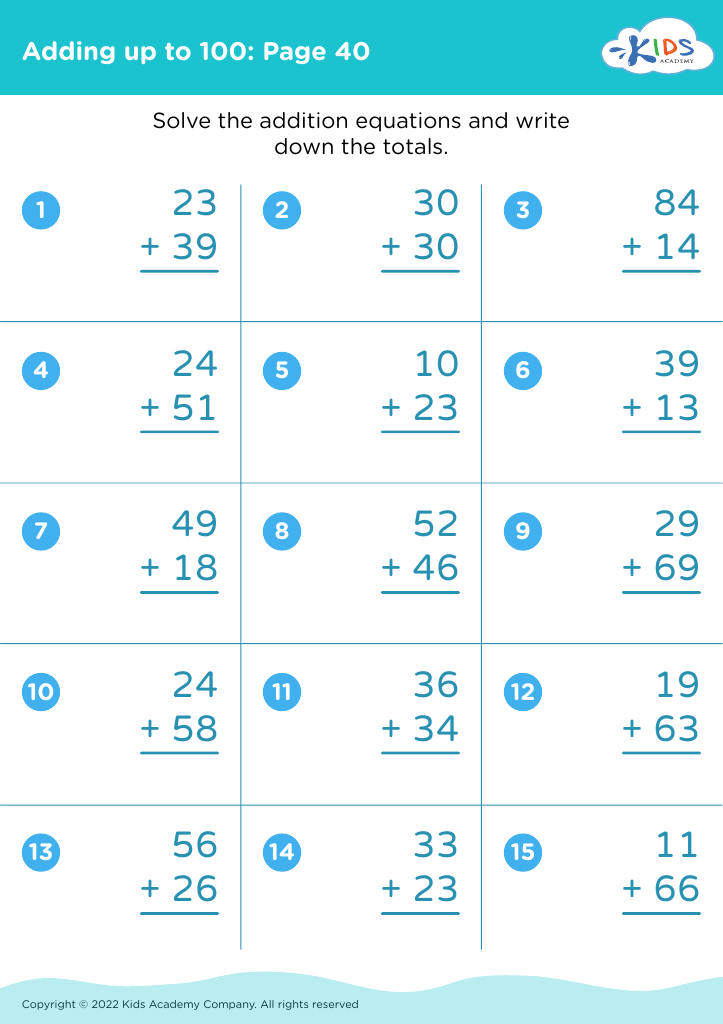
Adding up to 100: Page 40

Adding up to 100: Page 40

Adding up to 100: Page 40
Worksheet
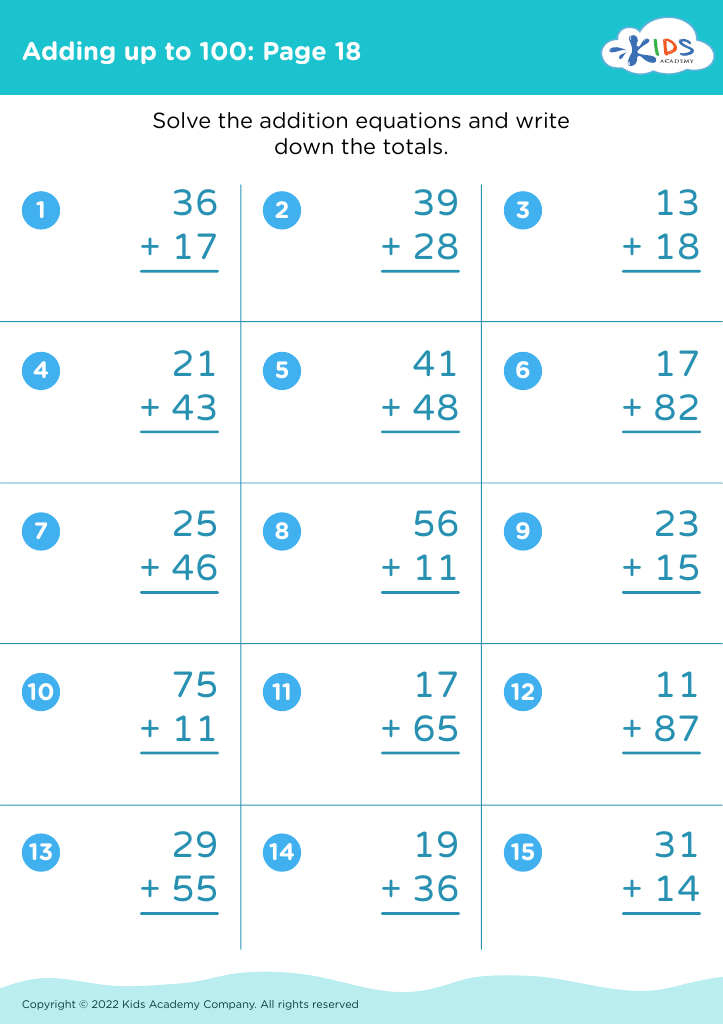
Adding up to 100: Page 18

Adding up to 100: Page 18

Adding up to 100: Page 18
Worksheet
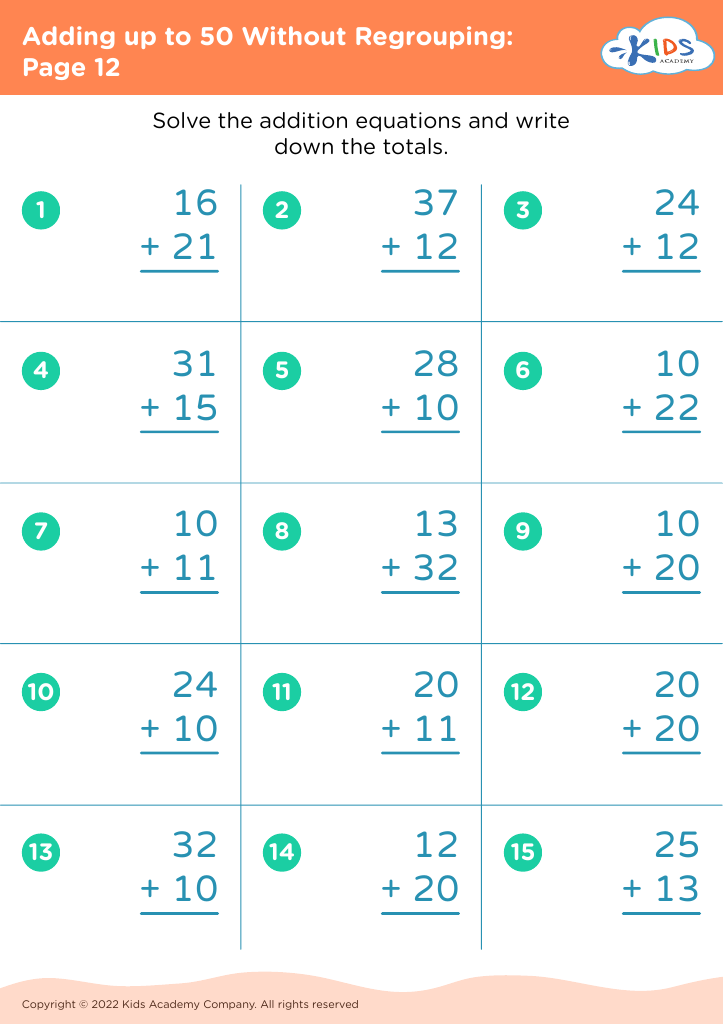
Adding up to 50 Without Regrouping: Page 12
Worksheet
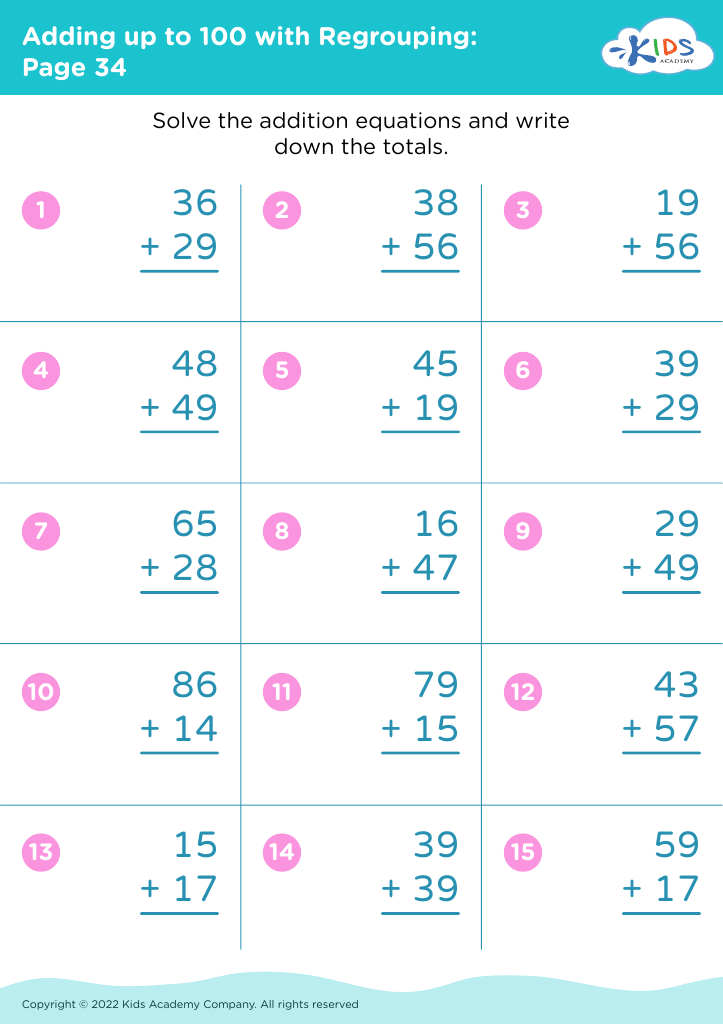
Adding up to 100 with Regrouping: Page 34
Worksheet
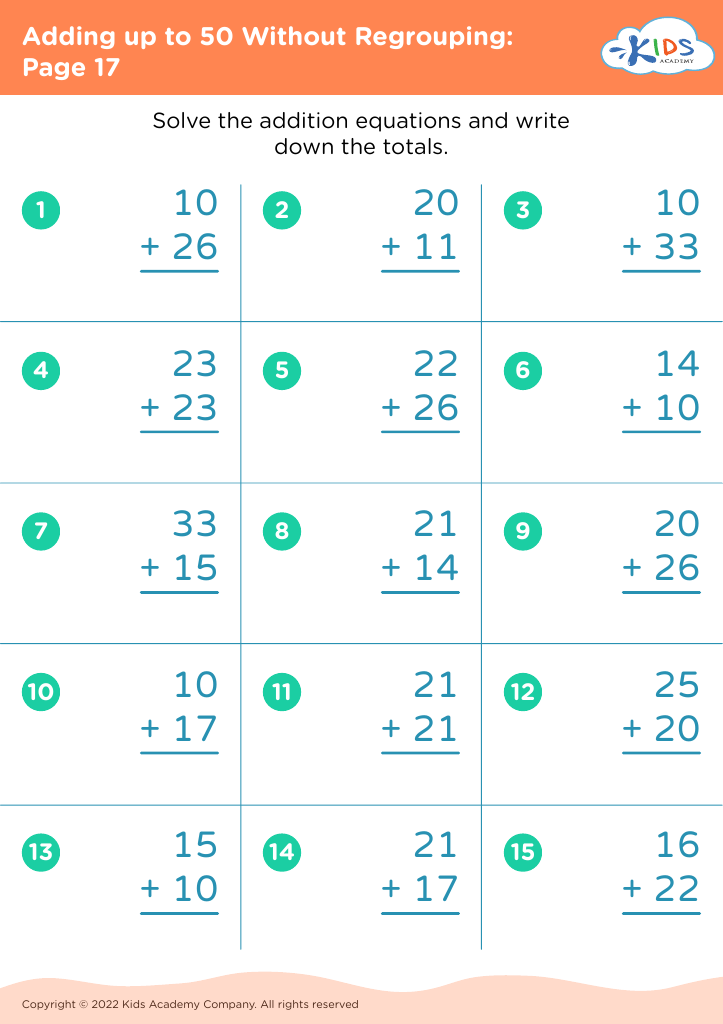
Adding up to 50 Without Regrouping: Page 17
Worksheet
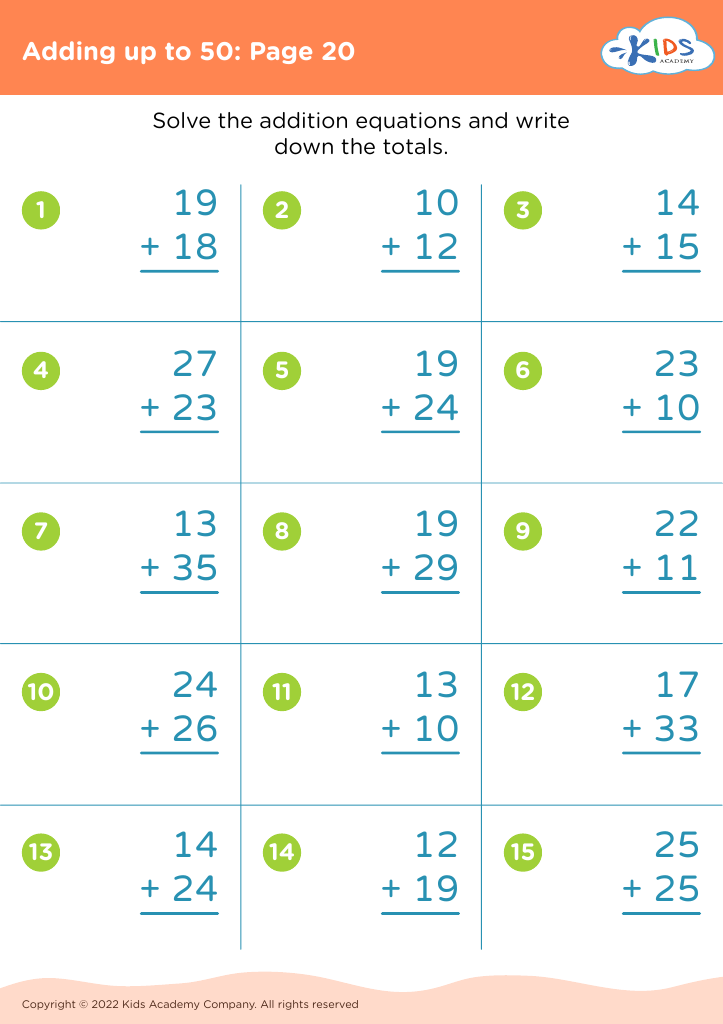
Adding up to 50: Page 20

Adding up to 50: Page 20

Adding up to 50: Page 20
Worksheet
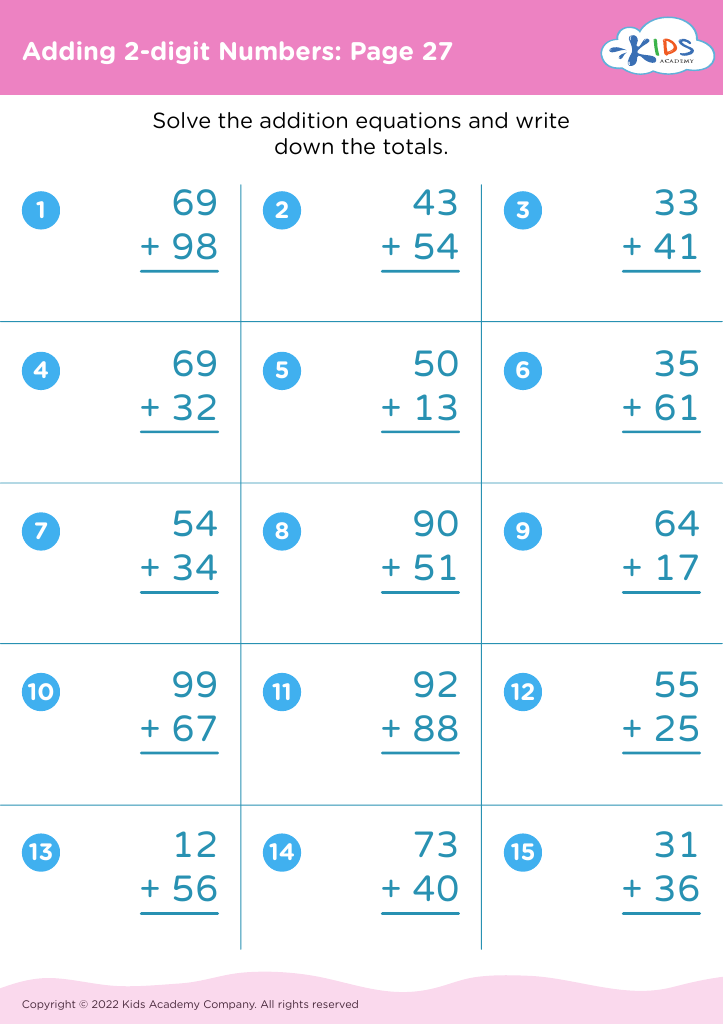
Adding 2-digit Numbers: Page 27

Adding 2-digit Numbers: Page 27

Adding 2-digit Numbers: Page 27
Worksheet


Enhancing number recognition and addition skills in children aged 7-8 is crucial for their overall mathematical development and lifelong learning. At this age, children typically transition from concrete operations to more abstract mathematical concepts. Strong number recognition lays the foundation for basic arithmetic, enabling them to understand quantities, values, and the relationships between numbers. This developmental milestone is essential, as it allows for more efficient problem solving and sets the stage for future mathematical concepts like subtraction, multiplication, and division.

Furthermore, mastering these foundational skills boosts children’s confidence and desire to tackle more complex challenges, contributing to a positive attitude towards math. When parents and teachers prioritize enhancing these skills, they not only support academic growth but also equip children with critical thinking abilities that extend beyond math into broader areas of learning.

Additionally, a solid grounding in number recognition and addition can have positive effects on standardized test outcomes and overall academic performance. By fostering these skills, parents and teachers play a pivotal role in preparing children for higher academic pursuits, enhancing their cognitive development, and ensuring success in a world that increasingly relies on numeracy across various aspects of life.