Enhance Vocabulary Addition Worksheets for Ages 7-8
4 filtered results
-
From - To
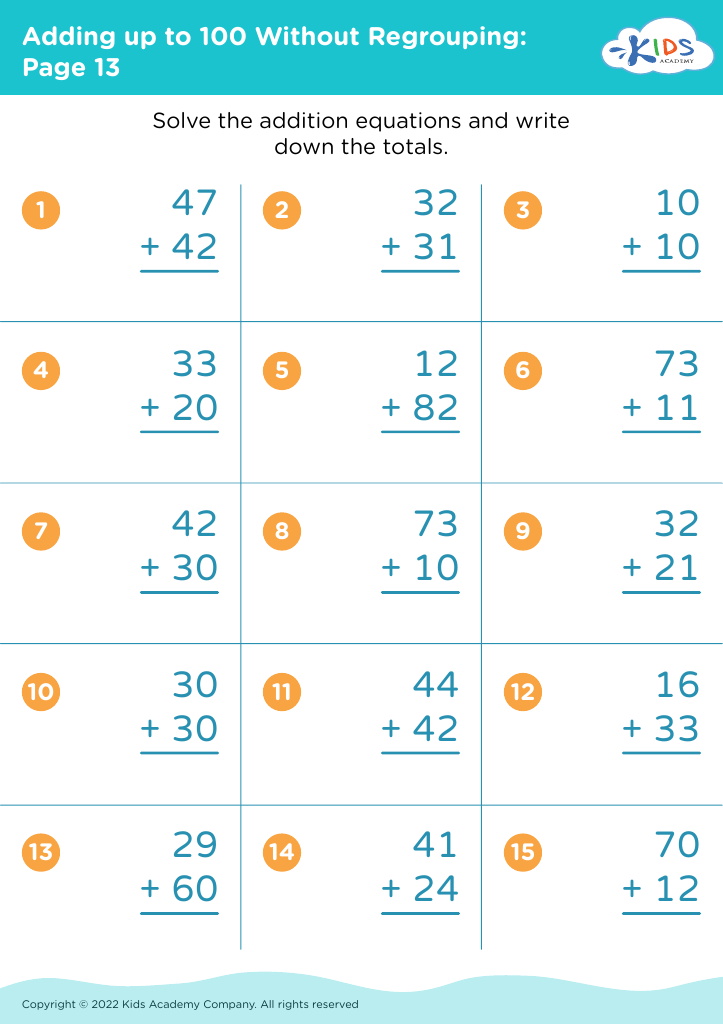
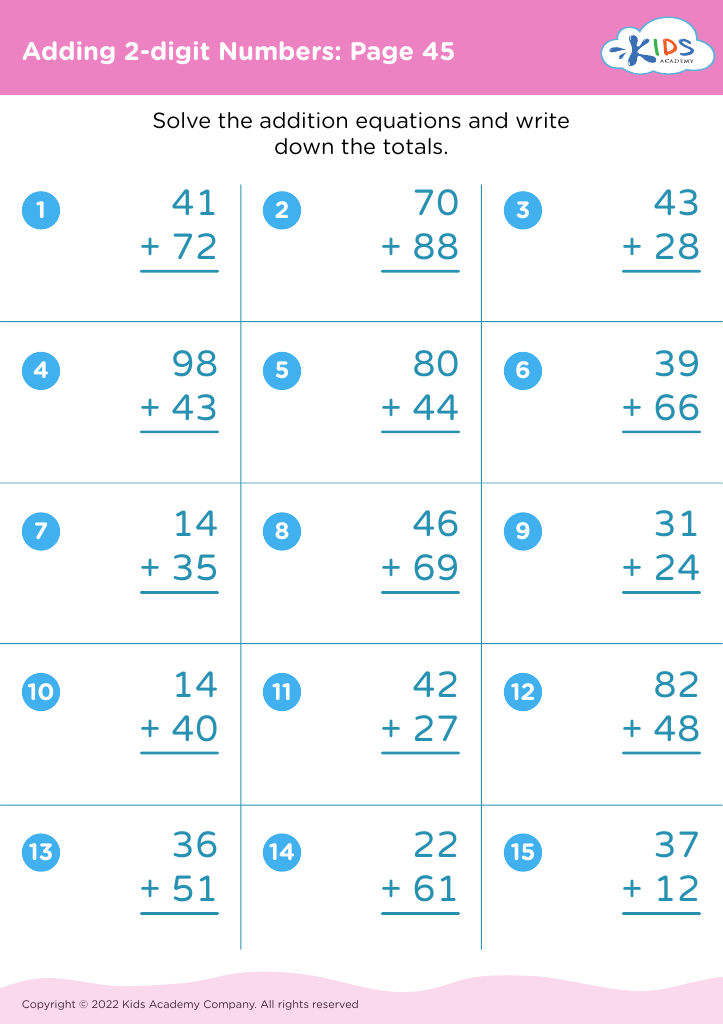
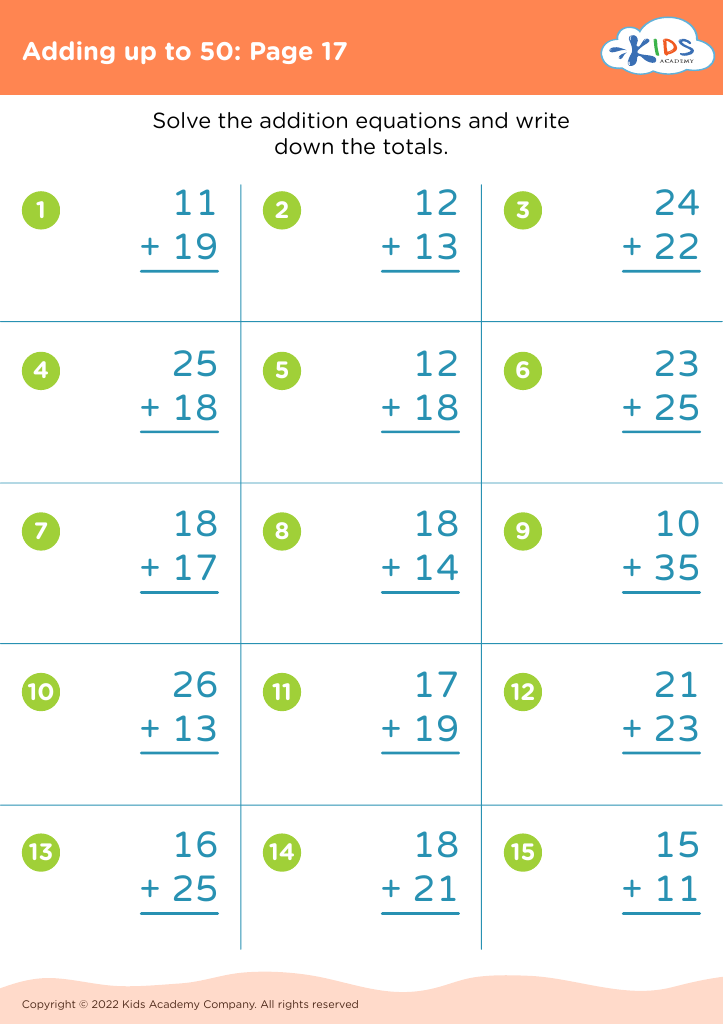
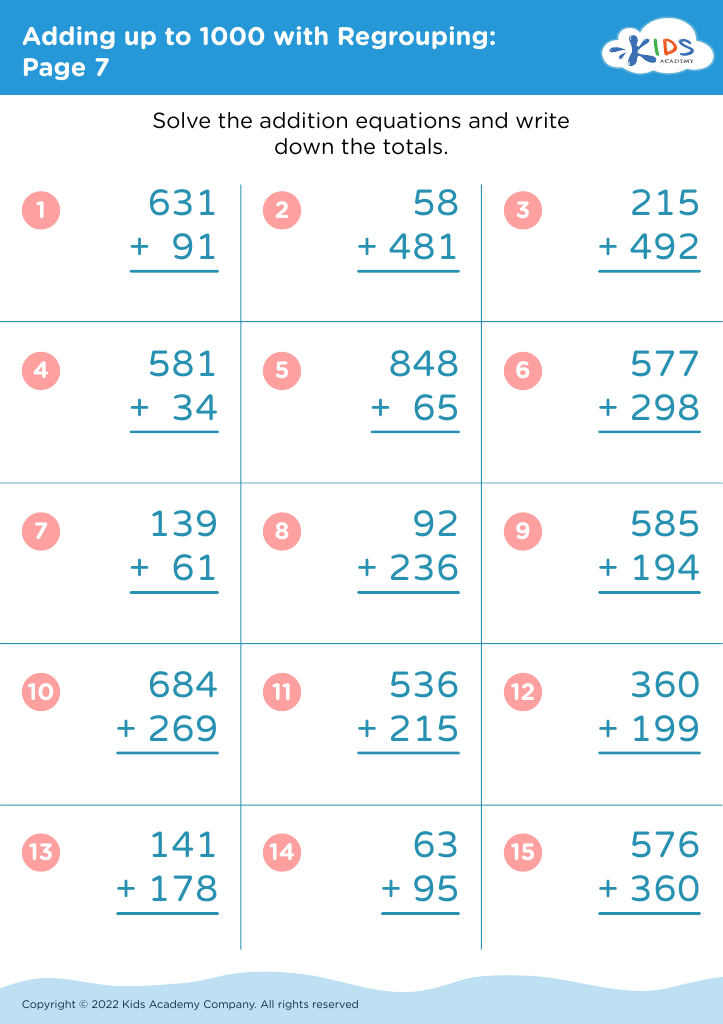
Discover our "Enhance Vocabulary Addition Worksheets for Ages 7-8", designed to fuse math with language skills seamlessly! These engaging worksheets not only focus on boosting your child's addition abilities but also enrich their vocabulary. Each worksheet is uniquely crafted with fun addition problems alongside vocabulary-building activities, catering specifically to young learners. Ideal for students aged 7-8, these printable worksheets ensure a balanced development of critical skills, preparing them for more advanced subjects. Make learning a delightful experience by integrating math and language arts, fostering a more comprehensive educational foundation. Perfect for home practice or classroom use!








Enhancing vocabulary for children aged 7-8 is crucial for several reasons. During these formative years, a robust vocabulary acts as the foundation of effective communication, comprehension, and cognitive development. First, a rich vocabulary helps children express their thoughts, feelings, and ideas more clearly and accurately. When kids can articulate themselves well, they gain confidence and are more likely to engage in classroom discussions, ask questions, and seek help when needed.
Second, vocabulary is integral to reading comprehension. Children with a richer vocabulary can understand and interpret texts more easily, making reading a more enjoyable and less frustrating experience. This enjoyment often translates into a lifelong habit of reading, which further strengthens cognitive abilities and knowledge.
Additionally, a strong vocabulary improves academic performance across all subjects. Vocabulary is not only central to reading and language arts but is also essential for understanding mathematical concepts and instructions. For example, understanding terms like "subtract," "divide," or "equal" is crucial for problem-solving in math.
Finally, vocabulary development supports social skills. It allows children to communicate effectively with peers and adults, navigate social situations, and build stronger relationships. By enhancing vocabulary at ages 7-8, parents and teachers are investing in children's overall linguistic, academic, and social success, setting them up for brighter futures.








