Fine Motor Skills (coloring) Addition Worksheets for Ages 7-8
3 filtered results
-
From - To
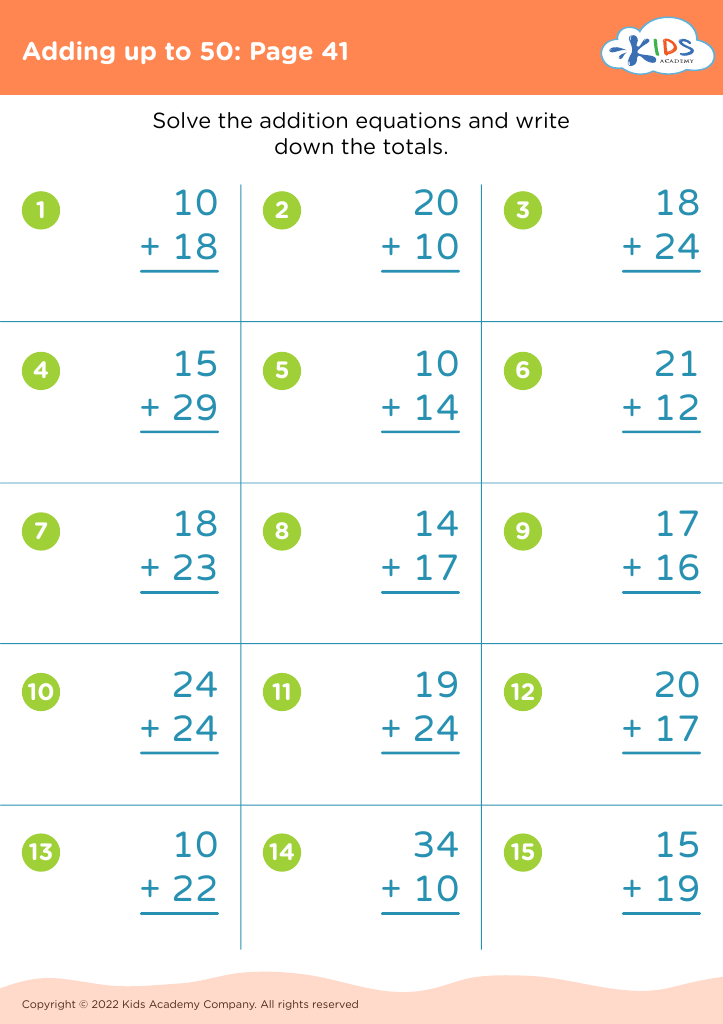
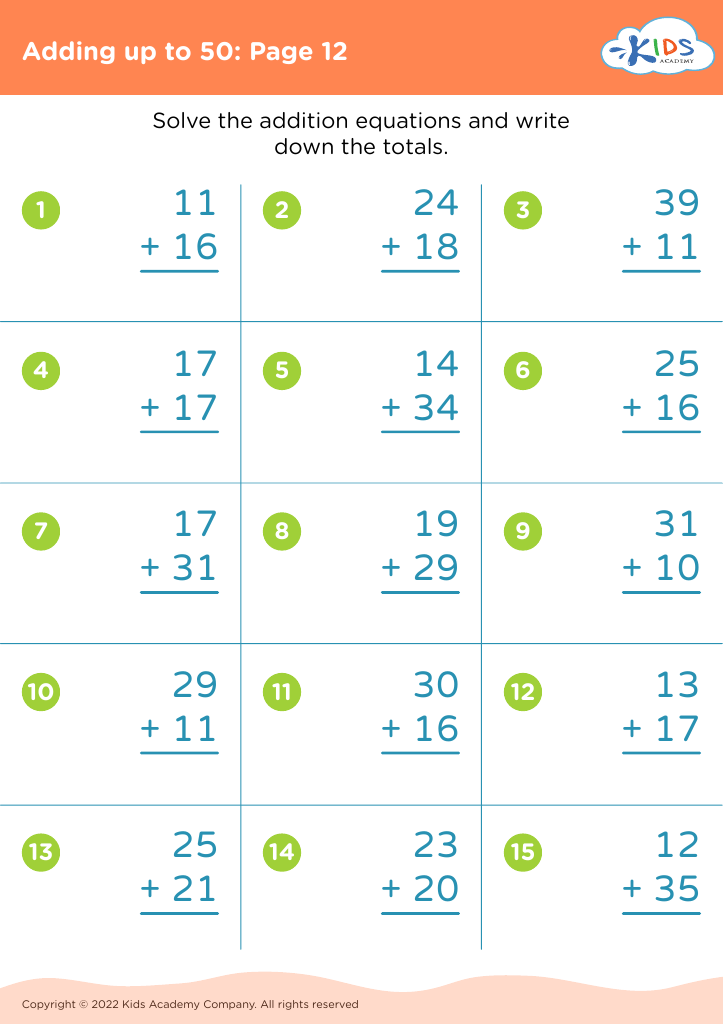
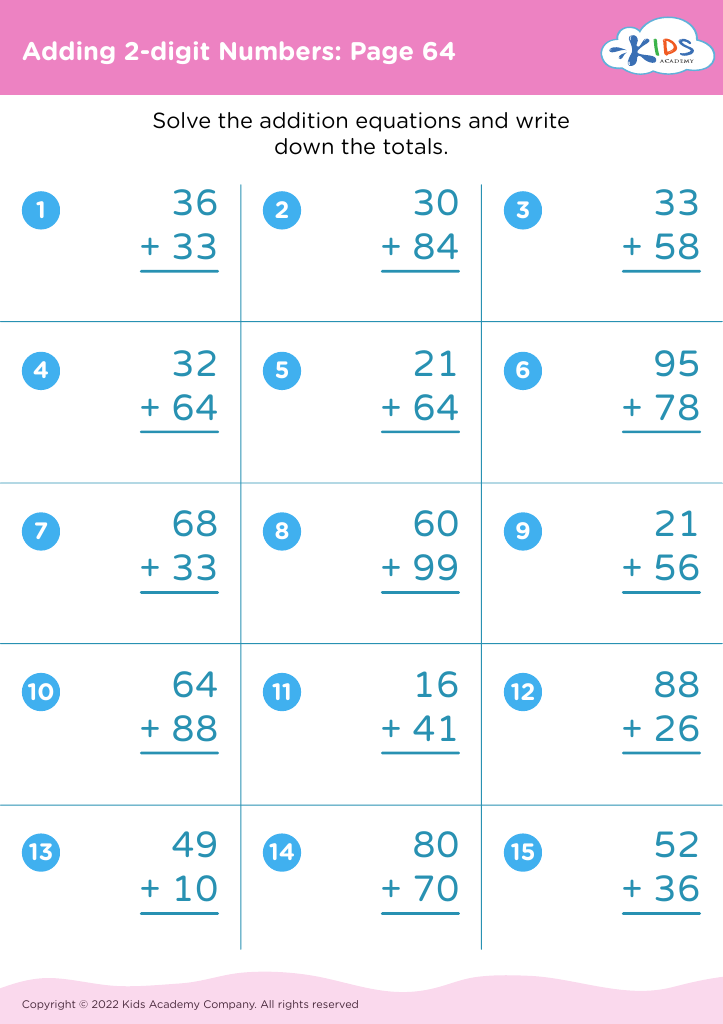
Boost your child's learning with our engaging Fine Motor Skills (coloring) Addition Worksheets for ages 7-8! These interactive worksheets combine the fun of coloring with essential math skills, making addition practice enjoyable and effective. Designed to enhance fine motor skills, these activities help children develop hand-eye coordination while solving addition problems. Each worksheet features colorful illustrations that motivate kids to complete their tasks, ensuring they stay focused and engaged. Perfect for classrooms or at-home learning, our printable resources provide a hands-on approach to math, fostering both creativity and academic growth in young learners. Unlock their potential and explore today!








Fine motor skills, particularly activities like coloring, play a crucial role in a child’s development, especially for those aged 7-8. At this stage, children are refining their hand-eye coordination, dexterity, and precision, which are essential for more complex tasks such as writing, cutting, and painting. Engaging in coloring not only strengthens these fine motor skills but also promotes cognitive development. It requires children to concentrate, follow directions, and make decisions about colors and designs.
For parents and teachers, nurturing fine motor skills through coloring can also be a gateway to enhancing creativity and self-expression. It provides a fun and engaging way for children to articulate their thoughts and feelings, boosting their confidence and emotional well-being. Additionally, coloring can be a calming activity, helping children to manage stress and focus their energy positively.
Moreover, achieving successful outcomes in coloring tasks can motivate children, enhancing their enthusiasm for learning. When parents and teachers prioritize fine motor skill development, they set the foundation for academic success, particularly in writing and other tasks that require precise hand movements. By making coloring a part of everyday activities, they contribute significantly to a child’s general growth and readiness for future educational challenges.








