Improve calculation skills Addition Worksheets for Ages 7-8
4 filtered results
-
From - To
Enhance your child's math capabilities with our engaging Improve Calculation Skills Addition Worksheets for ages 7-8. These expertly designed worksheets aim to make learning addition fun and effective, ensuring kids master this essential skill. Featuring a variety of activities, from simple equations to word problems, these worksheets cater to different learning styles. Not only do they help reinforce academic concepts, but they also boost confidence and promote critical thinking skills. Perfect for home practice or classroom use, these addition worksheets support young learners as they develop their computation skills in a supportive and interactive way. Start your child's math journey today!
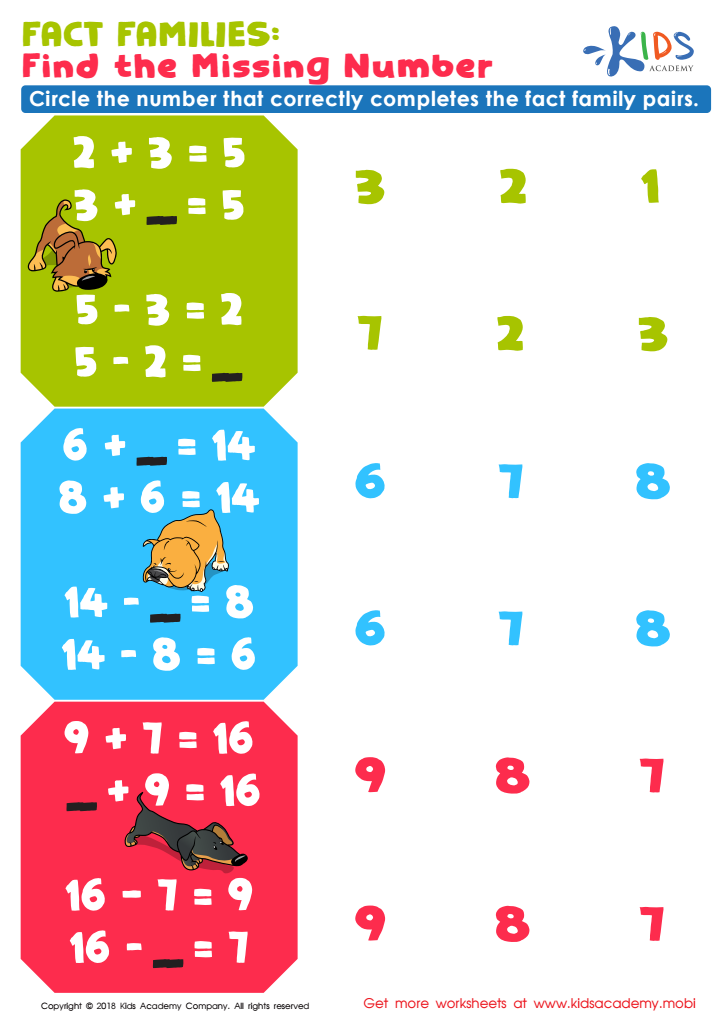
Fact Families: Find Missing Number Worksheet
 Assign to My Students
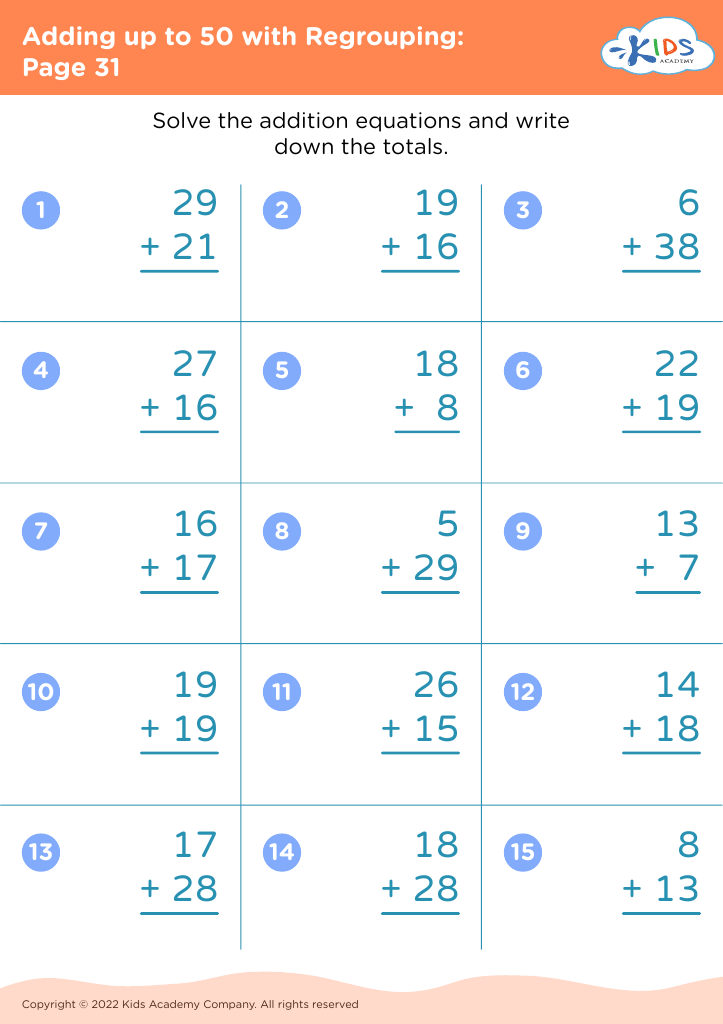
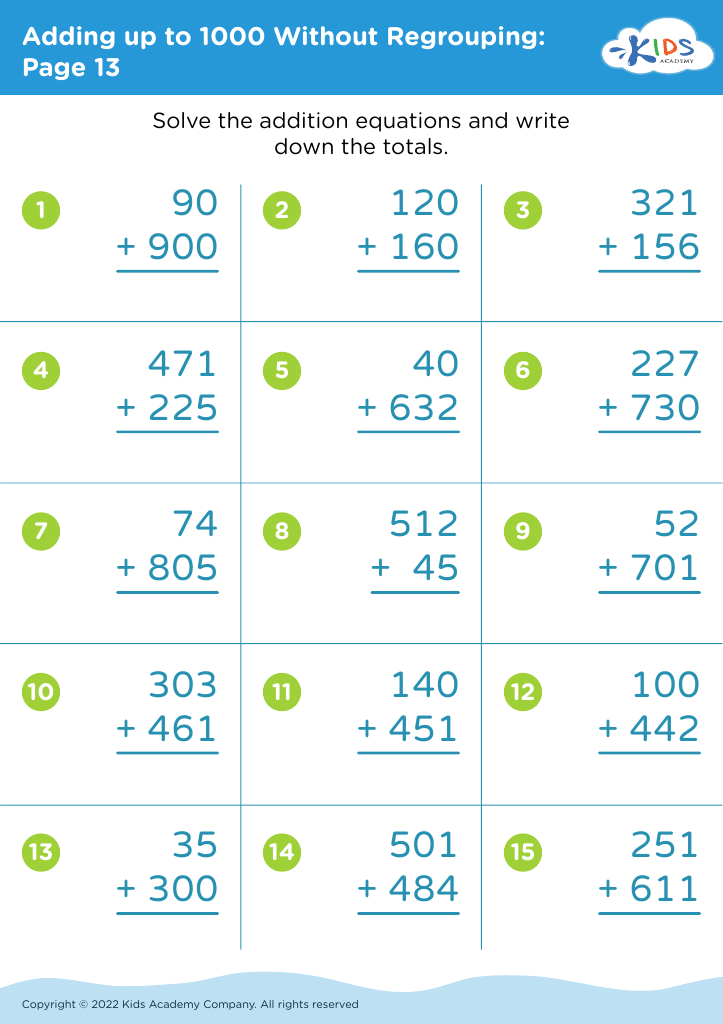
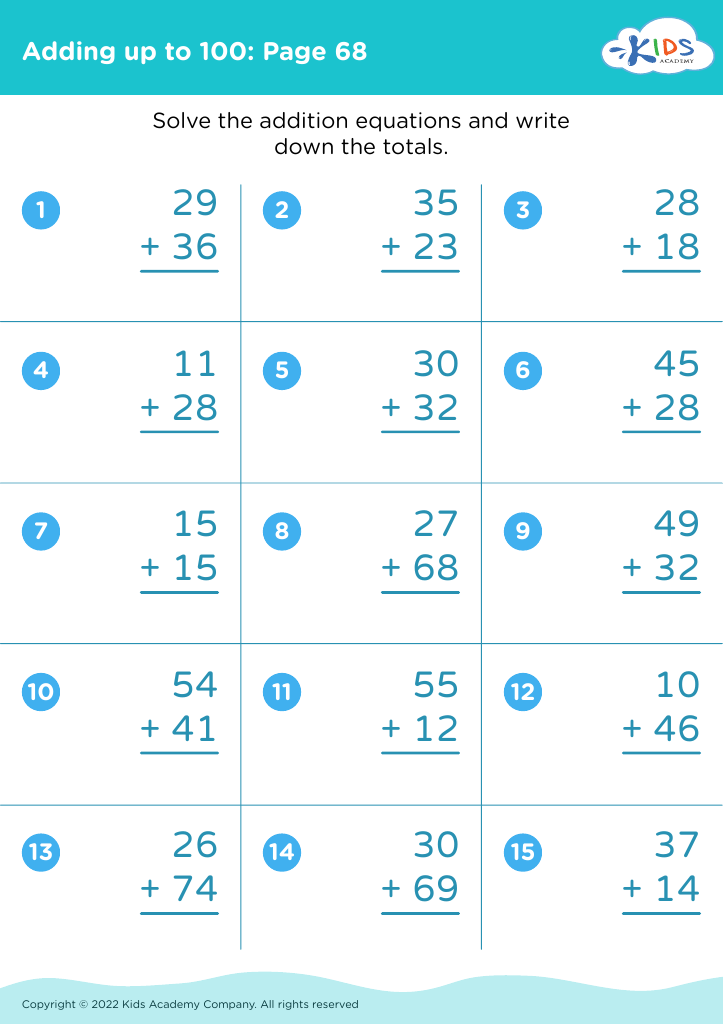








Improving calculation skills in addition for children ages 7 to 8 is crucial for several reasons. At this age, children are developing foundational math skills that will support their future learning in more complex concepts. Strong addition skills enhance a child's confidence in math, making them more likely to engage in classroom activities and take on challenges. Mastery in addition during this critical period also lays the groundwork for other mathematical operations, such as subtraction, multiplication, and division.
Furthermore, strong calculation skills are vital for daily life situations, helping children manage money, measure ingredients in cooking, or calculate time. These skills foster a sense of independence and problem-solving ability that becomes essential as they grow older.
For teachers and parents, nurturing these skills can promote a positive relationship with mathematics. Engaging children in fun, diverse methods of learning—like games, real-life scenarios, or interactive activities—can make addition exciting and relatable. This involvement makes it less likely that children will develop math anxiety, ensuring they remain open to learning throughout their academic journey. In essence, supporting addition skills not only bolsters academic success but also cultivates essential life skills for a child's future.








