Comparing shapes Geometry Worksheets for Ages 7-8
3 filtered results
-
From - To
Explore our engaging Comparing Shapes Geometry Worksheets designed for children ages 7-8! These worksheets help young learners develop essential skills in recognizing and comparing various geometric shapes, enhancing their understanding of geometry in a fun and interactive way. Through a variety of exercises and activities, students will gain confidence in identifying similarities and differences among shapes, fostering critical thinking and analytical skills. Perfect for classroom use or at-home practice, these worksheets provide a valuable resource for teaching geometry concepts aligned with educational standards. Empower your child’s mathematical journey with our thoughtfully designed materials that make learning about shapes enjoyable and accessible!
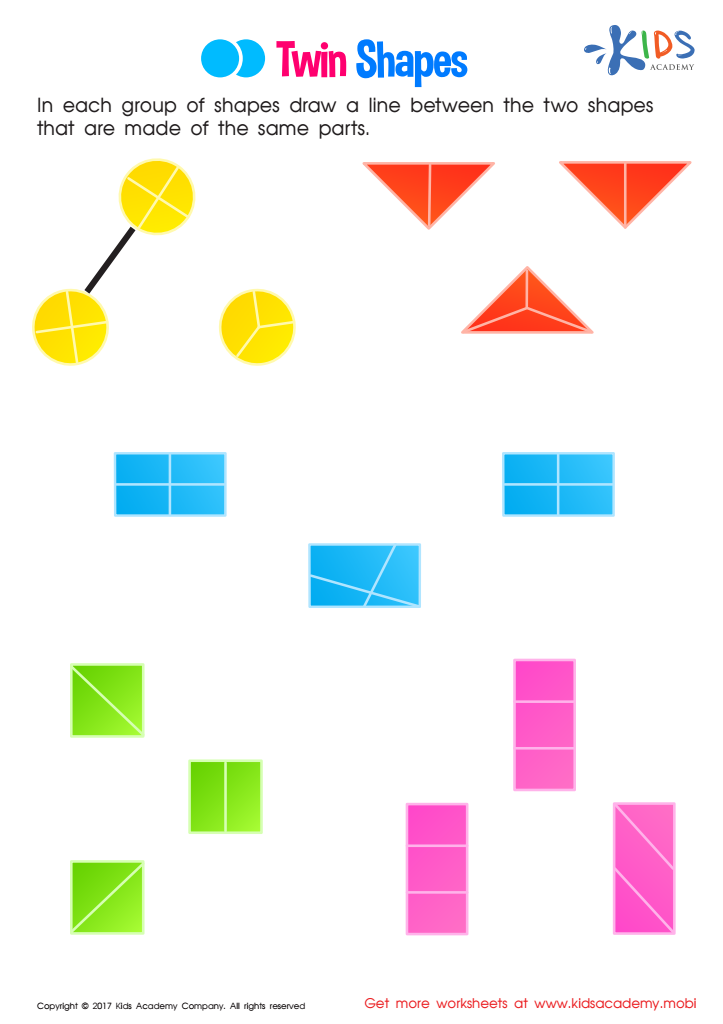
Twin Shapes Worksheet
 Assign to My Students











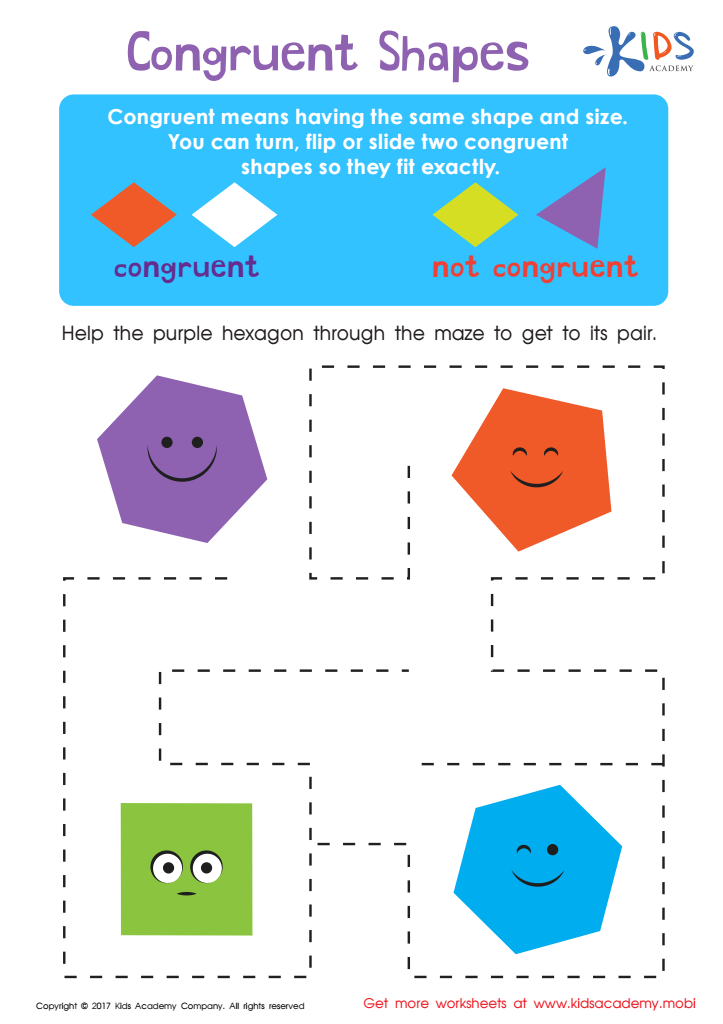
Congruent Shapes Worksheet
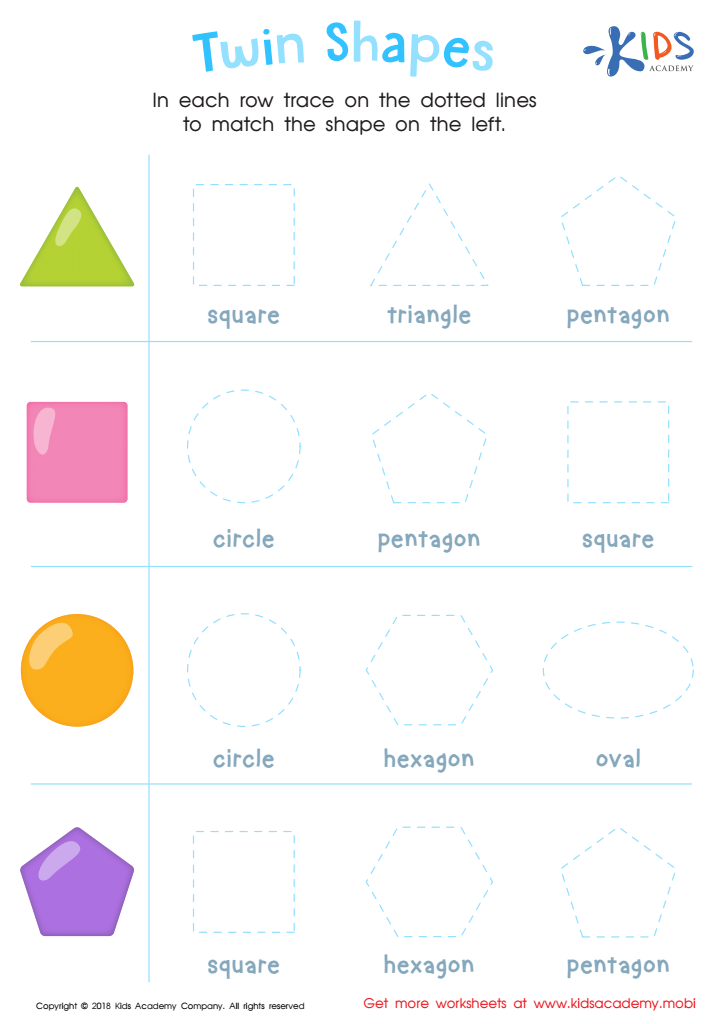
Twin Shapes Dot-to-Dot Worksheet








Understanding and comparing shapes is essential for children ages 7-8 as it lays the foundation for important mathematical concepts and skills. At this stage, children begin to transition from concrete to abstract thinking, and geometry provides them with a tangible way to engage with complex ideas. By comparing shapes, children are not only learning to identify and classify various geometric forms like triangles, squares, and circles, but they are also developing critical thinking and problem-solving skills.
Moreover, comparing shapes enhances spatial awareness, a crucial ability that relates to navigation, reading maps, and visualizing objects in two and three dimensions. As children analyze how different shapes relate—such as similarities, differences, and transformations—they build a deeper understanding of measurement, symmetry, and proportions, which are essential in more advanced math concepts later on.
Additionally, the skills gained through geometric comparisons extend beyond math. They foster observational skills and logical reasoning that benefit various academic disciplines and real-life situations. For parents and teachers, encouraging exploration in geometry not only supports academic success but also sparks creativity; children can express themselves through art, architecture, and design. Engaging the young minds in shape comparisons helps cultivate their natural curiosity and love for learning, preparing them for future challenges.








