Analyzing data Numbers Worksheets for Ages 7-8
3 filtered results
-
From - To
Welcome to our Analyzing Data Numbers Worksheets designed for ages 7-8! These engaging resources help young learners develop critical skills in understanding and interpreting data. Through a variety of visually appealing exercises, children will explore concepts such as collecting information, identifying trends, and making comparisons. Our worksheets encourage hands-on learning with colorful graphics and real-world applications, making math both enjoyable and relevant. Perfect for classroom use or at-home practice, these worksheets facilitate skill mastery in a fun, interactive way. Start enhancing your child's analytical thinking and data interpretation skills today with our thoughtfully crafted materials!
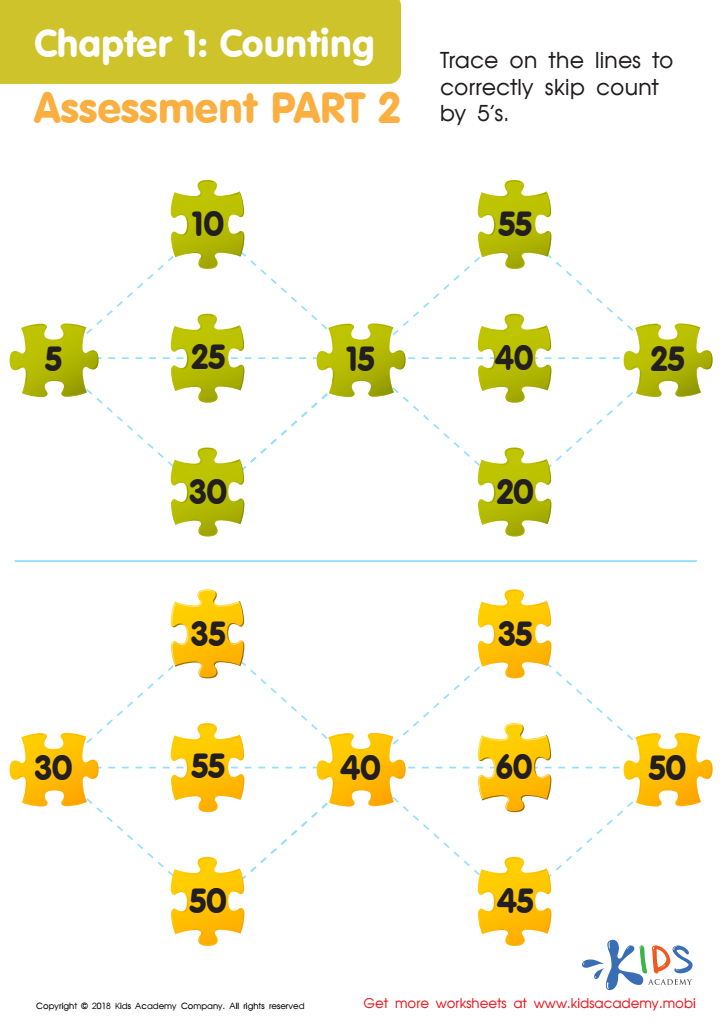
Counting: Assessment 2 Worksheet
 Assign to My Students
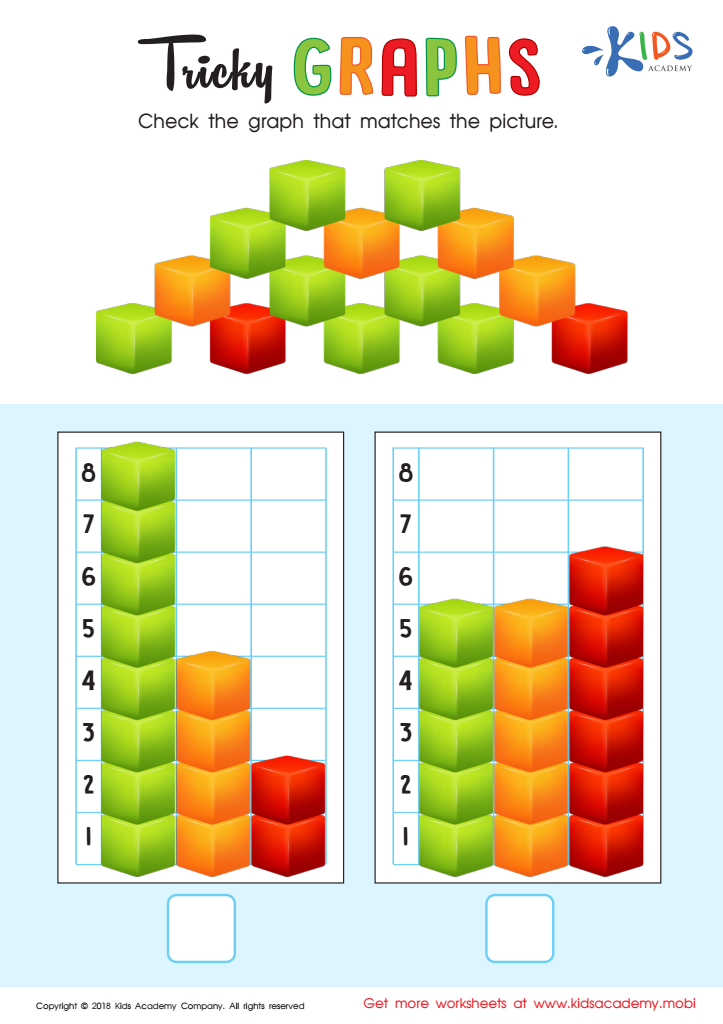
Tricky Graphs Worksheet
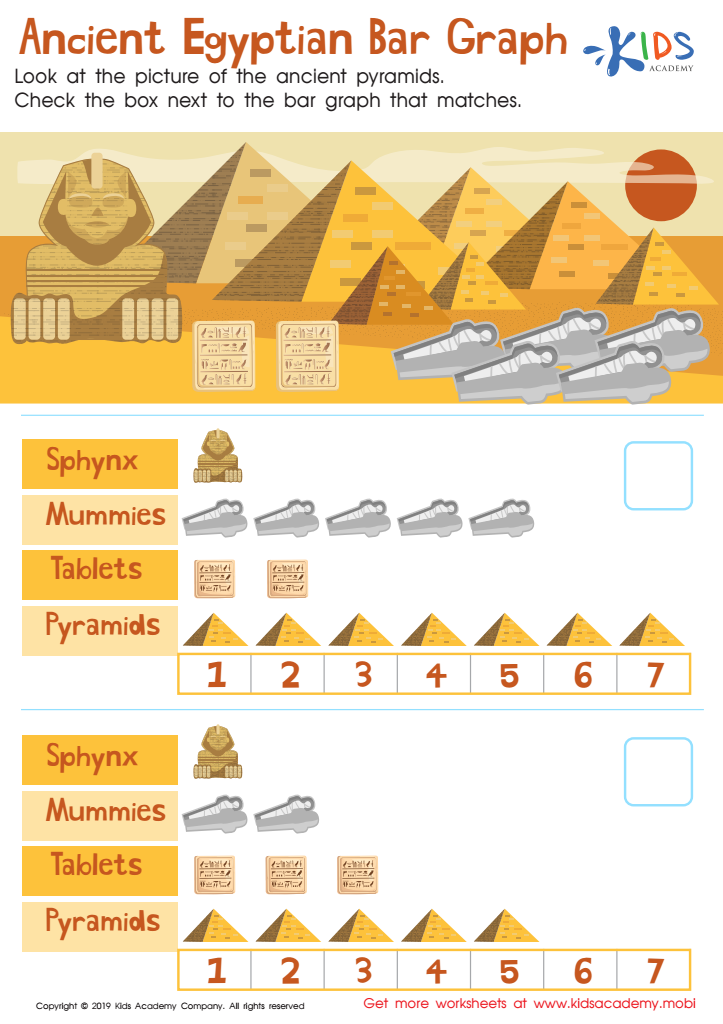
Egyptian Bar Graph Worksheet








Analyzing data and numbers is crucial for children aged 7-8, as it lays the foundational skills essential for their cognitive development. At this age, students are naturally curious and eager to make sense of the world around them. By engaging with data, they learn to interpret information, identify patterns, and make informed decisions, fostering critical thinking.
For parents and teachers, understanding data analysis can help track a child's academic progress, identify strengths and areas needing improvement, and tailor instructions to meet individual needs. When children learn to analyze numbers, they strengthen their math skills, but it also enhances their problem-solving abilities, crucial across all subjects.
Moreover, encouraging data analysis in early grades instills a sense of confidence and competence in young learners. It shows them that math isn’t just about calculations but also about discovering meaningful insights from information. Additionally, these skills are vital in a data-driven world, preparing them for future academic and career opportunities.
Ultimately, support from parents and teachers in emphasizing the importance of analyzing data encourages children to become informed and engaged learners, setting the stage for lifelong learning and intellectual curiosity.








