Counting practice Numbers Worksheets for Ages 7-8 - Page 2
27 filtered results
-
From - To
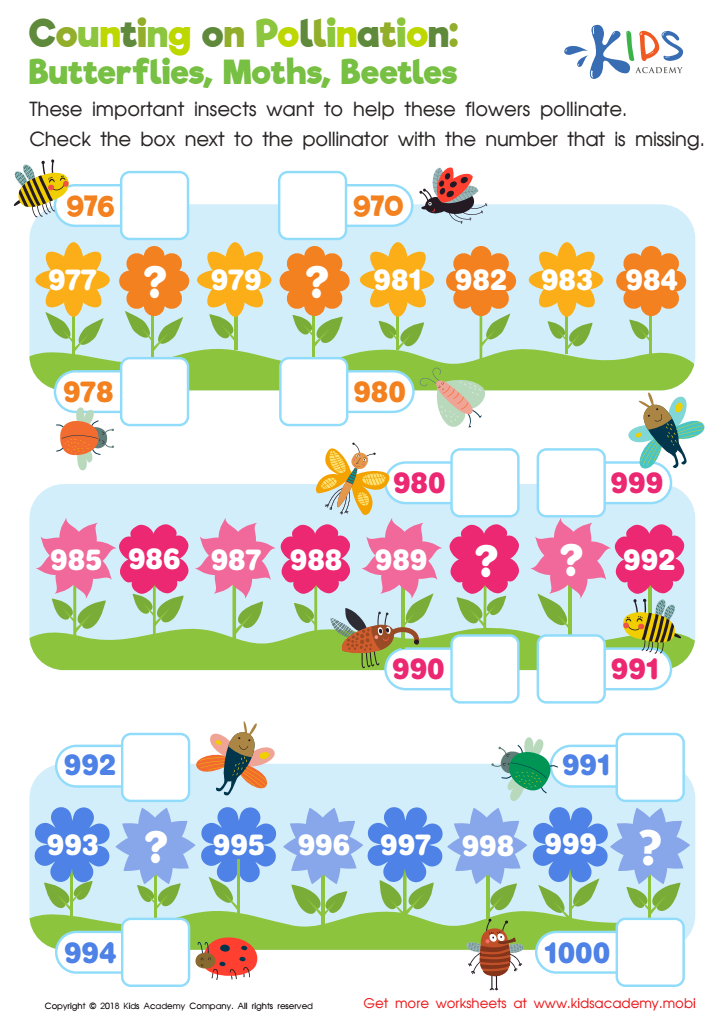
Counting on Pollination: Butterflies, Moths, Beetles Worksheet
 Assign to My Students

Counting on the City Skyline: Dot-to-Dot Worksheet
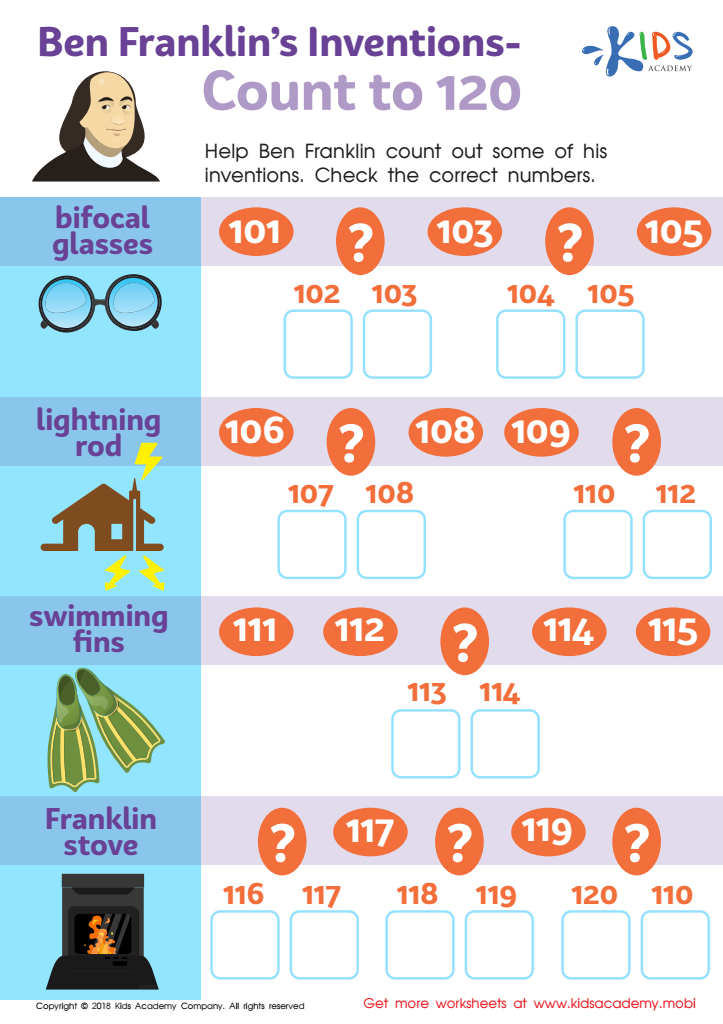
Ben Franklin’s Inventions – Count to 120 Worksheet








Counting practice for children aged 7-8 is a crucial part of their mathematical development and lays the groundwork for more advanced concepts. At this age, children transition from basic counting to more complex number sense, which is foundational for operations like addition and subtraction. Engaging in counting activities helps reinforce their understanding of numerical relationships and enhances their ability to recognize patterns, which is vital for problem-solving skills.
Parents and teachers should prioritize counting practice as it promotes cognitive development, critical thinking, and the ability to make connections between numbers and real-world situations. Furthermore, solid counting skills instill confidence in students, enabling them to tackle more challenging concepts in the future, such as multiplication or division. It also cultivates a positive attitude toward math by making it engaging and interactive.
Working on counting with children can foster important communication and collaboration skills, as they often engage in discussions about numbers with peers and adults. Overall, counting practice not only benefits academic performance but also equips children with essential life skills that they will use in personal finance, measuring, and everyday decision-making. Investing time in counting practice is instrumental in nurturing a strong mathematical foundation for lifelong learning.








