Critical Thinking Numbers Worksheets for Ages 7-8
7 filtered results
-
From - To
Boost your child's critical thinking skills with our engaging Critical Thinking Numbers Worksheets for ages 7-8. Designed to challenge young minds, these worksheets encourage students to apply reasoning and problem-solving techniques while working with numbers. Feature captivating activities that involve patterns, comparisons, and logical reasoning, our resources promote a deeper understanding of mathematical concepts. Ideal for both classroom and at-home learning, these worksheets make math fun and interactive. Help your child develop the analytical skills necessary for future academic success while enhancing their confidence in handling numbers. Explore our diverse collection of printable worksheets and watch your child’s love for math grow!
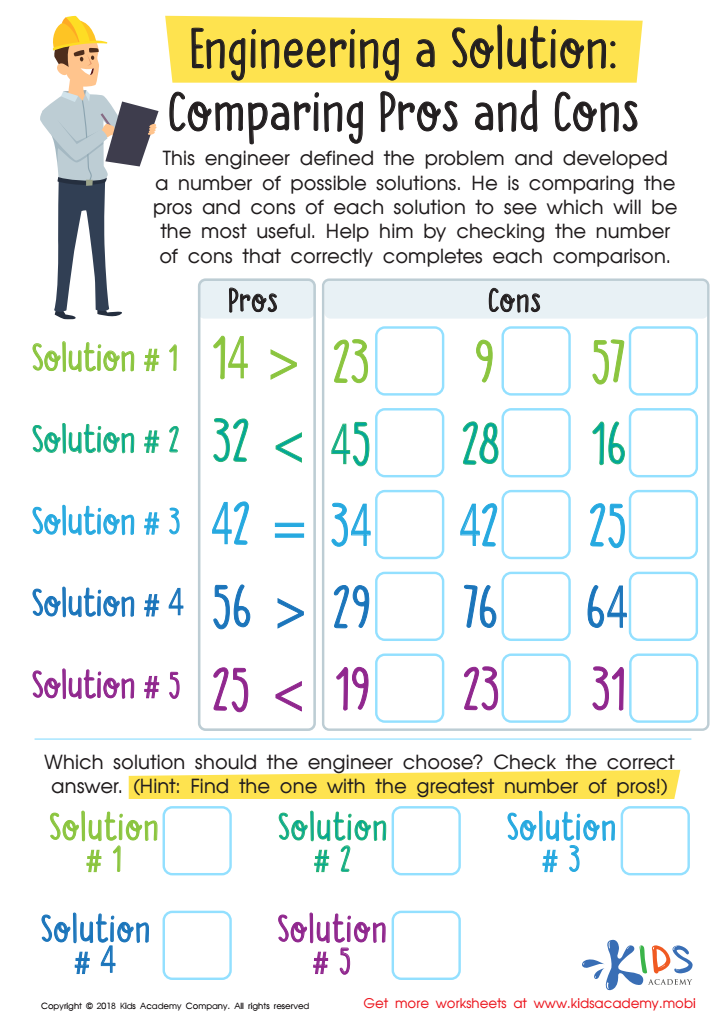
Engineering a Solution: Comparing Pros and Cons Worksheet
 Assign to My Students
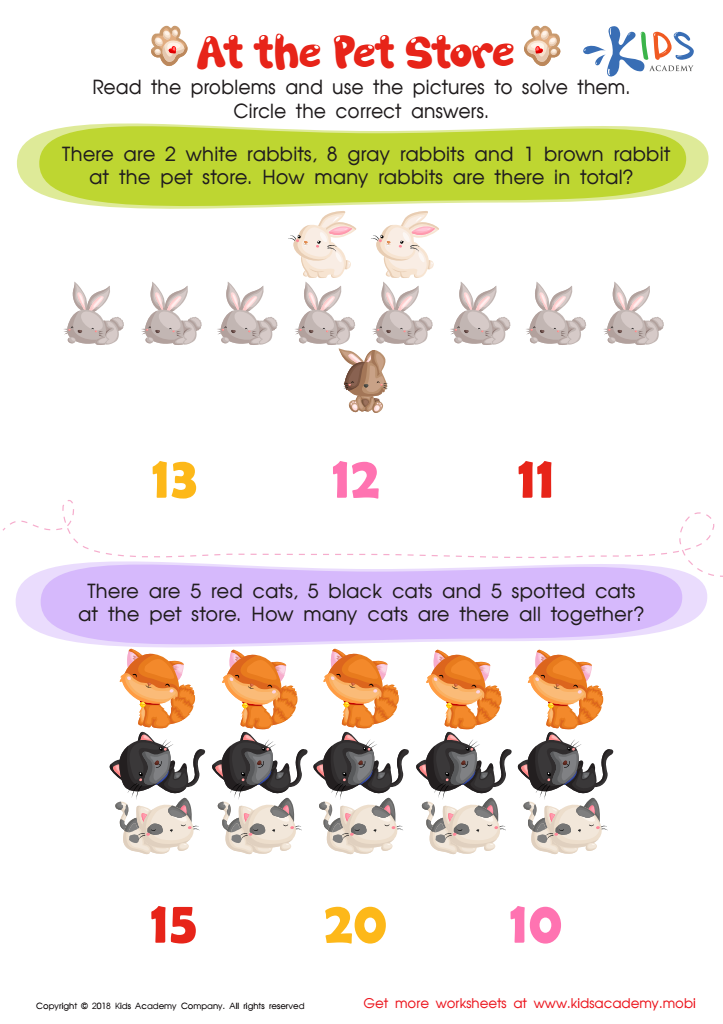
At the Pet Store Word Problems Worksheet
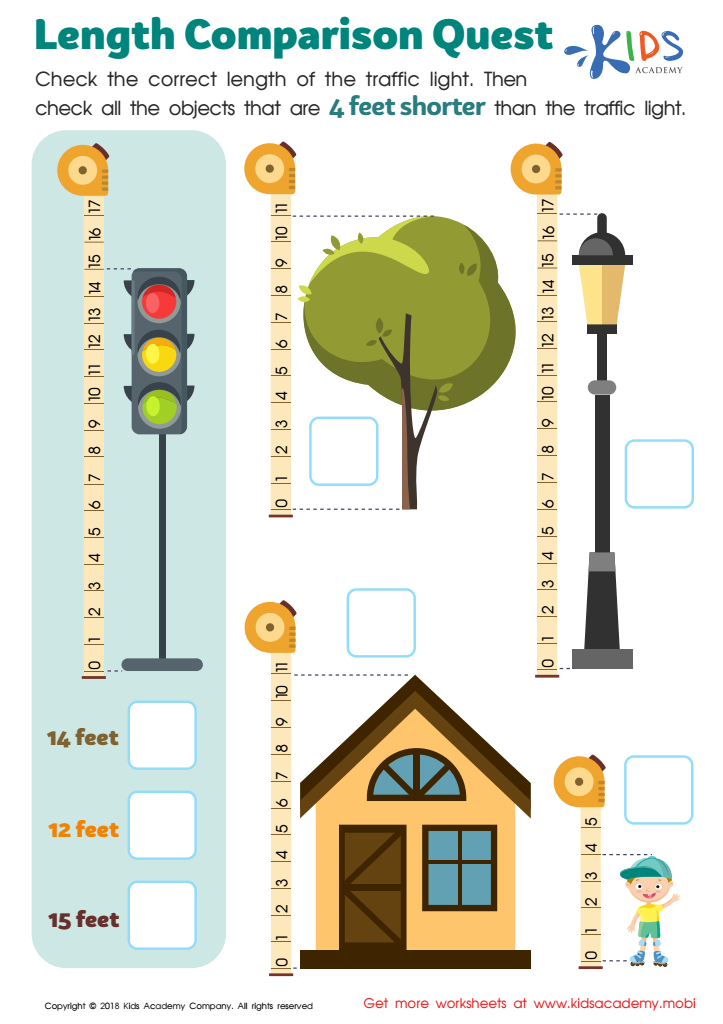
Length Comparison Quest Worksheet
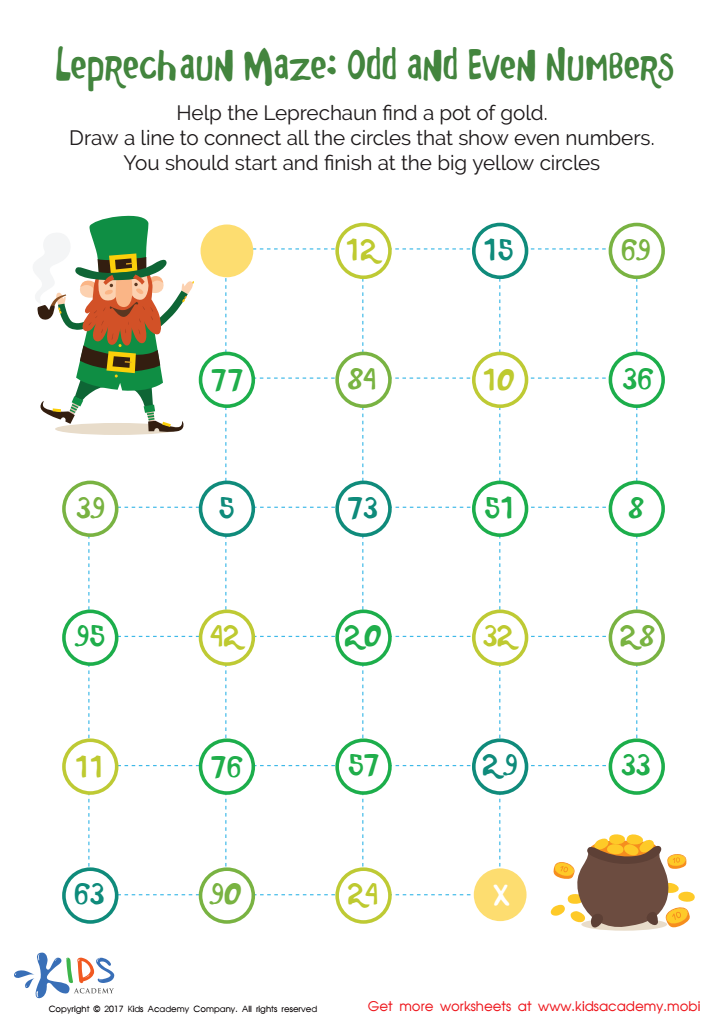
Leprechaun Maze Printable
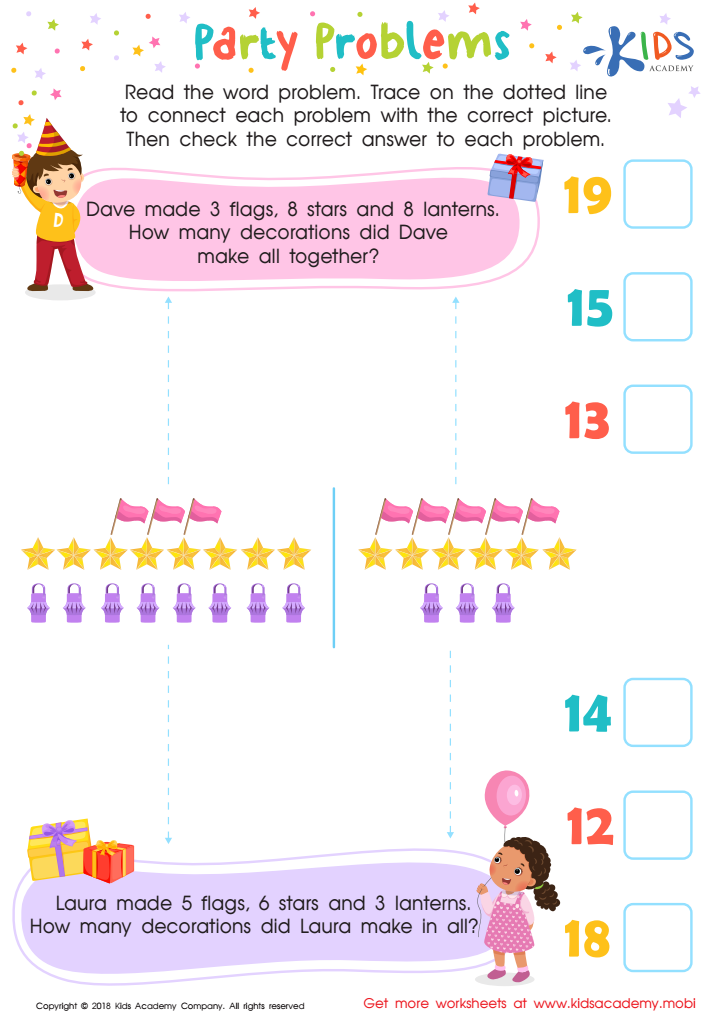
Party Problems Worksheet
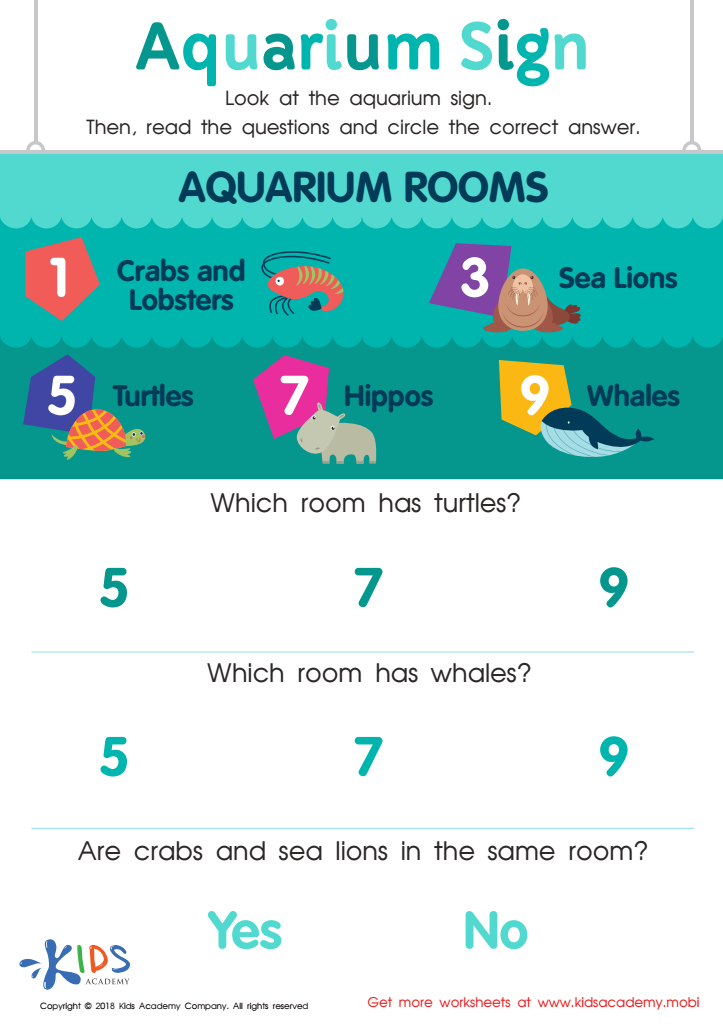
Assessment: Aquarium Sign Worksheet

World Traveler Worksheet








Critical thinking is an essential skill for children aged 7-8, bridging their early understanding of numbers with broader analytical abilities. At this age, children are beginning to grasp basic mathematical concepts, such as addition, subtraction, and simple problem-solving. Teaching critical thinking within this context encourages them to not only find the right answers but understand why those answers are correct.
Parents and teachers should prioritize critical thinking skills as they enhance a child's ability to analyze information, make connections, and evaluate outcomes. Critical thinking numbers activities can turn simple exercises into engaging, interactive experiences that foster discussions about strategies and logic, nurturing a deeper understanding of mathematical concepts. Moreover, these skills lay the groundwork for future learning, as children who think critically about numbers are more likely to approach complex problems with confidence and adaptability.
Additionally, fostering critical thinking helps develop a child's independence and resilience. It empowers them to question assumptions, reason through challenges, and collaborate with peers, building strong communication skills. By instilling a love for critical thinking in math at an early age, parents and teachers can equip children with the tools they need to succeed academically and personally throughout their lives.








