Data interpretation Numbers Worksheets for Ages 7-8
4 filtered results
-
From - To
Unlock your child's analytical potential with our "Data Interpretation Numbers Worksheets" tailored for ages 7-8! These expertly crafted activities enable young learners to grasp fundamental data concepts. Through engaging exercises, kids will interpret graphs, analyze charts, and draw meaningful conclusions from numerical data. Our worksheets seamlessly blend fun with education, ensuring concepts stick. Perfect for classrooms or at-home practice, these resources enhance critical thinking, promote problem-solving skills, and support Common Core standards. Equip your child with the tools to excel in math and beyond. Download now to make data interpretation a delightful learning adventure!
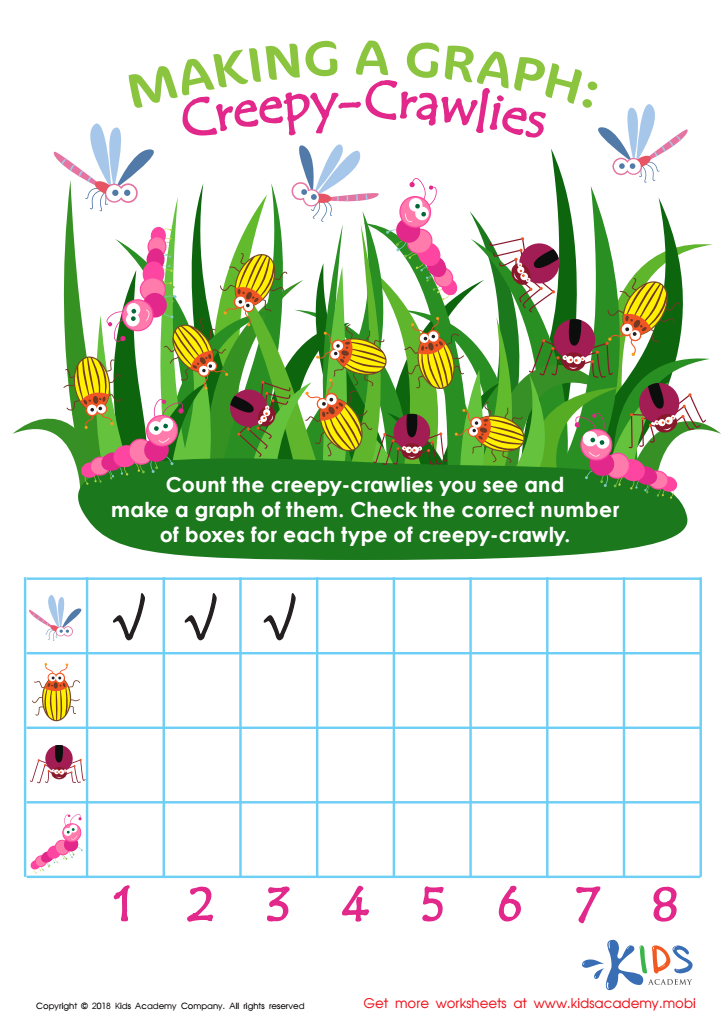
Making a Graph: Creepy Crawlies Worksheet
 Assign to My Students
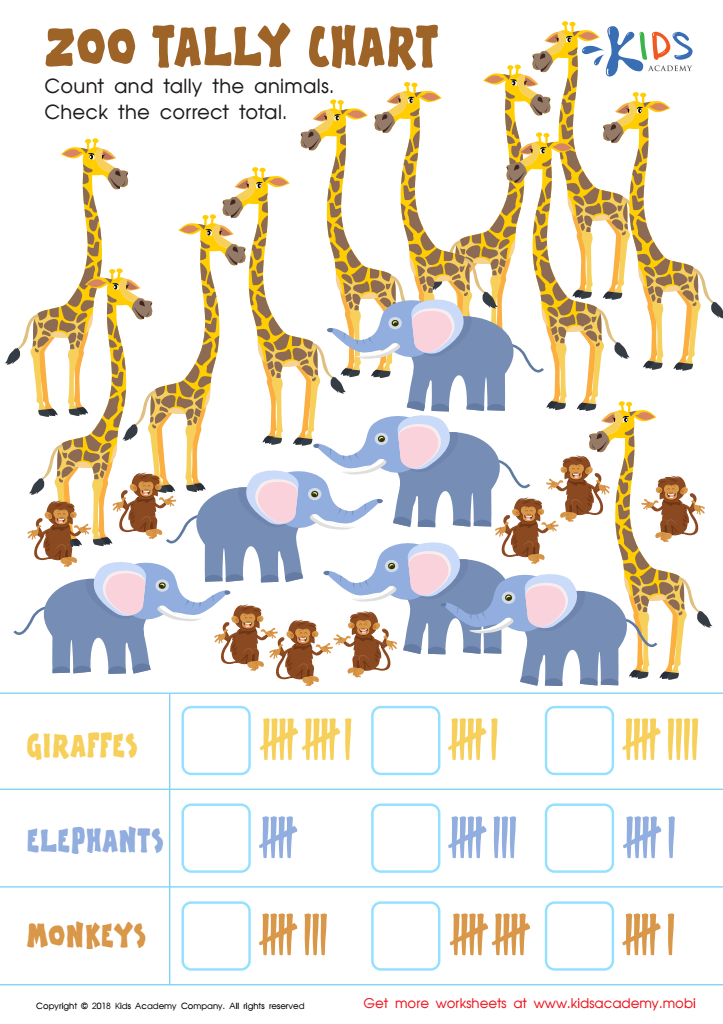
Zoo Tally Chart Worksheet
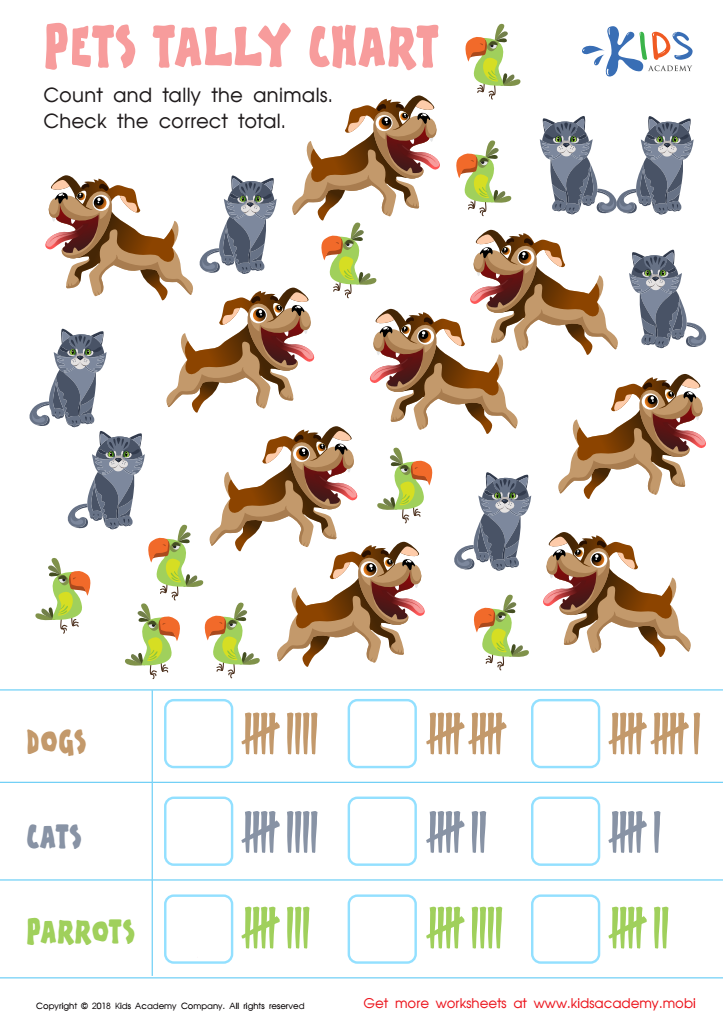
Pets Tally Chart Worksheet
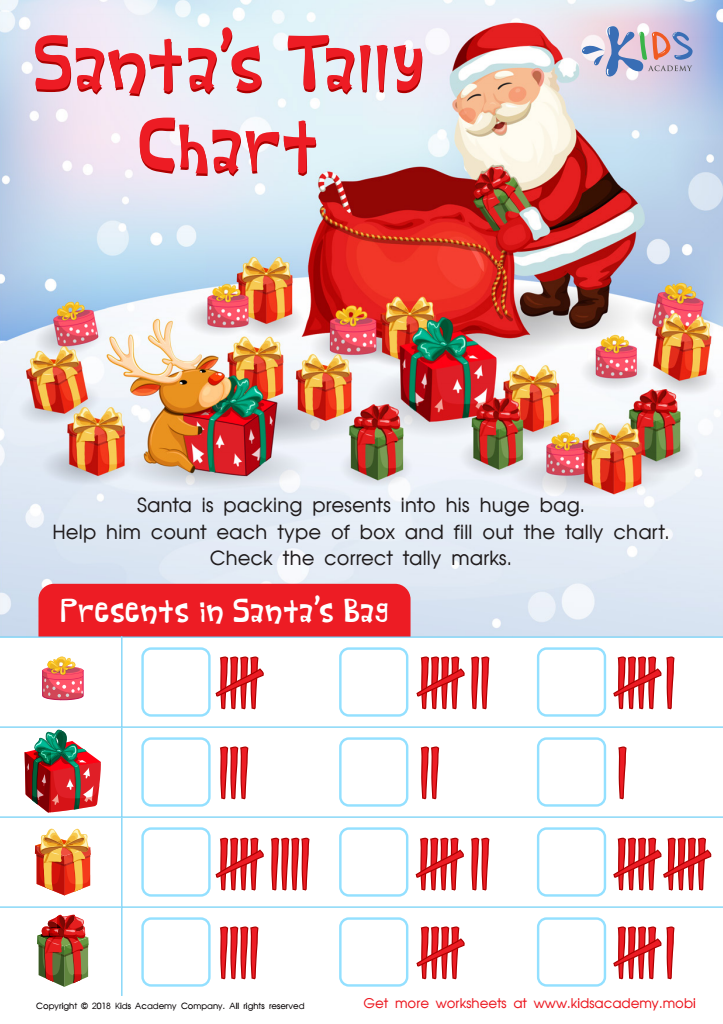
Santa Tally Chart Worksheet








Parents and teachers involve children in data interpretation with numbers for ages 7-8 to cultivate essential foundational skills. At this critical age, children are developing their numerical and logical thinking abilities. Familiarity with data interpretation strengthens their mathematical understanding, enabling them to make sense of numbers and patterns. This skill fosters problem-solving abilities, critical thinking, and analytical reasoning, which are vital across all academic subjects and in everyday decision-making.
Furthermore, interpreting data equips children with the ability to read charts, graphs, and tables, enhancing their capability to understand and convey information effectively. This skill is increasingly relevant in our data-driven world where interpreting information accurately is key to informed decisions.
Early exposure to data interpretation also boosts confidence in handling math, often mitigating math anxiety by making the subject more approachable and engaging. Interactive activities like designing simple surveys and analyzing results can make learning fun and practical, fostering a positive attitude toward the subject.
Thus, prioritizing data interpretation numbers for ages 7-8 sets the stage for future academic success, builds life skills, and encourages a constructive relationship with mathematics. Parents and teachers play a crucial role in nurturing these competencies through structured learning opportunities and practical applications.








