Understanding skip-counting Numbers Worksheets for Ages 7-8
3 filtered results
-
From - To
Our "Understanding Skip-Counting Numbers Worksheets for Ages 7-8" are designed to make mastering this essential math skill fun and engaging. Skip-counting helps young learners understand number patterns, build a strong foundation for multiplication, and improve overall math fluency. Through a variety of colorful and interactive exercises, children will count by twos, fives, tens, and more. Each worksheet is thoughtfully crafted to align with educational standards, ensuring your child gets the best support. Perfect for classroom use or homeschooling, these worksheets make learning easy and enjoyable for your budding math whiz. Download now and start skip-counting!
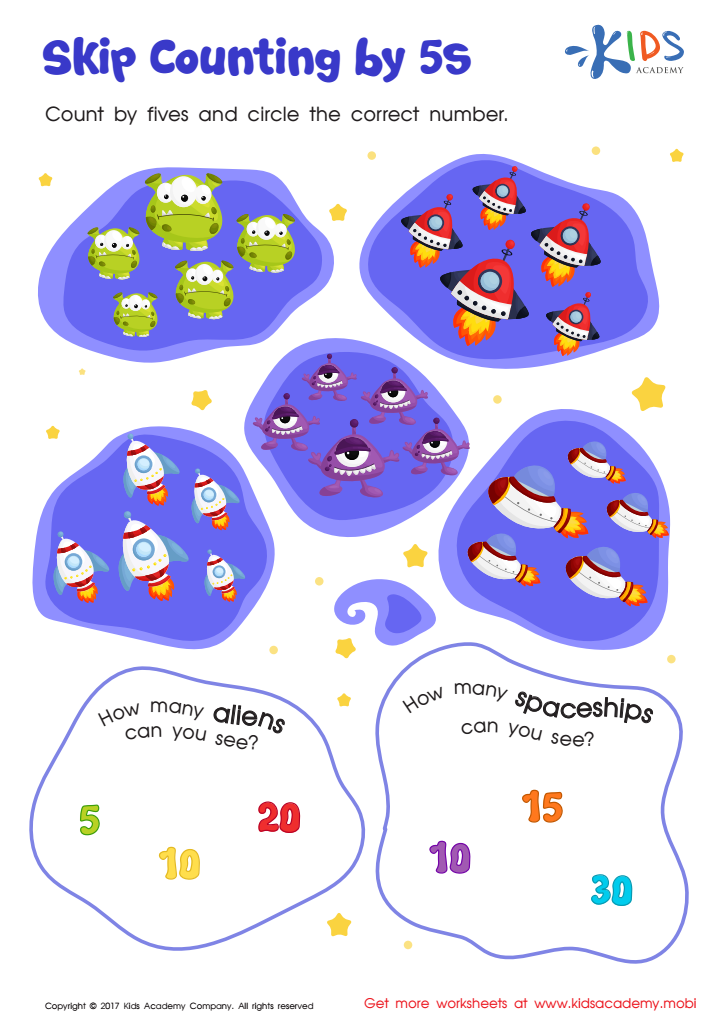
Skip Counting by 5s: Aliens and Spaceships Printable
 Assign to My Students
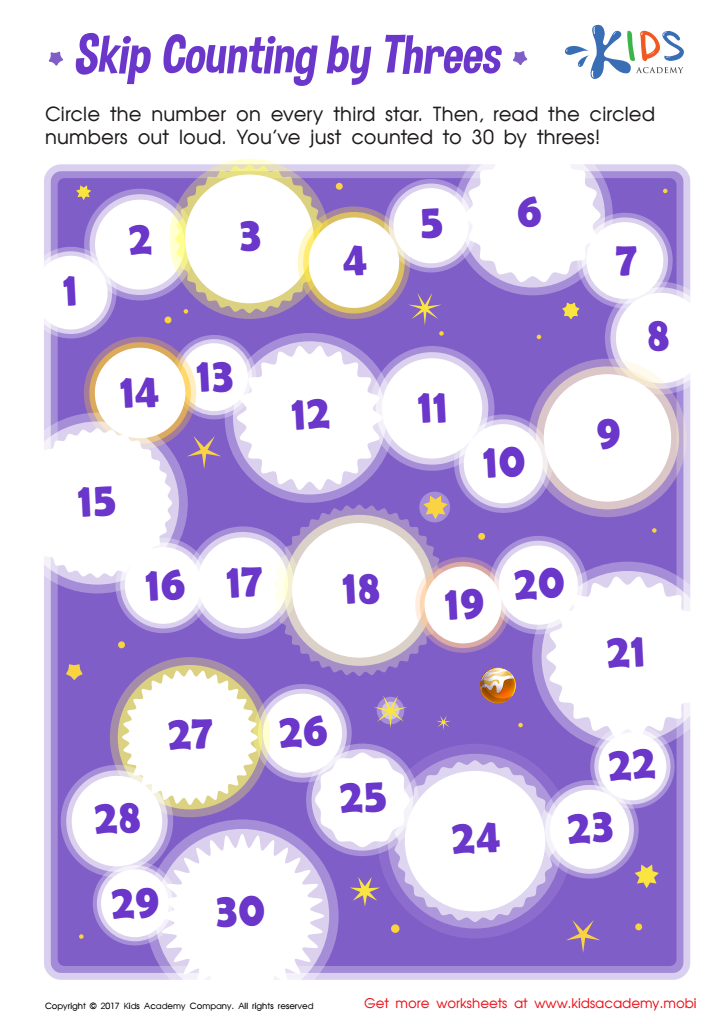
Skip Counting By Three Printable
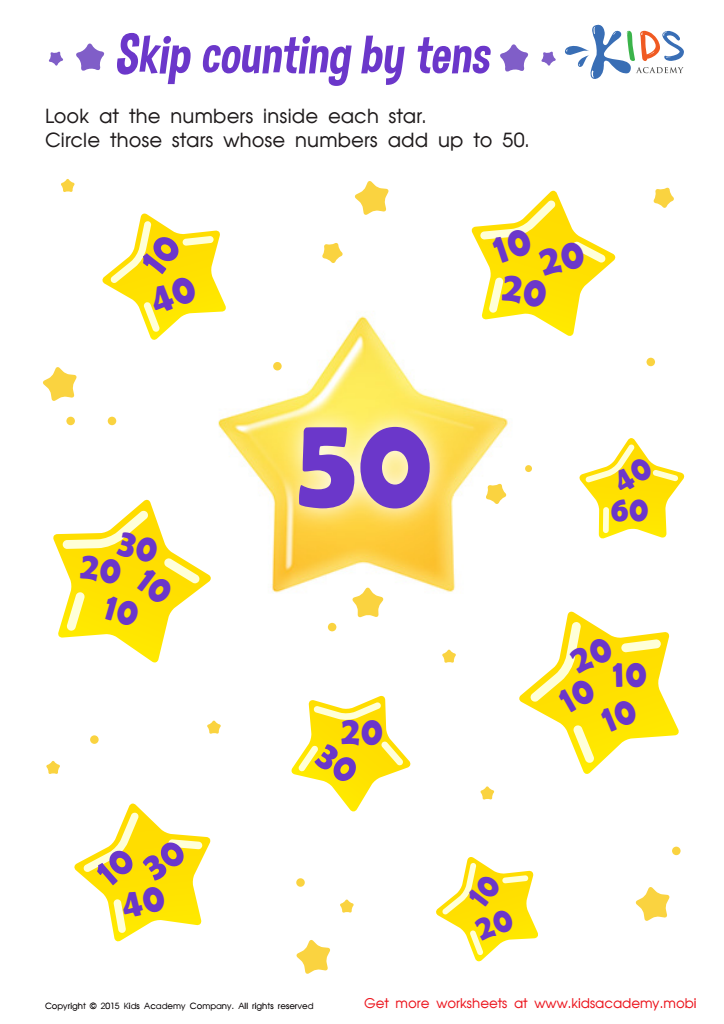
Learn Dozens: Skip Counting by Tens Printable








Understanding skip-counting is critical for children aged 7-8 because it lays a strong foundation for advanced mathematical skills. Skip-counting is essentially counting by a number other than one, such as by twos, fives, or tens. This concept is intertwined with fundamental arithmetic operations like addition, subtraction, multiplication, and division.
Firstly, skip-counting aids in developing a child's number sense, making it easier for them to comprehend number patterns and relationships. This understanding is crucial for tackling more complex mathematical concepts, including times tables and division. For instance, knowing how to skip-count by fives will help children master the 5-times table effortlessly.
Secondly, skip-counting promotes mental math skills. As children practice counting in sequences, they become more adept at performing calculations in their heads. This is helpful in everyday scenarios, such as quickly determining the total cost of multiple items while shopping.
Thirdly, skip-counting supports early measures of estimation and problem-solving. When children recognize patterns in numbers, they can make educated guesses and quickly verify the reasonableness of their results.
Moreover, skip-counting is often part of curricular assessments. Mastery of this skill can boost a child's confidence and performance in school.
In summary, grasping skip-counting at an early age sets the stage for success in mathematics and enhances essential cognitive abilities that are valuable in both academic and real-life contexts.








