Animal recognition Math Worksheets for Ages 7-8
8 filtered results
-
From - To
Discover our engaging Animal Recognition Math Worksheets designed for children aged 7-8! These worksheets blend math skills with fun animal themes, making learning enjoyable and interactive. Your child will practice essential concepts like addition, subtraction, and multiplication while identifying and categorizing various animals. Each worksheet is crafted to build critical thinking and problem-solving skills, providing a well-rounded educational experience. Perfect for classroom use or at-home practice, our resources can help enhance your child's comprehension and love for learning. Explore the exciting world of animals while mastering math concepts—download our Animal Recognition Math Worksheets today!
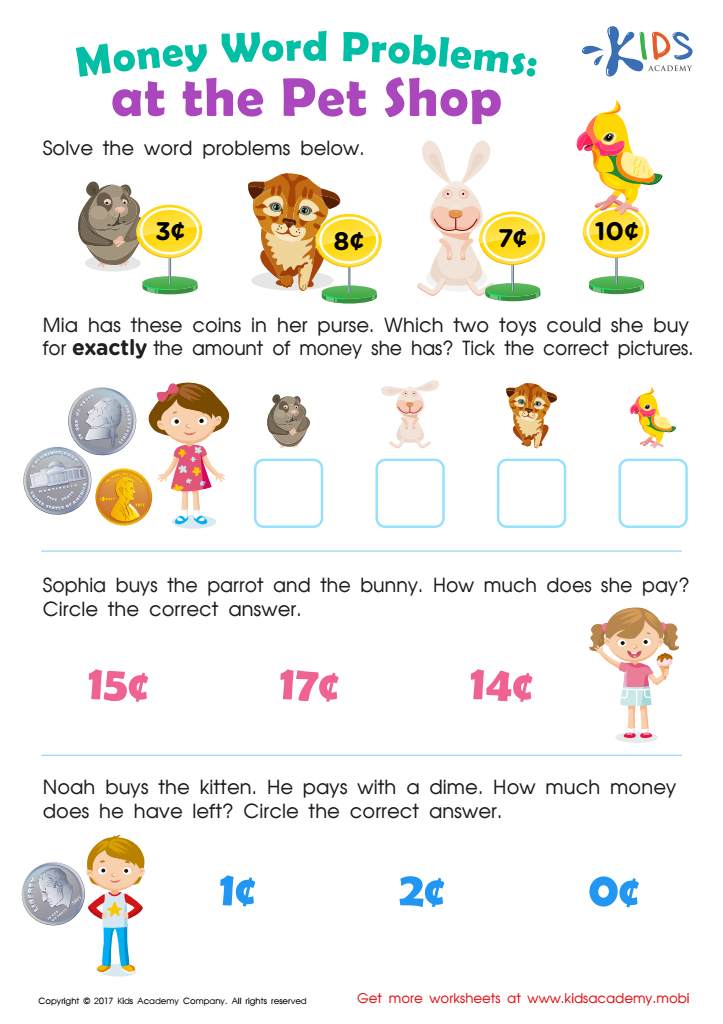
Pet Shop Worksheet
 Assign to My Students
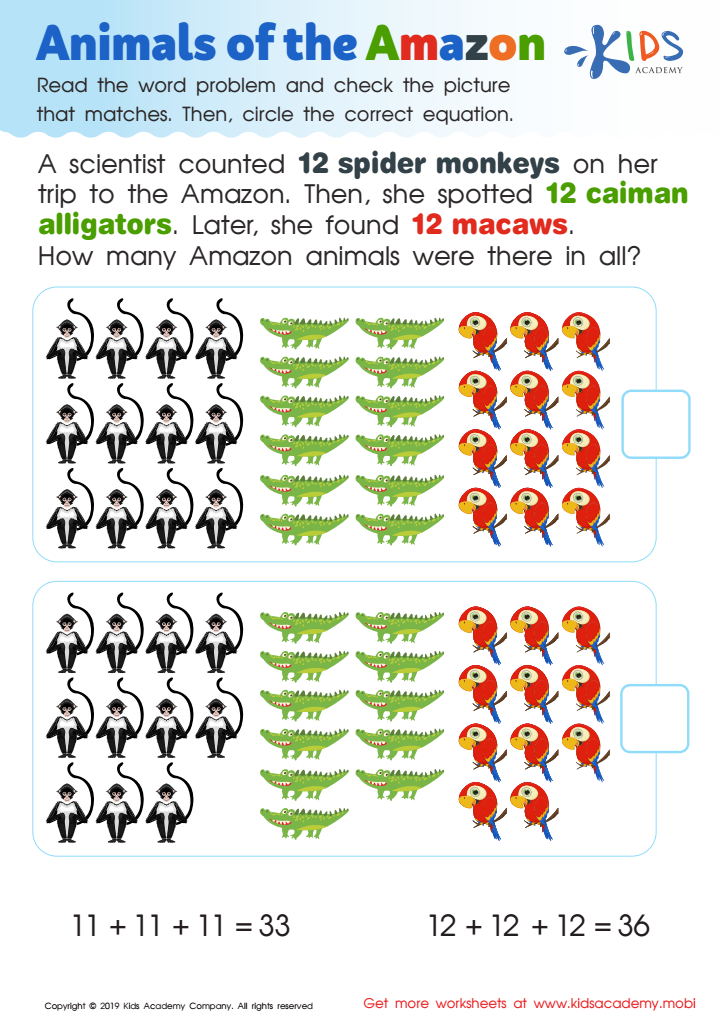
Animals of Amazon Worksheet
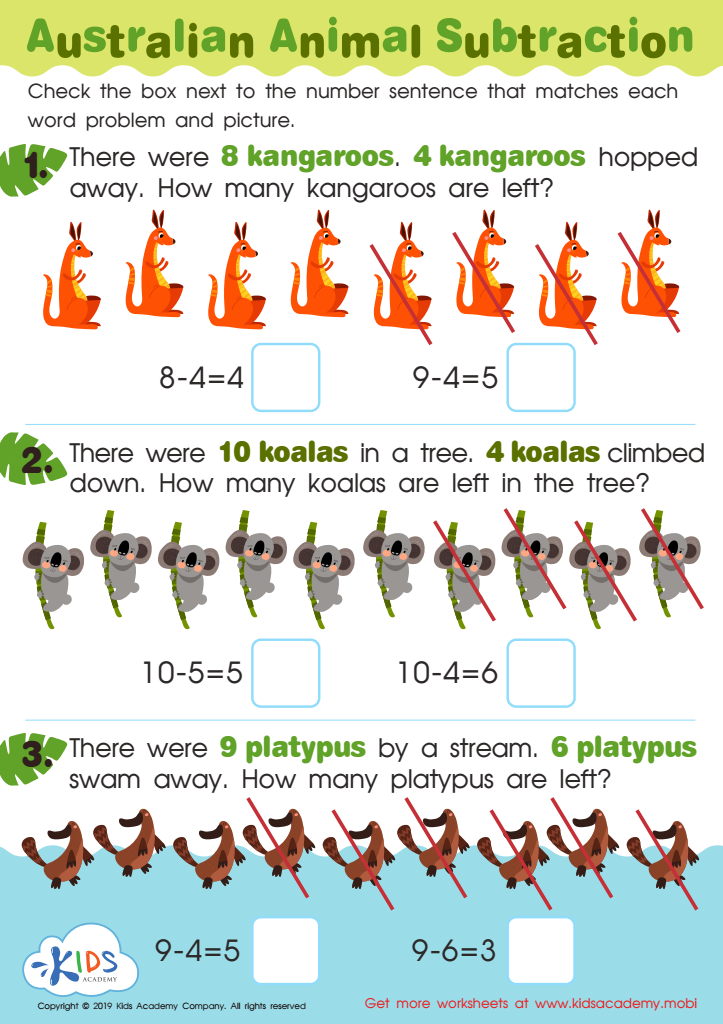
Australian Animal Subtraction Worksheet
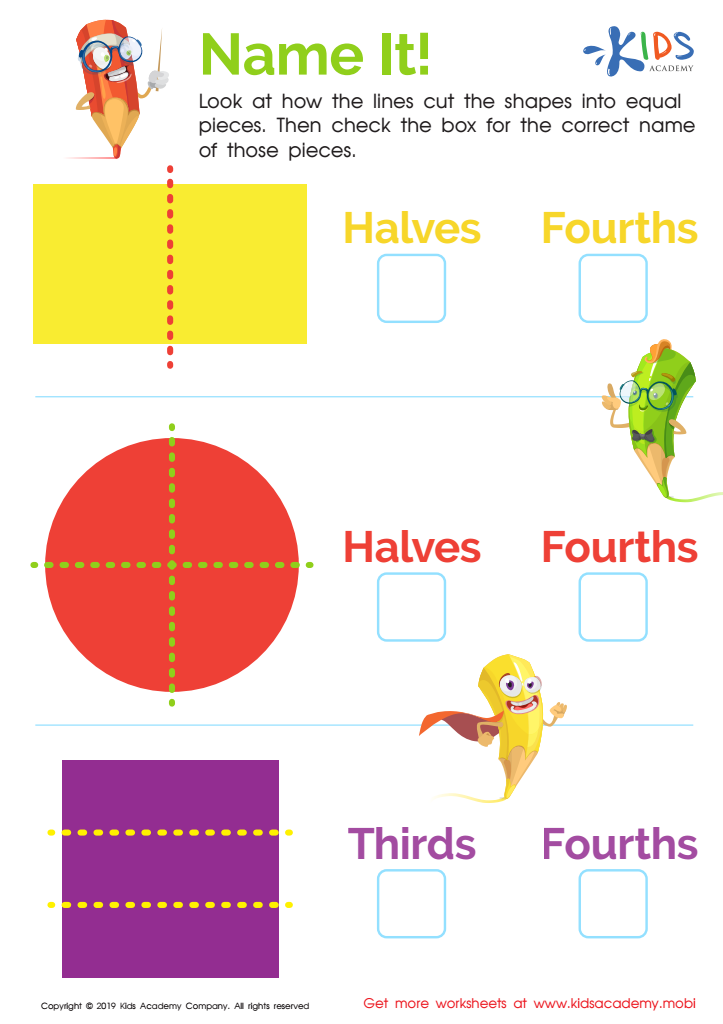
Name It! Worksheet
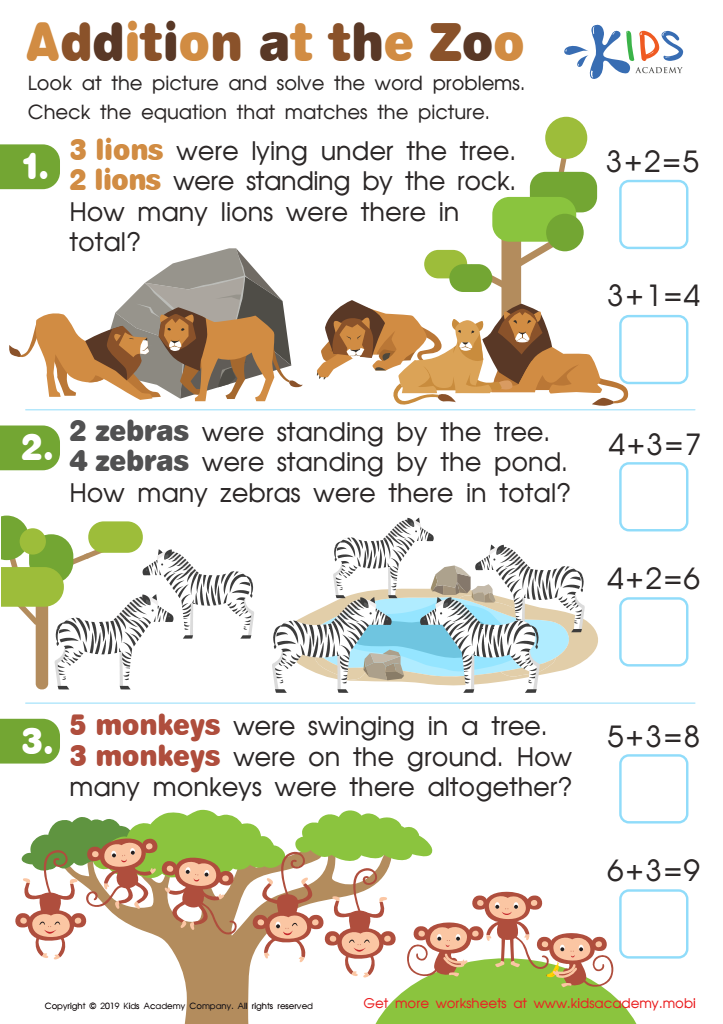
Addition at the Zoo Worksheet
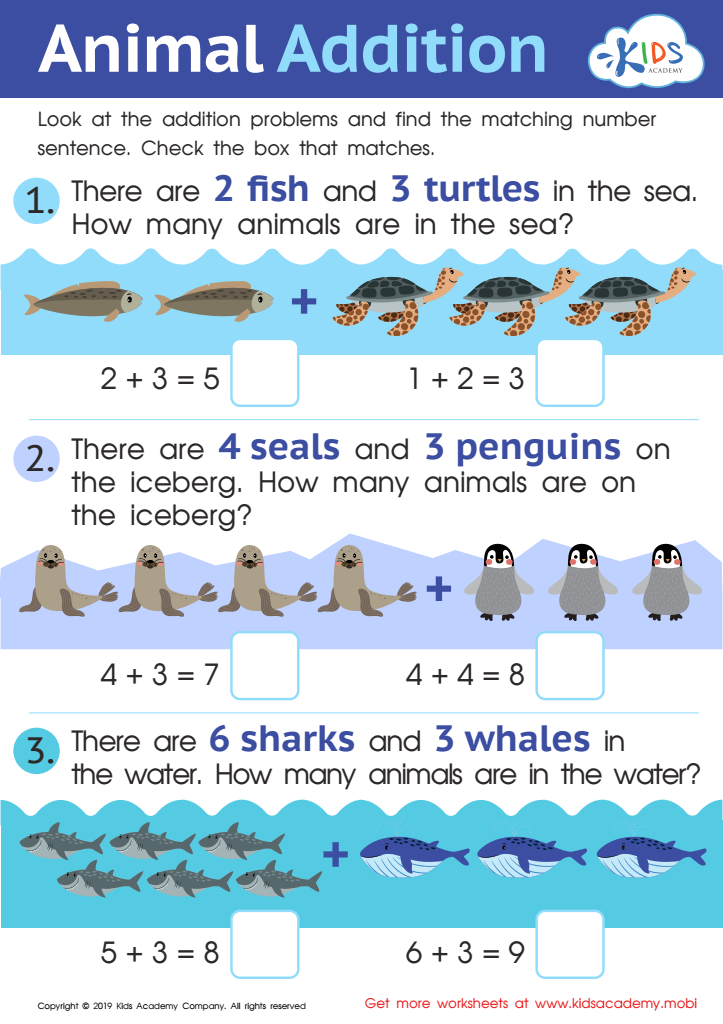
Animal Addition Worksheet
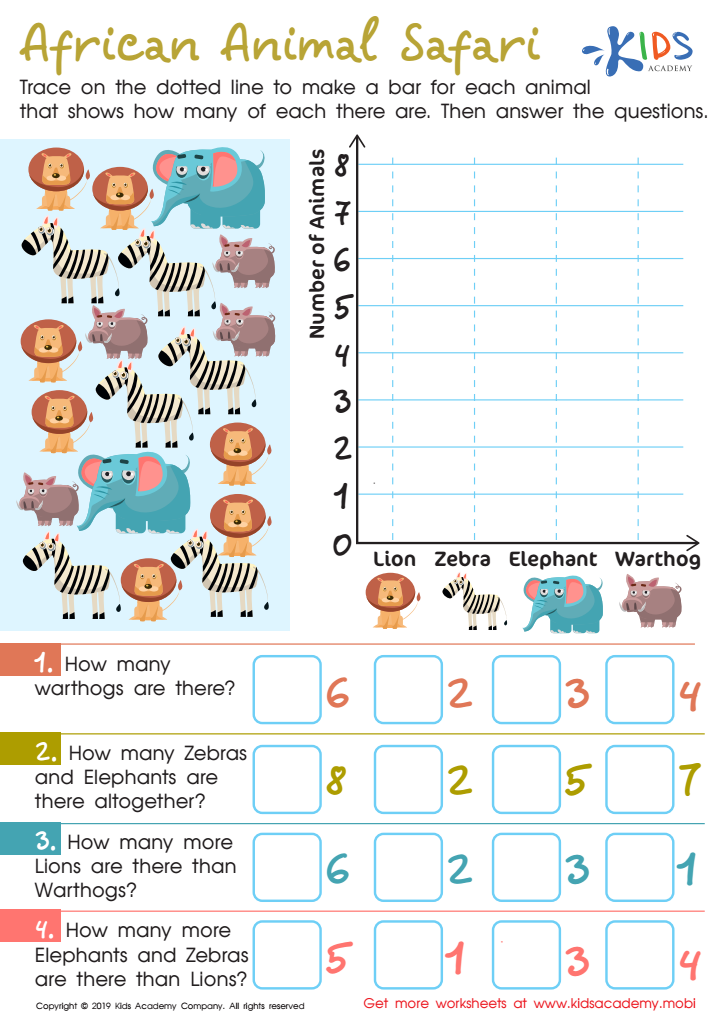
African Animal Safari Worksheet








Animal recognition math is an engaging way to teach mathematical concepts to children aged 7-8 while integrating their curiosity about animals. At this age, children's cognitive abilities are developing rapidly, and they are typically eager to learn through play and real-world connections. Incorporating animal recognition into math not only enhances basic arithmetic skills but also promotes critical thinking.
Firstly, it captures children's interests, making math more relevant and enjoyable. By using animals as a context for mathematical problems—like counting animals, comparing sizes, or understanding patterns—educators can create lessons that resonate with their experiences and enthusiasm.
Furthermore, animal recognition math encourages observation, classification, and data collection skills. For instance, sorting or organizing animals based on attributes can enhance logical reasoning and classification skills, foundational to math proficiency.
Moreover, such activities often promote collaboration and communication skills, as students engage in group work, discussing their calculations and reasoning. Lastly, integrating topics from science and nature helps foster a well-rounded education and instills respect and awareness of biodiversity.
Encouraging this kind of learning sets the groundwork for more complex concepts in math and science, ensuring that children are better prepared for future educational challenges.








