Basic geometry knowledge Math Worksheets for Ages 7-8
3 filtered results
-
From - To
Discover engaging and interactive basic geometry worksheets designed specifically for children ages 7-8! Our carefully crafted resources help young learners explore fundamental concepts such as shapes, angles, and spatial awareness. These printable worksheets are perfect for reinforcing essential math skills in a fun and accessible way. With colorful illustrations and straightforward instructions, students will develop their geometry knowledge while enhancing their cognitive abilities. Ideal for both classroom and at-home learning, our worksheets provide an effective foundation for future mathematical success. Explore the world of shapes and dimensions today and empower your child's learning journey with our geometry math resources!
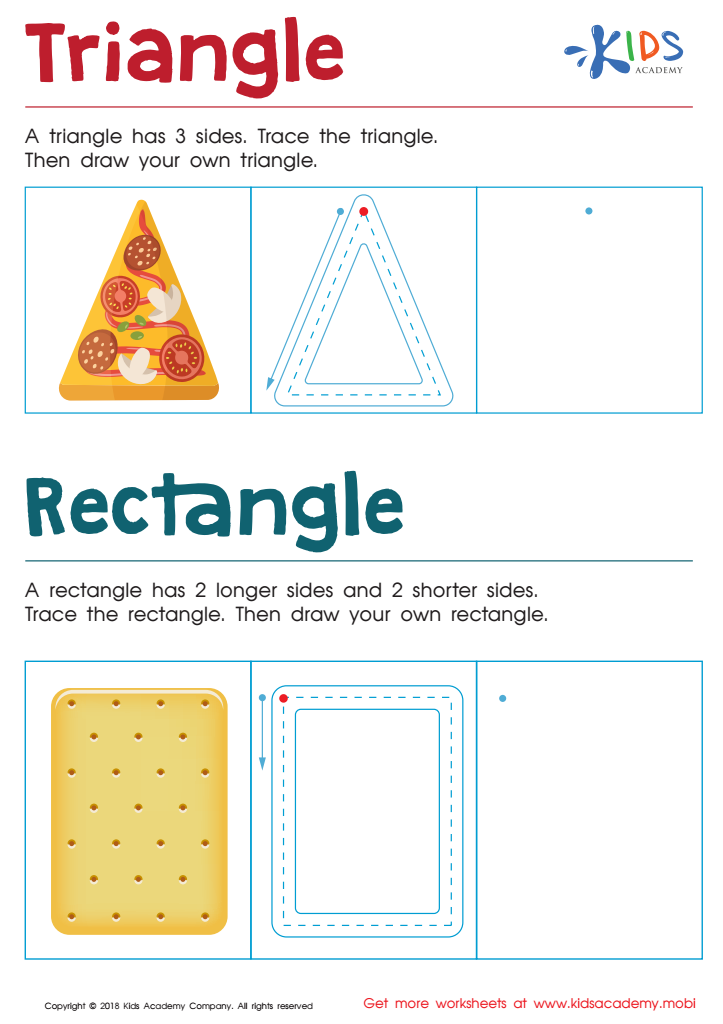
Triangle Rectangle Worksheet
 Assign to My Students
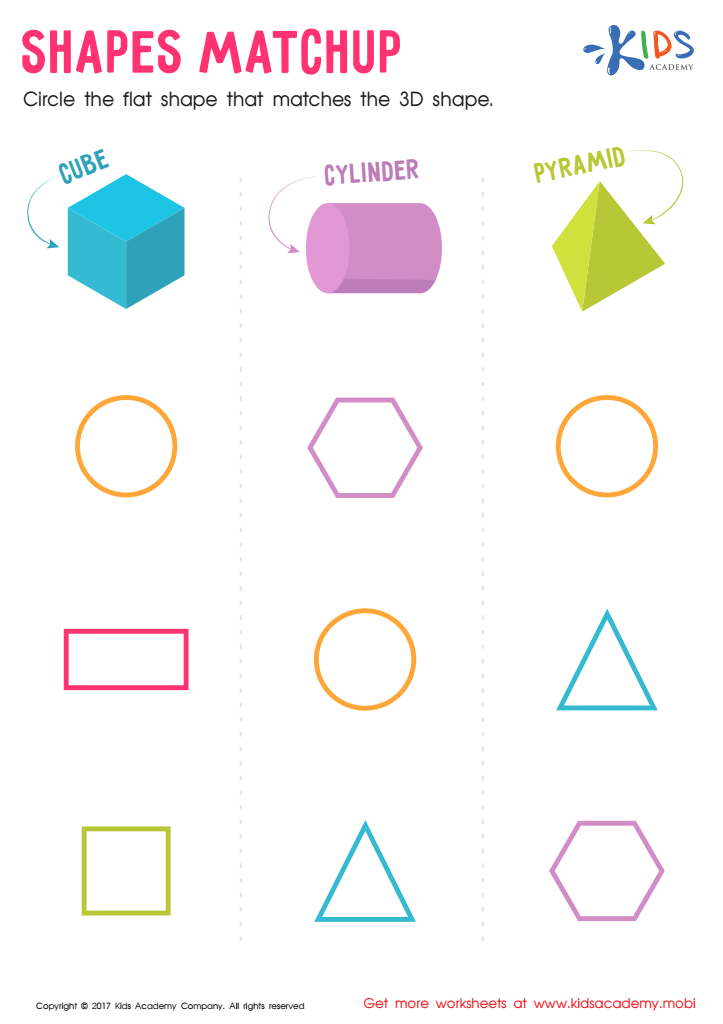
Shapes Matchup Worksheet








Basic geometry knowledge is essential for children aged 7-8 as it lays the foundation for critical thinking and problem-solving skills. Understanding geometric concepts helps students develop spatial awareness and visual perception, which are crucial in everyday life. For instance, recognizing shapes, understanding size and space, and interpreting maps all stem from foundational geometry skills.
Moreover, engaging with geometry enhances cognitive development. Children learn to classify and compare various shapes and understand their properties, encouraging logical thinking. Incorporating geometry into classroom activities and at home fosters a playful learning environment where children feel motivated to explore and inquire.
Additionally, basic geometry skills are integral to many advanced math concepts that children will encounter later in their education. Early exposure reduces math anxiety, helping students feel more confident as they progress through school. Moreover, many careers in fields like architecture, engineering, and design rely heavily on geometry, making early skills vital for future opportunities.
Incorporating geometry into daily life—such as through art, cooking, or building—can reinforce these concepts in an enjoyable way. Thus, parents and teachers should prioritize geometry to support holistic development and promote a lifelong appreciation for mathematics.








