Enhance your child's math abilities with our engaging Critical Thinking Skills Math Worksheets designed specifically for ages 7-8. These worksheets encourage young learners to think critically and engage deeply with mathematical concepts through problem-solving, logic puzzles, and analytical reasoning. Created to align with educational standards, our resources boost confidence while nurturing a love for math. Ideal for home schooling, supplementary education, or just for fun, these printable worksheets foster creativity and critical thinking, essential for academic success. Explore our collection and watch your child develop stronger reasoning and analytical skills while enjoying interactive math challenges today!
Check out this FREE Trial Lesson on Math for age 7-8!

Add 3 & 4 Numbers at the same time

Favorites
With answer key
Interactive
  • 7-8
  • Critical thinking skills
  • Math
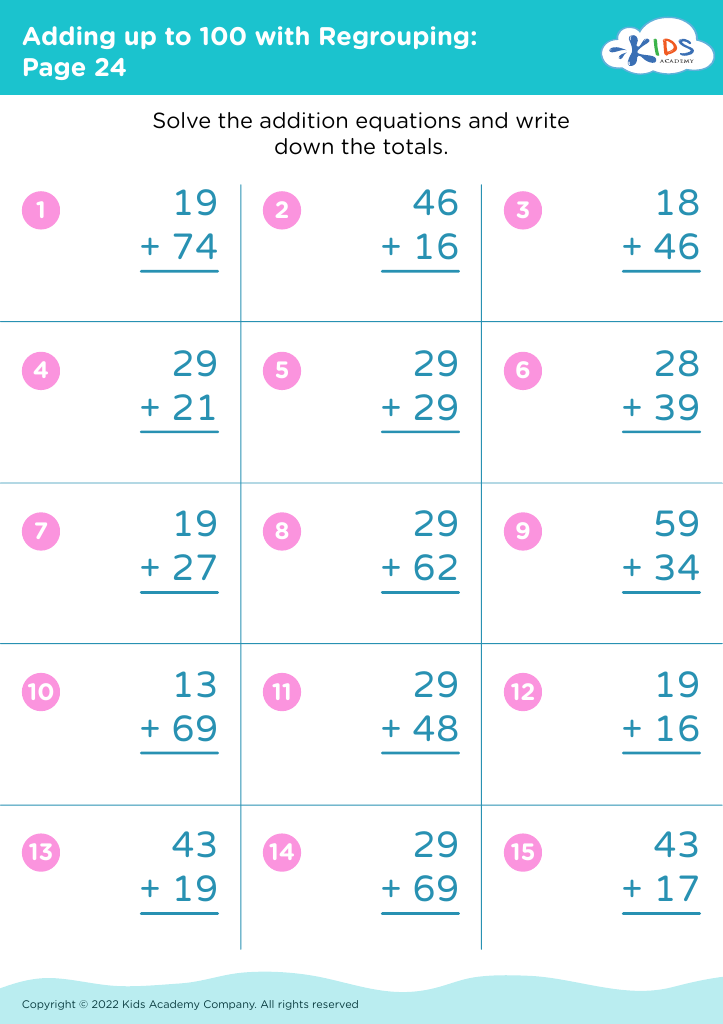
Adding up to 100 with Regrouping: Page 24
Worksheet
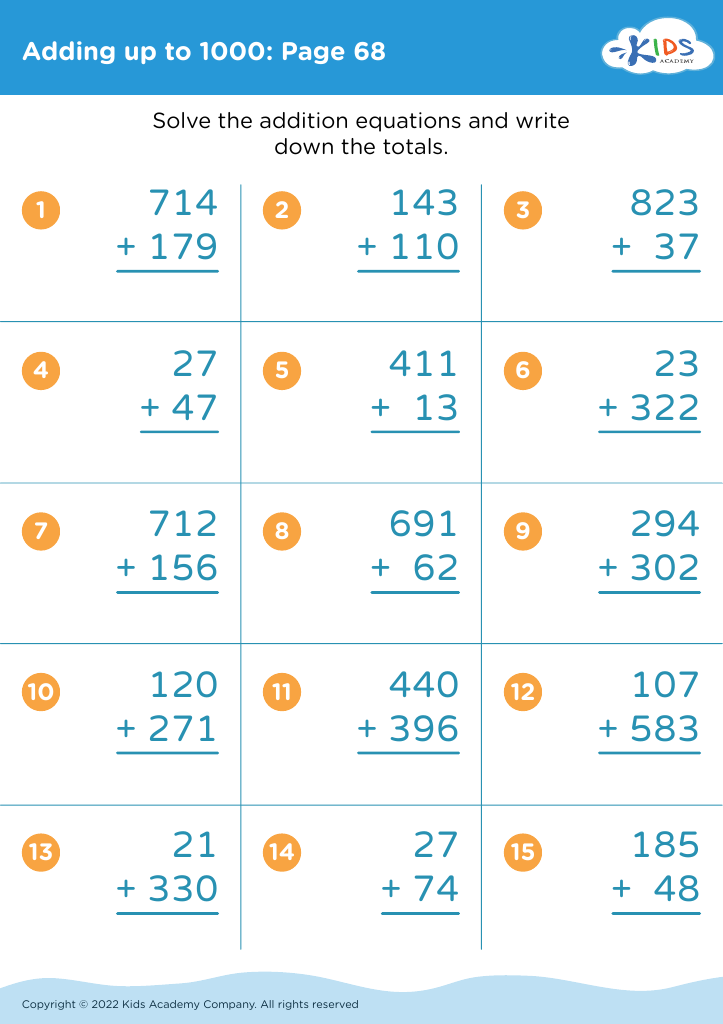
Adding up to 1000: Page 68

Adding up to 1000: Page 68

Adding up to 1000: Page 68
Worksheet
Rainforest Conservation Worksheet

Rainforest Conservation Worksheet

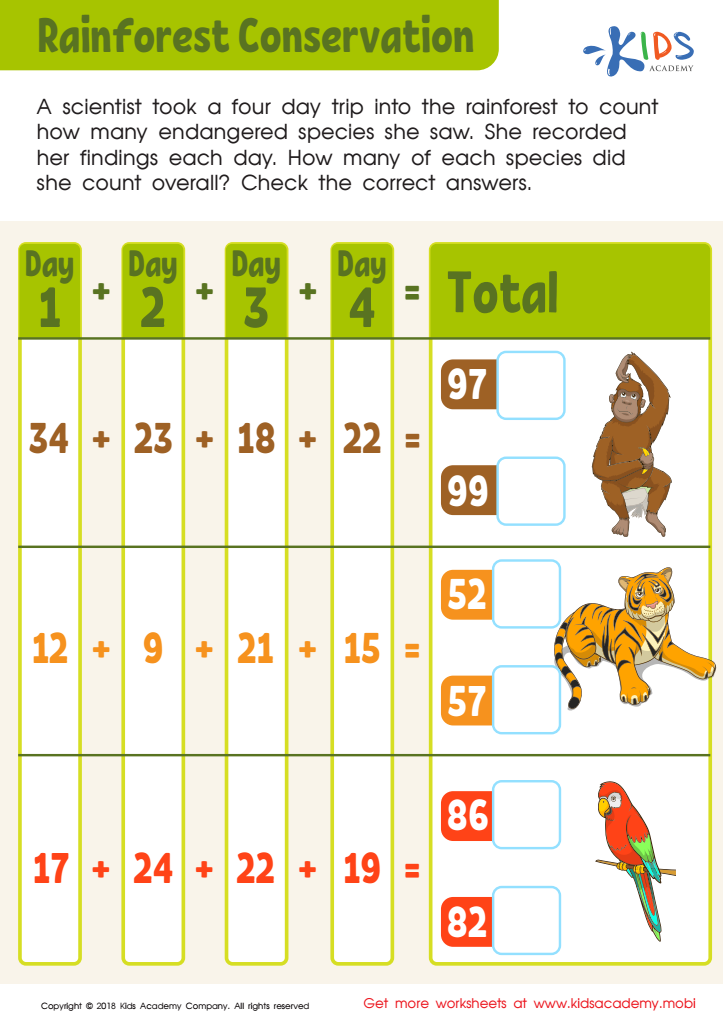
Explain to your child what a rainforest is and why it's important. A scientist took a four-day trip to count endangered species. Let your child count how many of each species were seen in total. Check the answers and help them understand.
Rainforest Conservation Worksheet
Worksheet
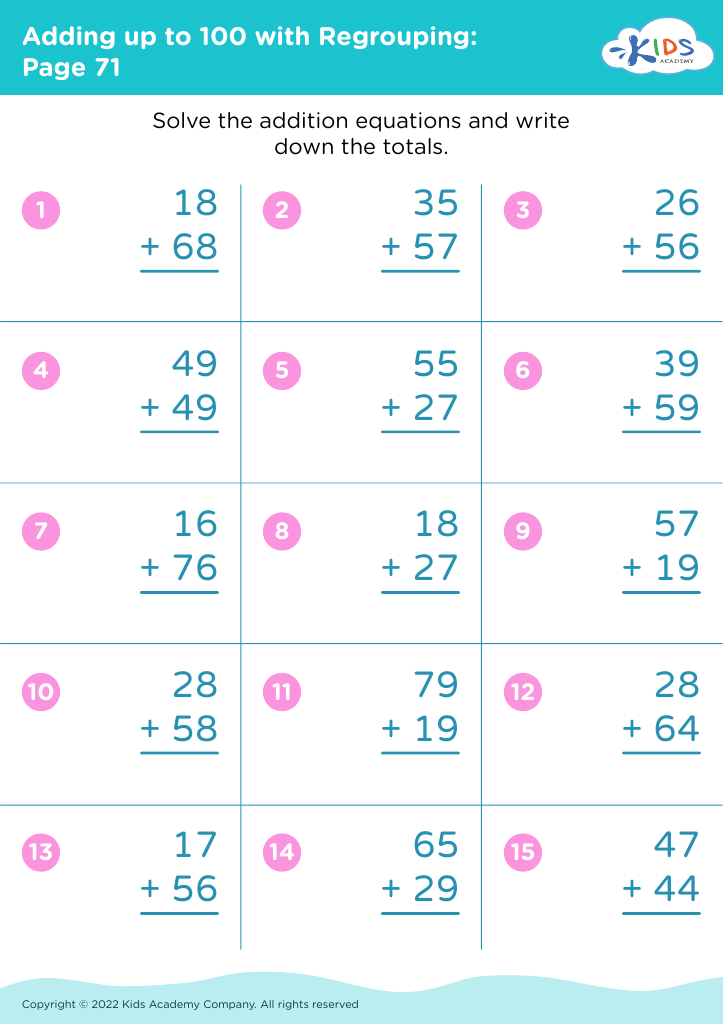
Adding up to 100 with Regrouping: Page 71
Worksheet
Comparing Shares Worksheet

Comparing Shares Worksheet

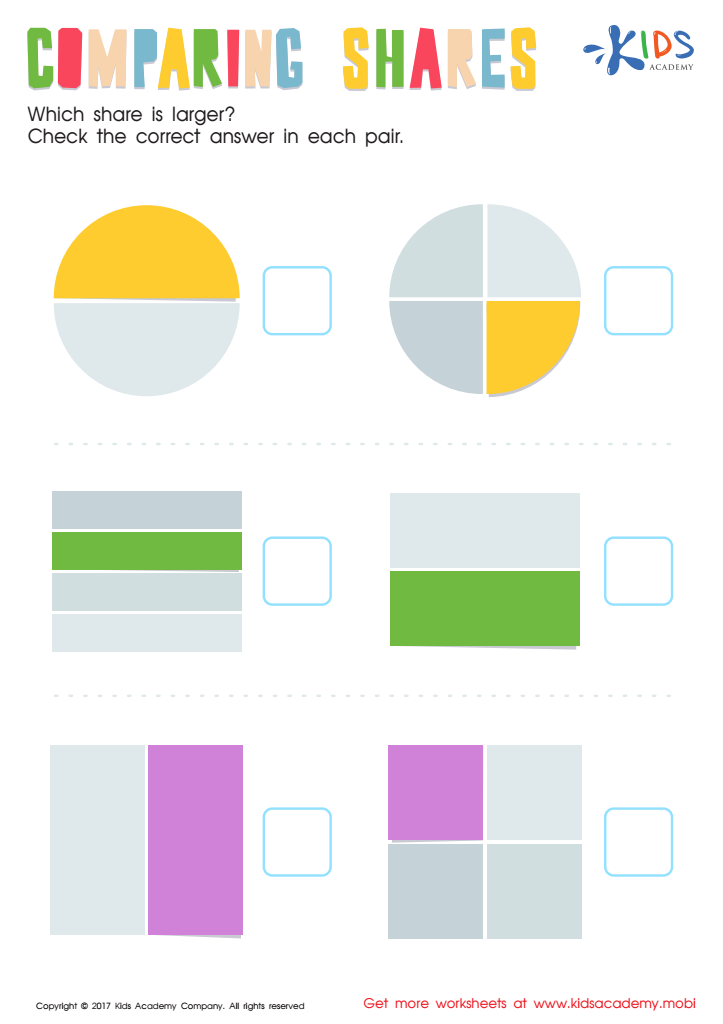
Can your students identify and draw shapes correctly? If so, this exercise may be too easy. For those who are still learning, extra help may be needed. The worksheet requires students to select which shape is larger in each pair; circles and squares are included.
Comparing Shares Worksheet
Worksheet
Adding and Subtracting to 1 Worksheet: Assessment 1
Adding and Subtracting to 1 Worksheet: Assessment 1
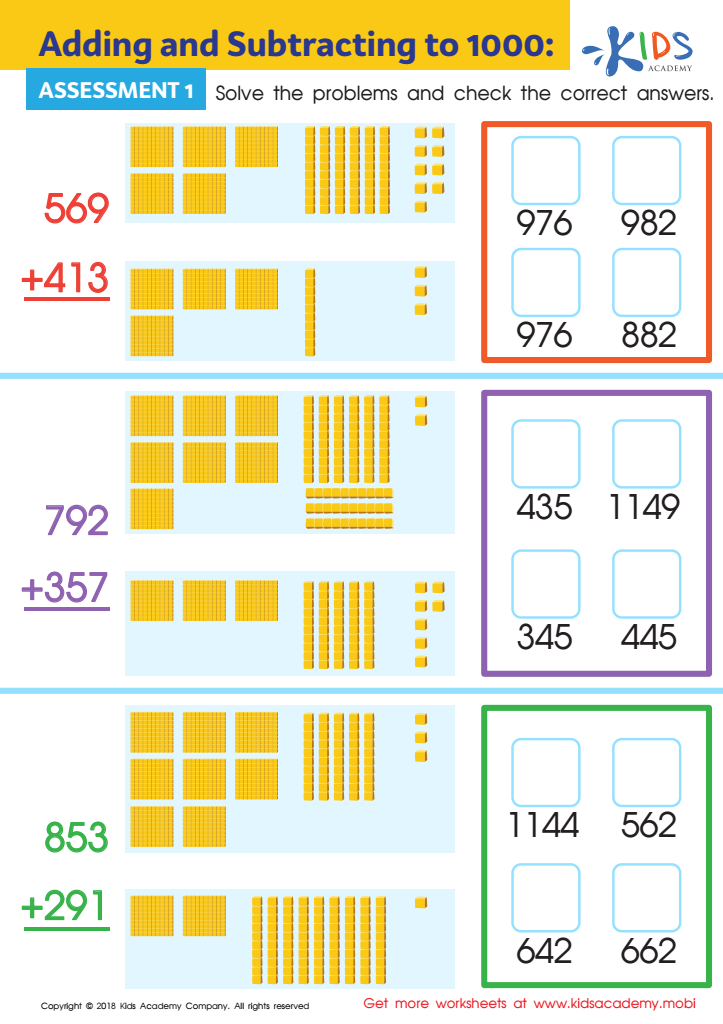
This assessment worksheet tests your child's addition skills. It has 3 3-digit problems with base ten blocks for visual aid. Encourage learners to use these visuals for better understanding. When they have solved the problems, they can check the box with the right answer. It's a quick and easy way to gauge numeracy development.
Adding and Subtracting to 1 Worksheet: Assessment 1
Worksheet
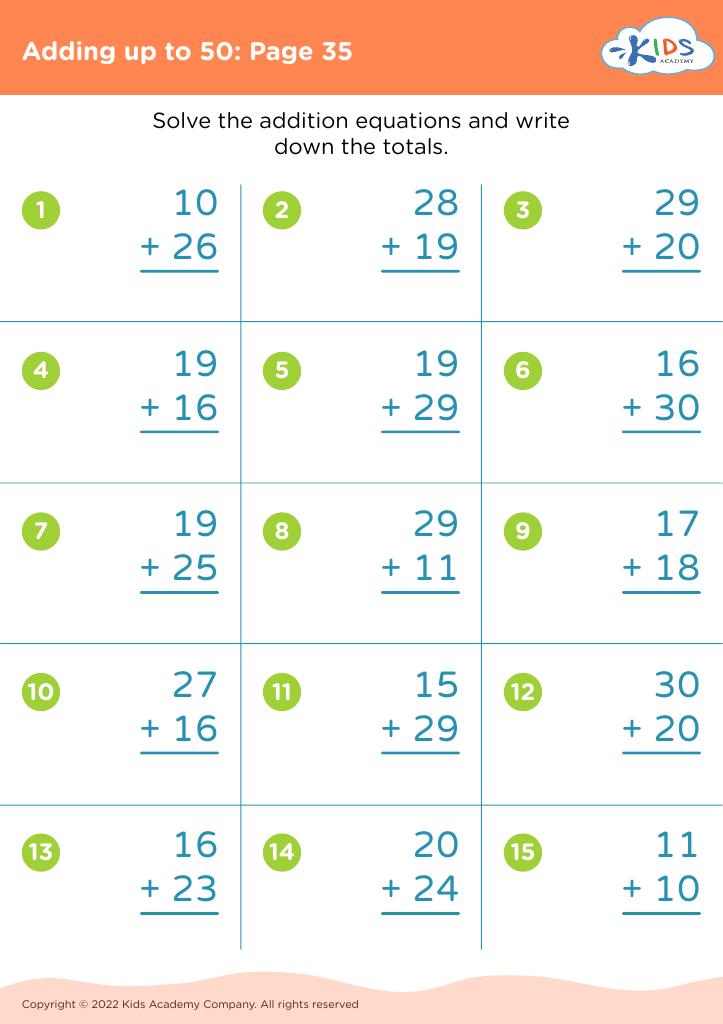
Adding up to 50: Page 35

Adding up to 50: Page 35

Adding up to 50: Page 35
Worksheet
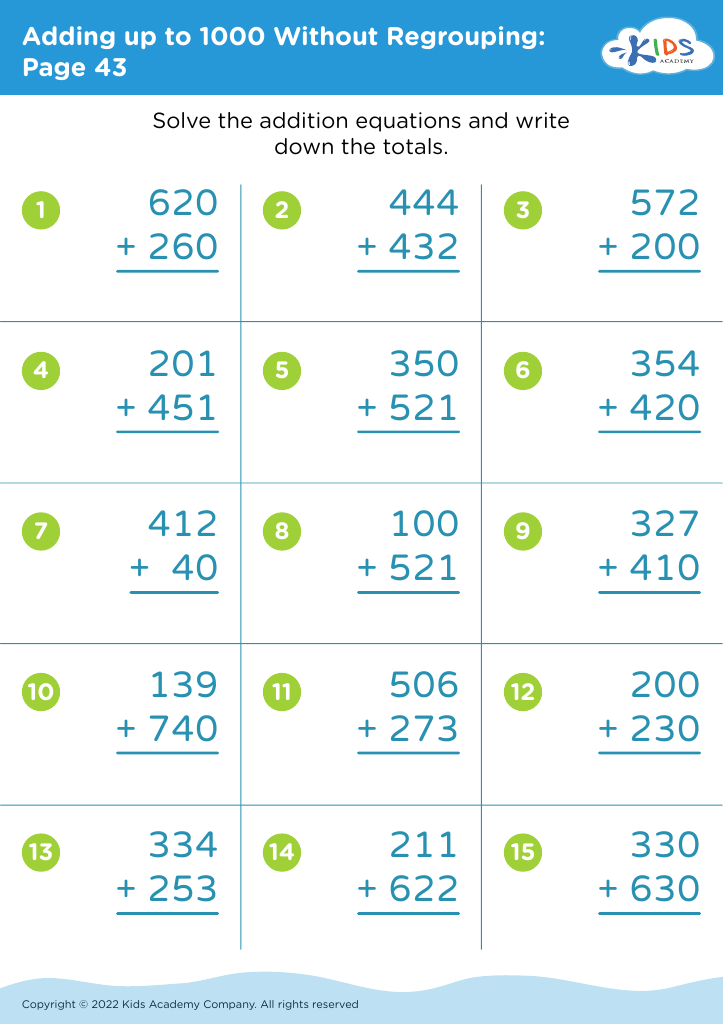
Adding up to 1000 Without Regrouping: Page 43
Worksheet
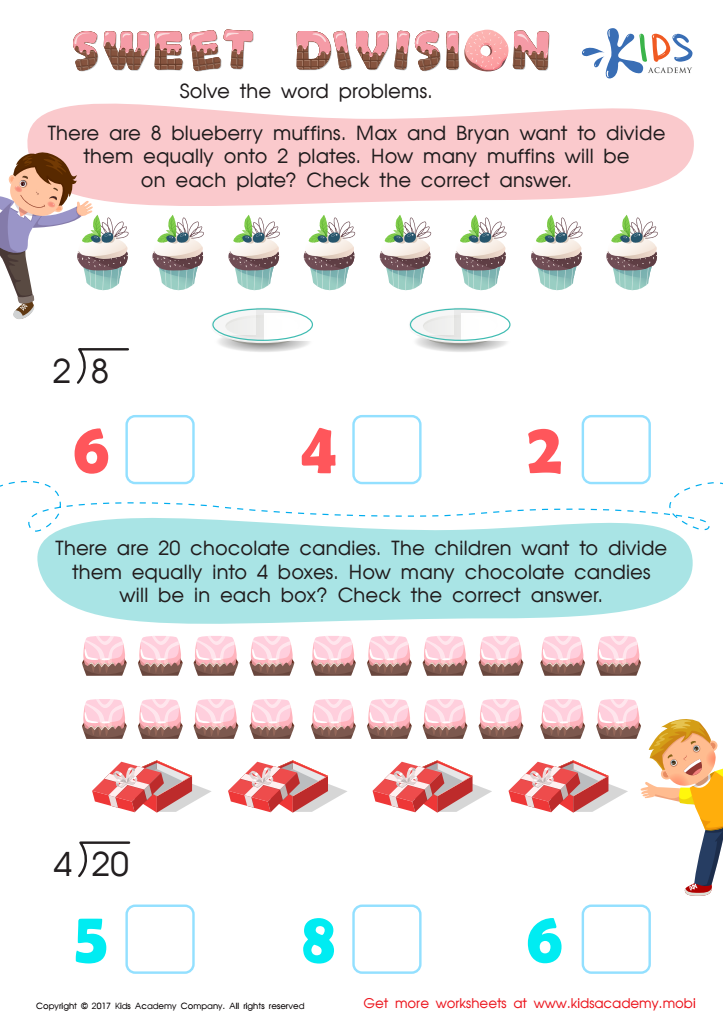
Division Word Problems Worksheet 3rd Grade

Division Word Problems Worksheet

This division worksheet helps kids understand how long division problems appear as word problems. Perfect for 3rd graders, it'll boost their confidence in solving division problems.
Division Word Problems Worksheet
Worksheet
Exploring Outer Space Worksheet


Exploring Outer Space Worksheet

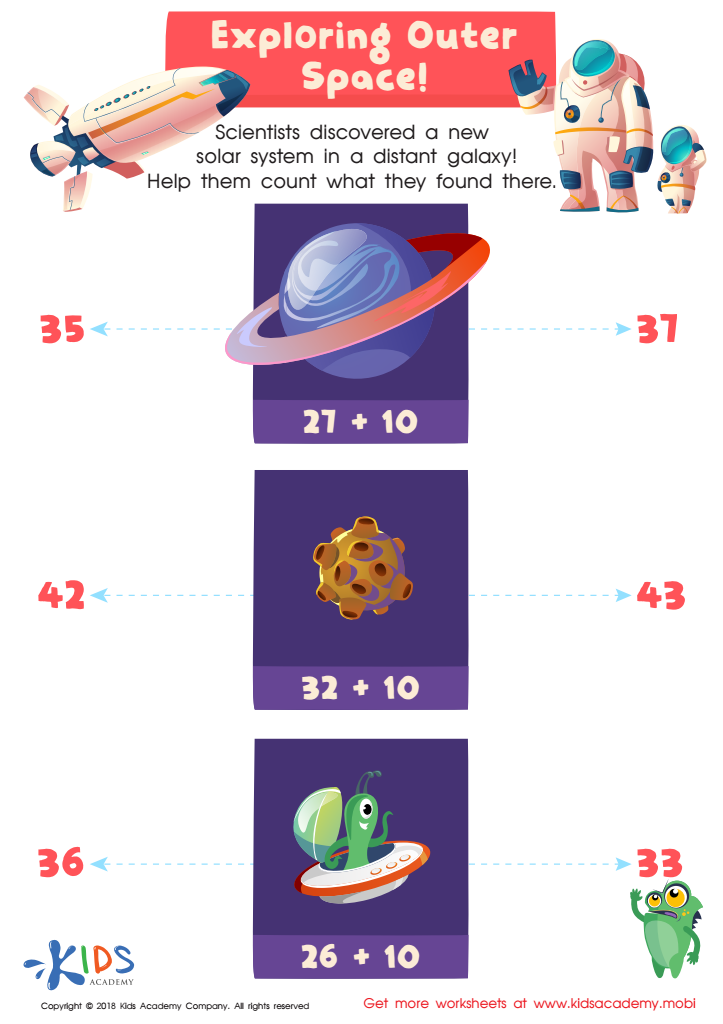
Outer space is an intriguing world. Physics behave differently than on Earth, and much remains to be uncovered. In this worksheet, scientists have located a new solar system in a distant galaxy. Explain to your kids what these two things are, then have them help count the findings. Solve the math problems, then link the lines to the right answer.
Exploring Outer Space Worksheet

Worksheet


Critical thinking skills in math are crucial for children aged 7-8 because they lay the foundation for a child's ability to analyze, evaluate, and apply knowledge in real-world situations. At this age, children are transitioning from concrete thinking to more abstract reasoning, making it an ideal time to foster these skills. Critical thinking in math promotes problem-solving abilities, encouraging students to explore multiple strategies to arrive at solutions.

Parents and teachers should care because developing critical thinking skills not only boosts mathematical understanding but also enhances overall cognitive development. When children engage in critical thinking, they learn to reason logically, assess outcomes, and recognize patterns—skills that are important across all subject areas and in everyday life.

Moreover, in an ever-changing world, these skills will prepare children to face complex challenges in the future. Instead of rote memorization, children will learn how to think independently and make informed decisions. By nurturing critical thinking skills, parents and teachers empower children to become confident, self-reliant learners and effective problem solvers, setting them up for success both in school and beyond. Thus, fostering critical thinking in early math education is an investment in a child’s future.