Data analysis Math Worksheets for Ages 7-8
4 filtered results
-
From - To
Explore our engaging Data Analysis Math Worksheets tailored for children ages 7-8! Designed to enhance critical thinking and problem-solving skills, these worksheets provide fun, interactive activities that teach kids how to collect, organize, and interpret data. From simple chart reading to analyzing graphs, our resources encourage young learners to explore mathematical concepts in a hands-on way. Suitable for home or classroom use, these worksheets make learning enjoyable and impactful. Help your child build a strong foundation in data analysis while fostering a love for math! Start exploring our collection today and watch their confidence soar!
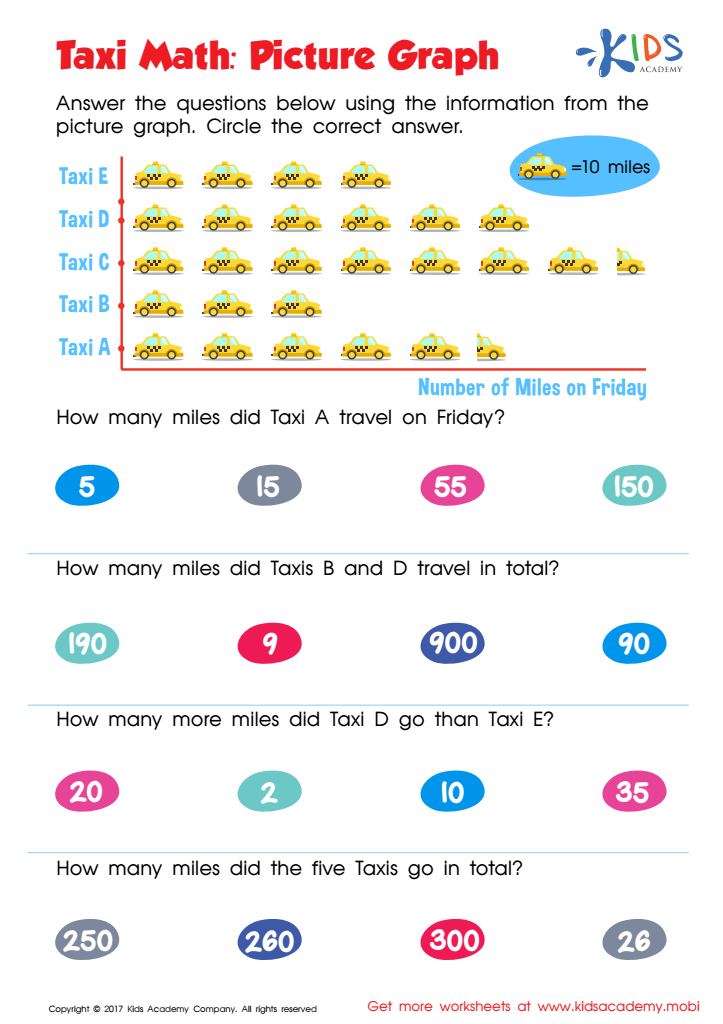
Taxi Math Worksheet
 Assign to My Students
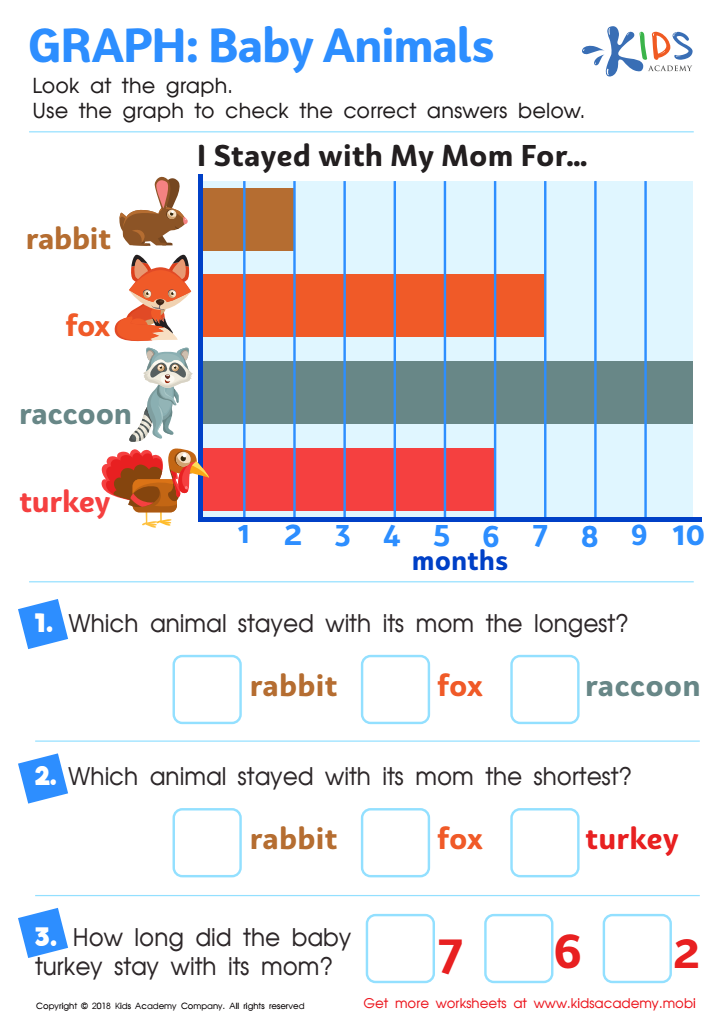
Graph: Baby Animals Worksheet
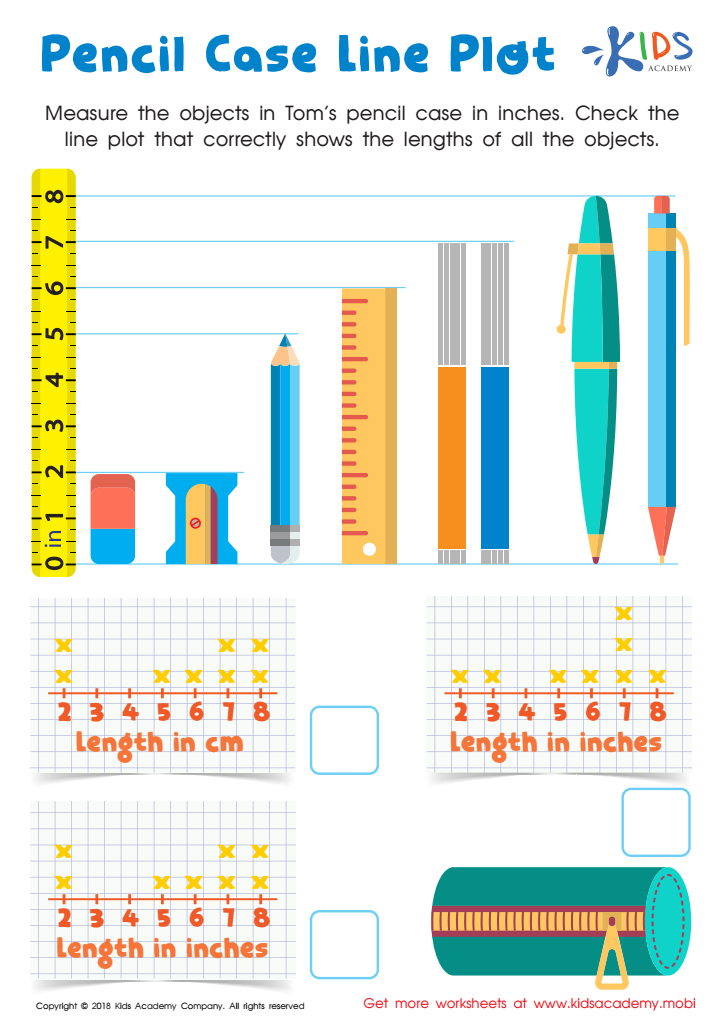
Pencil Case Line Plot Worksheet
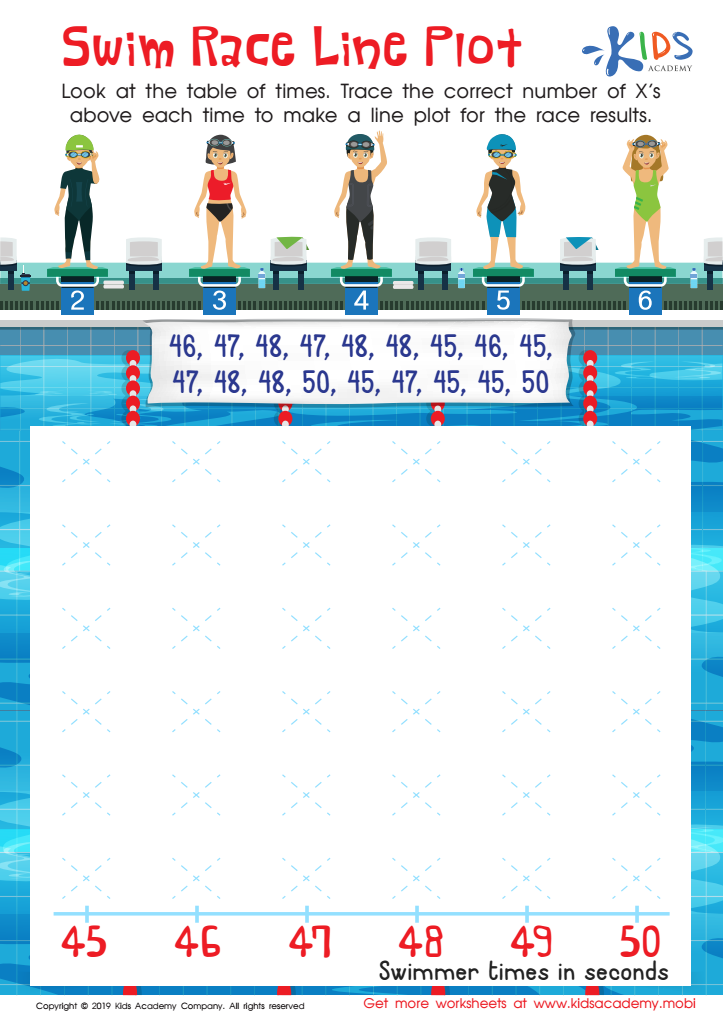
Swim Race Line Plot Worksheet







Data analysis in math for children aged 7-8 is crucial for their overall development and understanding of the world around them. At this age, children are naturally curious and eager to make sense of information. By introducing them to data analysis, parents and teachers can help foster critical thinking skills as students learn to collect, organize, interpret, and present data. This foundational knowledge equips children with the ability to ask questions, identify patterns, and draw conclusions based on evidence.
Moreover, data analysis is increasingly relevant in a technology-driven world. Understanding basic concepts such as graphing, averages, and simple statistics lays the groundwork for more complex mathematical principles in later years. It also promotes skills like reasoning and deduction, which are valuable beyond the classroom.
Additionally, engaging with data prepares children for real-life situations, such as making informed decisions based on statistical information in everyday contexts. When parents and teachers prioritize data analysis in math education, they help nurture a generation of informed, analytical thinkers who can confidently navigate an increasingly data-rich society. In essence, fostering skills in data analysis at this age supports academic success and lifelong learning.








