
Fine motor skills (drawing) Math Worksheets for Ages 7-8
4 filtered results
Difficulty Level
Grade
Age
-
From - To
Subject
Activity
Standards
Enhance your child's fine motor skills with our engaging drawing math worksheets designed specifically for ages 7-8! Our carefully crafted worksheets combine math practice and creative drawing activities, helping children refine their hand-eye coordination while developing essential math concepts. Each worksheet allows kids to explore numbers and shapes through drawing exercises, making learning enjoyable and interactive. Perfect for reinforcing classroom skills at home, these resources help build confidence and foster a love for math. Empower your child’s creativity and precision through fun, educational activities that prepare them for more complex challenges ahead. Start enhancing fine motor skills while having a blast today!
Favorites
With answer key
Interactive
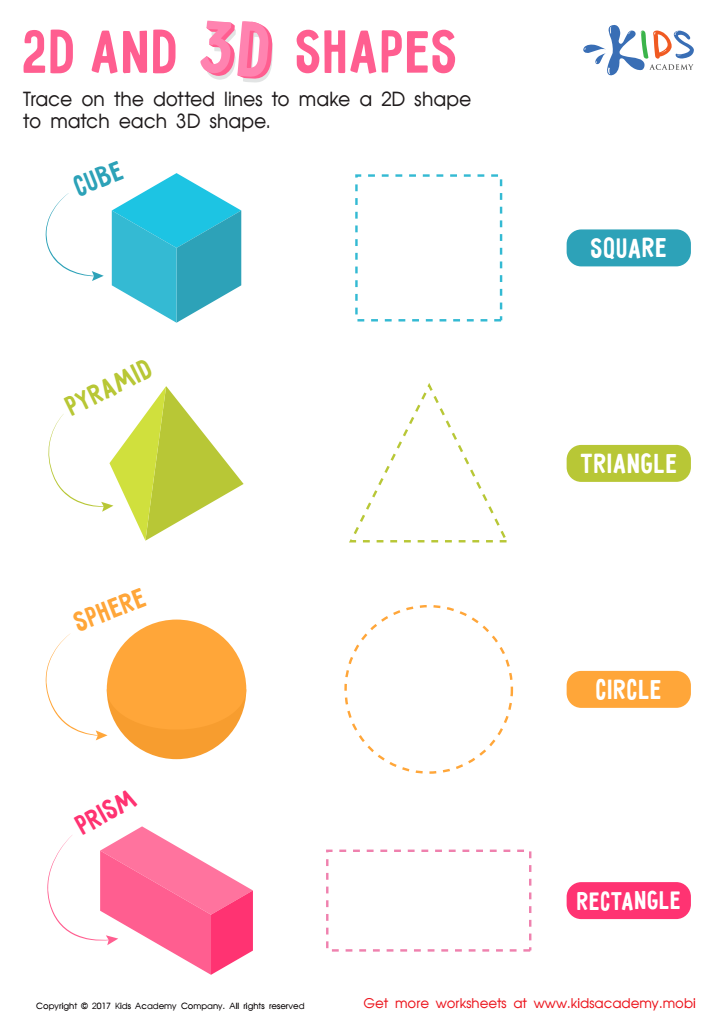
2D and 3D Shapes Worksheet
Introduce your child to 3D and 2D with this traceable worksheet. With dotted lines, help them trace and make a 2D shape for each 3D shape: square, triangle, rectangle, and circle. Show them there's more than one way to draw! You may have taken them to a 3D movie, or they've seen some fantastic 3D art. Now they can wonder no more.
 Assign to My Students
2D and 3D Shapes Worksheet
Worksheet
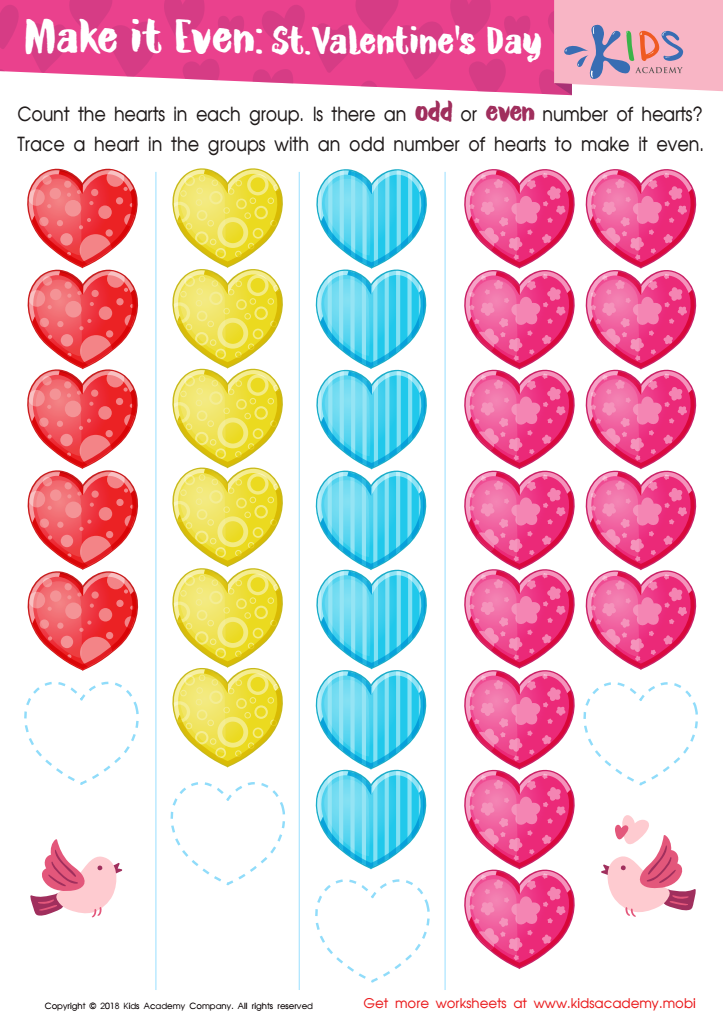
Make it Even: St. Valentine's Day Worksheet
Does your child love Valentine's Day? Make it special with this worksheet! Kids can use their counting skills to determine if each group has an even or odd number of hearts, then trace a heart in the odd groups. Help them make it even and have fun!
Make it Even: St. Valentine's Day Worksheet
Worksheet
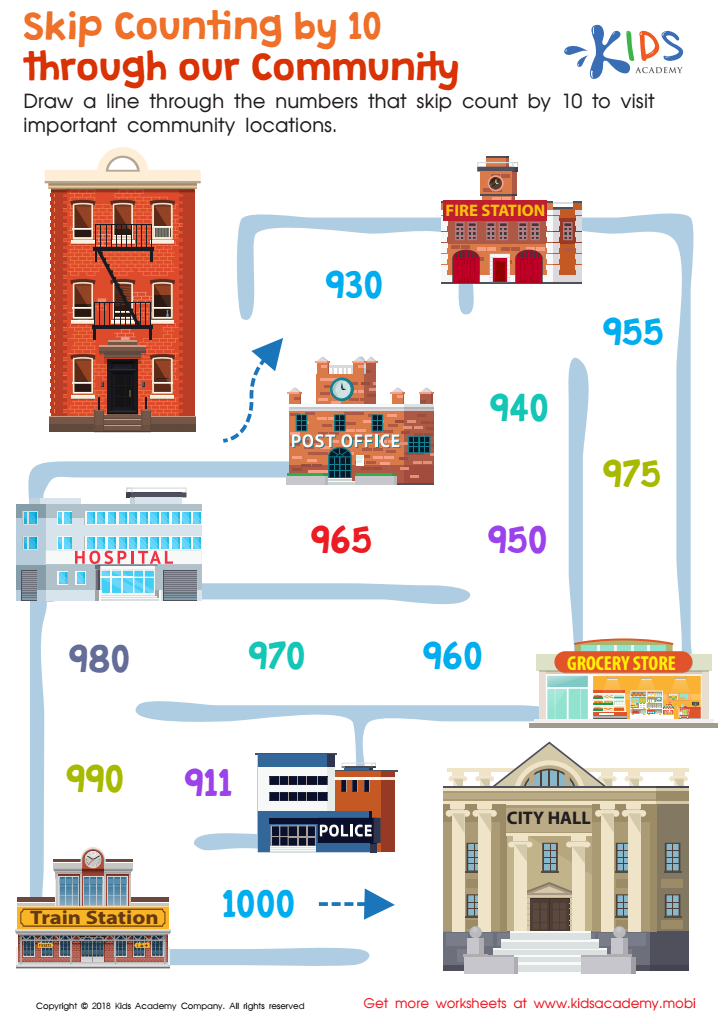
Skip Counting by 10 Through Our Community Worksheet
Our kids need to 'make a ten' and skip count by tens to boost their speed and accuracy in math. This cool, free worksheet takes them on a journey through their local community to practice counting by tens. They'll work on social studies and fine motor skills while having fun with the maze they get to count by tens in!
Skip Counting by 10 Through Our Community Worksheet
Worksheet
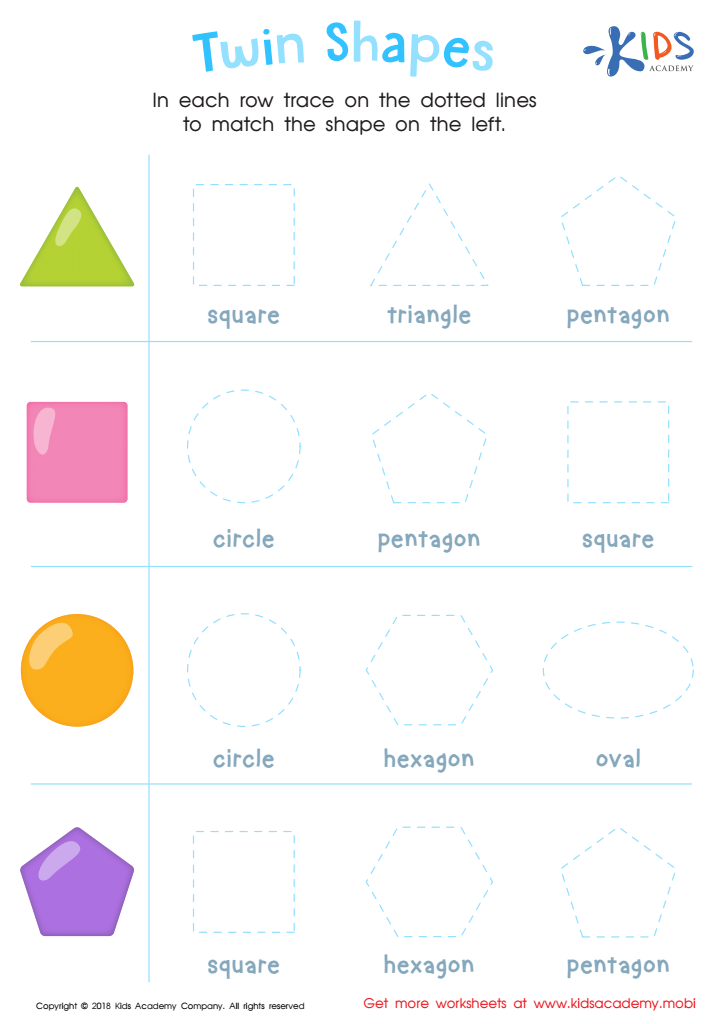
Twin Shapes Dot-to-Dot Worksheet
Test your child's ability to copy with this worksheet. Ask them to find and name the four shapes on the left. Then, they must match each with the dotted lines on the right. Help your child with all four shapes in this fun exercise.
Twin Shapes Dot-to-Dot Worksheet
Worksheet
Join Kids Academy for Free
Who is primarily going to use this learning content?




.jpg)


Parents and teachers should prioritize fine motor skills, particularly through drawing, because these skills are foundational for a child's development and learning, especially in math. At ages 7-8, children are transitioning to more complex mathematical concepts, such as geometry and measurement. Drawing helps enhance fine motor coordination, which is crucial for writing, manipulating tools, and performing precise tasks essential in math activities, like graphing and pattern creation.
Moreover, drawing reinforces spatial reasoning skills, allowing children to visualize shapes and understand spatial relationships — key components in math. When children engage in drawing with careful attention to proportions and angles, they develop a deeper understanding of geometry concepts, facilitating better problem-solving and critical thinking skills.
Furthermore, fine motor skills contribute to self-esteem and creativity. A child who can confidently express ideas through drawing may be more engaged and enthusiastic about learning math. Parents and teachers can integrate art into math lessons, promoting a multidimensional learning experience that connects creativity with logical reasoning. Overall, nurturing fine motor skills through drawing helps children build a strong foundation for future academic success and develops a lifelong appreciation for the connections between art and mathematics.








