Learn addition Math Worksheets for Ages 7-8
3 filtered results
-
From - To
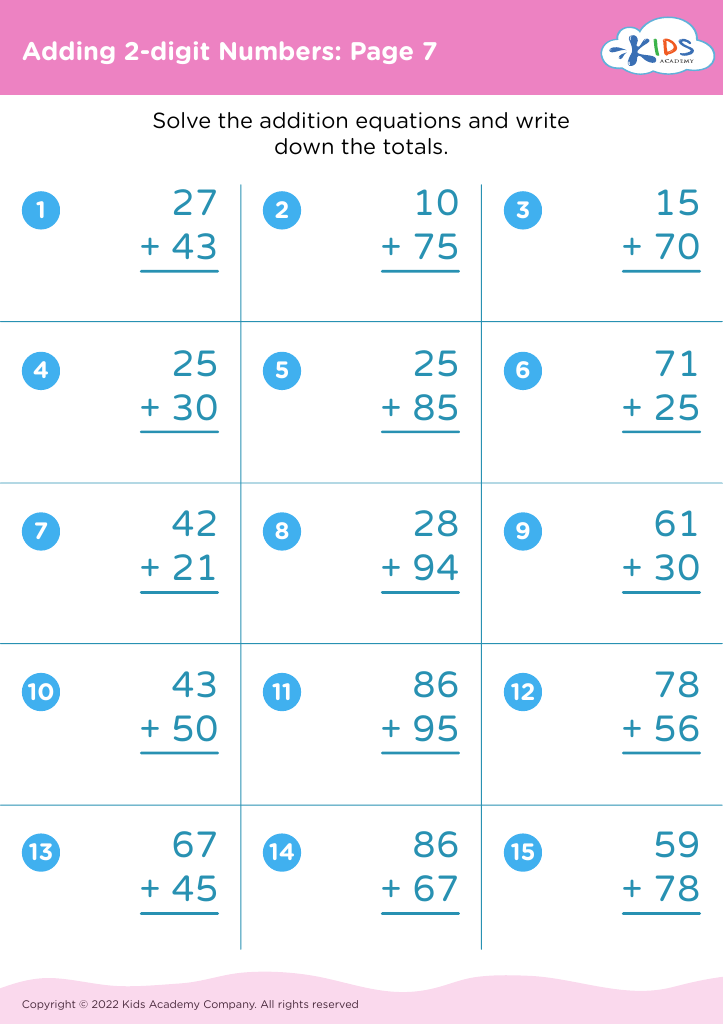
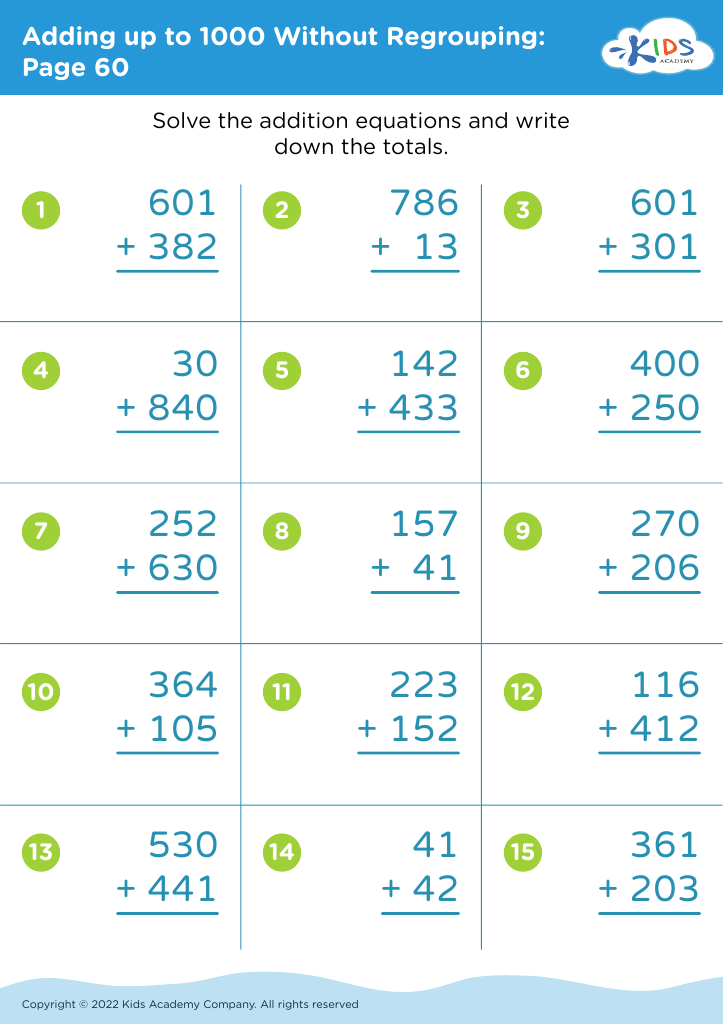
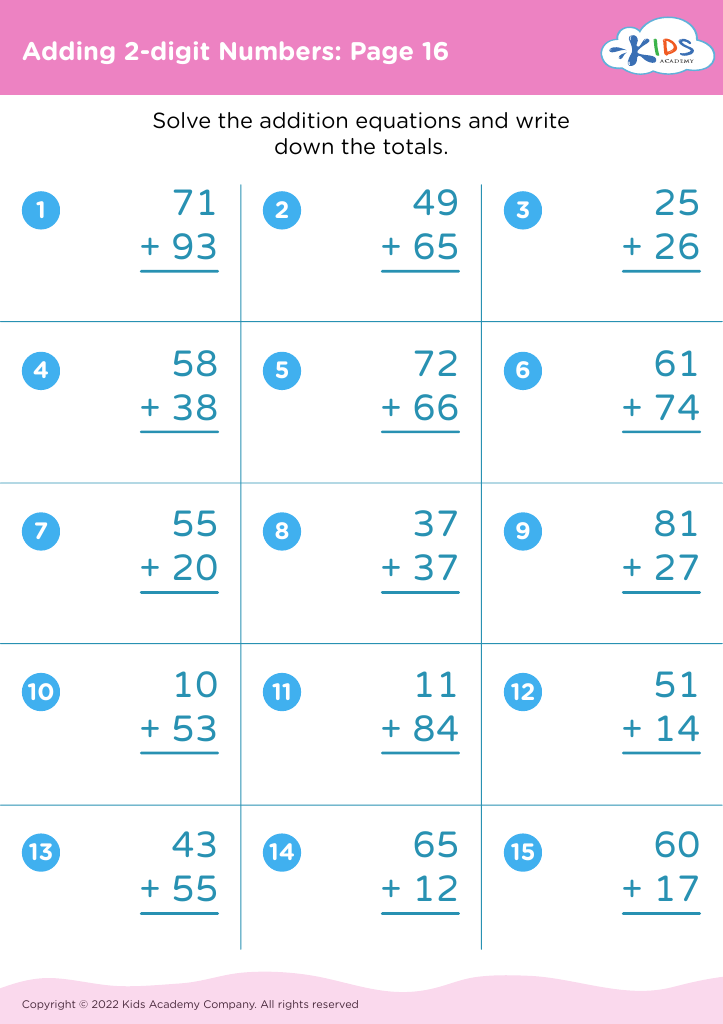
Discover our engaging "Learn Addition Math Worksheets for Ages 7-8," designed to enhance your child's math skills in a fun and interactive way. Tailored for young learners, these worksheets cover various addition concepts, from basic sums to more challenging problems. Kids will enjoy practicing their math skills through colorful, stimulating activities that promote critical thinking and problem-solving. With our user-friendly format, parents and teachers can easily access and utilize these resources, making learning enjoyable and stress-free. Encourage your child's confidence in mathematics and watch them excel as they master addition! Visit our website and explore the exciting world of math learning today.





For parents and teachers, fostering a solid foundation in addition for children aged 7-8 is essential for several reasons. At this age, children typically transition from simple arithmetic to more complex mathematical concepts, laying the groundwork for future learning. Mastery of addition not only enhances computational skills but also develops critical thinking, problem-solving abilities, and number sense.
Understanding addition is vital in everyday life, as it helps children manage money, measure quantities in cooking, and make sense of schedules and timelines. Proficient addition skills enable students to tackle more advanced topics like subtraction, multiplication, and division with confidence, which are crucial for success in both academic and real-world scenarios.
Moreover, engaging children in addition builds their confidence in math, reducing anxiety around the subject and encouraging a positive attitude toward learning. When students find joy in solving math problems, they are more inclined to explore and engage with mathematics deeply.
Finally, learning together can strengthen the bond between parents, teachers, and children, creating a collaborative learning environment. By prioritizing addition skills, we equip children with the necessary tools for academic success, fostering a lifelong love of learning in mathematics.








