
Map reading skills Math Worksheets for Ages 7-8
5 filtered results
Difficulty Level
Grade
Age
-
From - To
Subject
Activity
Standards
Discover our engaging Map Reading Skills Math Worksheets tailored for children aged 7-8! These printable resources are designed to enhance essential map skills while reinforcing math concepts. Through fun activities, young learners will develop an understanding of scales, distances, and directions, all key for navigational skills. Our worksheets promote critical thinking and problem-solving as students interpret maps and apply math in real-world contexts. Perfect for classroom use or at-home learning, these materials will make geography and math exciting and interactive! Help your child gain confidence in their map reading and mathematical abilities with our comprehensive resources – designed by educators to support their learning journey!
Favorites
With answer key
Interactive
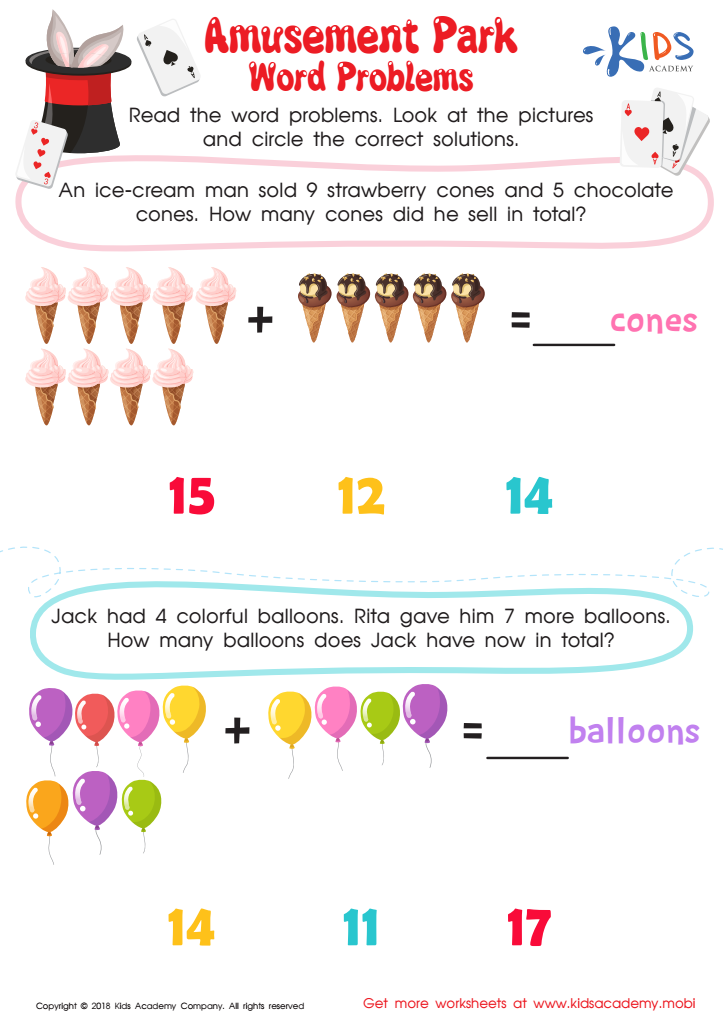
Amusement Park Word Problems Worksheet
Engage kids with math by making it realistic and incorporating manipulatives or pics they like! This worksheet helps kids understand word problems. Read the problem, note numbers and key phrases like "in total," then count the pics to find the total!
 Assign to My Students
Amusement Park Word Problems Worksheet
Worksheet
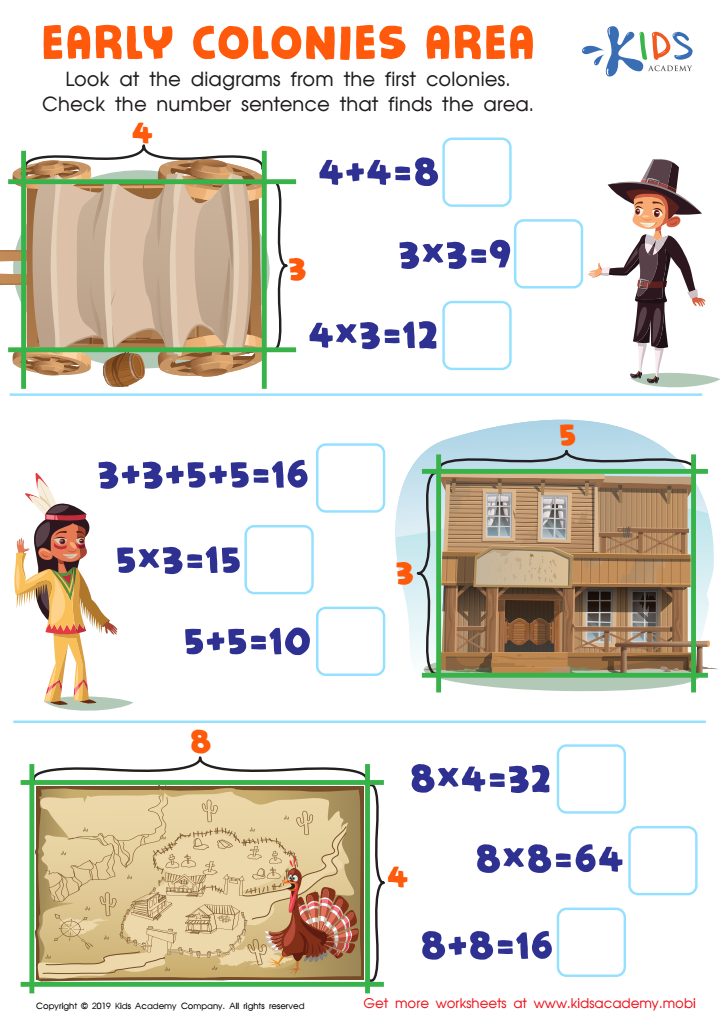
Early Colonies Area Worksheet
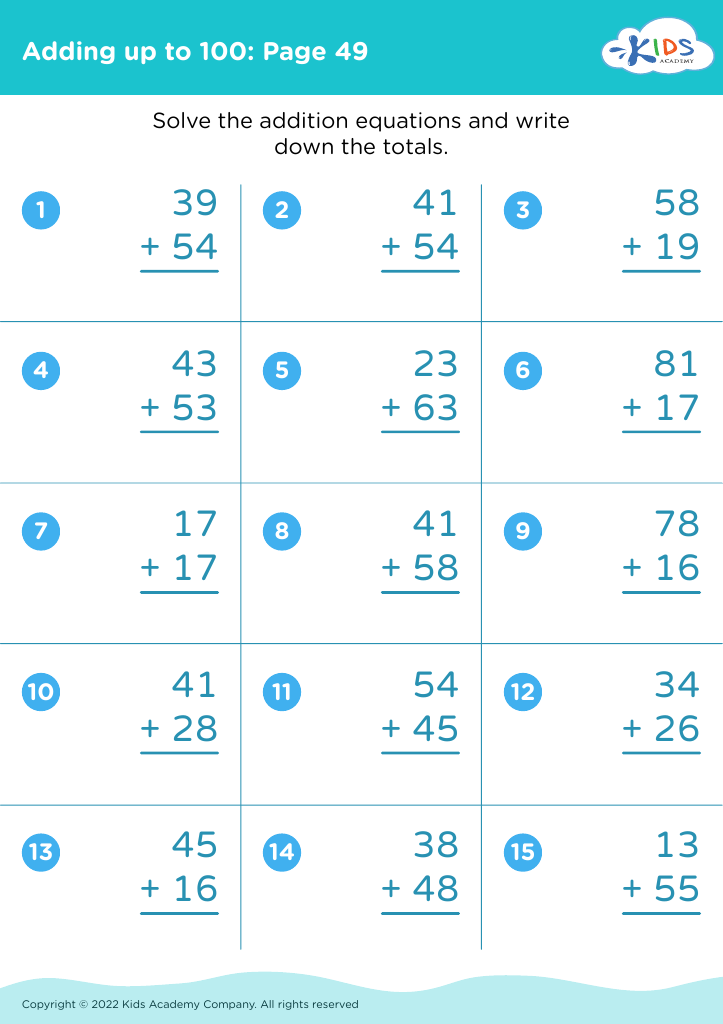
Before starting this worksheet, check if your kids know who the early colonizers were. Exercise their addition and subtraction skills by having them solve the equations, then look at the diagrams from the colonies. Guide them to check the number sentence to find the area.
Early Colonies Area Worksheet
Worksheet
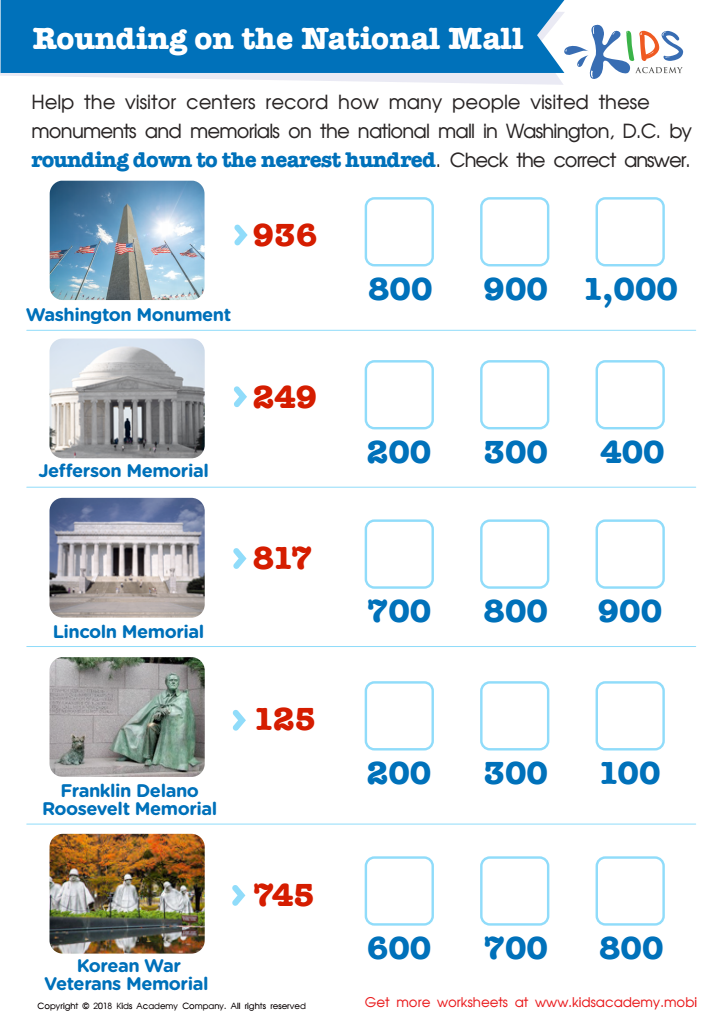
Rounding on the National Mall Worksheet
Math and social studies come together in this worksheet. Learners must round numbers to record attendance at Washington D.C. monuments and memorials. Remind them to round down to the nearest hundred. Extend the lesson by talking about each monument - a great way to teach or refresh your child's knowledge of these national landmarks!
Rounding on the National Mall Worksheet
Worksheet
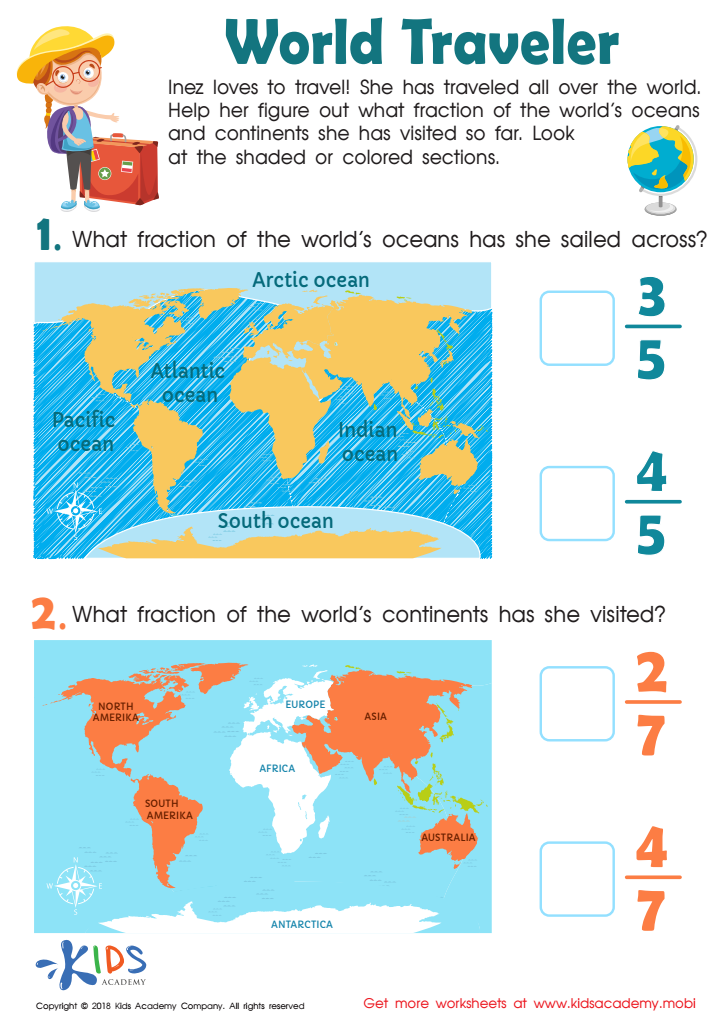
World Traveler Worksheet
Kids love exploring the world? Inez sure does! She's seen oceans and continents around the globe. Your kids can help her figure out what fraction of the world she has visited. Have them name all the countries they've been to, then look at the marked sections on the printout to find out!
World Traveler Worksheet
Worksheet
Join Kids Academy for Free
Who is primarily going to use this learning content?







Map reading skills are a vital component of learning for children aged 7-8, as they intertwine mathematical concepts with real-world applications. Understanding maps fosters spatial awareness, which is critical in developing problem-solving abilities. By interpreting map symbols, legends, and scales, children enhance their comprehension of measurements and proportions, essential mathematical skills that resonate beyond the classroom.
Moreover, map reading encourages critical thinking and analytical skills. Children learn to make connections between mathematical data and physical spaces, deepening their understanding of geography and encouraging curiosity about their surroundings. When children can navigate from one location to another using maps, they build confidence and independence.
For parents and teachers, nurturing these skills also means supporting a holistic educational approach. Engaging with maps can be a fun, interactive way to develop math skills outside traditional settings, fostering a love for learning. Activities like treasure hunts or geographic explorations turn math into a practical tool for children, linking academic concepts with everyday experiences.
Ultimately, map reading skills not only improve children's mathematical abilities but also develop essential life skills that help them navigate an increasingly complex world. By prioritizing these skills, parents and teachers empower children to become knowledgeable and capable learners.








