Mathematical thinking Math Worksheets for Ages 7-8
4 filtered results
-
From - To
Unlock your child's potential with our Mathematical Thinking Math Worksheets for ages 7-8! Carefully crafted to engage young minds, these worksheets help enhance critical thinking and problem-solving abilities through fun and challenging activities. From recognizing patterns to mastering basic arithmetic and logic puzzles, our resources support grade-level standards while fostering a love for math. Ideal for classroom use or extra practice at home, each worksheet is designed to inspire confidence and build foundational skills in addition, subtraction, geometry, and beyond. Give your child a head start on their math journey with Kids Academy!
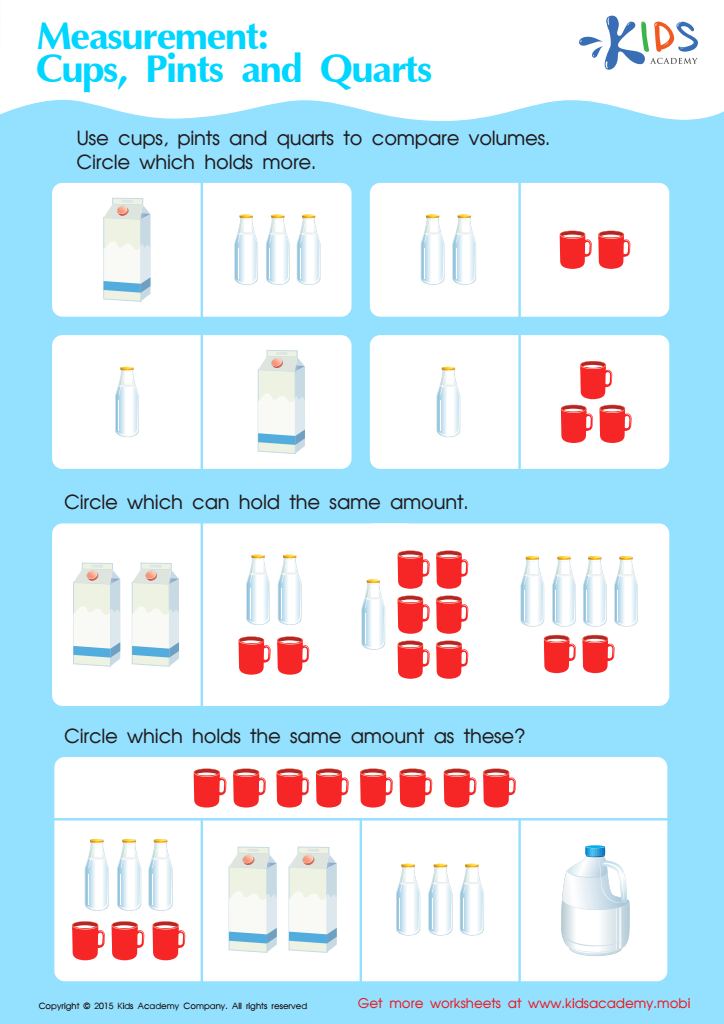
Measurement: Compare Volumes Worksheet
 Assign to My Students
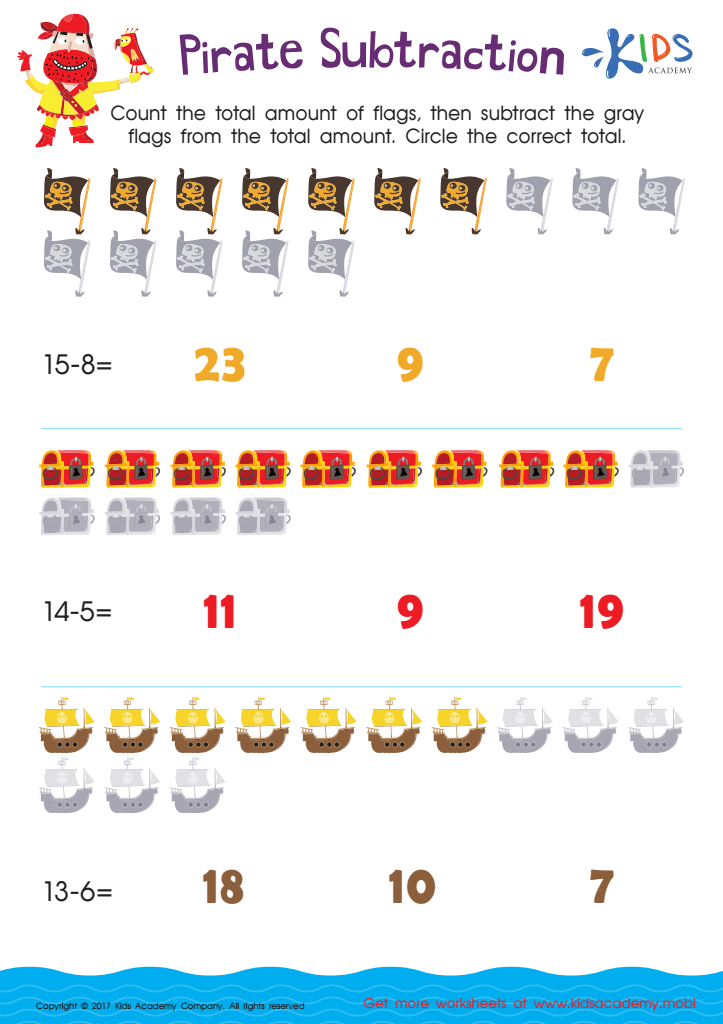
Pirate Subtraction Substraction Worksheet







.jpg)
Mathematical thinking is a crucial skill for children aged 7-8 because it fosters a strong foundation for future learning and problem-solving. At this developmental stage, children's brains are highly adaptable and receptive to new information, making it the perfect time to introduce fundamental concepts of logic, patterns, and numbers. When parents and teachers emphasize mathematical thinking, they are not merely teaching arithmetic; they are nurturing critical thinking, analytical skills, and logical reasoning.
Engaging with math early on helps children develop cognitive skills that are transferable to other subjects and real-life situations. For instance, understanding patterns can aid in reading comprehension, while grasping number operations can improve time management. Moreover, fostering a positive attitude towards math can counteract the common anxiety associated with the subject, encouraging a lifelong appreciation and confidence in tackling mathematical challenges.
Incorporating math into everyday activities, such as cooking, shopping, or playing games, not only makes learning fun but also demonstrates the practical application of mathematical concepts. Ultimately, emphasizing mathematical thinking from a young age empowers children to approach problems methodically, enhances their academic performance across the board, and prepares them for a world increasingly driven by data and technology. Parents and teachers play a pivotal role in this developmental journey, making their involvement essential for cultivating a well-rounded, confident, and capable learner.








