Number pattern recognition Math Worksheets for Ages 7-8
3 filtered results
-
From - To
Discover our engaging Number Pattern Recognition Math Worksheets tailored for ages 7-8! These worksheets are designed to enhance critical thinking and boost mathematical skills by helping young learners identify and analyze number sequences. Each worksheet features colorful visuals and age-appropriate exercises that encourage problem-solving and boost confidence. With structured activities, children will practice recognizing patterns, predicting sequences, and completing patterns in a fun and interactive way. Our resources support classroom learning and at-home practice, making math enjoyable and accessible. Explore our comprehensive collection today, and watch your child's numerical skills blossom as they master the art of number pattern recognition!
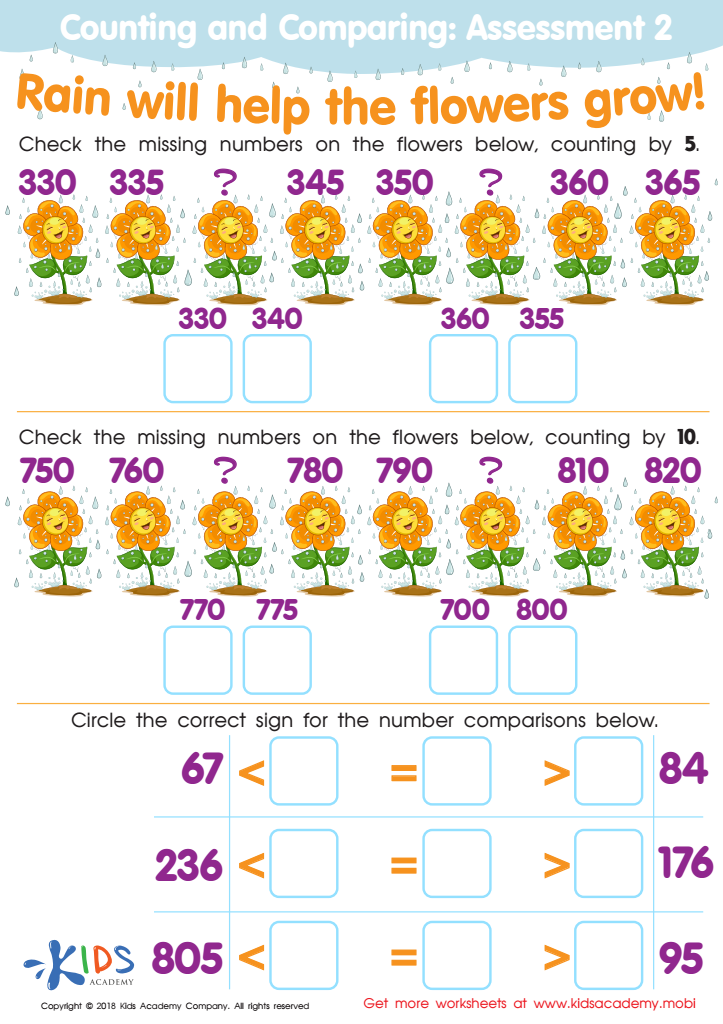
Counting and Comparing: Assessment 2 Worksheet
 Assign to My Students
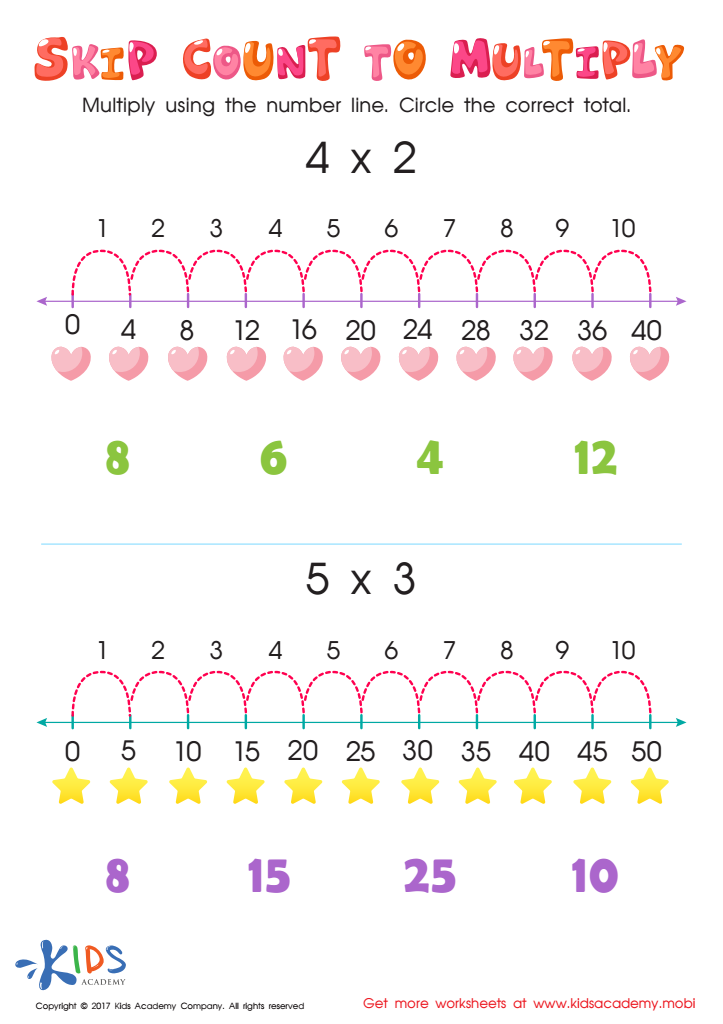
Skip Count Multiplication Worksheet
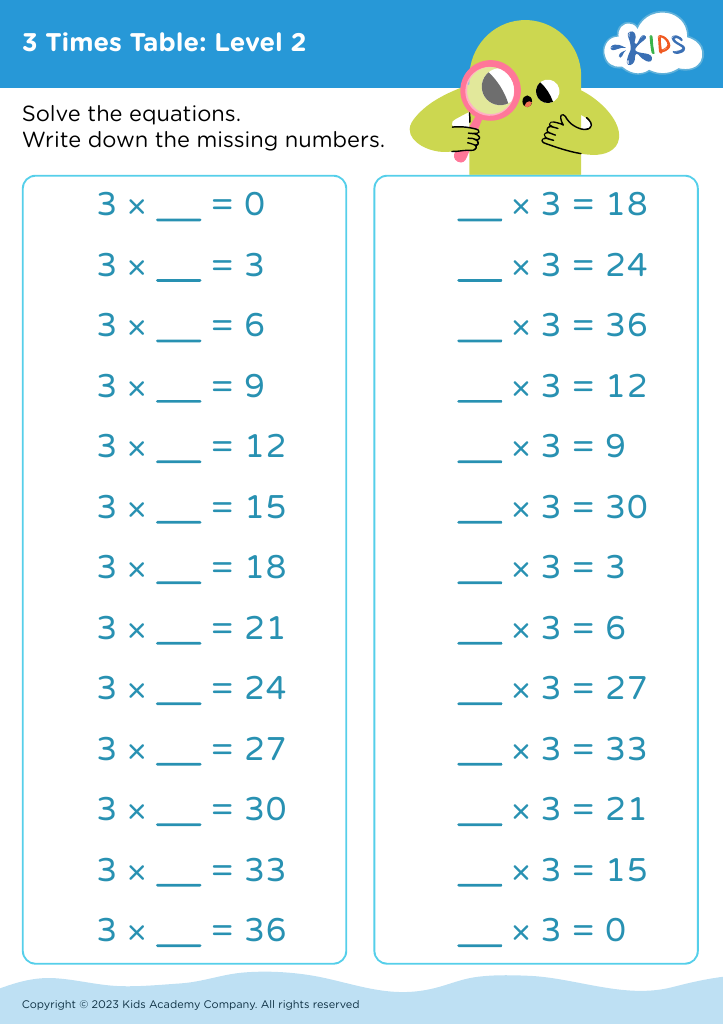


.jpg)

Number pattern recognition is a foundational skill in math for children aged 7-8, and its importance extends beyond mere academic achievement. Understanding number patterns helps students grasp essential concepts such as sequencing, relationships, and mathematical operations. Recognizing patterns enhances their ability to predict outcomes, draw connections, and develop logical thinking, which are crucial skills in solving more complex problems later on.
For parents and teachers, fostering pattern recognition can boost a child's confidence and interest in math. Engaging students with activities focusing on patterns can make learning more interactive and fun, leading to improved retention of mathematical concepts. Furthermore, this skill supports the development of critical thinking, as children learn to identify similarities, differences, and repetitions.
Additionally, strong pattern recognition skills serve as a gateway to advanced mathematical topics such as algebra and geometry, laying a solid foundation for future learning. As math is increasingly integrated into everyday situations—from budgeting to data interpretation—pattern recognition aids children in navigating real-world challenges. Therefore, both parents and teachers should prioritize this skill to enhance children's overall cognitive development and help them build a strong mathematical foundation for lifelong learning.








