Pattern identification Math Worksheets for Ages 7-8
6 filtered results
-
From - To
Explore our engaging Pattern Identification Math Worksheets designed specifically for children aged 7-8! These worksheets promote critical thinking and boost problem-solving skills through fun and interactive exercises. Students will learn to recognize, create, and extend patterns using a variety of shapes, numbers, and colors. Our carefully crafted activities help reinforce foundational math concepts while keeping young learners excited and motivated. Perfect for in-class learning or at-home practice, these worksheets align with educational standards and cater to diverse learning styles. Get ready to enhance your child’s mathematical abilities with our vibrant and stimulating pattern identification worksheets today!
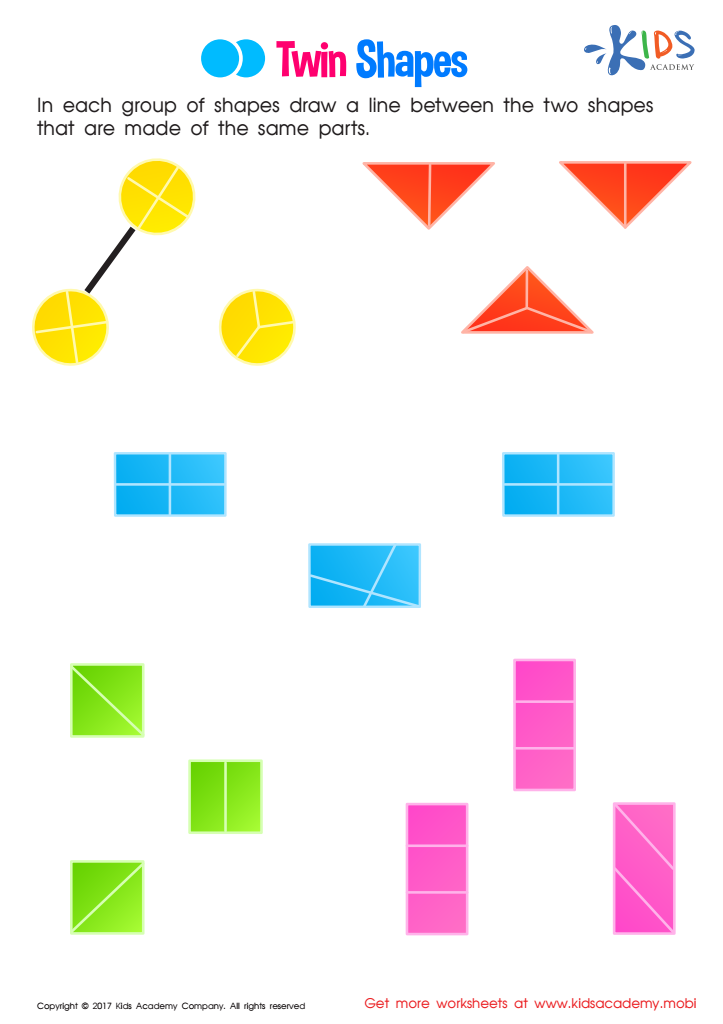
Twin Shapes Worksheet
 Assign to My Students
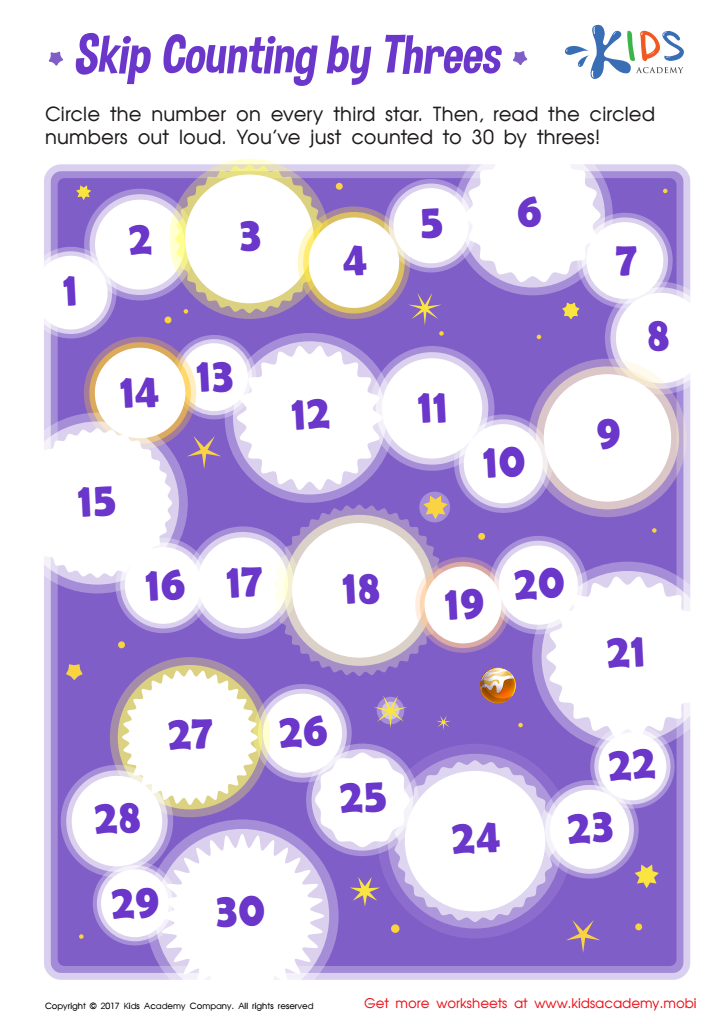
Skip Counting By Three Printable
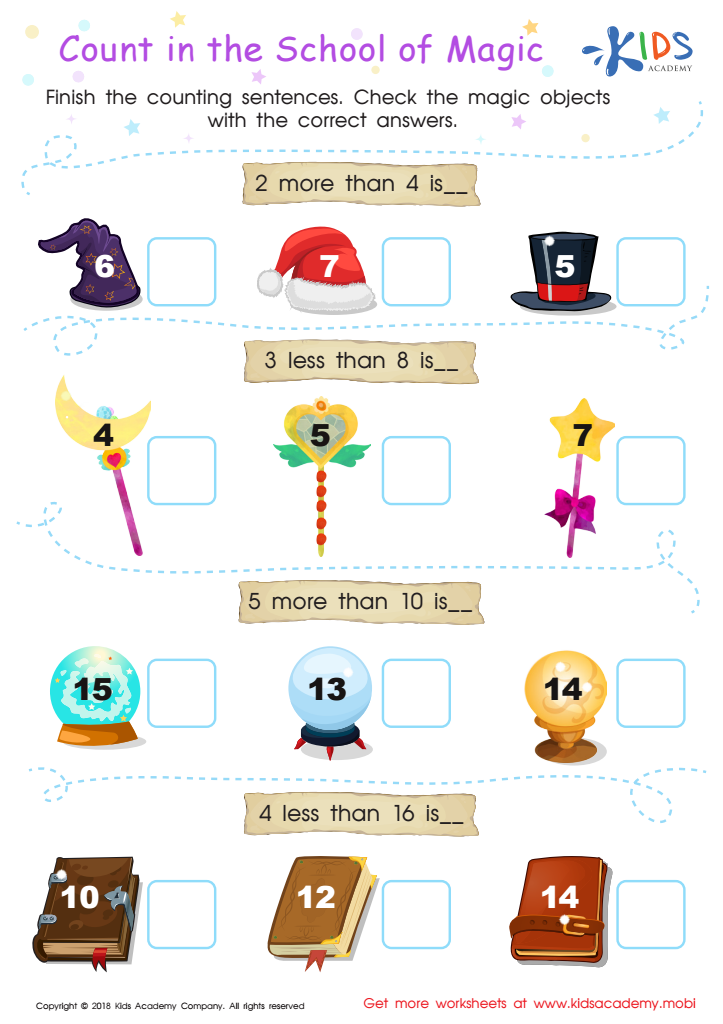
Count in the School of Magic Worksheet
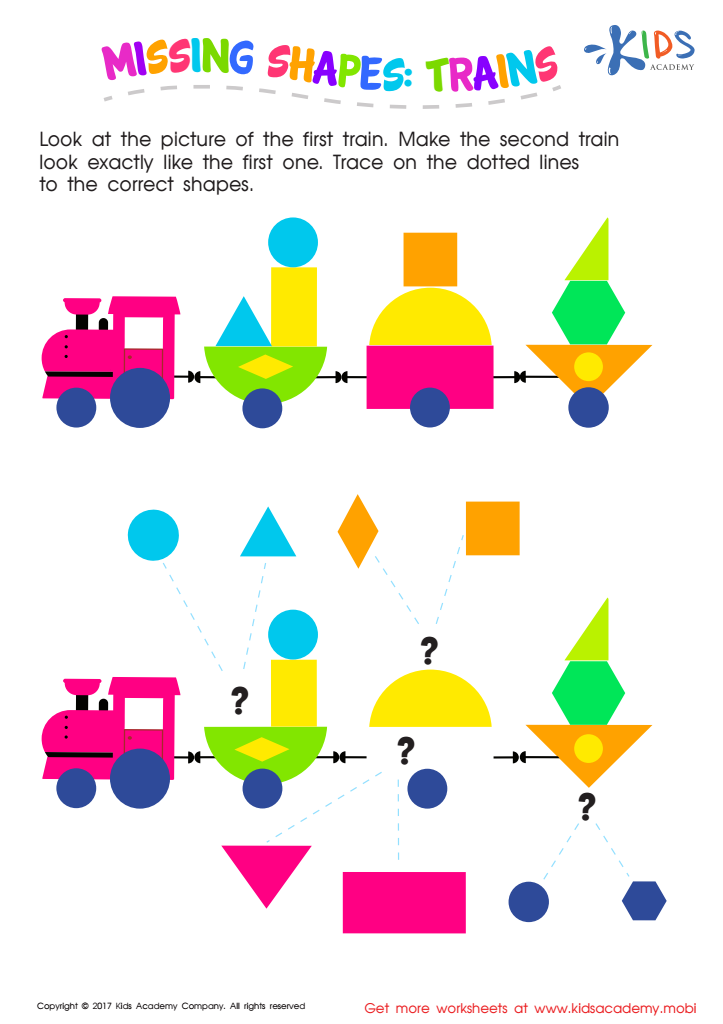
Missing Shapes: Trains Worksheet







Pattern identification in mathematics is fundamental for children aged 7-8, serving as a cornerstone for their overall mathematical understanding. Engaging in pattern recognition helps young learners develop critical thinking and problem-solving skills, enabling them to make connections between different mathematical concepts. By identifying patterns, students can enhance their ability to predict outcomes, which is essential for areas such as algebra and geometry, as they progress in their education.
Moreover, recognizing patterns fosters a sense of order and structure in seemingly chaotic mathematical concepts, making learning enjoyable and accessible. This skill encourages a growth mindset, as children learn to approach problems with curiosity and confidence, seeing challenges as opportunities to discover new patterns rather than obstacles.
For parents and teachers, promoting pattern identification can lead to improved academic performance. Students with a strong foundation in patterns are generally better prepared for more complex math topics in higher grades, reducing anxiety around math as they advance. Additionally, integrating pattern recognition into everyday activities can create meaningful learning experiences, forging a stronger parent-child or teacher-student relationship centered around shared discovery. Ultimately, investing in this critical skill ensures a brighter future for children, both academically and in their everyday lives.








